Robots are becoming smaller and more compact, but their batteries cannot simply keep getting larger. A battery that is too heavy takes up valuable payload capacity, while an oversized battery may not fit into the robot chassis. If the capacity is too low, the robot may need to return for charging after only a short period of operation. For AGVs, AMRs, delivery robots, cleaning robots, and other mobile equipment, the real challenge is finding a robot battery with the right weight, sufficient runtime, and stable power output. Lightweight design is not simply about reducing battery weight; it is about getting more useful performance from every kilogram of the battery.
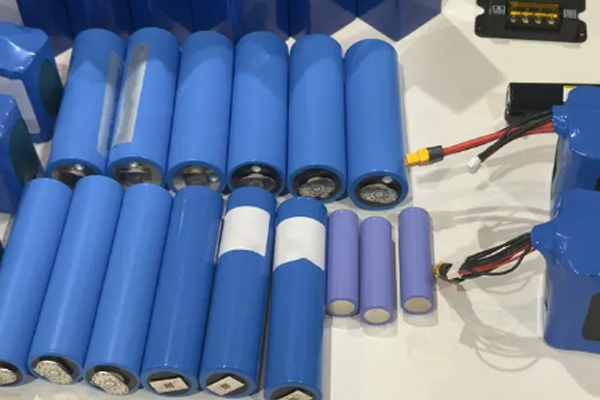
How Much Should a Robot Battery Weigh? Start With the Robot’s Total Weight Capacity
There is no universal standard for robot battery weight. A 48V robot battery used in a small delivery robot has very different requirements from one installed in a heavy-duty AGV. The right choice depends on the total robot weight, rated payload, travel distance, and daily operating time. If the battery takes up too much of the weight allowance, there will be less room for cargo, sensors, or additional components later.
Is a Lighter Robot Battery Always Better?
Not necessarily. Reducing capacity too much just to lower weight can force the robot to return to the charging station more frequently, reducing overall productivity. A better approach is to determine how much energy the robot actually needs and then reduce unnecessary battery weight within that range.
- Payload capacity: A material-handling robot needs to reserve as much weight as possible for cargo, so an oversized battery can directly reduce its usable payload.
- Daily travel distance: A robot traveling only a few kilometers per day has very different battery requirements from one operating continuously for long periods.
- Start-stop frequency: Robots that frequently start, stop, and turn require stronger instantaneous power output from the battery.
- Charging conditions: Robots that can recharge during task intervals may not need to carry an oversized battery for long periods.
- Overall robot size: Compact robots have limited internal space, so the battery needs a suitable balance between weight and volume.
The goal is not simply to make the battery lighter. For robot manufacturers, it is more important to consider how much usable energy the battery provides per kilogram and whether it can support the robot’s actual workload.
Do Different Robots Need Different Lightweight Batteries?
In real projects, robot battery requirements can vary significantly. Delivery robots are more sensitive to overall weight, warehouse AGVs often focus on continuous operating time, while cleaning robots may need to operate for extended periods. A single battery specification rarely fits every type of mobile robot.
| Robot Type | Typical Operation | Lightweight Battery Requirement | Key Parameters |
| AGV | Frequent movement and repetitive transport | Increase payload capacity | 24V/48V, capacity, discharge current |
| AMR | Autonomous navigation and changing tasks | Reduce overall robot weight | 48V battery, runtime, BMS communication |
| Delivery Robot | Limited payload and frequent movement | Control battery weight | Battery size, Wh, weight |
| Cleaning Robot | Long continuous operation | Balance capacity and weight | Runtime, charging speed, cycle use |
| Inspection Robot | Low-speed, long-duration operation | Compact battery pack | Capacity, standby time, dimensions |
If the robot is already close to its payload limit, battery weight cannot be treated as just another product specification. It can directly affect the robot’s mechanical design and operating cost.
How Can a Robot Battery Be Made Lightweight? Capacity and Runtime Are Not Just About Ah
Many robot battery selections still focus heavily on Ah ratings, but Ah alone does not tell you how much energy a battery actually stores. A 24V 100Ah battery and a 48V 100Ah battery do not have the same energy capacity. Comparing batteries only by Ah can easily lead to the wrong choice.
How Do You Calculate Robot Battery Capacity?
For robot batteries, the more useful figures are Wh or kWh. A simple way to estimate energy requirements is:
Battery Energy ≈ Operating Power × Operating Time
If a robot requires an average of 600W and operates for 5 hours per day, its theoretical energy consumption is around 3kWh. A suitable system reserve can then be added to determine the final battery specification.
The following specifications can be used as a practical reference when evaluating robot batteries:
| Robot Battery Specification | Theoretical Energy | Typical Application | Lightweight Design Focus |
| 24V 50Ah | 1.2kWh | Small mobile robots | Compact size, low weight |
| 24V 100Ah | 2.4kWh | AGVs, delivery equipment | Capacity and payload balance |
| 48V 50Ah | 2.4kWh | Small and medium AMRs | Power output, dimensions |
| 48V 100Ah | 4.8kWh | Warehouse and material-handling robots | Runtime, weight, BMS |
| 48V 200Ah | 9.6kWh | Long-duration equipment | Capacity, structure, thermal management |
Actual usable energy is also affected by depth of discharge, equipment efficiency, operating conditions, and robot workload. Theoretical battery energy should not be treated as fully usable capacity. For lightweight robots, measuring actual power consumption first and then selecting the battery capacity is usually more practical than simply choosing a larger battery.
Does Short Robot Runtime Always Mean More Battery Capacity Is Needed?
Not necessarily. If a robot does not travel as far as expected, the problem may not be the battery itself. Drive system efficiency, changing payloads, frequent acceleration and deceleration, slopes, and standby power consumption can all create differences between actual runtime and laboratory estimates.
- Reduce unnecessary load: Carrying unnecessary structural weight over long operating periods continuously increases energy consumption.
- Optimize task routes: Frequent stops and repeated detours increase motor operating time and consume additional energy.
- Recalculate battery capacity: If actual average power consumption is lower than the original design value, there may be no need to keep increasing battery capacity simply to extend runtime.
- Use opportunity charging: Recharging during task intervals, shift changes, or short idle periods can reduce the need for oversized battery packs.
- Check the charging system: Mismatched parameters between the charger, BMS, and robot control system may prevent the battery from being fully utilized.
This makes lightweight battery design more than simply replacing the battery with a lighter model. It also means optimizing how the robot uses energy throughout its daily operating cycle.
How to Choose Between 24V and 48V Robot Batteries? Voltage Also Affects Lightweight Design
Robot battery weight is also closely related to system voltage. Many mobile robots use 24V or 48V battery systems, and the current required for the same power level differs between voltage systems. For higher-power robots, a higher system voltage can help reduce operating current, but the final choice still needs to match the motor, controller, charger, and overall electrical system.
What Is the Difference Between 24V and 48V Robot Batteries?
In simple terms, lower-power equipment can use a 24V system, while higher-power mobile robots with longer operating requirements may use 48V systems. The decision should not be based on robot type alone; actual motor and controller specifications also matter.
- 24V batteries: Commonly used in small AGVs, delivery robots, and some service robots with relatively simple electrical systems.
- 48V batteries: More suitable for higher-power robots or mobile equipment that needs longer operating periods and higher electrical output.
- Capacity cannot be compared directly by Ah: A 100Ah battery at 24V and a 100Ah battery at 48V have different theoretical energy levels, so Wh is a better comparison.
- The complete system must be compatible: Motor controllers, chargers, DC-DC converters, and BMS communication parameters all need to match the battery voltage.
Once the robot manufacturer has confirmed the drive system voltage, the battery design should follow that voltage instead of changing the voltage simply to reduce weight.
How Should the Housing and Structure of a Lightweight Robot Battery Be Designed?
Sometimes the problem is not a lack of battery space, but the fact that a standard battery enclosure simply cannot fit inside the robot. For compact chassis designs, the battery pack can be customized to match the available internal space.
- Slim battery packs: Suitable for robot chassis with limited battery compartment height and allow the available horizontal space to be used more effectively.
- Long battery packs: Suitable for mobile robots with narrow internal chassis layouts, helping reduce unused space.
- Pull-out battery packs: Make maintenance and battery replacement easier for robots that require regular battery removal.
- Customized connector locations: Predefining connector positions, cable lengths, and mounting methods can reduce installation conflicts.
- Control structural weight: The enclosure does not need to be unnecessarily heavy, and its structure can be optimized while still meeting mechanical strength, protection, and mounting requirements.
For projects with an existing robot prototype, providing the battery compartment length, width, height, mounting method, and connector location makes it much easier to develop a battery that actually fits than simply requesting a “lightweight battery.”
Are LiFePO4 Robot Batteries Suitable for Lightweight Design? Custom Battery Packs Work Better for Real Projects
Lightweight robot battery design ultimately comes down to the complete battery pack. LiFePO4 batteries offer good cycle performance and safety characteristics and are commonly considered for robot applications that require frequent charging and discharging. The final performance of a battery pack depends not only on the cells but also on the BMS, enclosure, wiring, connectors, and internal pack structure.
What Should You Look for in a LiFePO4 Robot Battery?
When developing a new robot battery pack, it is better to include the following specifications in the product specification sheet rather than listing capacity alone:
- Nominal voltage: Specify 24V, 48V, or another system voltage to ensure compatibility with the robot controller.
- Rated capacity: List both Ah and Wh to make the actual battery energy easier to understand.
- Continuous discharge current: Confirm that the battery can provide sufficient current during normal robot operation.
- Peak discharge capability: Check whether the battery can handle motor startup, acceleration, and short periods of high load.
- Total battery pack weight: Include the cells, BMS, enclosure, wiring, and connectors instead of comparing cell weight alone.
- Battery dimensions: Define the length, width, height, and mounting points to prevent installation problems during mass production.
- BMS communication: For smart robots that need SOC, fault information, or battery status, confirm communication requirements such as CAN or RS485 in advance.
Which Details Matter Most When Customizing a Robot Battery?
In custom battery projects, many problems are not caused by the battery cells but by specifications that were not clearly defined at the beginning. Once a robot enters mass production, even a small dimensional change can affect the battery compartment, charger, and overall robot structure.
The following information is worth confirming in advance:
- Is the battery compartment a fixed size?
- Does the battery need to be removable or quickly replaceable?
- How many hours does the robot need to operate each day?
- How different is power consumption between unloaded and fully loaded operation?
- What is the peak current during motor startup?
- What charging parameters does the charger use?
- Does the robot controller need to read the battery SOC?
- Will the battery capacity need to be expanded later?
Once these requirements are clear, lightweight design can be applied to the battery’s weight, capacity, dimensions, and output performance instead of simply trying to make the battery as light as possible.
What Should Be Tested Before Mass Production of Robot Batteries?
Once a battery sample is available, it is better to install it directly on the actual robot instead of testing only the battery voltage on a workbench. Real operating power consumption, vibration, startup current, and installation conditions can be very different from standalone battery tests.
- Full-system installation: Confirm that the battery does not interfere with the chassis, motor, sensors, or other internal components.
- Full-load operation: Run the robot under actual working conditions and record changes in battery voltage, current, and remaining capacity.
- Runtime testing: Measure actual operating time instead of calculating runtime only from theoretical battery capacity.
- High-load operation: Check whether battery output remains stable during robot startup, climbing, and acceleration.
- Charge and discharge cycling: Evaluate capacity changes and operating performance after repeated use.
- Communication testing: Confirm that BMS data can be correctly read by the robot control system.
For global robot manufacturers, lightweight robot batteries can also be customized based on voltage, capacity, dimensions, weight, connectors, and BMS communication requirements. DELIGREEN provides LiFePO4 batteries, battery packs, DIY battery boxes, BMS accessories, and scalable energy storage products, with customized robot battery solutions for AGVs, AMRs, delivery robots, cleaning robots, and other mobile equipment. The goal is not simply to make a battery that fits inside the robot, but to create a battery that matches the robot’s operating cycle and overall weight requirements.