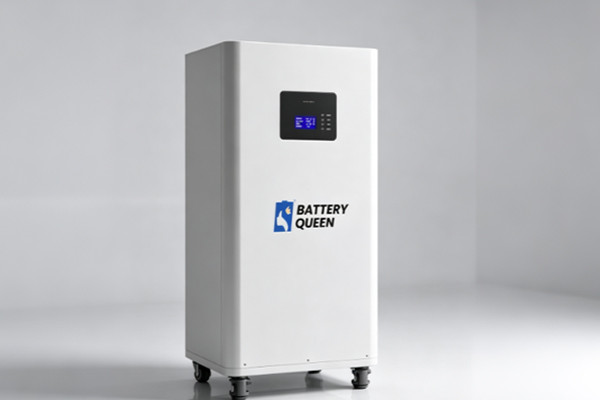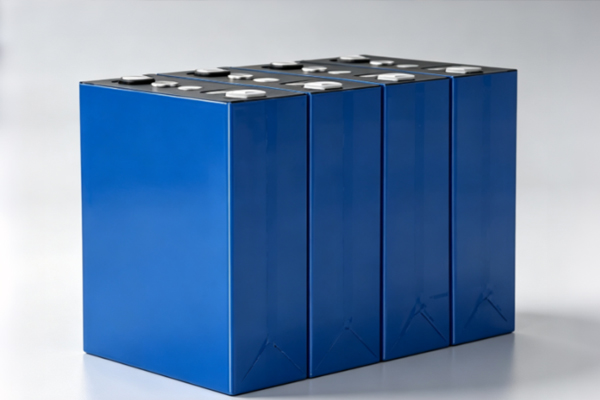
A robot can only perform as well as its power system allows. Battery performance directly affects motor startup, acceleration, operating time, charging frequency, and overall uptime. For AGVs, AMRs, material handling robots, and other industrial equipment, 48V battery systems are widely used. When choosing a 48V robot battery, looking at the Ah rating alone is not enough. Runtime, discharge current, battery dimensions, BMS communication, charging method, and installation requirements all need to be considered.
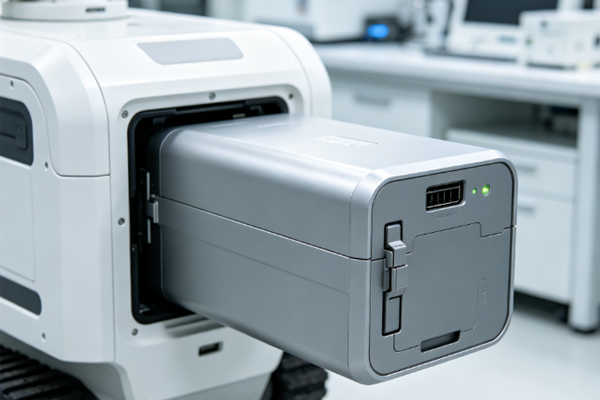
How to Choose a 48V Robot Battery? Check These Key Parameters
Different robots have different loads, operating schedules, and power requirements. A 48V 100Ah battery and a 48V 200Ah battery may have the same voltage but offer very different runtime. Checking the key specifications before purchasing makes battery selection much easier.
What Parameters Should You Check for a 48V Robot Battery?
When purchasing a robot battery, start with these specifications:
- Rated voltage: Commonly 48V
- Battery capacity: 100Ah, 150Ah, 200Ah, etc.
- Continuous discharge current: Must support the robot’s long-term operating load
- Peak discharge current: Important for motor startup and acceleration
- Battery dimensions: Must fit inside the robot’s battery compartment
- Battery weight: Affects payload and mobility
- BMS functions: Overcharge, over-discharge, overcurrent, short-circuit, and temperature protection
- Communication interface: CAN, RS485, or other protocols
- Charging method: Fixed charging, automatic charging, or battery swapping
Don’t compare batteries based only on the label “48V 100Ah.” Two batteries with the same capacity can have very different discharge performance, BMS functions, communication protocols, and service life. The total operating cost can also be quite different.
What Is the Difference Between 48V 100Ah and 200Ah Robot Batteries?
The most obvious difference is energy capacity. The theoretical energy can be estimated using:Voltage × Capacity
| Battery Specification | Theoretical Energy | Common Applications |
| 48V 50Ah | 2.4kWh | Small robots and light-duty equipment |
| 48V 100Ah | 4.8kWh | AGVs, AMRs, and material handling robots |
| 48V 150Ah | 7.2kWh | Medium- and heavy-duty robots |
| 48V 200Ah | 9.6kWh | Long-runtime and heavy-duty applications |
A 200Ah battery is not automatically the best choice for a robot that operates for long hours. Higher capacity also means more weight, larger dimensions, and higher purchase costs. A better approach is to calculate the required capacity from the robot’s actual power consumption and operating time.
How Long Can a Robot Battery Last? Capacity and Power Consumption Both Matter
“How many hours can this battery run the robot?” is one of the most common questions from buyers. Actual runtime depends not only on battery capacity but also on the total power consumption of motors, controllers, sensors, drives, and other components.
How Long Can a 48V 100Ah Robot Battery Run?
A 48V 100Ah battery provides approximately 4.8kWh of theoretical energy.
If the robot’s average power consumption is:
- 800W: theoretical runtime is about 6 hours
- 1,200W: theoretical runtime is about 4 hours
- 2,000W: theoretical runtime is about 2.4 hours
Actual runtime will vary depending on payload, driving conditions, frequent starts and stops, ambient temperature, and usable battery capacity. The theoretical value should not be treated as the actual runtime. Leaving a reasonable capacity margin is a safer choice for industrial applications.
What Makes a Robot Consume More Battery Power?
Shorter runtime does not always mean the battery capacity is too small. Changes in operating conditions can also increase power consumption:
- Increased payload
- Frequent motor startup and acceleration
- Long periods of operation under full load
- Slopes or uneven floors that increase drive load
- Low temperatures that reduce battery performance
For robots that need to operate throughout the day, increasing battery capacity is one option. Automatic charging, fast charging, or battery swapping can also reduce downtime and keep equipment running more efficiently.
Why Are LiFePO4 Robot Batteries Becoming More Popular?
For AGVs, AMRs, and material handling robots that undergo frequent charge and discharge cycles, battery performance matters just as much as capacity. LiFePO4 batteries are well suited to these applications because of their safety characteristics, cycle performance, and relatively low maintenance requirements.
What Are the Advantages of LiFePO4 Batteries for Robots?
Buyers usually pay close attention to these benefits:
- Long cycle life for frequent charging and discharging
- Good thermal stability for extended operation
- A practical balance between energy capacity and battery weight
- Low routine maintenance requirements
- Smart BMS options for monitoring battery status
For robots that operate for long hours every day and go through frequent charging cycles, battery life can have a direct impact on operating costs. The lowest initial purchase price does not always mean the lowest long-term cost.
What Does a BMS Do in a Robot Battery?
The Battery Management System, or BMS, acts as the “manager” of the battery pack. It provides protection while also allowing the robot control system to monitor battery conditions.
Common BMS functions include:
- Overcharge protection
- Over-discharge protection
- Overcurrent protection
- Short-circuit protection
- Temperature monitoring
- Cell voltage monitoring
- State of Charge (SOC) estimation
- Fault alarms and data communication
If the robot needs to read remaining capacity, voltage, current, or fault information, the BMS communication interface and protocol should be confirmed before purchasing the battery.
What Information Should You Provide When Purchasing a 48V Robot Battery?
Robot batteries are often more than a simple “plug-and-play” product. Battery compartment dimensions, connectors, mounting methods, and communication protocols vary from one robot to another, so customized battery packs may be required.
What Can Be Customized for a 48V Robot Battery?
If a standard battery does not fit the robot, the following specifications can usually be customized:
- Battery pack length, width, and height
- Battery capacity and cell configuration
- Output connectors and cable length
- BMS communication protocol
- Battery mounting method
- Charging port position
- Battery enclosure
- Protection rating
Before contacting a battery manufacturer, it is useful to provide the robot battery compartment dimensions, power consumption, operating time, and motor startup current. More complete technical information allows the manufacturer to develop a more suitable 48V robot battery solution.
How Much Does a 48V Robot Battery Cost?
There is no fixed price for a 48V robot battery. Capacity is only one part of the cost. Cell type, BMS configuration, battery structure, communication functions, enclosure, connectors, and customization requirements can all affect the final quotation.
For bulk purchasing, buyers should also ask about:
- Unit price and volume pricing
- Cell brand and specifications
- BMS configuration
- Cycle life test conditions
- Warranty period
- Lead time
- Sample testing costs
- Future customization costs
For AGVs, AMRs, warehouse robots, and industrial material handling equipment, it is best to complete runtime, charging, communication, and installation tests during the sample stage before moving into mass production.
A 48V robot battery is more than just a combination of “48V + a certain Ah rating.” The real question is whether the complete battery solution matches the robot. A LiFePO4 battery combined with the right BMS, communication system, and customized battery structure can support different AGV, AMR, and industrial robot applications. Suppliers such as Deligreen can customize capacity, dimensions, discharge performance, and BMS communication to create a battery that not only fits the robot, but also provides stable operation, easier maintenance, and better long-term cost control.