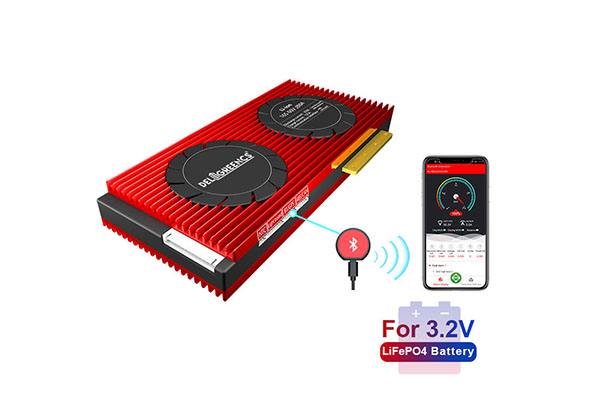
In lithium battery systems, voltage differences between individual cells can affect the overall performance of the battery pack. If certain cells reach their maximum charging voltage or minimum discharging voltage earlier than others, the entire battery pack may not be able to use its full rated capacity. This can also increase battery management challenges. The balancing function in a Battery Management System (BMS) is designed to address this issue.Active balancing and passive balancing are two common battery balancing technologies. They differ in working principles, energy efficiency, cost, and application scenarios. Understanding these differences can help you choose a suitable BMS solution for your battery project.
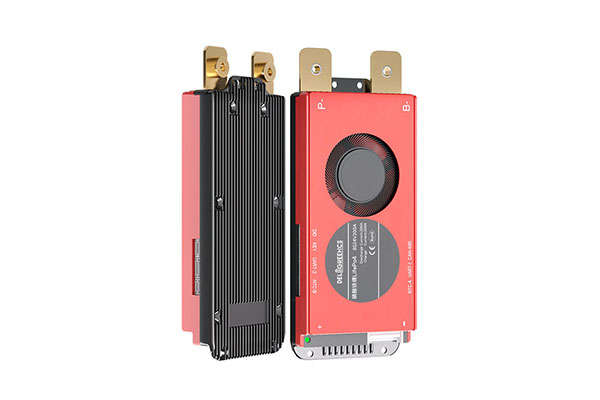
What Are Active and Passive Battery Balancing?
Active Balancing
Active balancing is a technology that transfers energy from higher-voltage cells to lower-voltage cells through electronic circuits. When the BMS detects voltage differences between individual cells, it uses inductors, capacitors, or DC-DC converter circuits to redistribute energy.
Instead of simply dissipating excess energy, active balancing transfers it to other cells whenever possible. This improves energy utilization efficiency and makes the technology particularly suitable for large-capacity battery packs with multiple cells.
Passive Balancing
Passive balancing primarily uses resistors to release excess energy from higher-voltage cells. When a cell exceeds a preset voltage threshold, the BMS activates the corresponding balancing resistor, converting the excess electrical energy into heat.
This method features a relatively simple circuit design, lower manufacturing costs, and easier implementation. However, since energy is dissipated as heat, passive balancing has lower energy efficiency. Its balancing speed is also limited by resistor power ratings and heat dissipation conditions.
What Are the Main Differences Between Active and Passive Balancing?
Energy Efficiency
Active balancing transfers some of the energy from higher-voltage cells to lower-voltage cells, reducing energy waste. Passive balancing, on the other hand, consumes excess energy through resistors without recovering it for reuse.
For energy storage systems that operate over long periods, active balancing offers advantages in reducing energy losses during the balancing process.
System Cost and Circuit Complexity
Passive balancing generally requires only balancing resistors and control circuits. Its hardware structure is simple and relatively inexpensive, making it suitable for battery projects with limited budgets.
Active balancing requires additional energy conversion and control circuits. Its design is more complex and demands higher standards for circuit reliability and control accuracy. As a result, its initial purchasing cost is generally higher than that of passive balancing solutions.
Balancing Speed and Heat Dissipation
The actual balancing speed of an active balancing system depends on its balancing current, conversion efficiency, and control strategy. Designs with higher balancing capabilities can improve voltage consistency between cells more quickly.
The speed of passive balancing is generally limited by its balancing current. In addition, continuous energy dissipation generates heat, making resistor temperature control and heat dissipation important design considerations.
Long-Term Operating Performance
In large battery packs, differences between individual cells may become more noticeable over repeated charging and discharging cycles. Active balancing can help improve energy distribution between cells, while passive balancing is more suitable for systems with relatively consistent cells and limited balancing requirements.
It is important to note that neither technology can repair cells that have already experienced severe capacity degradation or internal damage.
Which BMS Balancing Technology Is Better for Different Applications?
Residential Energy Storage: Choose Based on Capacity and Budget
Residential solar energy storage systems typically require long-term charging and discharging cycles. If the battery pack has a large capacity and contains many cells, active balancing BMS may be worth considering, especially when energy utilization efficiency is a priority.
For smaller residential storage batteries with good cell consistency, passive balancing can also meet basic battery management requirements.
Commercial and Industrial Energy Storage: Focus on Long-Term Efficiency
Commercial and industrial energy storage systems generally have larger battery capacities and more complex operating conditions. Balancing performance can influence battery capacity utilization and long-term operating stability.
Active balancing is suitable for projects with higher energy efficiency requirements. However, the final selection should also consider balancing current, system cost, maintenance requirements, and return on investment.
RVs, Marine Applications, and Portable Power Stations: Prioritize System Reliability
RVs, marine battery systems, and portable power stations require reliable battery performance, efficient space utilization, and convenient maintenance.
For battery packs with moderate capacity and relatively simple structures, passive balancing may be a more economical option. For larger battery packs, active balancing solutions may be worth evaluating.
What Other Features Should You Consider When Choosing a BMS?
Balancing technology is only one part of a BMS. The overall quality of a battery management system should not be judged solely by whether it uses active or passive balancing.
Cell Voltage Monitoring
A reliable BMS should continuously monitor individual cell voltages and identify abnormal voltage levels or differences between cells. Accurate monitoring data provides a foundation for effective balancing control.
Overcharge and Overdischarge Protection
Overcharging and overdischarging can affect lithium battery lifespan and may create safety risks under severe conditions. A well-designed BMS should provide appropriate voltage protection and charging and discharging control functions.
Temperature and Overcurrent Protection
Batteries generate heat during charging and discharging. Temperature monitoring, overcurrent protection, and short-circuit protection help the system respond to abnormal operating conditions and improve overall battery safety.
Battery Compatibility
When selecting a BMS, confirm that it is compatible with the battery chemistry, series cell count, voltage range, and charging and discharging current.
For example, LiFePO4 batteries and other lithium battery chemistries have different voltage parameters and protection thresholds. A BMS should not be used without confirming that its specifications match the battery system.
How to Choose the Right BMS for Your Battery System?
There is no absolute winner between active and passive balancing. Passive balancing offers a simple structure and lower cost, making it suitable for battery systems with limited balancing requirements and tighter budgets. Active balancing focuses more on energy transfer and utilization efficiency, making it a suitable option for large-capacity battery packs, long operating cycles, and projects with higher balancing performance requirements.
For residential energy storage, commercial and industrial energy storage, and various LiFePO4 battery applications, BMS selection should take battery capacity, cell count, balancing current, protection functions, and actual operating conditions into account.
Deligreen specializes in the development and supply of LiFePO4 cells, battery packs, BMS products, and energy storage systems. The company also provides OEM and ODM services to support battery solutions for different applications. Whether you are developing a residential energy storage system or a commercial and industrial energy storage project, selecting a properly matched BMS helps improve battery pack safety, operating stability, and energy utilization efficiency.