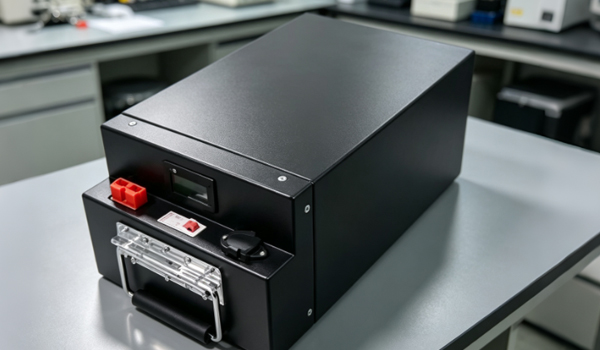
When drones perform tasks such as aerial photography, inspection, surveying and mapping, and logistics transportation, battery performance directly affects flight time, payload capacity, and mission stability. Since different drone models vary in installation space, power requirements, and operating environments, standard batteries often fail to achieve an ideal fit. Customized lithium battery solutions can be designed around cell type, structural dimensions, BMS functions, and interface configuration, helping customers complete the selection and development of drone power systems more efficiently.
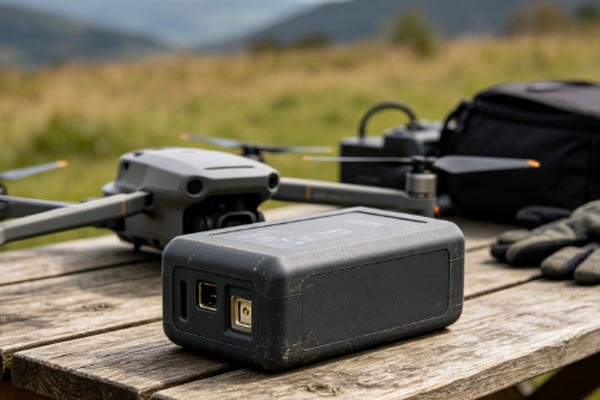
Matching Cell Solutions to Drone Operating Conditions
For drone batteries, a larger capacity is not always better. The right balance must be found among weight, power, and flight endurance.
Selecting Cells According to Flight Requirements
Different types of drones have significantly different mission requirements. Cell selection generally needs to consider the following parameters:
- Energy density: Provides more usable energy within a limited weight, helping extend flight endurance.
- Discharge rate: Multirotor drones require high instantaneous current during takeoff, climbing, and high-speed flight.
- Cycle life: Drones used for frequent operations place greater emphasis on capacity retention after long-term cycling.
- Consistency: Multiple cells connected together need to maintain good consistency in voltage, capacity, and internal resistance.
Properly matching the cells enables the battery pack to better adapt to the drone’s actual load.
Different Applications Require Different Priorities
Different types of drones require corresponding battery solutions based on their mission characteristics.
| Drone Type | Main Focus | Key Battery Design Considerations |
| Surveying and mapping drones | Long endurance and weight control | Select cells with high energy density and low weight, while balancing capacity and overall aircraft load |
| Agricultural spraying drones | Continuous high load and stable discharge | Select cells with a high discharge rate and good cycle performance to ensure stable operation during long-duration tasks |
| Logistics drones | Energy reserve, safety, and stability | Increase battery capacity and safety protection capabilities, while strengthening BMS monitoring, temperature management, and structural protection |
| Other professional drones | Matching specific mission requirements | Customize the design based on flight time, payload, dimensions, weight, discharge current, and installation space |
By clearly identifying the drone type and actual mission requirements, cell performance, battery capacity, and the overall structural solution can be determined more accurately.
Customizing Battery Pack Structures Around Weight and Dimensions
The internal space of a drone is limited, and battery weight directly affects payload capacity and flight time. Therefore, structural design is an important part of a customized solution.
Controlling Battery Pack Dimensions and Weight
The battery pack needs to match the aircraft’s battery compartment, installation interfaces, and center of gravity. Common design considerations include:
- Overall dimensions: Customize the length, width, and height according to the available battery compartment space.
- Weight distribution: Arrange the positions of the cells, BMS, connectors, and housing reasonably.
- Interface layout: Determine the terminal and wiring directions according to the drone’s power interface.
The better the structural fit, the easier the battery pack will be to install and replace, while also reducing its impact on the drone’s center of gravity.
Strengthening Vibration Resistance and Thermal Management
During flight, drones are continuously affected by vibration and airflow, so the internal connections of the battery pack must remain stable. At the same time, high-rate discharge generates a certain amount of heat, and the structural design should provide appropriate heat dissipation conditions. Balancing fixation, insulation, and heat dissipation can improve the long-term operating reliability of the battery pack.
BMS and Safety Protection Must Be Designed for Drone Operating Conditions
Drones may experience rapid takeoff, frequent acceleration and deceleration, and high-current output during operation. Therefore, the BMS needs to be well matched with the battery pack parameters and the overall flight control system.
Configuring Suitable BMS Protection Functions
The BMS is responsible for battery status monitoring and abnormal-condition protection. During customization, the following functions generally need to be considered:
- Overcharge and over-discharge protection: Prevents the cells from entering unsuitable voltage ranges.
- Overcurrent protection: Establishes appropriate protection strategies for the drone’s instantaneous high-current requirements.
- Temperature monitoring: Provides timely information about changes in the battery pack’s operating temperature.
- Individual cell voltage monitoring: Helps identify abnormal differences between cells.
A properly configured BMS can improve the safety management capability of the battery pack during operation.
Optimizing Communication and Battery Level Management
For professional drones, the battery pack may also need to provide operating information such as voltage, current, remaining capacity, and temperature to the flight control system. Customized solutions can be adapted to the aircraft’s communication protocol and interface requirements, enabling the flight platform to monitor battery status more accurately.
Providing Complete Customized Solutions Based on Customer Requirements
Drone lithium battery customization is not limited to replacing cells. It should cover the entire process from requirement analysis to testing, validation, and mass production.
What Information Is Usually Included in a Customized Solution
When submitting a customization request for a drone lithium battery, customers are advised to provide the following information:
- Voltage platform.
- Battery capacity.
- Maximum discharge current.
- Battery dimensions and weight.
- BMS functions.
- Interface and wiring harness.
- Housing structure.
The voltage must match the drone’s motors and electronic control system. The capacity must meet flight endurance and payload requirements, while the discharge current must support takeoff, climbing, and high-load operation. The dimensions, weight, interfaces, and housing must also be compatible with the aircraft structure, installation method, and heat dissipation requirements. Clearly defining these parameters can improve customization efficiency and battery compatibility.
Sample Testing and Mass Production Are Equally Important
After the design is completed, installation testing should be conducted with the actual drone. Key factors to observe include starting current, continuous discharge, temperature rise, flight endurance, interface connections, and structural fixation. During mass production, cell screening, consistency testing, and finished-product testing should also be strengthened to ensure stable performance across different batches of battery packs. A complete customization process can reduce later rework and adaptation costs.
Drone battery solutions need to be comprehensively evaluated based on the specific aircraft model, operating environment, and procurement requirements. Through standardized cell screening, structural design, performance testing, and quality control, the compatibility and consistency of battery packs in actual operations can be improved. For drone manufacturers, industry application companies, and bulk procurement customers, a complete customization process helps reduce adaptation difficulties and improve subsequent use and maintenance efficiency.