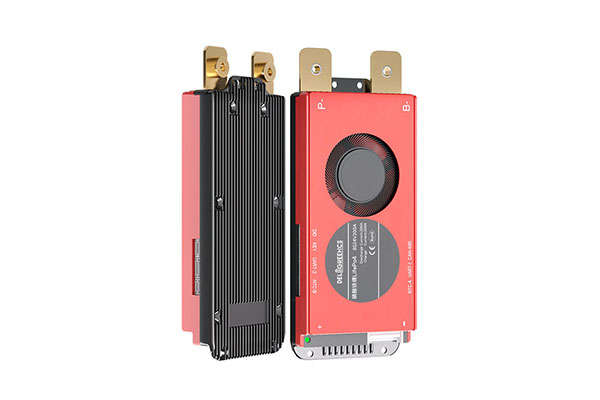
Lithium batteries are widely used in residential energy storage, commercial and industrial energy storage, electric vehicles, RVs, and portable power stations. In practical applications, multiple individual cells are usually connected in series or parallel to form a battery pack that meets the voltage and capacity requirements of different devices. However, even cells of the same model and production batch can develop differences in voltage, capacity, and internal resistance during long-term charging and discharging. If these differences continue to increase, they may affect the overall performance of the battery pack. Battery balancing is an important technology for addressing this issue, while the Battery Management System (BMS) is responsible for monitoring and controlling the process.
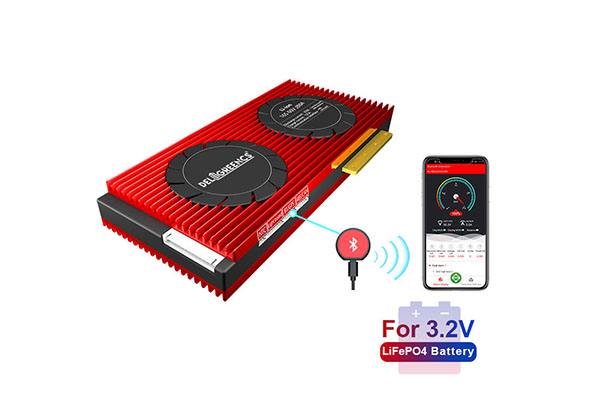
What Is Battery Balancing?
The Basic Concept of Battery Balancing
Battery balancing refers to the process of regulating the voltage or State of Charge (SOC) of individual cells to reduce inconsistencies and maintain relatively coordinated operating conditions within a battery pack.
In a lithium battery pack consisting of multiple cells, individual cells may have different remaining energy levels. If one cell has a significantly higher voltage than the others, it may reach its maximum voltage limit earlier during charging. Similarly, a lower-voltage cell may reach its minimum voltage limit earlier during discharging, preventing the entire battery pack from fully utilizing its available capacity.
Battery balancing helps address these differences and improves the overall usable capacity of the battery pack.
How Does Battery Balancing Work?
A BMS monitors the condition of each cell through voltage monitoring circuits. When the system detects differences between individual cells that exceed a preset range, it activates the corresponding balancing mechanism according to its control strategy.
The two most common battery balancing methods are active balancing and passive balancing. Active balancing transfers energy from cells with higher energy levels to those with lower energy levels. Passive balancing uses resistors to dissipate excess energy from higher-voltage cells as heat. These two methods differ in circuit design, energy efficiency, and cost, so the appropriate solution should be selected according to the actual requirements of the battery system.
Why Do Lithium Battery Packs Need Cell Balancing?
Reduce Inconsistencies Between Individual Cells
Differences in battery materials, manufacturing tolerances, and initial capacity can cause variations in cell performance. In addition, operating environments, temperature changes, and charging and discharging habits can affect the aging rate of individual cells.
Over time, some cells may develop greater voltage deviations than others. Battery balancing helps manage these differences and maintain relatively stable operating conditions throughout the battery pack.
Improve the Usable Capacity of the Battery Pack
The overall charging and discharging capability of a series-connected battery pack is generally limited by the cell that reaches its voltage limit first. If one cell reaches its maximum charging voltage, the BMS may need to stop charging even when other cells are not yet fully charged.
A similar situation can occur during discharging. Proper cell balancing helps reduce the likelihood of individual cells reaching their voltage limits prematurely, improving the capacity utilization of the entire battery pack.
Extend Battery Pack Service Life
If significant differences exist between individual cells over an extended period, some cells may repeatedly approach overcharge or overdischarge limits, increasing the risk of battery degradation.
Balancing helps reduce cell inconsistencies and lowers the likelihood of individual cells operating under unfavorable conditions for extended periods. However, battery lifespan is also affected by temperature, charging and discharging rates, cycle count, and cell quality. Balancing cannot replace proper battery protection.
Improve Battery System Operating Safety
Individual cells in a battery pack have specific voltage limits. If one cell continuously experiences abnormal voltage conditions without being detected, the operating risks of the battery system may increase.
A BMS equipped with voltage monitoring and balancing functions can identify voltage differences between cells and work together with overcharge, overdischarge, overcurrent, and temperature protection features to improve battery safety management.
Which Lithium Battery Applications Need Cell Balancing?
Residential Energy Storage Systems
Residential energy storage batteries usually undergo frequent charging and discharging cycles over extended periods. Proper balancing management helps maintain cell consistency and improve battery capacity utilization. These systems benefit from being paired with a BMS that provides comprehensive protection functions.
Commercial and Industrial Energy Storage Systems
Commercial and industrial energy storage systems typically consist of large numbers of individual cells and have relatively high battery capacities. Long-term operation places greater demands on cell consistency and system stability. Battery balancing helps manage differences in cell conditions and supports continuous energy storage system operation.
RV and Marine Battery Systems
RVs and marine applications commonly use LiFePO4 batteries to power lighting, equipment, and other electrical loads. Since these batteries may operate under varying temperatures and load conditions, balancing management helps maintain stable battery pack performance.
How to Choose a BMS with Battery Balancing Functions?
When selecting a BMS, it is important to consider more than just whether it uses active or passive balancing. Other key specifications include voltage monitoring accuracy, balancing current, overcharge protection, overdischarge protection, short-circuit protection, and temperature protection.
You should also confirm that the BMS is compatible with the battery chemistry, number of cells connected in series, and charging and discharging current.
For LiFePO4 battery packs, protection parameters should be configured according to the rated cell voltage, charging cutoff voltage, and discharging cutoff voltage. Using an incompatible battery management solution should be avoided.
DeliGreen specializes in LiFePO4 cells, battery packs, BMS products, and energy storage solutions, offering battery products and OEM/ODM services for different application requirements. Whether used in residential energy storage, commercial and industrial energy storage, RVs, or marine power systems, properly configured battery balancing functions and comprehensive BMS protection mechanisms help improve battery capacity utilization, operating stability, and overall safety.