UAVs used for inspection, surveying, agricultural operations, and park patrols need to take off and land frequently. Traditional manual battery replacement and decentralized charging methods can increase labor requirements and extend task turnaround times. Smart charging stations integrate automatic docking, charging control, environmental regulation, and status management into a unified system. For projects involving multiple UAVs operating from fixed locations over long periods, the charging station also needs to address equipment compatibility, outdoor protection, and subsequent maintenance.
What Problems Does a UAV Smart Charging Station Need to Solve
After a UAV automatically returns to the station, it needs to complete a series of operations including precise docking, safe connection, and controlled charging.
Achieve Precise UAV Docking and Automatic Charging
The landing position after a UAV returns directly affects whether the charging contacts can connect properly, making accurate positioning an important structural requirement.
- Use positioning, visual recognition, or auxiliary guidance structures to improve landing accuracy.
- Ensure reliable contact at the charging interface and reduce connection problems caused by positioning deviations.
- Start the charging process only after confirming that the UAV has completed docking.
- Automatically stop power output after charging is completed and enter standby mode.
A stable docking mechanism can reduce manual intervention and provide a foundation for continuous operations.
Adapt to High-Frequency UAV Operations
For UAVs that perform multiple missions in a single day, charging speed directly affects equipment turnaround. The charging station should configure charging modules according to battery capacity, mission intervals, and allowable charging power, while controlling the charging process according to actual battery conditions. In multi-UAV operations, charging resource allocation also needs to be considered to prevent waiting when multiple UAVs return to the station at the same time.
Core Design of a UAV Smart Charging Station
The charging station involves mechanical structures, electrical control, thermal management, and environmental protection, and these modules need to be coordinated according to actual deployment conditions.
Establish a Safe and Stable Charging System
UAV batteries have specific requirements for charging voltage, current, and temperature, so the charging module needs appropriate control and protection functions.
- Match the charging voltage and current range according to battery specifications.
- Monitor charging voltage, current, and battery temperature in real time.
- Configure overcurrent, overvoltage, short-circuit, and abnormal-temperature protection.
- Stop power output promptly when abnormal charging conditions are detected.
- Automatically terminate the charging process after charging is completed.
Proper electrical control can reduce the impact of abnormal charging on batteries and equipment.
Manage the Internal Temperature of the Charging Station
Charging stations deployed outdoors for long periods need to cope with seasonal temperature differences and environmental variations across different regions. Depending on actual power levels and environmental conditions, the station can use insulation, ventilation, heating, or cooling structures, together with temperature sensors to determine current charging conditions. In low-temperature environments, charging power can be limited or appropriate preheating can be applied. In high-temperature environments, internal heat needs to be dissipated promptly to prevent high-power charging when battery temperature conditions are unsuitable.
Combine Outdoor Protection with Charging Station Design
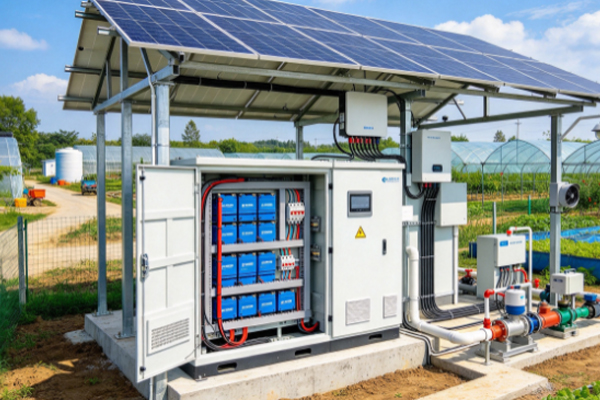
Rain, dust, moisture, and windblown sand can affect the long-term operation of outdoor equipment, so the protection structure needs to be coordinated with internal heat dissipation and electrical layout.
- Configure appropriate dustproof and waterproof capabilities according to the deployment environment.
- Reduce direct moisture exposure to charging contacts and electrical interfaces.
- Provide proper insulation and fixation for internal wiring and control modules.
- Reserve appropriate heat transfer and heat dissipation paths within the protective structure.
Considering environmental protection and internal thermal management together can improve the stability of charging stations during long-term outdoor deployment.
How Can UAV Smart Charging Stations Improve Maintenance Efficiency
Automatic charging is only one function of a smart charging station. Operating data and remote management capabilities are also important for subsequent maintenance.
Establish a UAV Battery Status Monitoring Mechanism
Key operating data can be collected during charging to provide a foundation for battery management and maintenance.
| Monitoring Item | Main Information | Management Function |
| Battery Voltage | Total voltage, individual cell status | Determine charging status |
| Charging Current | Real-time current, abnormal fluctuations | Control the charging process |
| Battery Temperature | Temperature and change trends | Evaluate charging conditions |
| SOC | Current remaining charge | Determine mission readiness |
| SOH | Battery health status | Evaluate maintenance requirements |
| Charging Records | Number of charges, duration, abnormal information | Establish usage records |
Continuous data recording helps management personnel understand changes in battery usage and provides data support for subsequent maintenance.
Support Remote Monitoring and Abnormality Alerts
Charging stations may be deployed at substations, industrial parks, agricultural areas, or mountainous locations where frequent manual access is inconvenient. Remote management can reduce the need for on-site inspections. The system can provide charging status, station operating conditions, ambient temperature, and abnormality alerts. When charging fails, temperature becomes abnormal, communication is interrupted, or equipment malfunctions occur, management personnel can receive timely notifications and arrange on-site handling based on the fault information.
How to Configure Smart Charging Stations for Different UAV Applications
Charging station configurations should be planned according to the number of UAVs, mission frequency, single-flight duration, and deployment conditions.
Inspection and Surveying UAVs
Inspection and surveying missions usually have relatively long operating durations, so the solution needs to balance charging efficiency and remote management capabilities.
- Determine appropriate charging power according to the mission cycle of each UAV.
- Record each charging session to continuously monitor battery usage.
- Configure reliable communication and environmental monitoring functions for long-term outdoor deployment.
- Plan charging station locations according to mission areas to reduce UAV return distances.
Proper station layout can shorten mission intervals and improve continuous equipment utilization.
Agricultural and High-Frequency Operation UAVs
Agricultural UAVs often perform multiple missions in a single day, placing higher requirements on battery turnaround and charging equipment durability. The solution should determine charging capacity according to battery capacity, individual operating time, and daily mission volume, while also considering charging scheduling when multiple UAVs return simultaneously. During high-temperature seasons, particular attention should be paid to battery temperature, station heat dissipation, and charging power control to reduce the impact of environmental conditions on operational planning.
Park Patrol and Emergency Operation UAVs
Park patrol and emergency missions place greater emphasis on equipment readiness and rapid response. The charging station can work with the mission scheduling system to manage UAV status while recording battery level, health status, and equipment abnormalities. When an emergency mission occurs, an available UAV can be selected according to its current status, reducing manual confirmation and preparation time.
The construction of a UAV smart charging station should start from the mission model and determine equipment quantity, docking structure, charging capacity, environmental control, and remote management functions. Before implementation, configuration should be determined according to operating conditions, with actual operation used to verify core capabilities. For long-term deployment projects, comprehensive data records and maintenance mechanisms can also help enterprises reduce manual management pressure and better integrate UAV battery charging into daily operations.