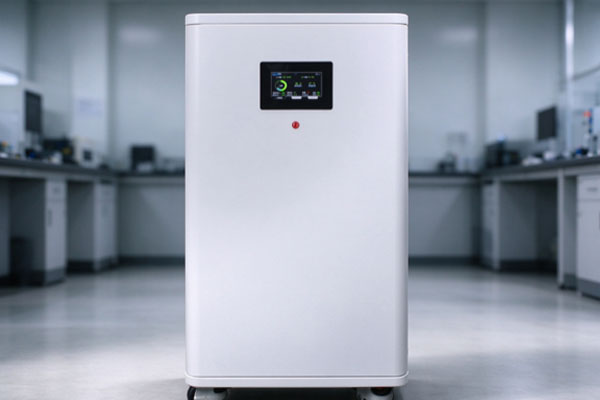
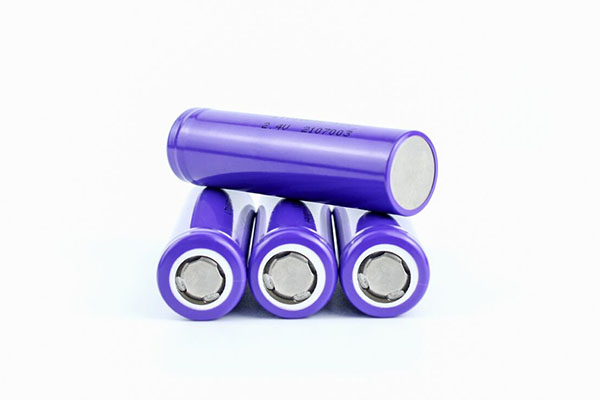
During the lunch rush, the biggest problem is not necessarily a slow delivery robot. It is a robot that has just delivered an order but no longer has enough battery power for the next trip. Staff are busy serving food, customers keep coming and going, and if robots frequently return to charging stations or stop working halfway through a task, the labor savings quickly disappear. For restaurant robot manufacturers and foodservice equipment buyers, battery selection involves more than checking the rated capacity. Daily operating schedules, payload weight, charging habits, and working conditions all matter. Choosing the right robot battery helps equipment keep up with the demands of a busy restaurant.
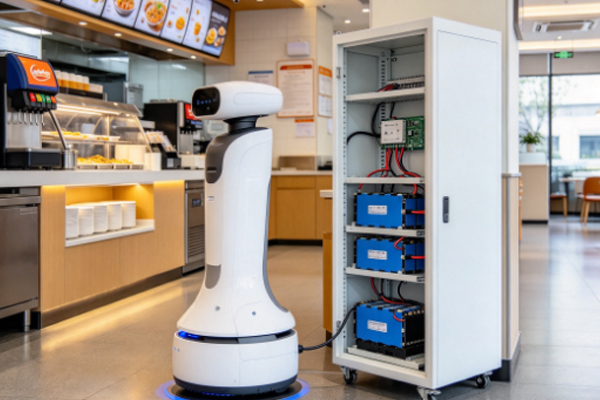
How Can You Improve Restaurant Robot Battery Runtime?
Delivery robots often travel repeatedly between serving counters, dining tables, and collection areas. Every start, turn, obstacle avoidance maneuver, and stop consumes energy. When trays are fully loaded, the drive system may also face a heavier workload. If a robot frequently reports low battery during peak hours, it is worth checking its actual power consumption instead of simply assuming that a larger battery is always the best solution.
Why Does a Delivery Robot’s Actual Runtime Fall Short of Expectations?
A battery’s advertised runtime is usually an estimate. Actual performance depends on task frequency, payload, floor conditions, and standby power consumption. Even in a relatively small restaurant, frequent starts and stops can use more energy than steady driving.
- Frequent delivery routes: Repeated trips between serving counters and tables, along with constant acceleration, deceleration, and turning, can increase energy consumption beyond what simple driving tests suggest.
- Changing payload weight: When a robot carries several meals at once, it must handle a heavier load. The battery must provide enough power to meet the drive system’s requirements.
- Continuous standby power consumption: Touchscreens, navigation sensors, voice modules, and wireless communication devices may continue using power even when the robot is temporarily stationary.
If a robot’s runtime is noticeably shorter than expected, record its battery level throughout a full operating shift before making changes. This helps determine whether the real issue is battery capacity, charging schedules, or the power consumption of onboard equipment. It can be more effective than immediately replacing the battery with a larger one.
How Much Battery Capacity Does a Restaurant Robot Need Per Day?
To estimate battery requirements, start with the robot’s average power consumption during actual operation and multiply it by the planned runtime. Suppose a robot consumes an average of 100 W and needs to operate for eight hours per day. If overall system efficiency is estimated at 90%, the preliminary energy requirement is approximately 889 Wh. This figure is only an initial estimate; final battery selection should also account for peak motor power, usable energy, and reserve capacity.
If there is a long break between lunch and dinner, the restaurant may be able to recharge the robot during that period instead of relying on one oversized battery to cover the entire business day. For restaurants that operate continuously, automatic recharging, spare batteries, or short charging sessions may be more suitable for the actual workflow.
Which Batteries Are Suitable for Restaurant Robots? What Are the Benefits of LiFePO4 Batteries?
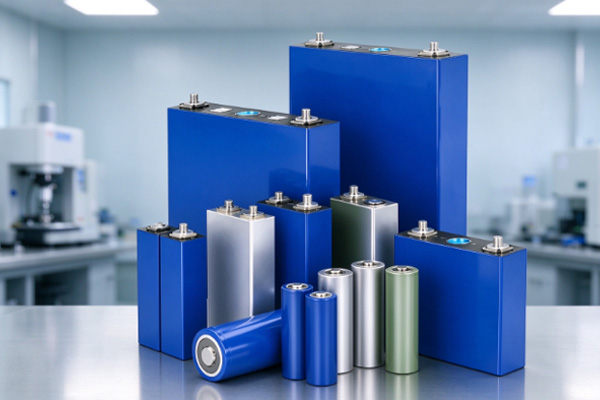
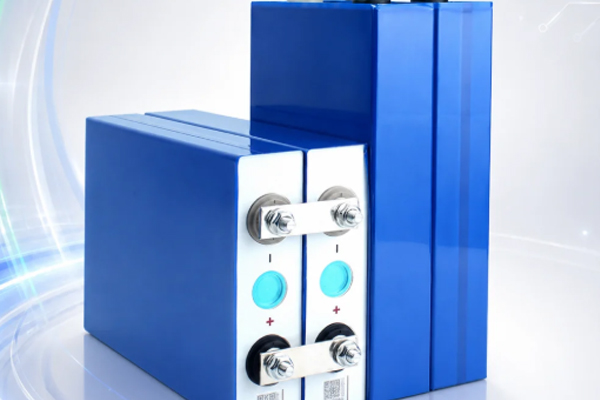
Restaurant robots may go through repeated charge and discharge cycles every day, so battery selection should consider long-term operating costs rather than just the initial purchase price. Lithium iron phosphate (LiFePO4) batteries offer good thermal stability and cycle performance, making them a common option for mobile robots and energy storage applications. However, suitability for a particular restaurant robot still depends on its voltage, capacity, weight requirements, and available battery compartment space.
How Do You Match Batteries to Different Types of Restaurant Robots?
Not every restaurant robot delivers food. Some greet and guide customers, while others collect dishes or transport items from the kitchen. Their workloads and standby times can differ considerably, so battery configurations should reflect their actual duties.
| Robot Type | Typical Operating Conditions | Key Battery Requirements |
| Food delivery robot | Frequent trips between tables and serving counters | Runtime and continuous discharge capability |
| Dish collection robot | Carries dishes with varying payloads | Peak current and capacity reserve |
| Reception robot | Combines movement with screen interaction | Standby power consumption and stable power supply |
| Kitchen delivery robot | Transports items over potentially longer routes | Battery capacity and drive power |
| Multifunctional service robot | Uses movement, voice, screens, and other functions simultaneously | Overall power consumption and BMS communication |
Which Battery Specifications Should You Check Before Buying?
A battery datasheet may contain many figures, but the most important details for a restaurant robot are voltage, energy capacity, discharge capability, and physical dimensions. These specifications affect both operational performance and whether the battery can fit inside the robot.
- Rated voltage: The battery voltage must be compatible with the robot’s motor controller and overall power system. A matching connector alone does not guarantee that a replacement battery will work correctly.
- Capacity and energy: Ampere-hours (Ah) indicate battery capacity, while watt-hours (Wh) indicate stored energy. When comparing batteries with different voltages, Wh provides a more useful basis for comparing their energy capacity.
- Continuous and peak discharge current: The battery must support normal driving and brief periods of high load without triggering protection during startup or when carrying a full payload.
- Dimensions and weight: The battery must fit the existing compartment without negatively affecting the robot’s center of gravity, payload capacity, or maintenance access.
Once these specifications are confirmed, comparing battery prices and expected service life becomes much more meaningful. This makes it easier to identify a configuration that suits the equipment and its operating requirements.
How Can Restaurant Robot Batteries Handle Wet Floors and Frequent Charging?
Restaurant environments differ from factory settings. Robots may pass kitchen entrances, beverage stations, and cleaning areas where water occasionally collects on the floor. They may also start, stop, and recharge several times a day. Reliable battery protection is important, but the battery compartment, connectors, and wiring also need appropriate design.
What Safety Protections Do Restaurant Robot Batteries Need?
A battery management system (BMS) monitors battery operating conditions and provides protection when abnormal situations occur. The specific protection settings should match the battery pack specifications and robot load. Simply having a BMS does not guarantee that the system is properly configured.
- Overcharge and over-discharge protection: Keeps cell voltage within the specified range and reduces the impact of improper charging and discharging on battery life.
- Overcurrent and short-circuit protection: Responds to abnormal current conditions in the drive load or electrical wiring according to the designed protection thresholds.
- Temperature monitoring: Monitors battery temperature during charging and discharging to prevent continued operation outside the permitted temperature range.
- State-of-charge feedback: Sends battery level and fault information to the robot controller, helping the equipment determine when to return for charging or pause its tasks.
If the robot needs to display its remaining battery level or automatically return to a charging station, confirm that the BMS supports CAN, RS485, or the communication protocol specified by the equipment manufacturer. If the protocol is incompatible, the battery may still supply power normally, but the battery display and automatic charging functions may not work as expected.
Can Restaurant Robot Batteries Be Charged Frequently?
Frequent charging depends on the battery specifications, charger parameters, and charging strategy recommended by the manufacturer. If a restaurant plans to recharge robots between lunch and dinner, it should confirm that the battery supports the intended charging current and estimate how much energy can be restored during the available time.
For robots with automatic docking, also check the position of the charging contacts, docking accuracy, and whether tables or other equipment could obstruct the charging area. Since restaurant traffic can be busy, charging stations should be positioned away from main walkways where possible. The battery and charger must also have compatible electrical specifications.
How Can You Customize Restaurant Robot Batteries? What Should Manufacturers Prepare Before Purchasing?
If you manufacture restaurant robots or are developing a new service robot, a standard battery may not meet all your design requirements. Battery compartment dimensions, connector positions, charging methods, and controller communication can all affect final assembly. Preparing these details early can reduce sample revisions and make future mass production easier.
What Information Is Needed to Customize Restaurant Robot Batteries?
You do not need an extensive set of technical documents at the beginning. The following information is usually enough for a battery supplier to conduct an initial assessment.
| Customization Details | Information to Provide | Purpose |
| Electrical specifications | Rated voltage, target capacity, maximum current | Establish the basic battery specifications |
| Structural requirements | Battery compartment dimensions, mounting method, connector position | Design the battery pack’s physical configuration |
| Charging requirements | Charger specifications, charging time, recharging method | Confirm charging compatibility |
| Communication requirements | CAN, RS485, or a specified protocol | Ensure compatibility with the robot controller |
| Operating conditions | Daily runtime, payload, ambient temperature | Evaluate runtime and protection requirements |
What Should You Test When Evaluating Restaurant Robot Battery Samples?
Before placing a bulk order, install a sample battery in the actual robot and test it under realistic conditions. A datasheet alone cannot tell you everything. Running the robot along its normal delivery routes is a practical way to determine whether the battery meets daily operating requirements.
- Fit and assembly testing: Check that battery dimensions, mounting structure, connector positions, and cable lengths match the robot’s design.
- Real-world runtime testing: Simulate delivery routes during busy restaurant hours and record battery consumption under different payload conditions.
- Charging and communication testing: Verify that the charger, automatic docking function, and BMS data feedback work properly.
After the sample passes testing, confirm the voltage, capacity, connectors, protection settings, and quality inspection requirements for mass production. This helps reduce the risk of inconsistencies between battery batches and makes future maintenance and replacement easier.
For restaurant equipment manufacturers looking to improve service efficiency and reduce robot downtime, the right robot battery must meet runtime, power output, charging, and structural requirements. DELIGREEN provides LiFePO4 batteries, battery packs, DIY battery boxes, BMS accessories, and scalable energy storage solutions, with customization support based on restaurant robot voltage, capacity, dimensions, discharge requirements, and communication needs. If you are developing a new delivery robot or looking for a compatible battery for an existing model, contact DELIGREEN with your equipment specifications and operating requirements. Our team can help assess a suitable battery configuration for your application.