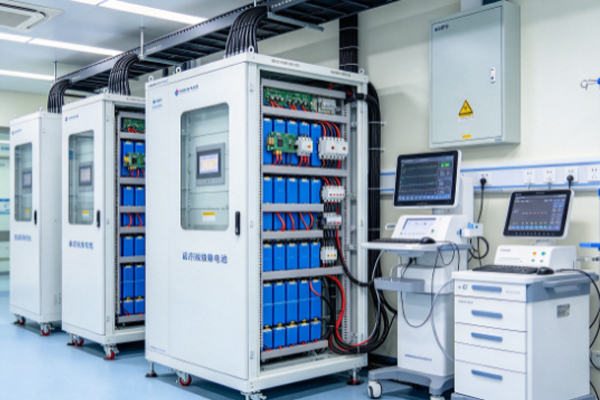
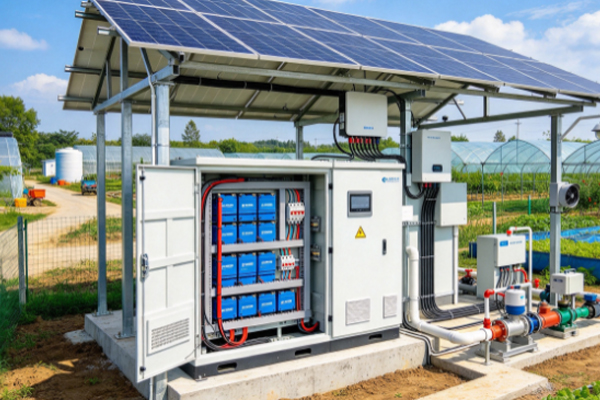
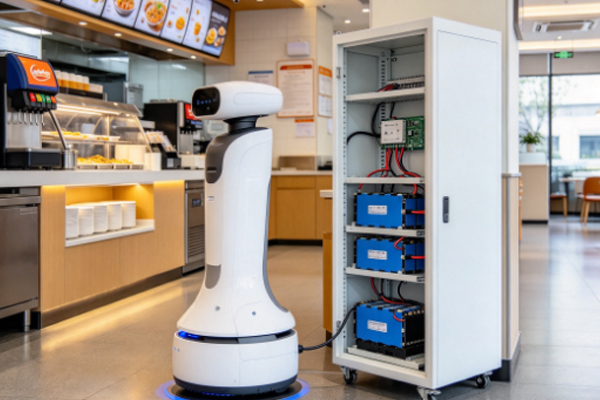
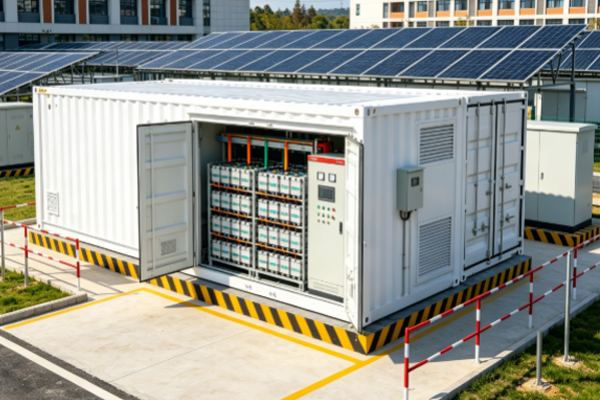
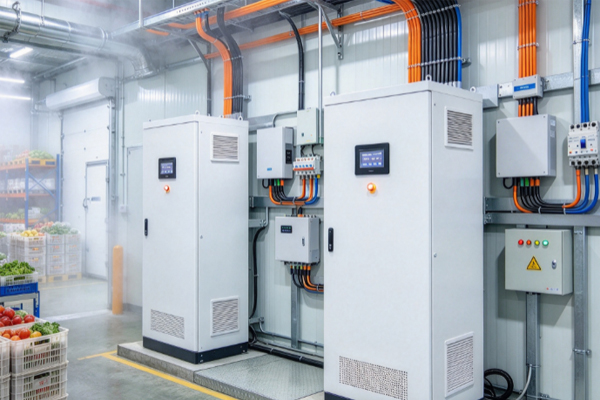
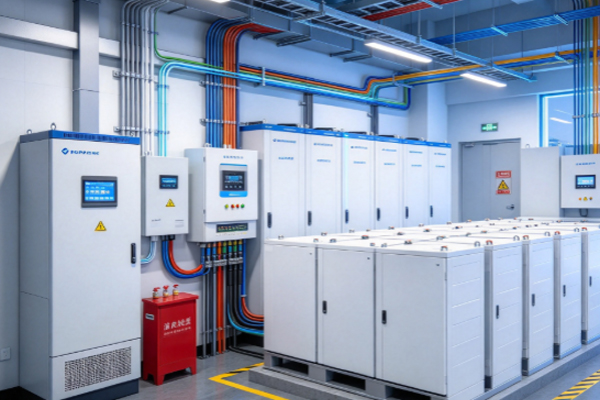
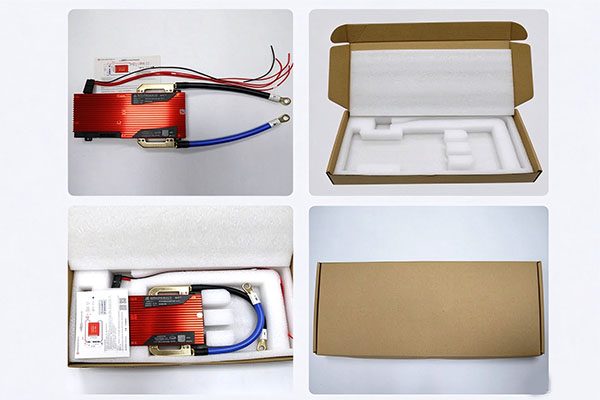
Buying an energy storage cabinet is no longer just about having power available during an outage. During peak solar production in the daytime, a hospital may not be able to use all the electricity generated. At night, lighting, air conditioning, refrigeration, and medical equipment continue consuming power, while using expensive grid electricity throughout the day can also increase operating costs. Large hospitals, community clinics, rehabilitation centers, and medical laboratories all have very different load profiles, so their storage cabinets should not follow the same template. For hospital battery storage, it is worth calculating when electricity is used, which loads require higher power, how much surplus solar energy is available, and how often the battery needs to charge and discharge each day.
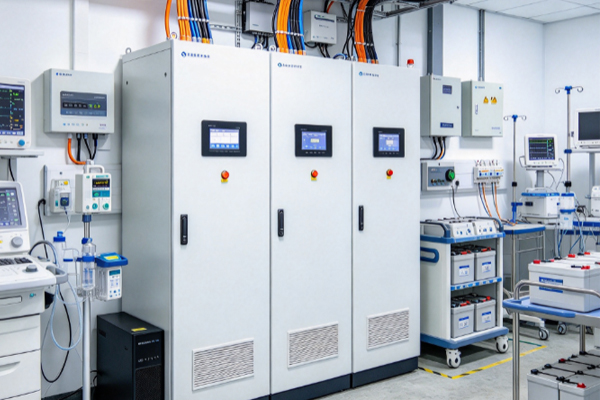
How Should Medical Facilities Choose Battery Energy Storage? Start With the Daily Load Profile
Even within the same medical facility, electricity consumption can change significantly between morning, afternoon, evening, and early morning. Large hospitals operate equipment around the clock, clinics may have concentrated power demand during business hours, while rehabilitation facilities can experience obvious daytime peaks. Looking at these daily changes before deciding on storage capacity is usually more useful than simply asking how many kWh are needed.
How Do Energy Storage Needs Differ Between Medical Facilities?
An energy storage cabinet does not necessarily need to supply the entire building. In an actual project, it can be more practical to identify which loads are best supported by the battery and then determine the required storage capacity.
| Medical Facility | Typical Power Profile | Main Use of Hospital Battery Storage | Key Storage Requirements |
| General hospital | 24/7 operation, fluctuating loads | Peak shaving, solar energy storage, backup power | Large energy storage cabinet, EMS |
| Specialty hospital | Concentrated medical equipment loads | Daily energy storage, backup power | Output power, operating stability |
| Community clinic | Higher demand during business hours | Reduce grid consumption, short-term backup | Compact modular battery |
| Rehabilitation center | Higher daytime equipment and HVAC loads | Time-of-use energy management | Cycling capability |
| Elderly care facility | Continuous monitoring, lighting, and care equipment | Long-duration stable power | Battery capacity, backup runtime |
| Emergency medical center | Monitoring, communications, lighting, refrigeration | Fast switching, reliable output | Transfer speed, output stability |
| Medical laboratory | Continuous testing and refrigeration equipment | Stable electricity, backup power | Output stability, temperature management |
This distinction matters. A small clinic does not necessarily need the same storage scale as a large hospital, while a large hospital cannot expect a small storage cabinet to handle every load. Recording the facility’s 24-hour load profile before procurement can make many configuration decisions much clearer.
How Is a Hospital Energy Storage Cabinet Used During the Day?
If hospital battery storage is only used during power outages, the equipment may have a relatively low utilization rate. Many projects now allow batteries to participate in daily energy management, with different tasks assigned at different times.
- Charge during low-cost periods: Store electricity when grid prices are lower and discharge it during peak-price periods to reduce expensive electricity purchases.
- Discharge during high-load periods: When air conditioning, lighting, and medical equipment are operating heavily, the battery can share part of the load and reduce instantaneous demand from the grid.
- Store surplus solar energy: When daytime solar generation exceeds the facility’s current demand, the excess electricity can be stored for later use.
- Reserve power for critical loads: When the grid experiences a failure, designated important loads can be switched to battery power.
Used this way, a hospital energy storage cabinet provides value during normal operation instead of sitting idle until the next outage. This approach can be particularly useful for medical facilities with significant differences between electricity prices and facilities that already have solar installations.
How Much Electricity Can Hospital Battery Storage Save? Don’t Look Only at Battery Capacity
When buyers receive energy storage quotations, it is common to compare the kWh rating and price first. What actually affects project performance is how much energy the battery can move each day and whether that energy can be released at the right time. Battery capacity is only one basic specification. Charging and discharging power, daily cycling, and the facility’s real load profile all influence how effectively the system can operate.
How Do You Calculate Battery Storage Capacity for a Hospital?
Start with the loads that the hospital actually wants the battery to support:
Required Storage Capacity ≈ Battery-Supported Load Power × Operating Time ÷ System Efficiency
If a hospital wants its storage system to support a 10kW load for five hours at night, the theoretical energy requirement is 50kWh. The actual project should still leave some reserve and account for depth of discharge, conversion losses, and changes in load.
| Storage Scale | Typical Medical Application | Suitable Tasks | Key Procurement Considerations |
| Small-scale storage | Clinics, community medical centers | Lighting, communications, monitoring, basic equipment | Capacity, dimensions |
| Medium-scale storage | Rehabilitation centers, care facilities | Peak shaving, solar storage, backup power | Capacity, power, cycling |
| Large-scale storage | General hospitals | Peak management, solar storage, critical loads | System power, EMS, expansion |
| Modular storage | Medical campuses | Gradual capacity expansion | Module compatibility, communication, parallel operation |
Actual operation should also account for usable battery capacity. Rated capacity does not mean the entire amount can be withdrawn during every cycle, as energy storage systems normally operate within a defined SOC range.
Why Is Storage Cabinet Power Just as Important?
Suppose the battery has sufficient capacity, but the inverter is undersized. When high-power hospital equipment operates at the same time, the battery may still be unable to provide enough instantaneous output. Air-conditioning units, pumps, and other motor-driven equipment can require significantly more power for a short period during startup.
When selecting a system, check these specifications together:
- Rated output power: Confirm that the storage system can continuously support the loads planned for battery operation.
- Peak output capability: If motors or similar equipment are connected, check the power required during startup.
- Inverter compatibility: The battery, inverter, and power distribution equipment need compatible power ratings rather than being evaluated separately.
- Load allocation: Separating high-power non-critical equipment from essential loads can prevent unnecessary increases in battery capacity and system power.
This point is easy to underestimate. Capacity determines how long the system can operate, while power determines whether it can actually run the connected equipment.
How Should Hospital Energy Storage Work With Solar Power?
After a hospital installs solar panels, one common issue is that electricity generation and consumption do not happen at the same time. Solar production may be high around midday while some parts of the facility are using relatively little electricity. In the evening, solar output falls even though lighting, air conditioning, and other equipment continue operating. Hospital battery storage can bridge this time gap.
Why Do Medical Facilities Need Solar + Energy Storage?
Solar power handles electricity generation, while batteries determine when that electricity can be used. When the two systems work together, part of the solar energy generated during the day can be saved instead of being consumed immediately.
- Increase solar self-consumption: Surplus solar electricity can be stored instead of being left unused when hospital demand is relatively low.
- Reduce nighttime grid purchases: Energy stored during the day can support lighting, air conditioning, and other loads at night.
- Reduce peak demand: During periods of high hospital electricity consumption, the storage cabinet can provide part of the required power and reduce grid-side demand.
- Create more flexible energy scheduling: The hospital can adjust battery charging and discharging based on solar generation, electricity prices, and actual load conditions.
Solar capacity and battery capacity should also be planned together. A large solar installation without sufficient storage may still have surplus midday electricity, while an oversized battery paired with insufficient solar generation may remain undercharged for extended periods.
Does a Hospital Energy Storage System Need an EMS?
A small clinic may use a relatively simple energy storage setup, while a large hospital with numerous loads and rapidly changing demand can benefit more from an energy management system. EMS can help coordinate solar generation, battery storage, grid electricity, and facility loads, allowing charging and discharging schedules to be managed automatically instead of manually.
If the hospital already has an energy management platform, communication compatibility between the BMS, inverter, and EMS should be confirmed during procurement. CAN, RS485, and similar interfaces are commonly used for equipment communication, while the specific protocol and communication parameters should be confirmed during project design.
How Should Different Medical Facilities Purchase Energy Storage Cabinets?
Medical energy storage projects often require more than a standard battery cabinet. Different facilities have different loads, installation spaces, and backup requirements, while the system may also need to connect with solar power and existing electrical equipment. Overseas projects can involve additional requirements for electrical equipment, installation methods, technical documents, and certifications. A manufacturer’s customization and project support capabilities can have a direct impact on implementation.
What Information Should Be Prepared Before Purchasing a Medical Energy Storage Cabinet?
There is no need to prepare an extremely complicated technical document at the beginning, but the following information can make communication with a battery supplier much more efficient:
- 24-hour load data: If available, provide one day or one week’s electricity consumption curve, which can be more useful than monthly electricity bills alone.
- Critical equipment list: List the power requirements of medical equipment, air conditioning, pumps, refrigeration systems, lighting, and communication equipment.
- Existing solar system information: Provide solar panel capacity, inverter model, and current solar generation data.
- Installation dimensions: State whether the storage cabinet will be installed indoors or outdoors and provide the available space and ambient temperature.
- Primary application: Clarify whether the system will mainly be used for peak shaving, solar energy storage, backup power, or a combination of these functions.
- Future expansion plans: If the hospital plans to add floors, equipment, or solar capacity, leave sufficient room for future energy storage expansion.
With these details prepared, the manufacturer can develop a project-specific configuration rather than simply sending a standard battery quotation.
What Can Be Customized in a Medical Energy Storage Battery?
Medical facilities can have very different requirements for energy storage cabinets. For a space-limited clinic, cabinet dimensions may be more important than capacity, while a large hospital may place greater emphasis on capacity expansion, communication, and parallel operation.
- Battery capacity can be configured for the project: The storage scale can be designed around the hospital’s load profile and target operating time.
- Cabinet structure can be adjusted: Indoor, outdoor, and equipment-room installations can require different cabinet dimensions, protection levels, and cooling designs.
- BMS functions can be matched to the system: Protection settings, communication interfaces, and monitoring functions can be configured for project requirements.
- Battery modules can support future expansion: Additional battery modules can increase storage capacity when the hospital adds equipment or expands its facilities.
- Connection methods can be confirmed in advance: Battery terminals, communication ports, and cable lengths should match the existing equipment and installation conditions.
For customized energy storage cabinets, it is advisable to complete a sample or small-batch test before moving into mass procurement. Practical testing can check installation dimensions, communication, charging and discharging performance, temperature changes, and compatibility with the existing inverter.
For hospitals, clinics, rehabilitation centers, care facilities, and medical laboratories, there is no single storage configuration that fits every project. Some facilities need to reduce peak electricity purchases, others want to make better use of solar generation, while others need an energy storage system that can expand over time. Hospital battery storage can be designed around actual loads and integrated with LiFePO4 batteries, energy storage cabinets, BMS, inverters, and energy management systems. DELIGREEN provides LiFePO4 batteries, battery packs, DIY battery boxes, BMS accessories, and scalable energy storage products that can be customized by capacity, power, cabinet structure, communication requirements, and application scenario, offering flexible battery storage solutions for medical facilities and healthcare energy projects worldwide.