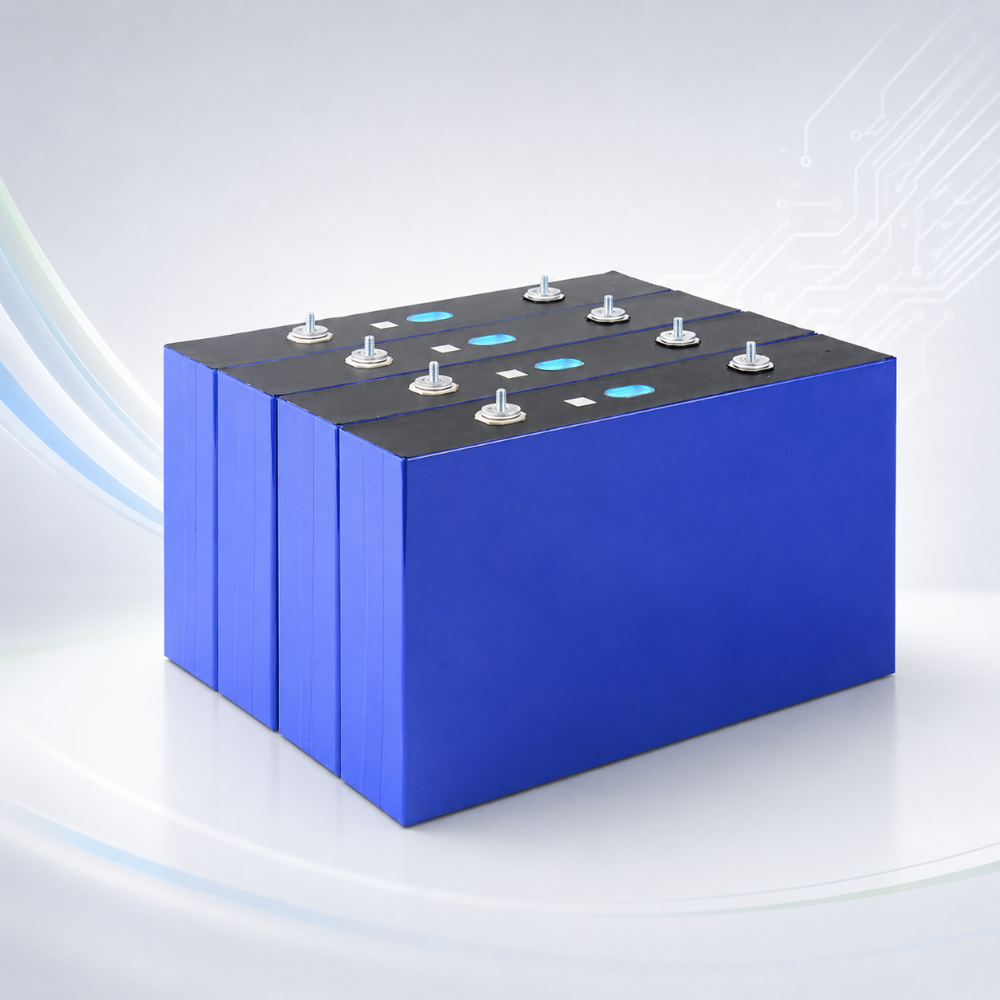
In new energy vehicles, energy storage equipment, industrial vehicles, and high-power devices, the structural form of a battery pack affects installation space, energy configuration, heat dissipation, and maintenance solutions. Prismatic battery packs use a regular hard-shell structure, allowing cells to be arranged compactly and achieving a high level of system integration within limited space. However, a compact layout does not mean simply compressing the cells. Changes in dimensions during cycling, mechanical stress, thermal management, and safety protection also need to be considered. For equipment manufacturers, battery procurement teams, and project R&D teams, understanding these characteristics helps them plan more suitable power systems.
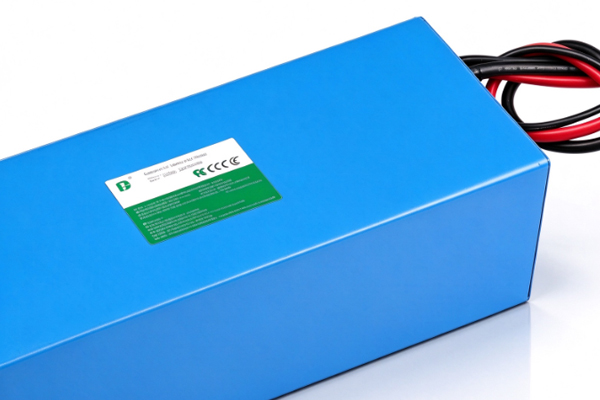
Prismatic Battery Packs Offer High Space Utilization
Prismatic battery packs have a regular shape and a concentrated cell arrangement, which can reduce wasted space during internal equipment layout while still requiring reasonable structural clearance for long-term operation.
More Compact Cell Arrangement
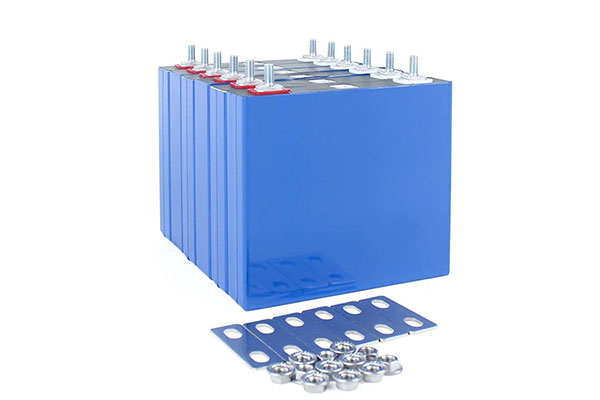
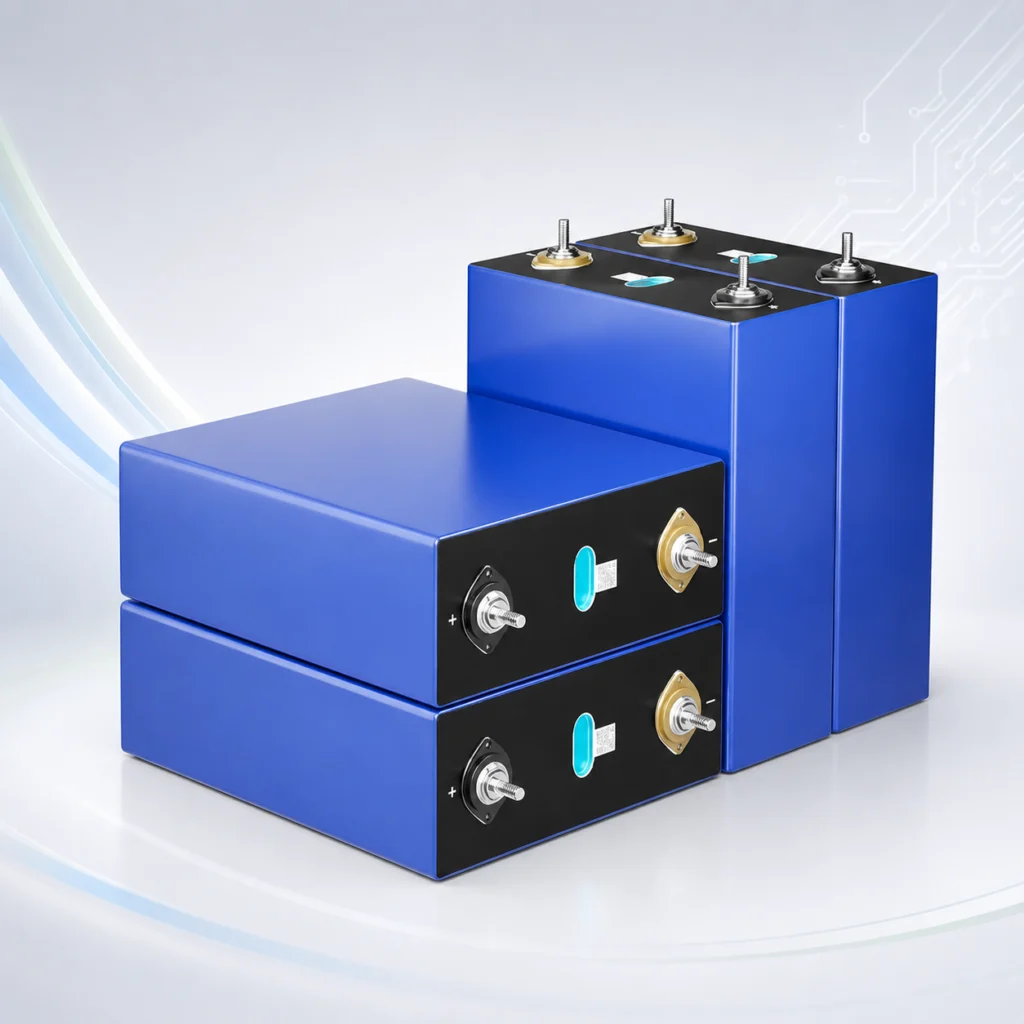
Prismatic cells have a regular rectangular shape, making them suitable for organized arrangements in a consistent direction.
- Cells can be arranged in a consistent direction to improve space utilization within the installation area.
- Module layouts are more orderly, making it easier to plan according to the internal dimensions of the equipment.
- Within the same installation area, reasonable structural design can accommodate more usable capacity.
Compact arrangement helps improve space utilization, but structural design still needs to reserve appropriate clearance based on cell expansion characteristics.
More Suitable for Large Equipment Integration
Large equipment typically requires high capacity while also needing to control the installation space occupied by the battery system. Prismatic structures offer good layout adaptability in these projects.
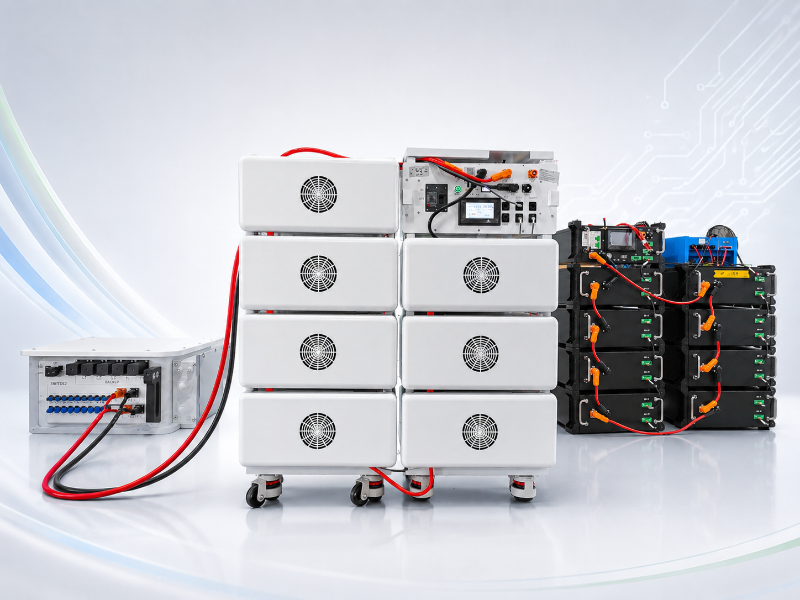
- Modular arrangement: Battery modules can be positioned according to the space available at the bottom, sides, or inside the equipment compartment.
- Series-parallel configuration: The number of cells and connection methods can be adjusted according to system voltage and capacity requirements.
- Space adaptation: The regular shape makes it easier to coordinate with brackets, mounting beams, and other structural components.
The orderly structure provides greater design flexibility for integrating power systems into large equipment.
Cycling Expansion Must Be Included in Structural Design
Prismatic hard-shell cells may experience thickness changes during charging and discharging, temperature fluctuations, and aging. The design should reserve expansion space, use cushioning materials such as foam to absorb deformation, control preload through end plates and tie bands to avoid excessive compression, and evaluate long-term mechanical stress based on expansion data. Properly controlling the relationship between expansion and restraint helps reduce the impact of mechanical stress on cell service life.
Prismatic Battery Packs Facilitate Systematic Structural Design
A prismatic battery pack is not simply a stack of cells. It requires a complete structural system covering fixation, mechanical stress, connections, insulation, and thermal management.
The Housing Provides Mechanical Protection, but Large-Surface Loads Must Be Controlled
Prismatic cells are typically enclosed in aluminum or steel casings. The casing provides a certain level of mechanical support, but large casing surfaces can be relatively sensitive to uneven lateral loads and localized concentrated stress.
- End-plate fixation: Use end plates and other structures to control the overall mechanical stress on the cells.
- Large-surface protection: Avoid applying localized concentrated pressure to the broad surfaces of the cells.
- Cushioning support: Configure cushioning or thermally conductive materials according to structural requirements.
- Stress control: Design appropriate preload and restraint methods based on cell expansion characteristics.
Proper mechanical stress design can balance structural fixation with dimensional changes that occur during long-term cell cycling.
More Concentrated Connection Structure
Prismatic battery packs typically use busbars, connectors, and wiring harnesses to complete electrical connections between multiple cells. The layout of these connection areas affects assembly and maintenance.
- Current transmission: Control connection paths and contact resistance to reduce unnecessary energy losses.
- Wiring layout: Arrange sampling wires and power cables properly to reduce crossing and interference.
- Testing interfaces: Facilitate the placement of voltage and temperature sampling points.
- Maintenance space: Reserve sufficient operating space for inspection and replacement of related components.
A clear connection layout can improve assembly efficiency while making subsequent testing and maintenance more convenient.
Structural Design Needs to Balance Insulation and Thermal Management
High-capacity battery packs contain numerous conductive components and heat sources, so structural design needs to consider both electrical isolation and heat dissipation. Appropriate insulation can be installed between cells, busbars, and the housing, thermal paths can be planned according to heat source locations, insulation protection can be strengthened around connection areas and high-potential regions, and thermal management can be used to reduce temperature differences. Coordinated design of structure, insulation, and thermal management helps improve the long-term operational stability of prismatic battery packs.
Prismatic Battery Packs Place Higher Requirements on Safety and Thermal Management
High system integration can reduce wasted space, but as the distance between cells decreases, heat transfer, abnormal-condition monitoring, and safety control also need to become more systematic.
Thermal Management Needs to Focus on Temperature Uniformity
Cells generate heat during charging and discharging, and excessive local temperature differences may affect battery pack operating conditions.
- Heat dissipation paths: Design appropriate heat transfer paths according to battery power and capacity.
- Temperature monitoring: Install temperature sensors at key locations to identify abnormal temperature rises promptly.
- Cooling structure: High-power systems can use liquid cooling or other thermal management methods to control temperature.
- Localized hotspots: Pay particular attention to connection areas and locations where heat tends to accumulate.
Maintaining a reasonable temperature distribution helps the battery pack maintain stable operating conditions.
The BMS Needs to Monitor Multiple Parameters
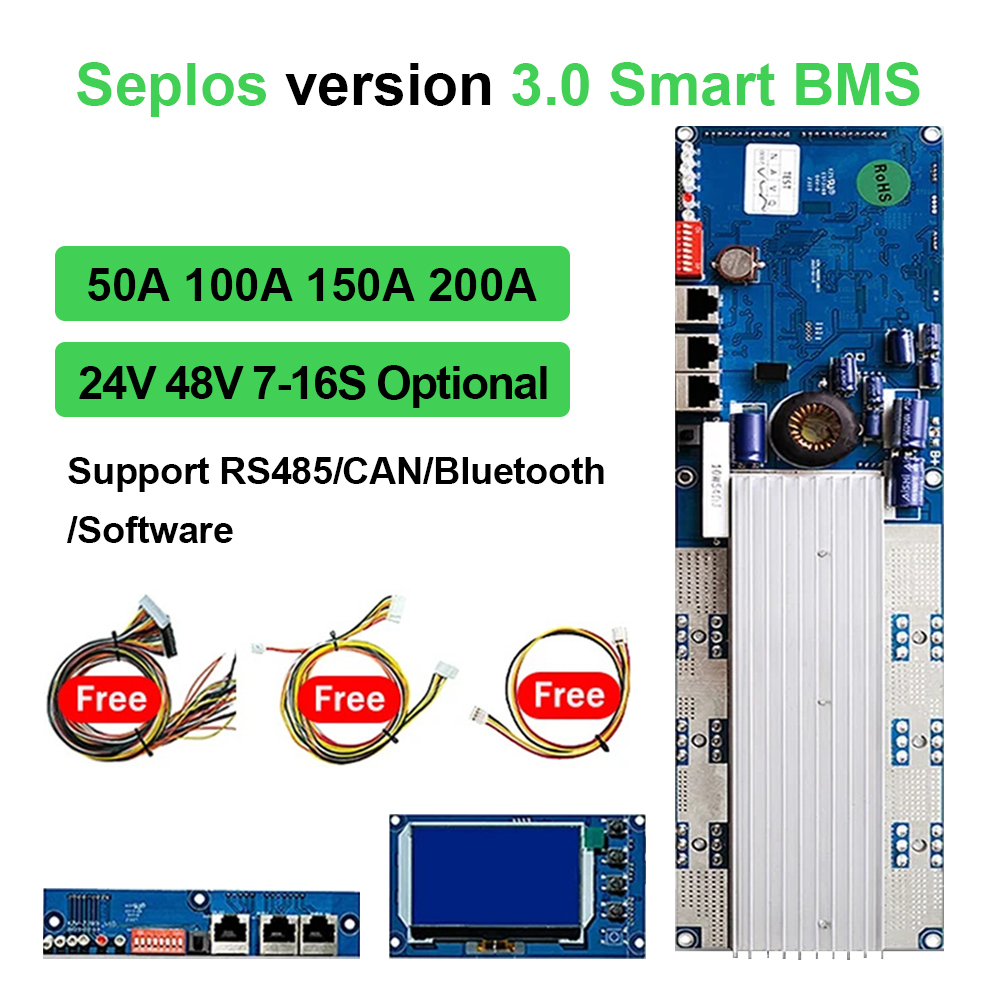
After multiple prismatic cells are combined, differences in cell conditions may develop, requiring the BMS to continuously collect key operating data.
- Voltage monitoring: Monitor individual cell voltage and voltage differences between cells.
- Current monitoring: Track current changes during charging and discharging.
- Temperature monitoring: Identify localized abnormal temperature increases.
- State estimation: Evaluate battery operating conditions based on SOC, SOH, and other information.
- Protection control: Handle overcharge, over-discharge, overcurrent, abnormal temperature, and other conditions according to system strategies.
A comprehensive BMS can improve battery pack status visibility and safety management capabilities.
Prismatic Battery Packs Are Suitable for Various Highly Integrated Applications
Prismatic structures offer strong adaptability in terms of space utilization, module design, and system integration, but specific solutions still need to be customized according to equipment operating conditions.
New Energy Vehicle Applications
New energy vehicles have high requirements for battery capacity, spatial layout, and system integration. Prismatic battery packs can be structurally planned around the vehicle platform.
- Chassis layout: Arrange battery modules according to the available space beneath the vehicle.
- Capacity configuration: Meet vehicle energy requirements through cell quantity and series-parallel configurations.
- Expansion control: Design end plates, tie bands, and cushioning structures according to dimensional changes during cycling.
- Thermal management: Configure appropriate cooling structures based on vehicle operating power.
Comprehensive structural design can meet the vehicle power system’s requirements for space, performance, and safety.
Energy Storage and Industrial Equipment Applications
Energy storage equipment and industrial systems typically require long-term operation and have ongoing requirements for capacity configuration, maintenance efficiency, and safety management. Battery modules can be arranged according to cabinet or equipment space, while series-parallel configurations can be used to adjust voltage and capacity. Cell fixation, insulation, and expansion restraint can also be strengthened, with the BMS and thermal management system monitoring long-term operating conditions. Proper configuration provides greater flexibility for power system design in high-capacity equipment.
Customized Projects Require Comprehensive Parameter Matching
Different devices vary in installation space, power, weight, communication, and environmental conditions, so prismatic battery packs need to be designed around the overall project parameters.
- Electrical parameters: Define the voltage platform, capacity, continuous current, and peak current.
- Structural parameters: Confirm installation dimensions, fixation methods, and maintenance space.
- Cell characteristics: Pay attention to key data such as expansion, temperature rise, and cycling performance.
- Management system: Define BMS functions, communication interfaces, and protection strategies.
- Sample validation: Test charging and discharging, temperature rise, structural stress, and safety performance together with the actual equipment.
A complete parameter confirmation and validation process can reduce the pressure associated with later modifications and system adaptation.
The characteristics of prismatic battery packs include their regular structure, compact layout, and high level of integration. At the same time, systematic design is required to address cell expansion during cycling, large-surface mechanical stress, thermal management, insulation, and BMS control. When planning battery solutions, enterprises can determine the structural design based on equipment space, capacity, power, operating environment, and maintenance requirements, using reliable battery pack technology to improve the stability, safety, and long-term application value of the power system.