As green campus development, smart campus construction, and low-carbon energy management continue to advance, schools are gradually moving from conventional grid-based electricity supply toward integrated energy systems that combine photovoltaic generation, energy storage, the power grid, charging facilities, and intelligent loads. Different campus buildings have different electricity consumption patterns. Teaching areas typically have higher loads during the daytime, while dormitories and public facilities may create additional demand in the morning and evening. Cafeterias, data rooms, laboratory equipment, air conditioning, and electric vehicle charging facilities can also create significant power fluctuations.
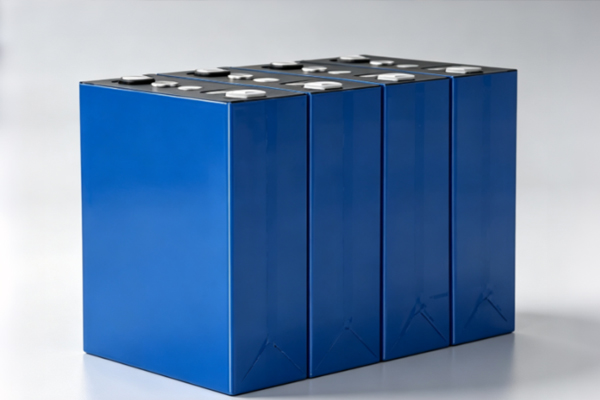
A school integrated energy LiFePO4 battery solution can connect LiFePO4 batteries, a Battery Management System (BMS), Power Conversion System (PCS), Energy Management System (EMS), photovoltaic equipment, and power distribution facilities to create a more flexible campus energy architecture. LiFePO4 batteries offer good cycle performance, high thermal stability, and suitability for stationary energy storage applications. They can be used for storing surplus photovoltaic energy, peak-load management, critical-load backup, charging infrastructure energy management, and campus microgrid applications. By properly designing battery capacity, PCS power, and control strategies, schools can improve renewable energy utilization while increasing the flexibility and emergency backup capability of their campus power system.
LiFePO4 Batteries Improve the Efficiency of Integrated Campus Energy Use
A school integrated energy system needs to manage different energy flows from the power grid, photovoltaic generation, and battery storage while responding to continuously changing campus loads. LiFePO4 batteries can serve as an energy buffer and power regulation unit. When photovoltaic generation is higher than immediate campus demand, the battery can store surplus electricity. When electricity demand increases or solar output decreases, stored energy can be released to support the loads. This operating model helps reduce the time mismatch between energy generation and consumption while creating a more coordinated relationship between campus energy equipment. The storage system can also follow peak and off-peak electricity schedules, charging during lower-demand periods and discharging during high-demand periods to help manage campus power demand.
Key Advantages of a School Integrated Energy Storage System
Integrated energy systems require batteries with stable long-term operation, fast response, and good compatibility with different energy devices. LiFePO4 batteries can work with various campus energy equipment and serve as flexible energy storage units.
- Improved photovoltaic utilization: When photovoltaic generation is high during the daytime, the battery can absorb surplus electricity that cannot be consumed immediately, reducing potential solar energy waste.
- Reduced peak-load pressure: When air conditioning, kitchen equipment, charging facilities, and other loads operate simultaneously, the battery can provide auxiliary power and reduce instantaneous demand on the grid.
- Peak and off-peak energy management: The system can charge during lower-cost periods and discharge during periods of higher demand, improving electricity utilization.
- Enhanced backup power capability: Critical loads such as servers, communication systems, monitoring equipment, access control, and emergency lighting can be assigned dedicated backup power.
- Campus microgrid compatibility: LiFePO4 batteries can serve as energy storage units in microgrids and coordinate with photovoltaic generation, the grid, and campus loads.
- Flexible capacity expansion: When campus electricity demand increases, additional battery capacity can be added according to the original system design.
These characteristics allow LiFePO4 batteries to support not only backup power but also daily campus energy scheduling and renewable energy utilization.
How to Use an Integrated Energy Storage System in Schools
Schools can establish energy storage operating strategies according to their electricity load curves. During normal operation, the EMS continuously collects campus load data, photovoltaic power, battery SOC, and grid operating information, then manages energy flows according to predefined control logic. When photovoltaic generation exceeds real-time campus demand, surplus electricity can be stored in the LiFePO4 battery. When campus demand exceeds photovoltaic output, the battery can discharge stored energy to supplement the loads.
For campuses without photovoltaic systems, the battery can still follow peak and off-peak electricity schedules. The grid can charge the battery during low-demand periods, while the storage system can provide auxiliary power during high-demand periods. For schools that require emergency backup power, a minimum SOC can be configured in advance to reserve energy for unexpected grid outages. When the grid experiences an abnormal condition, the system can distribute stored electricity to critical loads according to preset priorities.
During actual operation, battery SOC, SOH, load power, PCS capacity, and required backup duration should be considered when adjusting operating strategies. Appropriate charging and discharging depth and power control can reduce unnecessary battery stress and improve long-term operating stability.
Integrated Energy System Equipment Configuration
A school integrated energy system typically includes generation, energy storage, power distribution, and electricity-consuming equipment. Each device performs a different function, while the EMS coordinates the overall energy flow.
| System Equipment | Main Function | Relationship with LiFePO4 Battery |
| Photovoltaic Modules | Generate clean electricity | Surplus electricity can be stored in the battery |
| LiFePO4 Battery | Store and release electricity | Core energy storage unit |
| PCS | Bidirectional power conversion | Controls battery charging and discharging power |
| BMS | Battery condition monitoring | Manages voltage, temperature, SOC, and other parameters |
| EMS | Energy scheduling | Coordinates PV, grid, battery, and loads |
| Power Distribution System | Power distribution and protection | Connects storage equipment with campus loads |
| Charging Facilities | Electric vehicle energy supply | Can participate in load management |
| Critical Loads | Support important campus facilities | Can receive priority backup power |
Through coordinated data and power management between different devices, schools can create a more complete integrated energy architecture and allow the battery system to function as an energy buffer and regulation unit.
School Integrated Energy Applications Cover Solar, Charging, and Backup Power
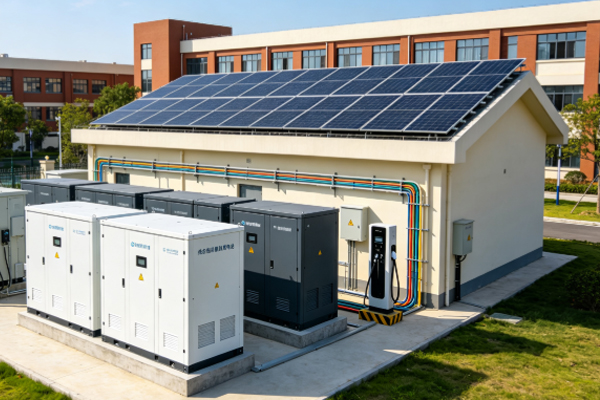
Campus integrated energy development is not limited to one building or one type of equipment. Energy facilities and loads distributed throughout the campus can be incorporated into a unified energy storage management system. LiFePO4 batteries can connect with photovoltaic systems, EV chargers, power distribution systems, and critical loads to provide energy regulation and backup support. For schools with large buildings and numerous public facilities, centralized energy management can reduce isolated operation between different energy devices and enable electricity to be distributed more efficiently according to different time periods.
Solar-Plus-Storage Systems Improve Clean Energy Utilization
School rooftops, parking canopies, and other suitable open areas can accommodate photovoltaic modules. During the daytime, solar electricity can directly supply teaching facilities, offices, air conditioning systems, and public equipment. If photovoltaic generation exceeds immediate electricity demand, the LiFePO4 battery can store the surplus energy. In the evening or during periods of low solar output, the battery can release stored electricity to campus loads, increasing the self-consumption rate of solar energy.
The EMS can automatically adjust the storage strategy according to photovoltaic output and real-time campus demand. For example, when solar generation is strong, the system can increase battery charging power. When campus demand rises rapidly, the EMS can reduce charging power or initiate battery discharge. Coordinated photovoltaic and energy storage operation can reduce energy losses caused by mismatches between renewable generation and actual electricity consumption.
Energy Storage Supports Campus Electric Transportation Management
As the number of electric vehicles, electric school buses, electric bicycles, and other electric transportation devices increases, charging facilities can become a significant campus load. When multiple chargers operate simultaneously, they can create high instantaneous power demand. A LiFePO4 energy storage system can work with charging infrastructure and dynamically adjust charging power through the EMS.
The battery can charge during periods of lower campus demand and provide auxiliary electricity when charging facilities operate intensively. This can reduce the instantaneous impact of charging loads on campus distribution systems. Schools can also establish different charging priorities according to vehicle usage schedules, allowing stored energy to be allocated more effectively.
For campuses with photovoltaic parking canopies, solar electricity can directly support part of the charging demand, while surplus energy can be stored in the battery. This configuration connects photovoltaic generation, energy storage, and electric transportation into a flexible clean-energy application model.
Integrated Energy Platforms Enable Unified Intelligent Control
The EMS can integrate campus photovoltaic systems, LiFePO4 batteries, the power grid, charging facilities, and critical loads into one energy management platform. Operators can view real-time power, battery SOC, photovoltaic generation, charging and discharging status, historical electricity consumption curves, and system alarms through the platform.
When the school enters a high-demand period, the EMS can initiate battery discharge according to preset conditions. When photovoltaic generation increases or electricity prices enter a lower-cost period, the system can schedule battery charging. Critical equipment can also be assigned a minimum backup SOC so that daily energy management does not consume the entire available battery capacity. Through data monitoring and automated control, schools can gain a clearer understanding of campus energy flows and use operational data to support future energy planning.
High-Performance LiFePO4 Batteries Support Long-Term Campus Energy Operation
School integrated energy systems are generally expected to operate for many years. Batteries need not only sufficient initial capacity but also stable performance during long-term cycling. Battery capacity should be designed according to campus load curves, photovoltaic capacity, required backup duration, peak power, and expected future electricity growth. PCS rated power should also match campus peak loads and the startup characteristics of important equipment. Appropriate system sizing can prevent insufficient battery capacity while reducing unnecessary initial investment caused by excessive configuration.
LiFePO4 Batteries Provide Good Cycle Performance
Campus integrated energy systems may perform charging and discharging operations every day, making battery cycle performance important for long-term use. LiFePO4 batteries are suitable for stationary energy storage applications and can support long-term energy regulation when operated within appropriate SOC ranges and charging and discharging power limits. The BMS continuously monitors individual cell voltage, temperature, current, SOC, and SOH and can activate protection functions according to battery operating conditions.
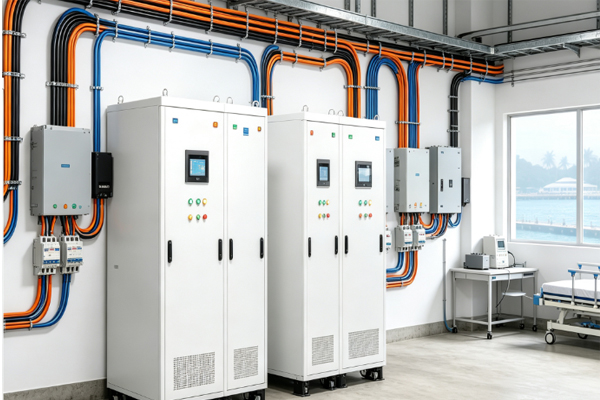
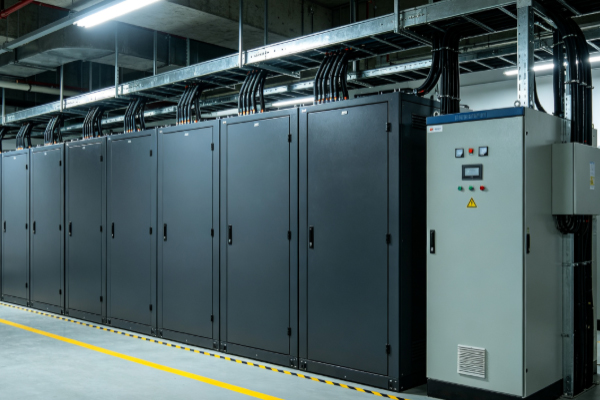
The installation environment should also be properly designed. Energy storage equipment should be installed in a dedicated space that meets applicable requirements and should be equipped with suitable ventilation, temperature monitoring, fire protection, and electrical protection facilities. Avoiding excessive heat, humidity, and unsuitable installation conditions can help maintain long-term battery performance. Proper operating strategies, regular maintenance, and continuous data monitoring are also important for stable energy storage operation.
Modular Batteries Meet Future Campus Expansion Requirements
School energy requirements may continue to increase as new buildings are constructed, student populations change, air conditioning equipment is upgraded, data centers are developed, and charging infrastructure expands. Modular LiFePO4 batteries can be combined according to storage requirements. Schools can initially install a capacity that matches current demand and add battery modules later as actual energy requirements grow.
During expansion, the PCS capacity, BMS communication, power distribution equipment, battery specifications, installation space, and protection configuration should be checked. If photovoltaic capacity is also increased, the relationship between solar generation and energy storage capacity should be reassessed. A properly designed modular structure can reduce the difficulty of future upgrades and allow the energy storage system to develop together with the school’s energy infrastructure.
Intelligent Monitoring Improves Integrated Energy System Stability
Long-term energy storage operation requires continuous monitoring of battery condition and energy equipment parameters. An intelligent monitoring platform can record SOC, SOH, voltage, temperature, power, and alarm information and generate historical operating data. Maintenance personnel can use these changes to identify potential battery performance issues, abnormal temperature conditions, or unusual power behavior and arrange inspections when necessary.
Data interaction between the BMS, PCS, and EMS can establish a monitoring structure covering the entire system from individual battery cells to overall energy operation. When overvoltage, undervoltage, overcurrent, overtemperature, or communication abnormalities occur, the system can reduce power or stop charging and discharging according to preset protection logic. Combined with regular inspections, electrical testing, and equipment maintenance, this approach can reduce the risk of unplanned downtime and help school integrated energy LiFePO4 battery systems maintain stable long-term operation.