Remote resort hotels, mountain lodges, island hotels, outdoor camps, and accommodation facilities located far from urban power grids often require independent and reliable energy supplies. When grid access is limited, grid extension costs are high, or utility power cannot meet the hotel’s long-term operating requirements, an off-grid power system can combine photovoltaic generation, LiFePO4 batteries, inverters, an Energy Management System (EMS), and backup generators to establish an independent electricity network.
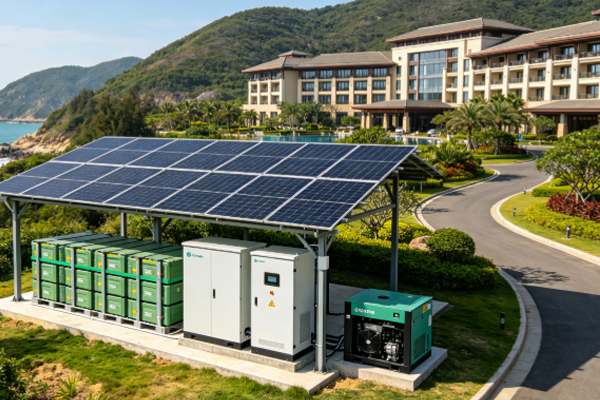
An off-grid hotel LiFePO4 battery power supply solution can store solar energy generated during the daytime and release it to hotel loads at night or during periods of poor sunlight. This allows lighting, refrigeration, communications, monitoring, hot water control, and other essential facilities to continue operating. LiFePO4 batteries offer good cycle performance, thermal stability, and suitability for long-term energy storage, making them suitable for off-grid systems that require daily charging and discharging. By properly sizing battery capacity, inverter power, photovoltaic capacity, and backup energy sources, hotels can build independent energy systems according to their scale and occupancy patterns. This reduces dependence on public utilities while increasing energy independence for remote hospitality facilities.
LiFePO4 Batteries Build an Independent Hotel Energy Supply System
Unlike conventional grid-connected hotels, off-grid hotels need to maintain a balance between power generation, energy storage, and electricity consumption within their own energy system. During the daytime, photovoltaic panels generate electricity, with solar power first supplying the hotel’s active loads and surplus electricity being stored in LiFePO4 batteries. At night, when there is no solar generation, the energy storage battery supplies electricity through the inverter. If prolonged cloudy or rainy weather reduces photovoltaic generation, the system can start a backup generator according to battery SOC and load requirements. This architecture creates an independent energy cycle that allows hotels to maintain essential operations even without reliable utility grid access.
Key Advantages of LiFePO4 Batteries for Off-Grid Hotels
Off-grid power systems place high requirements on battery reliability and cycling capability because the battery needs to handle both daily energy balancing and nighttime power supply. LiFePO4 batteries can work together with photovoltaic systems, inverters, and EMS equipment to create a stable energy storage unit for hotels.
- Suitable for frequent charging and discharging: Hotels experience changing energy demand every day, and LiFePO4 batteries can perform daily cycles within an appropriate SOC range.
- Flexible energy capacity: Battery capacity can be selected according to the number of guest rooms, public areas, equipment power, and required backup duration.
- Good thermal stability: The LiFePO4 chemistry offers good thermal characteristics, while BMS protection can further support safe energy storage operation.
- Reduced dependence on the grid: Hotels without reliable grid access can use solar generation and battery storage to establish an independent electricity network.
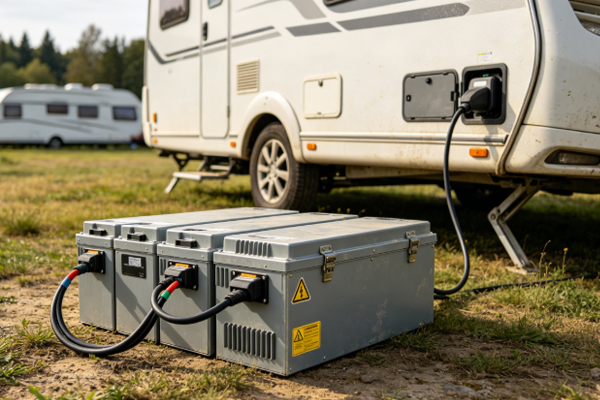
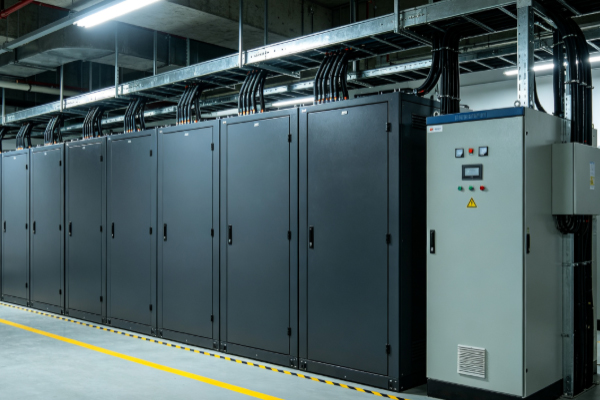
- Modular system design: Small hotels can use compact energy storage equipment, while larger resorts can deploy larger battery cabinets or battery clusters.
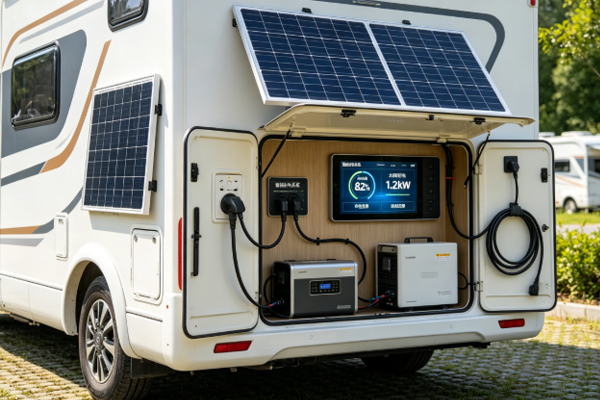
- Easy renewable energy integration: LiFePO4 batteries can be combined with rooftop PV, solar parking structures, and other renewable energy sources to improve clean energy utilization.
These characteristics make LiFePO4 batteries an important energy storage component for off-grid hotels, supporting both daytime energy storage and continuous nighttime power supply.
How to Use an Off-Grid Hotel Energy Storage System
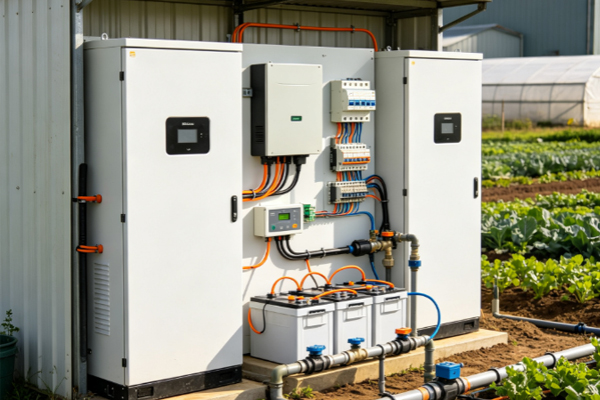
An off-grid hotel system typically uses a basic architecture consisting of photovoltaic generation, LiFePO4 batteries, an inverter, and an EMS. During the daytime, the EMS determines how available energy should be distributed according to real-time hotel loads. Hotel equipment can prioritize solar electricity, while surplus energy is directed to the battery for storage. When photovoltaic output is insufficient to meet current demand, the battery begins discharging to supplement the loads.
At night, hotels may still have continuous loads such as lighting, refrigerators, network equipment, monitoring systems, air conditioning, hot water circulation, and guest room equipment. The energy storage battery converts DC power into AC power through the inverter and supplies these hotel loads. During prolonged cloudy weather, when battery SOC falls to a preset level, the EMS can reduce non-critical loads and start a backup generator if the system includes one. This energy scheduling method helps extend the available battery runtime.
In practical applications, battery capacity should be designed according to the hotel’s average daily electricity consumption and the expected number of days without sufficient sunlight. For example, if a hotel consumes approximately 300 kWh per day and the energy storage system is expected to support one day’s nighttime load, the actual battery capacity should also consider depth of discharge, inverter efficiency, temperature variations, and battery aging margins rather than simply selecting a 300 kWh battery.
Off-Grid Hotel System Equipment Configuration
A complete off-grid hotel energy system requires different components to perform power generation, storage, conversion, control, and load supply functions. The equipment needs to be properly matched in terms of power ratings and communication protocols.
| System Equipment | Main Function | Hotel Application |
| Photovoltaic Modules | Generate solar electricity | Supply hotel loads and charge batteries during the daytime |
| LiFePO4 Battery | Store electricity | Supply power at night and during low-solar periods |
| Off-Grid Inverter | DC/AC conversion | Provides stable AC power for hotel equipment |
| BMS | Battery management | Monitors voltage, temperature, current, and SOC |
| EMS | Energy scheduling | Coordinates PV, storage, and hotel loads |
| Power Distribution Equipment | Power distribution and protection | Connects different hotel electrical circuits |
| Backup Generator | Emergency energy supply | Supports long cloudy periods or low battery conditions |
| Monitoring System | Operating data monitoring | Provides remote status and alarm information |
A properly matched equipment configuration enables the off-grid system to form a complete energy cycle and automatically adjust operating strategies according to changing hotel loads.
Off-Grid Hotel Energy Storage Covers Different Hospitality Applications
Off-grid energy systems are suitable for hotels located in areas with limited utility grid access or special energy conditions. Mountain resorts, island hotels, forest camps, desert accommodation facilities, and remote guesthouses can configure independent energy storage systems according to their specific electricity requirements. These applications need to consider not only daily electricity consumption but also weather variations, equipment transportation, maintenance conditions, and sufficient energy reserves during prolonged periods of low solar generation.
Remote Resort Hotels Achieve Independent Energy Supply
Hotels located in remote mountains and tourist destinations may be far from urban power networks, making new utility line construction expensive and technically difficult. By combining photovoltaic generation with LiFePO4 batteries, hotels can use local solar resources to generate and store electricity. During the daytime, the PV system supplies part of the hotel’s active loads and stores surplus energy in the battery. At night, the battery continues supplying basic hotel equipment.
For larger resort hotels, guest rooms, reception areas, kitchens, lighting, refrigeration equipment, network systems, and monitoring systems can be assigned different load priorities. High-power equipment can be scheduled according to solar availability and battery status, while critical facilities maintain higher power supply priority. This design helps extend system runtime when battery capacity is limited.
Island and Outdoor Hotels Adapt to Special Energy Environments
Island hotels and outdoor resorts often face difficult grid connections and inconvenient equipment transportation. Their energy systems therefore need strong independent operating capability. LiFePO4 batteries can serve as the core storage component of a photovoltaic system, supplying energy to lighting, communications, refrigeration, basic guest room equipment, and water treatment facilities.
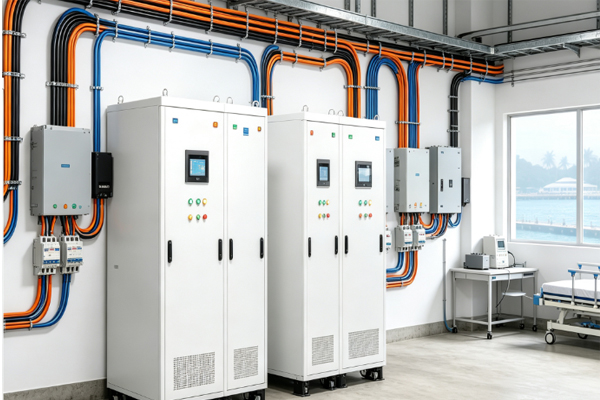
Island environments often have high humidity and salt exposure. Energy storage equipment should be installed in a suitable dedicated equipment room or enclosure with appropriate moisture protection, corrosion protection, and ventilation. Electrical connectors, distribution equipment, and communication components should also be selected according to local environmental conditions. Proper equipment placement and environmental management can reduce the negative effects of humidity and salt exposure on long-term system operation.
Energy Management Systems Optimize Off-Grid Hotel Operation
The EMS serves as the central energy scheduling unit of an off-grid hotel. It continuously monitors photovoltaic output, hotel loads, battery SOC, inverter power, and backup energy status. Based on real-time data, the system can determine whether to charge, discharge, limit certain loads, or start backup generation equipment.
When photovoltaic generation is sufficient, the EMS can prioritize solar energy for hotel loads and store surplus electricity in the battery. When solar output decreases, the energy storage system automatically supplies additional power. During nighttime operation, the EMS can control discharge power according to battery SOC while prioritizing critical loads such as lighting, communications, monitoring systems, refrigeration, and essential guest room equipment. If weather forecasts or historical operating data indicate an upcoming period of low solar generation, the system can also adjust the energy reserve strategy in advance to maintain sufficient stored energy for future demand.
High-Performance LiFePO4 Batteries Support Long-Term Off-Grid Hotel Operation
Off-grid hotels cannot rely on the utility grid to supplement electricity whenever necessary, so their energy storage systems need a high level of availability. Battery capacity should cover nighttime demand while also considering prolonged cloudy periods, seasonal solar variations, hotel occupancy rates, and future equipment expansion. Photovoltaic capacity and battery capacity also need to be properly matched to prevent insufficient solar generation or batteries remaining underutilized for extended periods.
Cycle Performance Meets Daily Hotel Energy Scheduling Needs
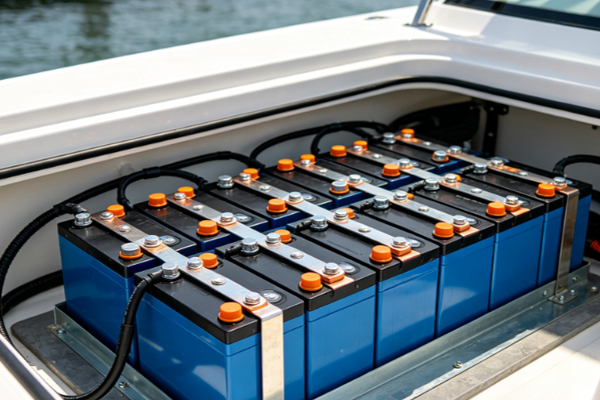
Off-grid hotel systems typically charge and discharge batteries every day, making long-term cycle performance an important consideration. LiFePO4 batteries are suitable for repetitive stationary energy storage applications and can perform daily energy scheduling within appropriate charging and discharging ranges. The BMS can monitor cell voltage, temperature, current, SOC, and SOH and activate corresponding protection functions when abnormal conditions occur.
The energy storage room should also be designed according to the local climate. High-temperature regions require appropriate thermal management, while cold climates require attention to low-temperature charging conditions. Humid environments need enhanced moisture protection and ventilation. Regular inspections of battery modules, inverters, power distribution equipment, and communication connections can help maintenance personnel identify potential problems at an early stage.
Modular Energy Storage Adapts to Hotel Capacity Changes
Hotel room numbers, occupancy rates, and electricity-consuming equipment may change as the business develops. Adding guest rooms, air conditioning systems, kitchen equipment, or EV charging facilities can increase energy demand and require additional storage capacity. Modular LiFePO4 batteries can be combined according to actual requirements, allowing hotels to install a suitable capacity during the initial stage while leaving room for future expansion.
Before expanding the system, inverter output capability, power distribution capacity, BMS communication, installation space, and battery compatibility should be checked. If photovoltaic capacity is increased at the same time, the relationship between PV generation and battery storage capacity should be recalculated. A well-designed modular architecture can reduce the complexity of future upgrades and allow the off-grid energy system to grow with the hotel.
Intelligent Monitoring Improves Off-Grid Power Reliability
Off-grid hotels need continuous visibility into energy system performance, especially during prolonged cloudy weather, peak tourism seasons, or periods of high occupancy. An intelligent monitoring platform can display battery SOC, SOH, charging and discharging power, photovoltaic generation, hotel load, and backup generator status in real time. When battery capacity becomes low, temperatures become abnormal, or equipment generates an alarm, hotel operators can respond promptly.
Data interaction between the BMS, inverter, and EMS can establish a complete off-grid energy monitoring system. The system can automatically adjust power supply strategies according to remaining battery energy and hotel load, prioritizing critical facilities when available energy is limited and appropriately reducing non-essential loads. Combined with regular maintenance and backup energy management, LiFePO4 batteries can provide remote hotels with a more stable and flexible independent energy supply.