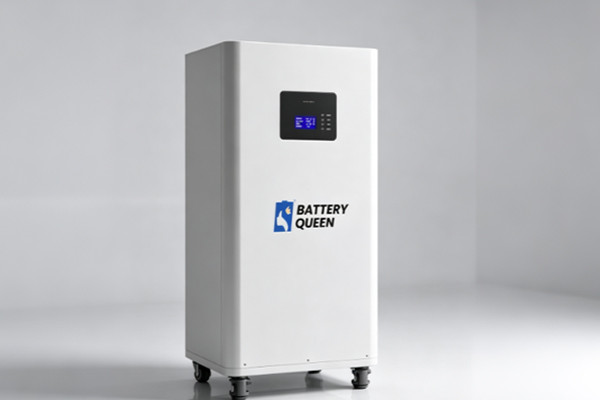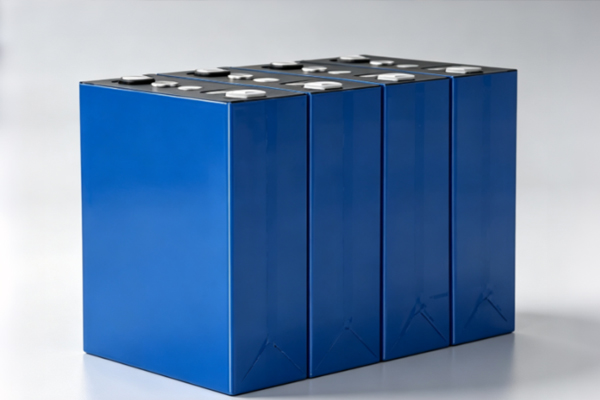
Golf carts are widely used on golf courses, resorts, hotels, scenic areas, industrial parks, airports, and large property sites. As vehicle usage increases, traditional lead-acid batteries are gradually becoming less suitable for higher-frequency operation due to their weight, driving range, charging time, and maintenance requirements. 48V LiFePO4 battery packs feature lighter weight, long cycle life, high charge and discharge efficiency, and low maintenance requirements, making them an important choice for upgrading golf cart power systems.
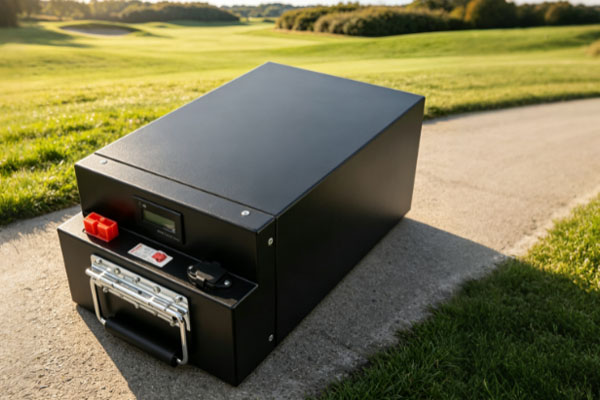
The motor power, controller parameters, daily operating hours, load, driving conditions, charging method, and available battery installation space all affect battery pack design. A customized battery pack needs to start with the actual vehicle parameters to determine the cell capacity, BMS specifications, output capability, enclosure dimensions, and interface configuration before complete pack testing. For customers requiring bulk purchasing, vehicle conversion, or their own branded battery products, OEM/ODM customization can further adjust the capacity, structure, connection method, and communication interfaces, making the battery pack more suitable for different golf cart models.
Why 48V LiFePO4 Battery Packs Are Suitable for Golf Carts
Meeting the Power Requirements of Golf Carts
48V battery packs are a common power supply specification for golf carts and can provide stable electrical power for the vehicle drive motor. Compared with traditional lead-acid batteries, LiFePO4 batteries can reduce frequent maintenance work under the same operating conditions while maintaining good discharge performance. In actual customization, 48V does not mean that all battery pack sizes and capacities are exactly the same. A common design uses a specific number of LiFePO4 cells connected in series to create a suitable voltage platform, such as 16 LiFePO4 cells in series to form a nominal voltage of approximately 51.2V. The specific configuration needs to be confirmed based on the vehicle controller, motor, and original battery specifications.
Lighter Battery Weight Helps Vehicle Operation
Golf carts frequently start, accelerate, decelerate, and stop, so battery weight directly affects the vehicle load. LiFePO4 batteries generally have a higher energy density than traditional lead-acid batteries, so the battery pack weight can be reduced when meeting similar capacity requirements. Lower weight can provide more flexible vehicle operation and reduce unnecessary load. For vehicles that operate for long periods at scenic areas, hotels, and golf courses, a lighter battery pack also makes installation, removal, and subsequent maintenance easier.
Longer Cycle Life Is More Suitable for Frequent Operation
Golf carts are generally not used occasionally. They may perform multiple short- or medium-distance trips every day. If the battery needs to be charged and discharged every day, cycle life becomes an important purchasing factor. LiFePO4 cells offer good cycle performance and can achieve a long service cycle under appropriate charging and discharging conditions and suitable temperature environments.
| Item | Common Design of 48V LiFePO4 Battery Pack | What Needs to Be Confirmed During Customization |
| Nominal voltage | Approx. 48V system | Vehicle controller voltage |
| Cell type | LiFePO4 | Cell specifications and capacity |
| Common configuration | 16S, approx. 51.2V | Original battery structure |
| Battery capacity | Customized according to vehicle requirements | Driving range and load |
| BMS | Smart BMS optional | Current, protection, and communication requirements |
| Communication method | CAN/RS485 optional | Vehicle controller or instrument requirements |
| Cycle life | 4000–8000+ cycles possible as a design range | Operating conditions and depth of discharge |
| Enclosure | Metal or customized structure | Battery compartment dimensions |
How to Customize a 48V Golf Cart Battery Pack
Determine Capacity According to Vehicle Parameters
Battery capacity directly affects the operating time of a golf cart. If the capacity is too small, the vehicle may require frequent charging. If the capacity is too large, it may increase weight and purchasing costs. Therefore, customization requires information about the vehicle motor power, controller parameters, daily operating hours, driving distance per trip, and vehicle load. For example, some shuttle vehicles at scenic areas operate for long periods every day and require larger battery capacity. Although golf carts used within golf courses may not travel very long distances per trip, they operate frequently and therefore also require sufficient continuous discharge capability.
When determining battery capacity, the following points can be considered:
- For short-distance and low-frequency use, a relatively moderate capacity can be selected.
- Long periods of continuous operation require greater battery capacity and continuous output capability.
- For high loads or frequent uphill driving, the current requirements of the motor and controller need to be confirmed carefully.
- For long daily operating hours, a larger battery pack can be designed according to actual operating conditions.
Design the Battery Structure According to the Installation Space
Golf cart battery compartment dimensions are not completely standardized. Some vehicles originally use multiple lead-acid batteries. After replacing them with a new battery pack, the installation dimensions, fixing positions, wiring direction, and charging interface need to be reconfirmed. Therefore, when customizing a battery pack, customers can provide the vehicle model, battery compartment dimensions, photos of the original battery, and installation location information. The production team can use this information to design the battery enclosure and internal layout. In addition to dimensions, the enclosure needs to consider dust protection, water resistance, fixing, and heat dissipation requirements. For golf carts used outdoors, the battery pack should have a structural design suitable for the actual environment to reduce the effects of rain, dust, and daily vibration.
Configure a BMS Suitable for the Vehicle
A BMS can be understood as the protection and management unit of a battery pack. It monitors battery status and provides protection when abnormal conditions occur. Golf cart battery packs may generate relatively high currents during starting and uphill driving, so the continuous current and peak current of the BMS need to be selected according to vehicle requirements. Common functions include overcharge protection, over-discharge protection, overcurrent protection, short-circuit protection, and temperature monitoring. If the vehicle or display equipment needs to read battery data, CAN or RS485 communication interfaces can also be added.
What Needs to Be Confirmed from Battery Design to Complete Pack Delivery
Cell Quality Determines the Basic Performance of the Battery Pack
A battery pack consists of multiple cells, and cell consistency affects the actual performance of the complete battery pack. LiFePO4 cells offer good stability and cycle performance, making them suitable for power applications that require long-term repeated charging and discharging. During production, the cells need to be inspected and selected according to capacity, voltage, and other data before being combined. Proper cell matching can help the complete battery pack maintain a more stable operating condition.
Complete Battery Pack Testing
A battery suitable for golf cart applications also needs to undergo testing after complete pack assembly.
| Test Item | Main Purpose |
| Voltage test | Confirm the battery pack output status |
| Capacity test | Check actual capacity performance |
| Charge and discharge test | Verify normal operating status |
| BMS protection test | Confirm protection functions under abnormal conditions |
| Communication test | Confirm CAN/RS485 data transmission |
| Temperature test | Monitor temperature changes during charging and discharging |
| Appearance inspection | Check the enclosure, interfaces, and assembly condition |
For customers purchasing in bulk, complete pack testing can help reduce differences between different production batches. After testing is completed, relevant documents can be prepared according to the product sales region and transportation requirements.
OEM/ODM Is Suitable for Different Vehicle Models and Brand Projects
Golf cart batteries are not only used for replacement. Many customers also need to establish their own battery product lines. For example, distributors, vehicle manufacturers, conversion companies, and battery brands can customize capacity, enclosure, interfaces, communication methods, and labels according to their product requirements. OEM/ODM services can provide customization from LiFePO4 cells and battery packs to BMS and complete energy storage products. For different markets, relevant access certificates, transportation test summaries, safety data sheets, and compliance reports can also be confirmed according to the product model. This customization method can reduce subsequent modification work and make it easier for customers to establish product specifications for different vehicle models.
Frequently Asked Questions
Can a 48V LiFePO4 Battery Directly Replace a Lead-Acid Battery?
Direct replacement based only on voltage is not recommended. Although both can be used in 48V golf carts, the actual operating voltage, charger, controller, current requirements, and installation dimensions need to be confirmed. Providing the original battery parameters and vehicle information before replacement can help determine the new battery specifications more accurately.
Does a Larger Battery Capacity Always Mean Longer Driving Range?
When other conditions are basically the same, a larger capacity can generally provide longer operating time. However, vehicle load, driving speed, road conditions, temperature, and driving frequency can all affect actual driving range. Therefore, capacity should be designed according to actual daily operating hours rather than simply choosing the largest capacity.
What Size BMS Does a Golf Cart Need?
The BMS current specification needs to be determined according to the motor and controller. Low-power and high-power vehicles have different starting current requirements, so the BMS cannot be selected based only on battery capacity. After providing the vehicle motor power, controller parameters, and original battery information, the continuous and peak current requirements can be further determined.
What Is the Difference Between 51.2V and 48V Batteries?
LiFePO4 batteries commonly use a 16-series configuration with a nominal voltage of approximately 51.2V. Therefore, these products are also commonly called 48V LiFePO4 batteries in the market. Whether they are suitable for a vehicle needs to be determined according to the controller and the vehicle manufacturer’s original electrical specifications.
What Information Is Needed for Battery Customization?
Customers can generally provide the vehicle brand and model, original battery specifications, controller parameters, motor power, battery compartment dimensions, charger parameters, interface photos, and expected driving range. More complete information allows the battery pack to be designed more accurately.
Choosing the right 48V LiFePO4 battery pack capacity for a golf cart can reduce frequent charging. Proper BMS configuration can help the battery maintain stable operation, while a suitable enclosure structure makes installation and daily use easier. For standard replacement projects, customization can be based on the original battery parameters. For bulk purchasing, vehicle conversion, or private-label projects, the capacity, dimensions, interfaces, and communication functions can be further adjusted. Through complete cell selection, assembly, and testing processes, the 48V LiFePO4 battery pack can be made more suitable for long-term golf cart operation. If you are looking for a 48V LiFePO4 battery pack for golf carts, you can prepare the vehicle model, battery specifications, and installation dimensions in advance.
WhatsApp: +86 15074995718
Email: info@deligreen.net