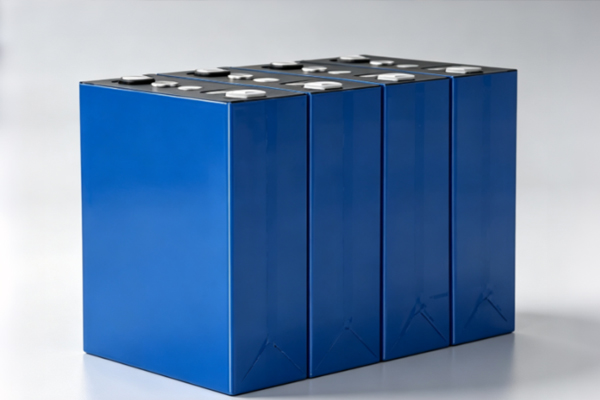
Running a hospital on an island often comes with more complicated power challenges than those faced by hospitals in cities. Island grids are usually smaller, diesel generators require fuel to be prepared in advance, and equipment failures may take longer to repair because qualified technicians are not always nearby. Typhoons, heavy rain, or interrupted marine transportation can make fuel and equipment supplies even more difficult to deliver. Hospitals cannot simply reduce critical medical services because energy supply is inconvenient. Some island healthcare projects are now integrating LiFePO4 batteries into their energy systems, allowing solar power generated during the day to be stored while reducing the need for diesel generators to handle frequent short-term loads. For hospitals, hospital battery storage is not only about backup power during outages, but also about long-term power supply and energy management.
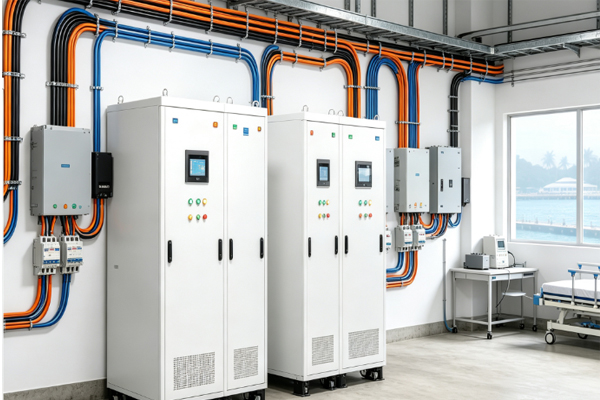
Why Do Island Hospitals Need Energy Storage More? Power Supply Cannot Depend on One Source
Urban hospitals usually have relatively mature power grids and maintenance networks, while island hospitals may face very different power supply conditions. Islands have limited space and infrastructure, but hospitals still need reliable electricity around the clock. This makes energy flexibility particularly important. Adding battery storage gives hospitals another layer of control between different power sources.
What Are the Common Power Supply Challenges for Island Hospitals?
The biggest problem for hospitals is not always a short power interruption. When external conditions affect the power supply, restoring normal operations can take much longer than expected.
- Limited grid capacity: Island populations and infrastructure are often limited, making grid expansion relatively expensive, while adding large medical equipment may require additional power capacity planning.
- Difficult diesel transportation: Diesel generators are a mature technology, but their fuel still needs to be transported and stored, and bad weather can interrupt fuel deliveries.
- Longer maintenance periods: Electrical equipment in cities can often be repaired quickly, while island projects may have to wait for marine transportation or specialized technicians to arrive.
- Strong weather impact: Typhoons, heavy rain, and severe marine weather can affect the grid, transportation, and fuel supply at the same time, increasing pressure on backup power systems.
- Medical loads cannot be easily reduced: Ordinary commercial buildings can temporarily shut down some equipment, but hospitals still need to maintain medical services, medicine storage, communications, and essential lighting.
These challenges make energy storage a practical requirement for many island hospitals. Batteries can provide a buffer when the power supply fluctuates and can also reduce the need to start the diesel generator every time a short-term power interruption occurs.
Can Battery Storage Replace a Diesel Generator?
This is a common question when island hospitals evaluate energy storage. In practice, the two systems do not necessarily have to compete with each other. Batteries are better suited to fast response, daily energy storage, and short-term backup, while diesel generators are more suitable for longer power outages. Using them together can provide a more flexible energy system.
| Power Source | Main Function | Suitable Applications |
| Solar PV system | Generates electricity during the day | Daily power use and battery charging |
| LiFePO4 battery | Stores energy and provides fast power | Nighttime power use, short outages, and load management |
| Diesel generator | Provides continuous power for extended periods | Long outages and extreme weather |
| Utility grid | Provides regular base power | Normal operating conditions |
Different power sources can handle different tasks instead of forcing the diesel generator to carry the entire hospital load throughout the year. For island projects where energy supplies are difficult to replenish, this combination can reduce dependence on a single power source.
How Can Hospitals Use Battery Storage Every Day? Don’t Wait for a Power Outage
If batteries are only used a few times a year during power outages, their utilization may be relatively low. Island hospitals can integrate battery storage into daily energy management so that the system participates in power supply every day. Even when there is no outage for an extended period, the battery does not remain idle and can also help hospitals make better use of solar energy generated during the day.
If There Is Plenty of Sunlight During the Day, Why Store the Electricity?
Island healthcare projects equipped with solar PV face a practical timing gap: peak solar generation does not always match the hospital’s highest electricity demand. At night, solar generation stops while patient rooms, lighting, monitoring systems, and medical equipment continue to require electricity.
- Solar power during the day: Hospital loads can use solar power first, while excess electricity can be stored in the battery.
- Higher loads in the evening: The battery can release energy stored during the day, reducing the load that conventional power sources need to handle.
- Continuous nighttime power use: The battery can supply designated areas based on its remaining capacity and the hospital’s actual power demand.
- Higher electricity prices: If the local electricity market uses peak and off-peak pricing, battery storage can also help shift part of the hospital’s electricity consumption.
With this setup, hospital battery storage becomes more than an emergency backup system. It becomes part of the hospital’s everyday energy system and can provide value even during normal operation.
Which Hospital Loads Are Suitable for Long-Term Battery Power?
An energy storage system may go through regular charging and discharging cycles, so there is no need to have every high-power device run from the battery. Selecting loads with relatively stable operating times and predictable power consumption can make the system easier to manage.
- Communication and information equipment: Servers, network equipment, telephones, and some information terminals are continuous loads that can use energy storage to maintain stable power.
- Medicine refrigeration equipment: Vaccines, medicines, and certain medical samples require suitable temperature conditions, making continuous power particularly important for these loads.
- Essential lighting: Patient rooms, nursing stations, corridors, and necessary work areas can be included in the battery-powered load.
- Selected daily medical equipment: Devices with relatively predictable power consumption and operating schedules can be connected to the storage system according to the hospital’s actual electricity plan.
- Control and monitoring equipment: These devices may have relatively low power consumption, but they often operate continuously, making them suitable for sustained battery power.
Once these daily loads are properly managed, the battery has a practical purpose every day while still reserving available energy for unexpected power outages.
How Does the Island Environment Affect LiFePO4 Batteries? Installation Location Matters More Than You Might Think
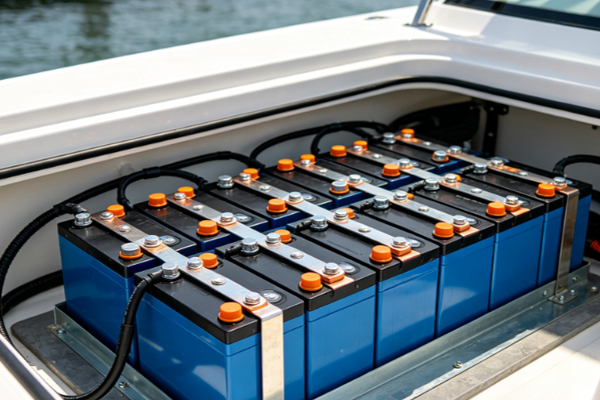
Installing a battery inside a hospital does not mean the system can simply be left there without further consideration. Salt in the air, humidity, and high temperatures all need to be taken into account. This is particularly important for medical facilities near the coastline, where electrical equipment may be exposed to salt spray for long periods. Connectors and enclosures can face additional environmental stress. Battery specifications matter, but the installation environment should not be overlooked.
What Should Be Considered When Installing Energy Storage Batteries on an Island?
Battery selection should not focus only on capacity and price. The installation environment should also be communicated to the supplier in advance so that the battery enclosure, connections, and system protection can be designed for the actual conditions.
- Do not expose the battery directly to sea air: Energy storage equipment should preferably be installed indoors or in a dedicated protected equipment area to reduce direct exposure to salt spray.
- Control moisture entering the equipment: In humid environments, electrical connections and control components need appropriate moisture protection to reduce connection problems during long-term operation.
- Pay attention to ambient temperature: Energy storage equipment should be kept away from direct sunlight and extreme heat, with suitable ventilation or cooling provided when necessary.
- Secure the equipment properly: Islands may experience strong winds and severe weather, so battery cabinets, cables, and related equipment need reliable installation and fastening methods.
- Reserve enough maintenance space: Batteries, BMS units, terminals, and other components may need inspection later, so the equipment area should not be packed too tightly just to save space.
For projects far from the mainland, ease of maintenance is particularly important. If minor issues can be inspected and handled locally, the hospital may not need to wait for outside maintenance personnel every time a problem occurs.
Why Should Island Hospitals Consider LiFePO4 Batteries?
Island energy storage systems may go through frequent daily charging and discharging as well as transitions between normal and backup operation. The battery needs to support long-term use rather than simply handling one power outage.
- Frequent cycling requirements: When paired with solar PV for daily energy storage, batteries may experience frequent charging and discharging, making cycle performance an important consideration.
- Safety protection: Energy storage systems should use an appropriate BMS to monitor and protect against overcharging, over-discharging, overcurrent, and abnormal temperatures.
- System expansion: If the hospital adds medical equipment, refrigeration equipment, or solar capacity in the future, the battery system should ideally have room for further expansion.
During procurement, hospitals can also confirm BMS communication, charging and discharging parameters, dimensions, weight, and battery enclosure protection requirements to avoid discovering compatibility problems after the batteries have already been transported to the island.
What Should Island Hospitals Look for Beyond Price When Purchasing Energy Storage Batteries?
Transportation and installation costs should not be overlooked in island projects. When a battery system is shipped from the manufacturer to a hospital, the process may involve packaging, sea or island transportation, on-site handling, and installation. If key specifications are not confirmed in advance, rework can be much more complicated than it would be for an ordinary project. Instead of simply asking, “How much does it cost?”, buyers should confirm product specifications, delivery conditions, and after-sales support together.
Which Battery Parameters Matter Most When Purchasing for an Island Hospital?
When hospitals purchase energy storage batteries, comparing suppliers based only on capacity can easily lead to misleading price comparisons. During the quotation process, battery capacity, discharge capability, BMS, dimensions, communication, and environmental adaptability should be evaluated together with the hospital’s existing equipment.
| Battery Parameter | What to Confirm During Procurement | Practical Impact on Island Hospitals |
| Battery capacity | Rated capacity and actual usable capacity | Determines backup power duration |
| Continuous discharge current | Maximum continuous discharge capability | Affects stable operation of medical equipment |
| Peak discharge current | Peak value and duration | Handles startup and short-term loads |
| BMS functions | Overcharge, over-discharge, overcurrent, and temperature protection | Improves system operating safety |
| Communication interfaces | CAN, RS485, etc. | Facilitates connection with inverters and monitoring systems |
| Dimensions and weight | Length, width, height, and total battery weight | Affects island transportation and installation |
| Operating temperature | Charging and discharging temperature range | Helps adapt to local high-temperature conditions |
| Protection design | Moisture and dust protection of the battery enclosure | Reduces the impact of humidity and salt spray |
| Expansion capability | Support for parallel connection and future expansion | Makes it easier to increase capacity as hospital loads grow |
Confirming these parameters at the beginning can make quotation comparisons much easier. For island projects in particular, dimensions, weight, environmental conditions, and after-sales support should not be left out, because returning equipment to the mainland or arranging replacement transportation after delivery can add significant time and cost.
What Information Should an Island Hospital Provide When Purchasing Batteries?
Suppliers need to understand the actual operating conditions before they can recommend a practical battery configuration and provide a useful quotation. Hospitals do not need to prepare complicated technical documents. Having the following basic information ready is already very helpful.
- Hospital location and installation site: Specify whether the system will be installed in an indoor equipment room, a dedicated equipment building, or another area, and provide the available installation space.
- Daily electricity consumption: List the equipment that the battery storage system is expected to support and its approximate operating hours so the supplier can estimate daily storage requirements.
- Required backup duration: Explain whether the battery is intended for short-term transition, nighttime power supply, or longer backup operation.
- Existing power configuration: Provide information about the utility grid, solar PV system, diesel generator, and inverter so the supplier can plan how different power sources should work together.
- Equipment power data: Rated power for medical equipment, refrigeration systems, pumps, air conditioners, and other loads should be as accurate as possible, while motor-driven equipment should ideally include startup data.
- Environmental conditions: Provide information about local temperature, humidity, and whether the site is exposed to significant salt spray.
- Future expansion plans: If the hospital plans to add patient rooms, medical equipment, or solar capacity, battery expansion space can be reserved in advance.
After the information is prepared, asking the supplier to develop a solution and quotation will usually produce a more targeted configuration than simply saying, “We need a hospital energy storage battery.” For overseas island projects, transportation methods, package dimensions, and on-site handling conditions are also worth confirming early.
Why Should Island Hospitals Consider After-Sales Support and Spare Parts in Advance?
Island hospitals face one very practical maintenance issue: distance. If a battery system develops a problem with a connector, communication module, or another small component but there are no spare parts available, the entire system may have to wait for replacement parts, which can seriously delay operations.
- Complete technical documentation: Suppliers should provide battery specifications, electrical parameters, BMS information, and necessary installation and operating documentation.
- Prepare common spare parts in advance: Connectors, cables, and other project-specific accessories can be planned together with the equipment to reduce future waiting time.
- Remote technical support: When an abnormal condition occurs, remote assistance from the supplier can help determine the battery status and reduce on-site troubleshooting time.
- Stable long-term supply: When batteries are added or replaced later, key parameters such as capacity, dimensions, BMS, and interfaces should remain consistent whenever possible.
For island hospitals operating over the long term, supplier response speed and the completeness of technical documentation are also worth considering. Installing the equipment is only the beginning. How smoothly the system can be maintained over the following years should already be considered during procurement.
Island hospital energy storage addresses the practical pressure caused by unstable energy supplies in remote areas. Solar PV can generate electricity during the day, LiFePO4 batteries can store and manage that energy, and diesel generators can provide power during longer outages. When these systems work together, hospitals do not have to place all their energy demands on a single power source. DELIGREEN provides LiFePO4 batteries, battery packs, DIY battery boxes, BMS accessories, and scalable energy storage solutions for global buyers, with configurations available for hospital loads, backup duration, island installation conditions, communication requirements, and future expansion plans, supporting flexible hospital battery storage solutions for island hospitals and remote healthcare projects.