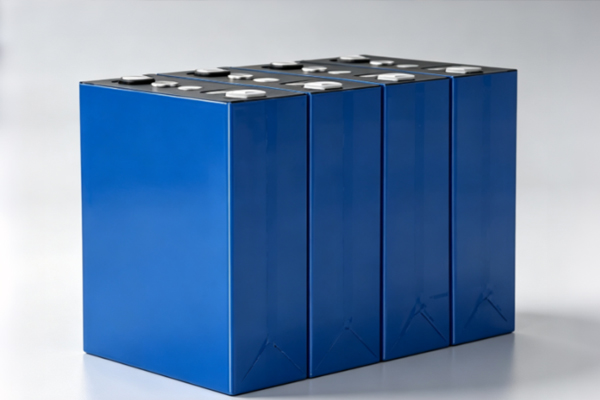
RVs need a stable low-voltage power source during travel, camping, and outdoor living to continuously supply electricity to lighting, refrigerators, water pumps, fans, televisions, routers, and other 12V devices. Although traditional lead-acid batteries can meet basic power requirements, they have certain limitations in weight, usable capacity, cycling capability, and charging and discharging efficiency. A 12V LiFePO4 battery uses lithium iron phosphate cells and incorporates a BMS battery management system to create an energy storage solution that is better suited to the low-voltage electrical environment of an RV. For RVs that primarily use 12V equipment, properly configuring battery capacity, charging equipment, inverters, and distribution wiring can reduce energy waste and provide more stable onboard electricity.
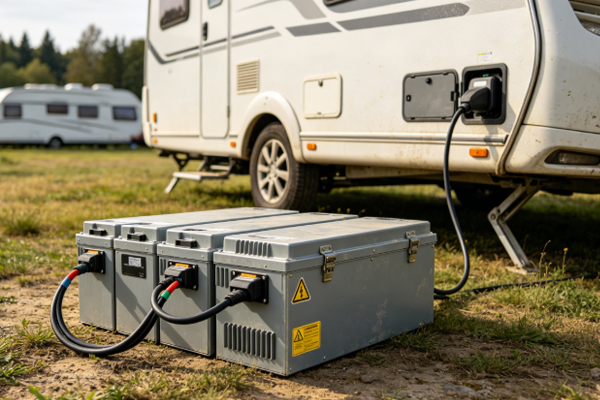
Advantages and Usage Methods of 12V LiFePO4 Batteries for RVs
When installing a 12V LiFePO4 battery in an RV, the configuration should be selected according to appliance power, daily operating time, travel duration, and available charging conditions. A 12V battery can directly power many low-voltage RV devices and can also supply some AC appliances through an inverter. Proper battery capacity and charging-path design can help the storage system work more effectively with the vehicle’s existing electrical system.
Main Advantages of 12V LiFePO4 Batteries for RV Applications
12V LiFePO4 batteries offer good energy storage density and cycling capability, making them suitable for RV environments where power is frequently used during travel and camping. Key advantages include:
- Convenient voltage compatibility: Many RV lighting systems, fans, water pumps, and refrigerator control systems use 12V or similar low-voltage power, reducing unnecessary voltage conversion.
- Better weight management: For the same usable energy requirement, LiFePO4 batteries can generally use a more compact storage structure, helping control additional vehicle weight.
- Good cycling capability: During travel, the battery may be charged and discharged every day, and LiFePO4 chemistry is suitable for this type of repeated energy storage operation.
- Efficient energy utilization: Stored electricity can be used efficiently by onboard equipment, making the battery suitable for lighting, refrigeration, entertainment, and auxiliary equipment.
- Integrated BMS protection: The battery management system can monitor voltage, current, temperature, and SOC while providing protection when abnormal conditions occur.
- Low maintenance requirements: Compared with traditional batteries that may require regular attention to electrolyte and maintenance conditions, LiFePO4 batteries are relatively convenient for everyday use.
These characteristics make 12V LiFePO4 batteries an important power source for RV low-voltage energy storage systems, suitable for short trips, weekend camping, and extended outdoor stays.
How to Use 12V LiFePO4 Batteries in RVs
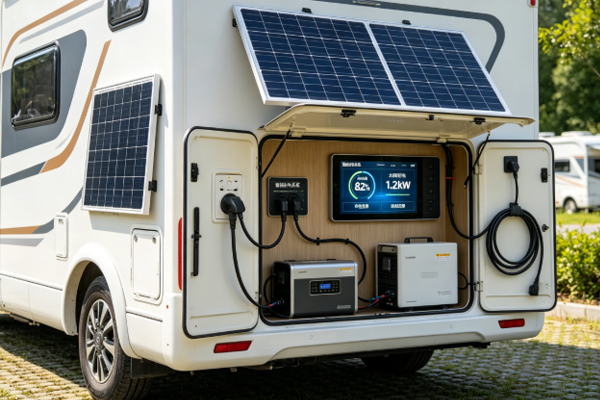
When using a 12V LiFePO4 battery, users should first identify the rated power and daily operating time of the RV’s 12V equipment and then estimate daily electricity consumption. If the RV is equipped with solar panels, a solar charge controller can be used to replenish the battery. During driving, the vehicle’s charging system or a DC-DC charger can supply energy to the auxiliary battery. When connected to campsite shore power, a compatible AC battery charger can be used for additional charging.
After installation, the battery’s positive and negative terminals should be connected according to the manufacturer’s requirements, with suitable fuses, cables, and circuit protection devices. For loads with high starting current, such as refrigerators, water pumps, or other motor-driven equipment, users should confirm that the BMS and wiring can handle the required peak current. When an inverter is used, its continuous rated power and starting power should match the AC appliances to prevent battery overload.
Reference Configuration Table for 12V LiFePO4 RV Batteries
| RV Type | Recommended Battery Capacity | Main Electrical Loads | Recommended Supporting Equipment | Configuration Focus |
| Small camping vehicle | 100Ah | Lighting, water pump, fan, refrigerator | 12V charger, solar controller | Lightweight installation |
| Compact RV | 100–200Ah | Refrigerator, lighting, audio/video equipment | DC-DC charger, solar system | Extend operating duration |
| Medium RV | 200–300Ah | Refrigerator, water pump, television, small inverter | Charger, inverter, BMS | Balance capacity and space |
| Family RV | 300Ah or above | Refrigerator, lighting, auxiliary kitchen equipment, entertainment devices | Solar, DC-DC charger, inverter | Support continuous electricity use |
| Long-distance travel RV | 300–400Ah or above | Multiple onboard devices and household appliances | Multi-source charging system | Increase off-grid power capability |
Actual battery capacity should be selected according to appliance power, daily operating time, charging conditions, and available installation space.
Application Scenarios and Core Functions of 12V LiFePO4 Batteries for RVs
A 12V battery system is particularly suitable for low-voltage equipment in RVs. Compared with large high-voltage energy storage systems, a 12V solution can provide more direct compatibility with low-voltage equipment and reduce some unnecessary voltage conversion. For RVs that primarily use 12V appliances, a properly configured battery can establish an independent low-voltage living power network.
Typical Application Scenarios for 12V LiFePO4 RV Batteries
12V LiFePO4 batteries can support a wide range of daily RV electricity requirements. During stationary camping, the battery can supply power to lighting, refrigerators, water pumps, and ventilation equipment. During nighttime rest, it can continue powering lights, mobile charging equipment, and networking devices. In locations without campsite electricity, the battery can serve as an independent low-voltage power source.
For outdoor fishing, nature camping, and extended parking, the 12V battery can also work with solar panels to create a daytime charging and nighttime discharging cycle. While the vehicle is moving, a DC-DC charger can use available vehicle-generated power to replenish the storage battery. Combining different charging sources can reduce dependence on a single energy source for RV living.
Core Functions of 12V LiFePO4 Batteries in RVs
An RV energy storage battery is responsible not only for storing electricity but also for power management and operational protection. Properly integrating a BMS, charging equipment, distribution modules, and monitoring devices can make the 12V energy storage system better suited to mobile applications.
- Battery status monitoring: The BMS can monitor individual cell voltage, total battery voltage, current, and temperature to help users understand battery operating conditions.
- Charging and discharging protection: If overcharging, over-discharging, overcurrent, or abnormal temperature occurs, the protection system can take appropriate protective action according to its design.
- Load power management: Different RV appliances can be connected to the 12V distribution system according to their actual requirements, helping reduce wiring complexity.
- Multiple charging sources: Depending on the configuration, the system can connect to solar power, a vehicle DC-DC charger, and campsite AC charging equipment.
- Battery status display: A display or monitoring system can provide information about remaining battery capacity and real-time power changes.
- Modular design: Some systems support additional battery capacity according to RV requirements, but voltage compatibility, BMS communication, and charging and discharging equipment should be verified before expansion.
With these functions, a 12V LiFePO4 battery can serve as a core component of an RV low-voltage power system rather than simply acting as a standalone storage device.
Performance Requirements and Maintenance Design for 12V LiFePO4 RV Batteries
RV operating conditions include movement, vibration, temperature changes, and limited installation space. The battery therefore needs not only suitable energy storage performance but also the ability to withstand the mechanical conditions associated with vehicle operation. When selecting a product, users should consider installation position, battery capacity, continuous discharge current, peak current, and BMS protection parameters while also checking the specifications of charging equipment and vehicle wiring.
Performance Requirements and Maintenance Design for 12V LiFePO4 RV Batteries
The performance selection of a 12V LiFePO4 battery should not be based only on its Ah capacity. Continuous discharge capability, peak output current, charging current range, operating temperature, and BMS protection parameters should also be considered. For basic lighting and small electrical devices, a 100Ah-class battery can often meet basic energy storage requirements. If the RV needs to operate a refrigerator, entertainment equipment, or other loads for extended periods, a larger battery configuration may be more suitable.
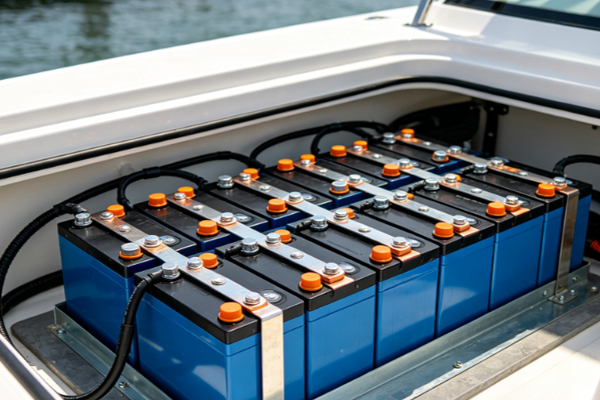
During installation, the battery should be securely fixed to prevent continuous vehicle vibration from affecting terminals and internal structures. Adequate space should be left around the battery, and prolonged operation in high-temperature environments should be avoided. Cable cross-section, fuse ratings, and connector specifications should also be selected according to the actual current requirements. During daily use, users can periodically check battery SOC, voltage, temperature, and charging and discharging status. Any abnormal heating, loose connection, or unusual battery reading should be inspected promptly.
If the RV will remain parked for an extended period, the battery should be maintained at an appropriate SOC according to the manufacturer’s storage recommendations. Unnecessary onboard loads should be switched off to reduce long-term standby consumption. Before returning the RV to service, users can check the battery terminals, fuses, charger, and DC-DC equipment. For BMS systems with communication functions, a display or monitoring device can also be used to record battery operating data for future maintenance.
12V LiFePO4 batteries are well suited to RV energy storage applications dominated by low-voltage equipment and can provide stable DC power within limited installation space. By selecting appropriate battery capacity, charging methods, BMS, and distribution equipment, users can build a 12V energy system suitable for camping, travel, parking, and outdoor living. For websites selling LiFePO4 batteries, providing battery configurations based on different RV sizes, electricity consumption habits, and equipment requirements can also help customers select a storage product that better matches their vehicles.