The application fields of drones are continuously expanding, placing higher demands on device stability and endurance. As the core power source, drone batteries undertake the critical task of continuous power supply. Once issues such as abnormal temperature, overcharge/over-discharge, or short circuits occur, they not only affect flight efficiency but may also increase maintenance costs. Establishing a comprehensive battery safety management system has become a key focus for drone manufacturers and industry users. Through scientific battery design, intelligent management systems, and standardized operating procedures, safety risks can be effectively reduced, device reliability can be improved, and long-term stable operation can be ensured.
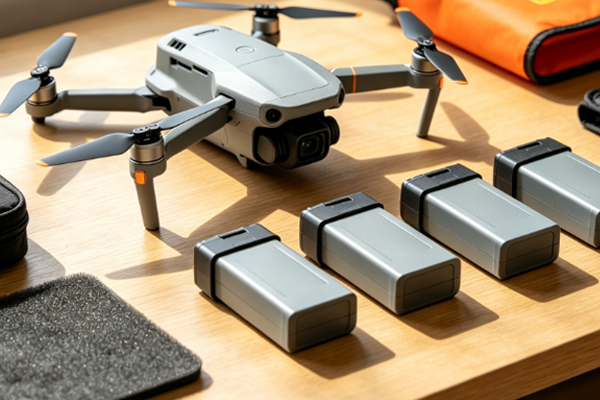
Key Components of Drone Battery Safety Management
Drone battery safety management requires the coordination of hardware design, software monitoring, and usage standards, with continuous optimization during operation.
Battery Management System Provides Full Protection
The BMS is the core module ensuring safe operation of drone batteries, covering the entire charge and discharge process.
- Real-time collection of voltage, current, and temperature data to quickly identify abnormal conditions.
- Automatic cell balancing management to reduce performance fluctuations caused by individual cell differences.
- Integrated overcharge, over-discharge, overcurrent, and short-circuit protection mechanisms to promptly cut off risk sources.
A stable and reliable management system can significantly improve the safety performance of drone batteries in complex environments.
High-Quality Cells Improve Overall Safety Performance
Cell quality directly determines the stability and service life of drone batteries.
- Use cells with higher consistency to reduce performance deviation.
- Improve cycle life and slow down capacity degradation.
- Maintain stable output capability to meet high-load operational demands.
High-quality cells can effectively reduce the probability of abnormal events and lower long-term maintenance costs.
Comprehensive Battery Safety Management Solutions
Scientific management strategies are essential for ensuring drone battery safety and must be dynamically adjusted according to real-world conditions.
Establish Temperature Management Mechanism
Temperature changes significantly affect drone battery performance, especially in high-intensity operation environments.
- Deploy high-precision temperature monitoring modules to track real-time operating conditions.
- Optimize thermal structure design to improve heat dissipation efficiency.
- Automatically adjust output strategies under extreme temperature conditions to ensure safe operation.
A well-developed thermal management system can effectively reduce thermal runaway risks and improve environmental adaptability.
Optimize Charge and Discharge Management Process
Proper charge and discharge management is directly related to the lifespan and stability of drone batteries.
- Intelligently adjust charging parameters based on battery status to reduce abnormal stress.
- Control depth of discharge to avoid excessive cell damage.
- Record charge and discharge data for further analysis and optimization.
Standardized processes help improve battery safety performance and reduce operational costs.
Strengthen Fault Warning Capability
Through multi-dimensional monitoring and analysis, potential risks can be identified in advance, reducing equipment downtime. The system can comprehensively evaluate voltage, current, and temperature changes, automatically record operational data and abnormal events, and provide a basis for maintenance. It also supports remote diagnostic functions, enabling technicians to quickly locate issues and develop solutions. A well-established warning mechanism can intervene before problems occur, thereby improving overall efficiency and safety of drone batteries.
Safety Management Priorities for Different Application Scenarios
Different application scenarios have varying requirements for drone batteries, requiring targeted optimization strategies.
| Application Scenario | Battery Safety Focus | Recommended Management Solution |
| Aerial Photography Drones | Long-duration stable power supply | Intelligent BMS management system |
| Inspection Drones | All-weather continuous operation | Temperature monitoring & fault warning |
| Agricultural Drones | High-current continuous discharge | High-rate battery protection solution |
| Mapping Drones | Flight stability | Cell consistency management |
| Logistics Drones | High-frequency cycling use | Intelligent charge/discharge management |
Developing dedicated strategies based on task characteristics helps improve overall operational safety and efficiency.
How Enterprises Can Improve Drone Battery Safety Management
Enterprises need to enhance management systems, technical solutions, and quality control simultaneously to build a complete safety assurance framework.
Establish a Full Lifecycle Management System
Battery safety management should cover the entire process of production, usage, and maintenance. Batteries should be coded for full traceability, key indicators such as capacity and internal resistance should be regularly tested, and complete maintenance records should be established. Full lifecycle management helps monitor battery health status in a timely manner and enables predictive assessment.
Choose Mature Battery Solutions
Professional solutions can significantly reduce operational risks and improve overall system stability.
- Support customized PACK design to fit different drone platforms.
- Provide multi-layer protection circuit design to enhance safety redundancy.
- Integrate intelligent management systems for data visualization and remote monitoring.
Mature solutions achieve a better balance between performance and safety, increasing overall application value.
Emphasize Product Consistency and Testing Validation
Strict factory testing is a key step in ensuring drone battery reliability.
- Conduct capacity consistency testing to ensure stable output.
- Perform high and low temperature environment testing to improve adaptability.
- Carry out cycle life and safety performance validation to assess long-term reliability.
- Establish a standardized quality control system covering the entire production process.
A comprehensive testing system significantly improves product reliability and makes battery safety management more controllable.
As the drone industry continues to evolve toward intelligence and high reliability, drone batteries and battery safety have become core factors affecting system performance. By optimizing battery management systems, strengthening structural design, improving thermal control mechanisms, and establishing full lifecycle management systems, operational risks can be effectively reduced and device stability can be enhanced, providing more reliable power support for various industry applications. In addition, predictive maintenance based on data analysis is becoming an important approach to improving battery safety levels.