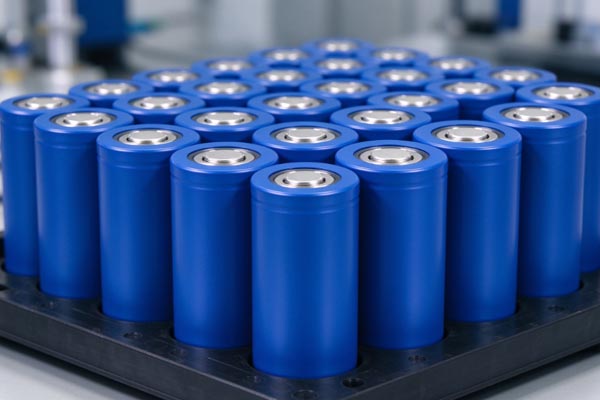
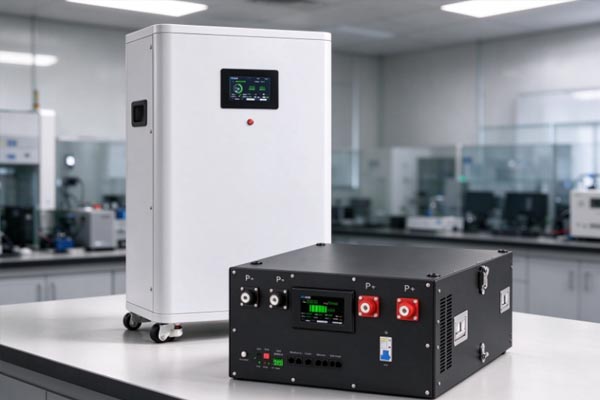
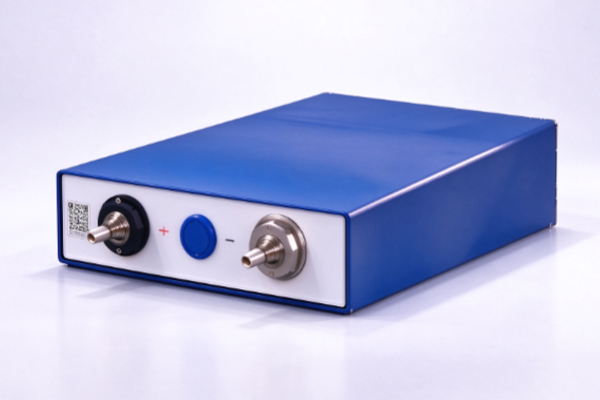
LiFePO4 cells are widely used in energy storage batteries, power batteries, communication backup power supplies, and various industrial battery systems. As market demand increases, the number of supply channels for battery cells has also grown. Original new cells, inventory cells, cells removed from used equipment, and refurbished cells may all be available on the market at the same time. Some refurbished cells undergo surface cleaning, re-marking, polishing, or repackaging, making their appearance quite similar to that of new cells. As a result, it can be difficult to accurately determine their actual condition based on appearance alone.
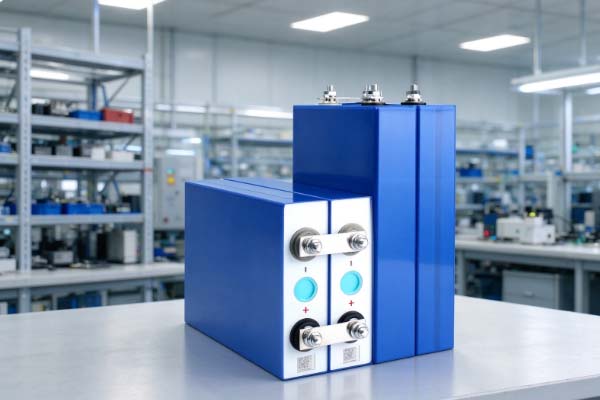
Original LiFePO4 cells generally have complete production batch information, traceable factory records, and relatively stable electrochemical performance. Refurbished cells, however, may have undergone disassembly, repair, re-sorting, or secondary packaging, resulting in differences in usage history, remaining capacity, and internal structural condition. Without the necessary inspections during procurement, buyers may receive cells with degraded capacity, high internal resistance, or poor consistency, affecting the assembly quality and operational safety of battery packs.
Check the Cell Appearance and Production Markings
Original LiFePO4 cells generally feature standardized production markings and relatively consistent manufacturing quality. The printed codes, labels, terminals, and casing treatments on the cell surface are usually uniform and correspond to the product information provided by the manufacturer. After cleaning, polishing, or repackaging, refurbished cells may also look relatively clean, but their casings, welding areas, and label details may still show signs of previous use or repair. Therefore, during inspection, each part should be carefully examined, and the production batch information should also be verified.
Check the Cell Printing and Label Information
Printed markings on cell surfaces usually include the brand, model, rated capacity, production date, batch number, and other product identification information. During procurement, the following details should be checked carefully:
Production Code: Check whether the cell has a clear and complete batch number. Confirm whether the coding format is consistent across products from the same batch, and look for unusual fonts, duplicate codes, or obvious signs of overprinting.
Production Date: Verify the production date against the factory documentation provided by the supplier. Pay attention to whether the date on the label has been altered, blurred, or reattached.
Brand Identification: Check whether the brand name, model, and product specifications are consistent with the manufacturer’s publicly available product information to avoid discrepancies between the labeled model and actual specifications.
Marking Quality: Observe whether the printed markings are uniform and whether there are any abnormalities, such as inconsistent font thickness, partially erased markings, or signs of reprinting.
Clear printed markings do not necessarily mean that a cell is an original new product. Some refurbished products may also have newly produced labels and production codes. Therefore, the information should also be verified through the manufacturer or authorized supply channels.
Inspect the Casing and Terminal Condition
The casing and terminals of LiFePO4 cells can reveal certain signs of previous use and processing, making them important areas to inspect during visual acceptance. For common prismatic aluminum-cased cells, carefully check the casing surface for scratches, dents, oxidation, discoloration, and signs of re-polishing. Also inspect the corners for obvious impact damage or repairs. If there are uneven coating areas, unusual surface treatments, or irregular casing shapes, further verification is needed to determine whether the product has undergone disassembly, repair, or secondary processing.
Pay particular attention to the terminals, top cover, and sealing areas, and check for the following conditions:
- Visible wear, discoloration, or irregular scratches on the terminal surfaces.
- Signs of secondary processing, uneven welding, or obvious repair marks around the top cover welding areas.
- Localized dents, swelling, corrosion, or abnormal deformation of the cell casing.
- Adhesive marks, residue, or irregular signs of reprocessing around the sealing areas.
Original new cells generally have standardized casing processing and assembly quality. However, manufacturing processes vary between manufacturers, so no single appearance characteristic should be used as the only criterion for determining whether a cell is original or refurbished.
Determine the Actual Condition Through Electrical Performance Testing
Visual inspections can only identify certain abnormalities and cannot accurately reflect the actual internal performance of a cell. Even when original new cells and previously used refurbished cells have the same rated capacity and similar appearances, they may differ in actual discharge capacity, internal resistance, and self-discharge performance. Therefore, electrical performance testing is an important step in distinguishing between these two types of products.
Measure the Open-Circuit Voltage
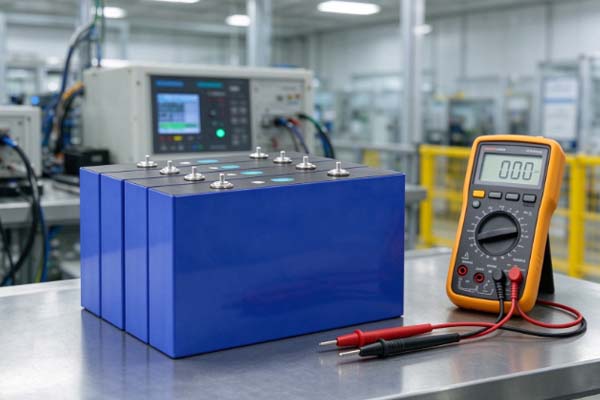
Open-circuit voltage refers to the terminal voltage measured when a cell is at rest without a charging or discharging load. The nominal voltage of a LiFePO4 cell is generally 3.2V, but its actual open-circuit voltage is affected by factors such as state of charge, resting time, and temperature. During inspection, a digital multimeter with suitable accuracy can be used to measure each cell, and the results should be recorded. For cells of the same batch and model that have undergone similar state-of-charge conditioning, any individual cell with a significantly higher or lower voltage should be examined further. A normal voltage does not mean that a cell has no usage history. Some refurbished cells can also reach an open-circuit voltage close to that of new cells after being recharged. Therefore, voltage testing is mainly used for preliminary screening and cannot independently determine whether a product is original.
Test the AC Internal Resistance
Internal resistance reflects the voltage changes and energy losses that occur when current passes through a cell. As the cell is used over time, its internal materials and interface conditions may change, resulting in increased internal resistance. Testing is generally performed using a dedicated internal resistance tester, following the test frequency, temperature, and state of charge specified by the cell manufacturer. For cells of the same model, the measured data should be compared with the internal resistance range specified in the original manufacturer’s datasheet. If individual cells in the same batch show significantly higher internal resistance or considerable variations in measurement results, their usage history and performance condition should be investigated further. Some cells that have undergone repairs or re-sorting may also exhibit considerable internal resistance variation.
Conduct an Actual Capacity Test
Capacity testing is an important method for determining the actual energy storage capability of a cell and is also an effective way to identify certain refurbished cells. During testing, battery charge and discharge testing equipment should be used to perform a complete test according to the charging voltage, discharge cutoff voltage, discharge current, and ambient temperature specified by the manufacturer. The actual discharge capacity can be calculated by recording the discharge current and duration. Capacity testing must also be conducted under consistent conditions. Test results obtained at different temperatures, discharge rates, or cutoff voltages should not be compared directly. IEC 62660-1 also includes capacity, power density, and cycle life among the performance testing requirements for lithium-ion cells.
Verify Batch Documentation and Cell Consistency
Verify Product Origin Through Production Records
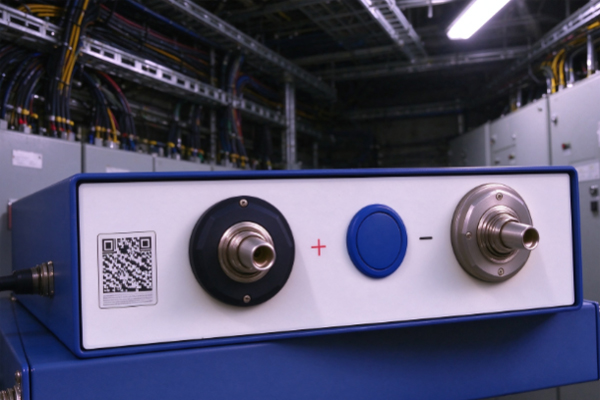
Original LiFePO4 cells can generally be supported by documentation corresponding to the manufacturer, specific model, and production batch. During procurement, buyers should not only review a general product datasheet but also verify whether the actual delivered products match the information in the documentation. Suppliers can be asked to provide the original manufacturer’s datasheet, batch information, factory inspection records, product label photographs, and relevant quality certification documents. For cells equipped with QR codes or serial numbers, production information can be verified through official channels recognized by the manufacturer to confirm whether the model, batch, and production date correspond to the records. It is important to distinguish between product model documentation and actual batch documentation. A datasheet mainly describes the design parameters of a particular model and cannot directly prove that every delivered cell is an original new product. Batch inspection records, on the other hand, should clearly specify the test samples, inspection dates, testing conditions, and actual results.
Products from the Same Batch Should Maintain Reasonable Consistency
Under normal production and quality control procedures, original cells from the same batch generally have relatively similar dimensions, weights, voltages, and internal resistance values. If refurbished cells come from different devices, usage periods, or production batches, variations in their data may remain even after re-sorting. During procurement acceptance, samples from the same batch can be inspected, or each cell can be tested individually. Record the voltage, internal resistance, weight, and capacity of each product, and then compare the results across the batch.
If a batch of cells has identical external labels but shows significant differences in actual weight, or inconsistent internal resistance and capacity distributions, further investigation is necessary. Particular attention should be paid to situations where the production dates on the cell labels are identical, but the QR code information cannot be verified or the product dimensions show unusual differences. Original cells may also have normal manufacturing tolerances, so minor parameter variations should not automatically be regarded as evidence of refurbishment. Judgments should be based on the original manufacturer’s specifications and inspection standards for the corresponding model.
Frequently Asked Questions
Q1: Do Original LiFePO4 Cells Always Have No Scratches?
Not necessarily. Minor surface marks may occur during transportation, storage, and handling. New cells kept in inventory may also have normal packaging wear. When evaluating their condition, buyers should consider the location of scratches, terminal condition, welding marks, and batch documentation. Minor scratches alone are not sufficient to identify a refurbished cell.
Q2: Can Refurbished Cells Still Be Identified After Being Re-labeled with Original Factory Labels?
Identification can be difficult. If refurbished cells have been fitted with newly produced labels and QR codes, visual inspection alone may not reveal the problem. The product serial numbers can be submitted to the manufacturer for verification. Buyers should also inspect terminal processing marks and conduct internal resistance, capacity, and self-discharge tests for further evaluation. The fact that a QR code can be scanned does not necessarily confirm its authenticity.
Q3: Can Voltage and Internal Resistance Tests Alone Confirm That Cells Are Original New Products?
No. Voltage and internal resistance tests mainly indicate the current electrical condition of a cell. Refurbished cells that have been screened or reprocessed may also produce normal test results. To verify product origin, buyers need to combine manufacturer batch records, factory documentation, and capacity test results for a comprehensive assessment.
Q4: Should Every Cell Be Tested When Purchasing High-Capacity LiFePO4 Cells?
It is recommended that every cell undergo visual inspection, identification number recording, and basic voltage and internal resistance testing. Capacity testing can be arranged according to the purchase quantity, product application, and acceptance requirements. For large-scale energy storage projects, critical backup power systems, or applications with high cell consistency requirements, the sampling ratio can be increased. If necessary, every cell should undergo capacity testing, with complete inspection data retained.
Distinguishing original LiFePO4 cells from refurbished cells requires a combined assessment of product appearance, production markings, electrical performance, and batch documentation. A single test result can only reflect part of a cell’s condition and cannot directly prove its production origin or usage history. During procurement acceptance, inspections can be conducted in the following order: first, verify the manufacturer, model, production date, and batch code; then inspect the casing, terminals, and sealing areas; next, measure the open-circuit voltage and internal resistance; finally, conduct capacity testing and batch consistency analysis according to procurement standards.
If a supplier can provide verifiable original factory batch documentation, the cell appearance meets the manufacturing requirements for the corresponding model, and the actual capacity and internal resistance comply with the datasheet specifications, this generally provides stronger evidence of product quality. Conversely, if there are signs of reattached labels, abnormal QR code information, polished terminals, insufficient capacity, or missing batch documentation, the products should be accepted with caution. It is also important to note that Grade A and Grade B cells are common commercial grading terms in the market. The grade label alone cannot determine whether a product is an original new cell. Procurement contracts should clearly specify the cell manufacturer, model, capacity requirements, production batch, quality acceptance standards, and procedures for handling non-conforming products.