The share of new energy buses in urban transportation systems continues to increase, and the performance of the power system directly affects vehicle operational efficiency and economic performance. Whether in urban public transport, tourist passenger transport, or intercity transportation scenarios, the battery system plays a core role as the energy supply unit. Its stability and energy efficiency determine vehicle range, maintenance cycles, and long-term operating costs. Building a battery system solution around electric buses requires not only improving range capability but also strengthening battery safety, intelligent control, thermal management, and whole-vehicle system coordination to achieve higher operational reliability.
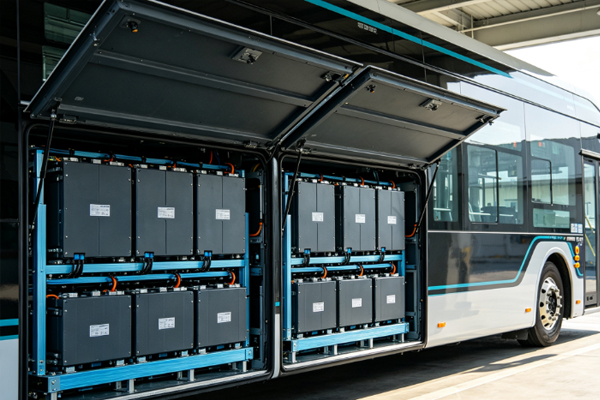
What Components Make Up an Electric Bus Battery System
The electric bus battery system is a highly integrated energy core, and its structural design directly affects vehicle performance and safety.
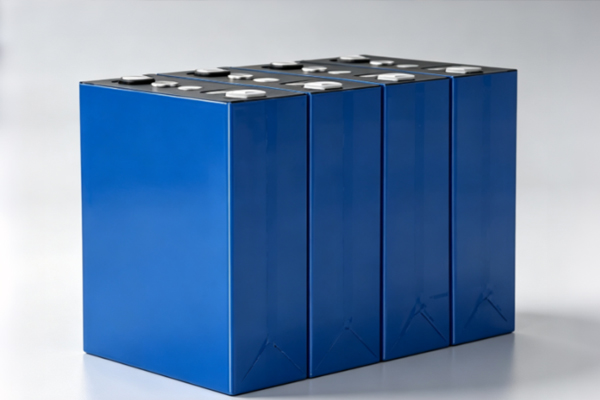
Battery Cells and Battery Modules
Battery cells are the fundamental energy storage units and play a decisive role in vehicle range and output capability.
- Use high-consistency cells to reduce performance fluctuations caused by parameter differences.
- Optimize module structural design to improve space utilization and energy density.
- Improve conductive and connection structures to reduce internal resistance losses and enhance energy transfer efficiency.
A stable combination of cells and modules provides a reliable and continuous power output foundation for electric buses.
Battery Management System (BMS)
The BMS is the core control unit of the battery system, responsible for operational monitoring and safety management.
- Real-time collection of voltage, current, and temperature data to enable visualized system status.
- Perform cell balancing to improve consistency and extend cycle life.
- Provide multiple protection mechanisms including overcharge, over-discharge, overcurrent, and short-circuit protection.
A high-performance BMS significantly improves the safety level and operational stability of the battery system.
Thermal Management System
Temperature control capability directly affects battery performance output and service life.
- Adopt efficient heat dissipation structural design to improve overall thermal exchange efficiency.
- Maintain battery temperature within an appropriate operating range to ensure stable performance.
- Reduce the impact of high temperature or extreme environments on battery degradation.
A scientific thermal management solution helps improve system reliability and extend service life.
Advantages of Electric Bus Battery System Solutions
With technological development, battery systems show greater advantages in efficiency, safety, and intelligence.
Improved Vehicle Operational Efficiency
Through an integrated design approach, energy utilization paths are optimized, effectively improving overall vehicle performance. A well-designed PACK structure reduces internal energy losses and enhances power transmission efficiency, allowing the vehicle to maintain stable output under acceleration, climbing, and high-load conditions. At the same time, reduced system energy consumption significantly extends driving range under the same battery capacity, improving both economic efficiency and operational stability in real-world applications.
Enhanced Battery Safety Management
Battery safety remains a core focus in electric bus system design. The safety concept runs through the entire development and application process of the battery system. A multi-level and multi-dimensional safety protection mechanism is established to achieve comprehensive protection from hardware to software. The system also features automatic anomaly detection and real-time alarm capabilities to ensure timely issue identification and response. In addition, it supports complete fault diagnosis and data analysis, providing a basis for subsequent maintenance and optimization. These measures effectively reduce operational risks and improve overall vehicle reliability.
Support for Intelligent Management
Battery systems are gradually evolving toward digitalization and intelligence.
- Support remote monitoring for real-time operational status tracking.
- Provide battery health analysis to evaluate degradation trends.
- Establish maintenance early-warning mechanisms to improve fault prediction capability.
- Enable data visualization management to enhance operational decision efficiency.
Intelligent management methods effectively reduce manual maintenance costs and improve overall operational efficiency.
Recommended Battery System Configurations for Different Operating Scenarios
Different application scenarios have different priorities for battery systems, requiring targeted design.
| Application Scenario | Core Requirements | Recommended System Solution |
| Urban Bus | High-frequency operation, stable power supply | Intelligent BMS + long-life battery system |
| Intercity Passenger Transport | Long range | High energy density battery system |
| Tourist Bus | Long-duration operation | High-reliability PACK system |
| Airport Shuttle | High safety | Multi-layer safety protection solution |
| Customized Bus | Flexible configuration | Customized battery system solution |
Proper system matching improves overall vehicle performance and optimizes operational cost structure.
How to Choose a Suitable Electric Bus Battery System
In practical selection, system capability, testing standards, and customization level must be comprehensively considered.
Focus on System Integration Capability
The battery system must achieve efficient coordination with the whole vehicle.
- Match with the vehicle power platform to ensure consistent control logic.
- Support standard communication protocols for data interaction and coordinated control.
- Improve system compatibility to adapt to various vehicle structures.
Strong system integration capability helps improve vehicle operational efficiency and reduces maintenance complexity.
Emphasize Product Testing Capability
A comprehensive testing system is key to ensuring battery system quality and reliability.
- Conduct cycle life testing to verify long-term degradation performance.
- Perform high and low temperature environment testing to ensure stable operation under different climates.
- Complete vibration, protection, and safety testing to comprehensively evaluate reliability.
A systematic testing process significantly improves battery system stability and ensures long-term operational reliability.
Support Project Customization Development
Different projects have significant differences in technical parameters and application requirements, making customization capability essential.
- Support customization of battery capacity and voltage platforms to meet different range requirements.
- Support optimized PACK structural design to adapt to various installation spaces.
- Support customized BMS functions and upgrades for differentiated management.
- Provide integrated solutions from cells to system level to improve delivery efficiency.
Battery systems with strong customization capability better adapt to diverse market demands and enhance product competitiveness.
The electric bus industry is continuously evolving toward higher efficiency, stronger intelligence, and higher safety standards. As the core power source, the technical level of the battery system directly determines overall vehicle performance. By building a complete solution around battery safety, intelligent management, system integration, and thermal management technology, it is possible not only to improve vehicle operational stability but also to reduce overall lifecycle operating costs, providing strong support for the high-quality development of new energy transportation systems.