As demand for short-distance urban transportation continues to grow, electric scooters are widely used for daily commuting, shared mobility, campus transportation, and delivery services. For electric scooter manufacturers and operators, the battery determines more than just how far the scooter can travel. It also directly affects acceleration, vehicle weight, charging efficiency, and service life. Therefore, a suitable electric scooter lithium battery solution needs to consider the battery cells, capacity, BMS, structural design, charging and discharging performance, and other factors.
Why Do Electric Scooters Need Professional Lithium Battery Solutions?
Different Range Requirements
Electric scooters with different designs have different motor power, vehicle weight, and operating conditions. Commuter scooters generally focus on balancing lightweight design and riding range, while high-performance models require more stable instantaneous discharge performance.
A larger battery capacity is not always better. Increasing capacity usually increases battery weight and size, so the battery needs to be matched with the motor power, target range, and available space inside the scooter.
Batteries Need to Handle Frequent Use
Commercial applications such as shared scooters and delivery scooters may experience multiple charge and discharge cycles every day. This places higher demands on battery cycle life and operating stability.
Instead of simply pursuing higher capacity, selecting suitable battery cells and using an effective BMS can help maintain stable battery performance during frequent use.
Key Design Factors of Electric Scooter Lithium Batteries
Battery Cells and Voltage Configuration
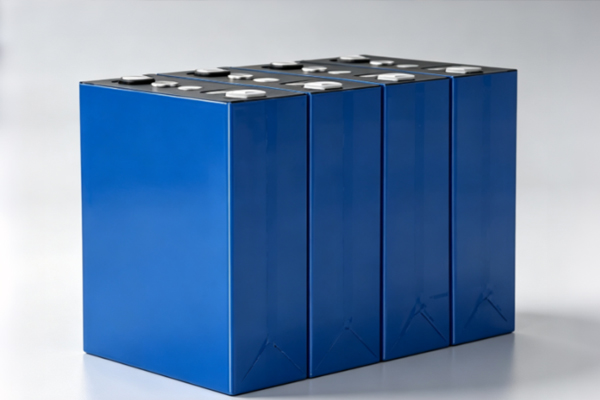
The battery voltage needs to be determined according to the scooter motor and controller, while the capacity should be selected according to the required riding range. Cylindrical lithium battery cells are commonly used and can be connected in series and parallel to create a battery pack that meets the vehicle’s requirements.
Deligreen provides cylindrical battery cells, lithium battery packs, and customized battery solutions. Voltage, capacity, battery structure, and connection methods can be configured according to specific application requirements.
Battery Management System
The BMS is an important part of an electric scooter lithium battery. It monitors battery operating conditions and can provide protection against overcharging, over-discharging, overcurrent, short circuits, and other potential problems according to the battery design.
For applications requiring intelligent battery management, communication functions can also be integrated. Depending on project requirements, Deligreen’s customized battery solutions can support communication methods such as CAN, RS485, and Bluetooth.
Battery Structure and Thermal Management
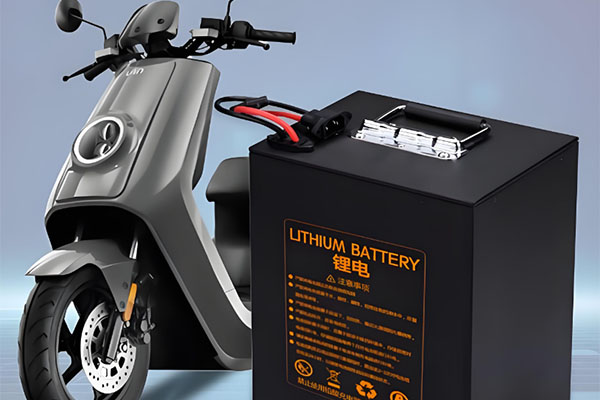
Electric scooters have limited internal space, and the battery is often installed inside the deck or frame. Therefore, battery pack design should consider not only capacity but also dimensions, weight, protection structure, connectors, and wiring layout.
A well-designed battery structure can improve the stability of the battery pack while making installation, maintenance, and replacement more convenient.
Recommended Battery Configurations for Different Applications
| Application | Main Requirements | Battery Design Direction | Key Parameters |
| Daily Commuting | Lightweight design and balanced range | Compact lithium battery pack | Voltage, capacity, weight |
| High-Performance Scooters | Power output and acceleration | High-discharge battery pack | Discharge rate, internal resistance |
| Shared Scooters | Frequent use and durability | High-cycle-life battery solution | Cycle life, BMS |
| Delivery Scooters | Long range and stable operation | High-capacity battery pack | Capacity, thermal management, reliability |
| Customized Models | Space and performance matching | OEM/ODM battery solution | Dimensions, interfaces, communication |
How to Choose the Right Electric Scooter Battery?
Determine Battery Capacity Based on Range
Battery capacity should be selected according to the actual riding distance and energy consumption rather than simply looking at the Ah rating. Motor power, riding speed, payload, road conditions, and ambient temperature can all affect the actual range.
Select Discharge Performance According to Power Requirements
If an electric scooter requires strong acceleration or hill-climbing performance, the battery needs to provide continuous and peak discharge capabilities that match the controller.
Battery cell performance, series-parallel configuration, and BMS parameters should be designed as an integrated system.
Select a Battery Solution According to the Operating Environment
Temperature and operating conditions can also affect battery performance. For low-temperature environments or specialized applications, battery technologies optimized for low-temperature performance may be considered.
Deligreen’s product portfolio also includes LTO battery solutions for specialized applications and low-temperature requirements.
Customized Electric Scooter Lithium Battery Solutions
For electric scooter manufacturers, standard batteries may not always match the available frame space or control system. OEM/ODM solutions can be customized in terms of battery cells, voltage, capacity, battery pack structure, BMS, connectors, and housing.
Deligreen’s OEM/ODM process covers requirement confirmation, solution design, sample testing, order confirmation, mass production, and delivery support. Battery solutions can be developed according to application requirements, target voltage, capacity, dimensions, discharge performance, and order quantity.
A reliable electric scooter lithium battery solution is not simply about choosing a battery with a larger capacity. It requires a balance between riding range, power output, safety, weight, available space, and service life.
With the right battery cells, BMS, and structural design, lithium battery packs can be better adapted to different types of electric scooters. For manufacturers requiring customized or bulk battery packs, factors such as target voltage, capacity, dimensions, discharge requirements, operating environment, and order quantity should be considered when selecting a battery solution. This helps create a more stable and efficient power system for electric scooters.