The depth of discharge of a LiFePO4 battery, commonly referred to as DOD (Depth of Discharge), refers to the percentage of the battery capacity consumed during a single use. For example, if a 100Ah LiFePO4 battery uses 50Ah, the depth of discharge is 50%; if it uses 80Ah, the depth of discharge is 80%. Depth of discharge has a relatively close relationship with battery cycle life. When the same battery is used under different DOD conditions, the number of cycles it can complete will usually vary. For most daily energy storage applications, a depth of discharge of 50%–80% is generally a suitable range for balancing runtime and battery life. If battery life is the higher priority, daily DOD can be controlled at around 50%–70%; if single-use available capacity is more important, it can be appropriately increased to around 80%.
LiFePO4 batteries themselves have good cycle performance and normally do not need to be deeply discharged as frequently as some traditional batteries. However, it is not recommended to continuously use the battery until the charge level becomes extremely low before charging it. It should be noted that the ideal depth of discharge is not a fixed value that is exactly the same for every battery. Cell model, manufacturing quality, BMS protection parameters, operating temperature, discharge rate, and application scenario can all affect actual service life. When selecting a DOD, users should also refer to the technical specifications provided by the battery manufacturer. If the product clearly specifies a recommended discharge range, the product instructions should be followed as the priority.
What Is the Depth of Discharge of a LiFePO4 Battery?
How Should DOD Be Understood?
DOD is the abbreviation for “Depth of Discharge” and is used to indicate how much of the rated battery capacity is consumed during a single use.
Taking a 100Ah LiFePO4 battery as an example:
Consuming 20Ah means a depth of discharge of approximately 20%;
Consuming 50Ah means a depth of discharge of approximately 50%;
Consuming 80Ah means a depth of discharge of approximately 80%;
Consuming 90Ah means a depth of discharge of approximately 90%.
The greater the depth of discharge, the more electricity can be used in a single cycle. However, frequent deep discharge over a long period may accelerate battery capacity degradation. Therefore, during actual use, an appropriate balance should be found between available energy and battery life according to runtime requirements.
Why Does Depth of Discharge Affect Battery Life?
Every time a battery completes a charging and discharging cycle, certain changes occur in its internal materials. A shallow cycle generally means that a smaller percentage of the capacity is used in a single cycle, while a deep cycle means that more capacity is consumed at one time. For example, a 100Ah battery that uses only 30Ah per day experiences a different cycle depth from one that uses 80Ah per day, even though both methods can provide power to the equipment. Over the long term, differences may appear in battery capacity retention. Therefore, battery usage cannot be evaluated simply by looking at “how many times it has been charged”; the actual capacity used each time also needs to be considered.
What DOD Is Suitable for LiFePO4 Batteries?
50%–70% Is Suitable for Users Who Prioritize Battery Life
If users are more concerned about long-term battery service life, daily depth of discharge can be controlled at around 50%–70%. For example, if a 100Ah battery uses around 50Ah per day before being recharged, this is equivalent to a cycle of approximately 50% DOD. This usage method avoids frequently bringing the battery to a low state of charge and is practical for applications such as RVs, home energy storage, and backup power supplies. The disadvantage is that less capacity is available for each use, so battery capacity needs to be determined according to the daily power consumption of the equipment.
70%–80% Is Suitable for Balancing Capacity and Battery Life
For users who require greater runtime, a daily DOD of around 70%–80% can be considered. For example, using a 100Ah battery until approximately 20%–30% of the capacity remains before charging allows a relatively large amount of usable energy to be obtained from each cycle. This usage method is common in applications such as solar energy storage, RVs, and portable outdoor power supplies. If the battery manufacturer permits a higher DOD, occasional use to around 90% does not necessarily cause immediate damage, but frequent deep discharge over a long period is not recommended.
How Should DOD Be Controlled in Different Applications?
Energy Storage Equipment
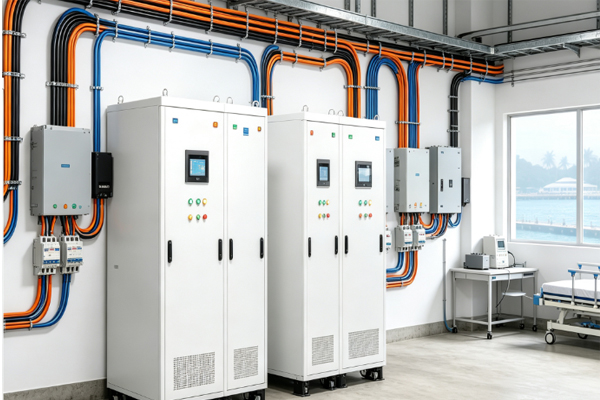
Home energy storage and solar energy storage systems usually charge and discharge every day. For these applications, an appropriate depth of discharge can be selected according to the actual load. If the energy storage system has a relatively large capacity, a lower DOD can be set so that the battery always retains a certain amount of power. This leaves some reserve capacity even when electricity demand increases at night. If the system has limited capacity and the available energy needs to be maximized, the DOD can be increased within the range permitted by the manufacturer.
RVs and Electric Equipment
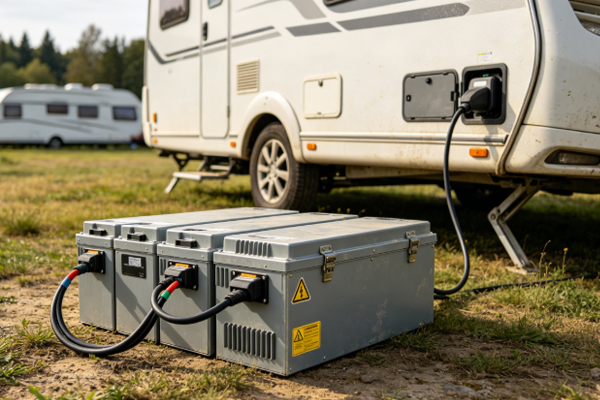
The power requirements of RVs, low-speed electric vehicles, and other mobile equipment can vary. Some users consume only a small amount of power each day, while others need to use the battery continuously for extended periods. For short-distance daily use, frequent deep discharge can be avoided. For long-distance travel, operation can be arranged according to the remaining battery capacity and charging conditions. There is no need to restrict normal travel simply to maintain a low DOD.
Four Daily Control Methods
Calculate power consumption based on capacity: Estimate the amount of electricity that needs to be consumed each day in advance, and then determine the appropriate battery capacity.
Set an appropriate low-battery threshold: If the BMS or equipment supports parameter settings, set a reasonable discharge cutoff value according to the manufacturer’s recommendations.
Avoid long-term operation at low charge levels: When the battery is already close to a low charge level, arrange charging promptly to reduce continuous deep discharge.
Adjust usage according to the environment: High temperatures, low temperatures, and high-current discharge can all affect battery condition, so DOD should not be the only parameter considered.
Frequently Asked Questions
Q: Is It Good to Discharge a LiFePO4 Battery to 0% Every Time Before Charging?
A: This is not recommended for long-term use. The so-called 0% battery level usually refers to the discharge cutoff state set by the BMS or equipment and does not mean that the cells actually contain no energy. Frequently using the battery to a very low charge level increases the number of deep cycles, which is not beneficial for long-term capacity retention.
Q: If I Use Only 20% of the Battery Capacity Every Day, Do I Need to Charge It Every Day?
A: Charging can be arranged according to actual equipment requirements. If only 20% is used each day, this type of shallow cycling is generally relatively gentle on the battery. Whether charging is required every day mainly depends on the next day’s power requirements and charging conditions.
Q: Will 80% DOD Affect the Service Life of a LiFePO4 Battery?
A: 80% DOD is considered a relatively deep cycling range, but it can be used normally for LiFePO4 batteries that support this depth of discharge. However, compared with shallower DOD, there may be differences in capacity retention after long-term cycling.
Q: Is Shallower Discharge Always Better for LiFePO4 Batteries?
A: Not necessarily. Excessively pursuing shallow discharge may require a larger battery capacity and may also increase the number of charging sessions. During actual use, an appropriate DOD should be selected according to battery specifications, equipment requirements, and economic costs.
There is no single “ideal depth of discharge” for LiFePO4 batteries that is suitable for every device. For users who prioritize cycle life, a daily DOD of around 50%–70% is generally relatively gentle; when balancing runtime and battery utilization, a DOD of around 70%–80% can be used. The specific range still needs to be determined according to the cycle test conditions and BMS parameters provided by the battery manufacturer. During use, it is not recommended to regularly discharge the battery to an extremely low level before charging, nor is it necessary to make the equipment charge frequently just to pursue shallow cycling. A more reasonable approach is to select the battery capacity according to actual daily power consumption so that the DOD remains within an appropriate range during normal use. For 100Ah, 200Ah, or even larger LiFePO4 batteries, the method of determining DOD is the same. As long as you understand the basic calculation of “actual capacity consumed ÷ rated battery capacity,” you can roughly determine the depth of discharge for each use. Combined with appropriate charging and discharging parameters, suitable operating temperatures, and normal BMS protection, unnecessary battery wear can be reduced, allowing LiFePO4 batteries to maintain good capacity and stability.