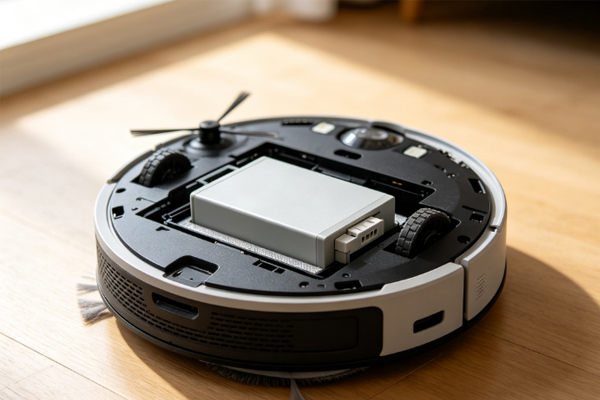
A floor-cleaning robot may look simple from the outside—it moves around, sweeps the floor, and returns to charge on its own. But once it is used in shopping malls, hotels, airports, warehouses, or factories, the battery has a much bigger job to do. A commercial cleaning robot may run for several hours a day while powering the drive motor, brushes, vacuum system, water pump, and control electronics at the same time. If the battery capacity is too low, the robot will keep returning to the charger. If the battery is too heavy, it can put extra load on the drive system. For buyers, the real questions are simple: How long can it run? Is the power output enough? Will the battery fit? And can it handle frequent daily use?
How to Choose the Battery Capacity and Voltage for a Sweeper Robot?
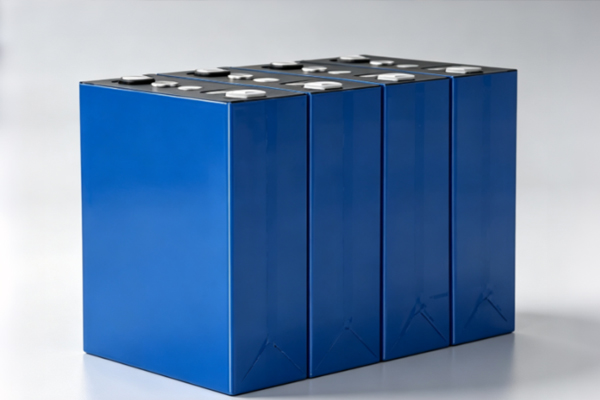
Choosing a sweeper robot battery is not simply a matter of looking at the Ah rating. The motor power, operating time, battery compartment, and charging system all affect the right battery specification. A LiFePO4 robot battery should normally be selected based on the robot’s rated voltage, average power consumption, target runtime, and available installation space. Some robotic systems may also require communication functions so that the main controller can monitor battery status.
How Do You Calculate Battery Capacity for a Sweeper Robot?
A practical way to estimate the required battery capacity is to start with the robot’s average power consumption and expected operating time.
Required battery energy ≈ Average power × Operating time
For example, if a sweeper robot consumes an average of 500W and needs to operate for 4 hours, its theoretical energy consumption would be around 2kWh. In actual battery selection, it is not a good idea to size the battery exactly to this figure. Conversion losses, changes in operating load, battery aging, and other operating conditions should also be considered.
Before asking a battery supplier for a quote, it helps to prepare the following information:
- What is the robot’s rated power?
- How many hours does it need to operate per charge?
- How many operating cycles are expected each day?
- Will vacuuming, brushing, mopping, and water pumping run at the same time?
These details make it much easier to determine the appropriate robot battery voltage and capacity than simply asking for a “large-capacity battery.”
What Is the Difference Between 24V and 48V Sweeper Robot Batteries?
Both 24V and 48V battery systems can be used in robotic equipment, but they are not interchangeable. At the same power level, a higher-voltage system generally requires lower operating current, which can be useful for larger commercial cleaning robots. Different LiFePO4 robot battery configurations are available for different voltage platforms, with capacity and discharge current adjusted to the requirements of the equipment.
| Robot Battery Parameter | Small Sweeper Robot | Commercial Sweeper Robot | Industrial Cleaning Robot |
| Voltage | 12V / 24V class | 24V / 36V / 48V class | 36V / 48V and above |
| Capacity | Focus on lightweight design | Medium to high capacity | Sized for continuous operation |
| Main Priority | Size and weight | Runtime and cycle life | Power output and runtime |
| Typical Environment | Indoor use | Malls, hotels, etc. | Factories, warehouses, etc. |
| Battery Design | Compact battery pack | Modular battery pack | Reinforced or customized pack |
These voltage ranges are only general references for early-stage selection. The final voltage must match the robot motor, controller, charger, and other electrical components. A higher-voltage battery should never be installed simply to increase power without checking system compatibility.
How Much Discharge Current Does a Sweeper Robot Battery Need?
The power demand of a robot changes during operation. The current required for steady movement may be very different from the current required when the robot starts, turns, climbs a slope, or runs several cleaning functions simultaneously.
If the battery can only handle the average power demand but cannot support the peak current, the robot may experience reduced driving power or battery protection shutdowns.
When purchasing a robot battery, it is worth checking more than the Ah rating:
- What is the maximum continuous discharge current?
- What peak discharge current can the battery support?
- Does the drive motor have a high startup current?
- Are the BMS over-current protection settings compatible with the robot?
For commercial cleaning robots, this can make a big difference. A battery may have plenty of capacity, but if its output cannot handle the robot’s peak load, the actual performance will still be disappointing.
Are LiFePO4 Robot Batteries Suitable for Sweeper Robots?
Sweeper robots are often high-frequency equipment. Commercial models may go through charging and discharging cycles every day, sometimes several times a day. The battery needs to provide more than enough energy for one operating cycle—it also needs to handle repeated use, frequent motor starts, and the limited space inside the robot. LiFePO4 batteries are widely used in robotic equipment, AGVs, and cleaning machines because they offer a practical combination of cycle life, thermal stability, and flexible battery-pack configurations.
Why Are LiFePO4 Batteries Suitable for High-Frequency Sweeper Robots?
For commercial cleaning equipment, the battery’s long-term performance can have a direct impact on maintenance costs. LiFePO4 batteries are well suited to applications that require repeated charging and discharging. Their cycle life, thermal stability, and modular design are key considerations when selecting a robot battery.
For shopping malls, airports, hotels, and similar environments where robots operate for long periods every day, buyers should not compare batteries based only on the initial price. Battery replacement frequency, downtime, maintenance requirements, and expected service life all affect the real cost of ownership.
Does Robot Battery Weight Affect Sweeper Robot Runtime?
Yes. A battery is part of the robot’s total moving load. Increasing battery capacity can extend runtime, but it also increases battery weight and physical size. Simply choosing the largest possible battery is not always the best solution.
For a robot with automatic charging, the battery can be sized to cover a practical operating cycle before the robot returns to the charging station. If the robot needs to operate for long periods without access to a charger, a larger battery may be necessary, but the effect on total robot weight should be checked at the same time.
Can Sweeper Robot Batteries Be Customized?
Yes. This is often one of the most important requirements for robotic equipment manufacturers. The battery compartment, chassis layout, wiring, and internal components are usually designed around a specific robot platform, so a standard battery may not fit properly.
A customized robot battery can be designed around the actual equipment requirements, including:
- Battery compartment length, width, and height.
- Required voltage and capacity.
- Robot power consumption and motor specifications.
- Charger output voltage and current.
- Battery connector, communication interface, and mounting method.
Providing accurate dimensional information at the beginning can save considerable time during development. Once a robot has entered mass production, changing the battery enclosure may also affect brackets, wiring, and internal assembly. It is much easier to confirm these details during the prototype stage.
Does a Sweeper Robot Battery Need a BMS?
For a customized robot battery pack, a BMS is normally an important part of the battery management system. It can monitor battery voltage, current, and temperature while providing protection functions such as overcharge, over-discharge, over-current, and temperature protection.
Some robotic systems also use CAN or RS485 communication to read battery information from the BMS, including state of charge, operating status, temperature, and fault information.
Not every sweeper robot requires the same communication functions. A simple power supply may only require basic protection, while a smart commercial robot may need real-time battery data. The communication protocol should be confirmed before the battery pack is finalized.
How Can a Sweeper Robot Battery Improve Runtime and Charging Efficiency?
Many buyers initially focus on one question: “How many Ah do I need?” In real applications, however, the more useful questions are how long the robot can operate per charge, how often it needs to recharge, how long charging takes, and how the robot manages automatic charging. A commercial sweeper that has to return to the charging station every 30 minutes may not be practical for a large facility, even if its battery is inexpensive. The battery solution needs to fit the robot’s working schedule and cleaning workload.
How Long Can a Sweeper Robot Run on One Charge?
There is no universal runtime for a particular battery capacity. Two robots using batteries with the same energy rating may have very different runtimes because of differences in driving speed, floor conditions, vacuum power, brush load, and water-pump operation.
| Application | Typical Operating Conditions | Key Robot Battery Requirements |
| Hotels | Scheduled cleaning with frequent charging opportunities | Capacity and automatic charging |
| Shopping Malls | Large cleaning areas and long operating hours | Runtime and cycle life |
| Airports | Long periods of continuous operation | Capacity, weight, and stable output |
| Factories | Dusty environments and changing floor loads | Discharge capability and battery protection |
| Warehouses | Long travel distances | Runtime and peak power |
If the robot manufacturer already has a prototype, actual testing is usually the most reliable way to determine battery requirements. Record operating time, current consumption, and remaining battery capacity during a complete cleaning cycle, then adjust the battery capacity based on the results. This gives a much more realistic battery specification than simply selecting a standard Ah rating.
Are Fast-Charging Batteries Suitable for Sweeper Robots?
It depends on the robot’s operating schedule. If the robot can charge for several hours overnight, standard charging may be sufficient. If it needs to operate for most of the day and only has short periods available for charging, faster charging can be more useful.
Fast charging should not simply mean increasing the charging current as much as possible. The battery cells, BMS, charger, wiring, and thermal conditions all need to support the selected charging rate. Buyers should provide the target charging time to the battery supplier and have the charging parameters designed around the complete battery system.
Do Sweeper Robots Need Spare Batteries?
For high-use environments such as shopping malls, airports, factories, and warehouses, spare batteries can be considered for battery rotation. If the robot uses a removable battery design, one battery can power the robot while another is being charged, reducing waiting time.
This approach can work particularly well when equipment cannot remain idle for long periods. However, buying more spare batteries is not automatically better. The required quantity should be estimated from the number of robots, daily operating hours, charging time, and available charging stations.
If the robot supports automatic charging, additional charging stations may also be used to reduce the need for spare batteries.
What Should Be Considered for Long-Term Sweeper Robot Battery Use?
Commercial cleaning robots often operate for long hours every day, so battery selection should not be based only on first-use performance. Buyers should look at cycle life, operating temperature, charging conditions, protection functions, and communication requirements when defining the battery specification.
For robot manufacturers selling internationally, transportation and compliance requirements for lithium batteries should also be checked in advance. Preparing the necessary battery documentation during the prototype stage can make later mass production and international shipments much smoother.
Choosing a sweeper robot battery is not simply about selecting the largest capacity or the lowest price. The real goal is to make the voltage, power output, runtime, weight, physical dimensions, and charging method work together. LiFePO4 robot batteries offer a practical option for high-frequency cleaning equipment, while customized battery packs, BMS configurations, connectors, and enclosure dimensions can be adapted to different robot platforms. For buyers developing or purchasing sweeper robots, providing the supplier with the robot’s power requirements, battery compartment dimensions, target runtime, and charging method is a much more reliable way to determine the right robot battery than comparing Ah ratings and unit prices alone.