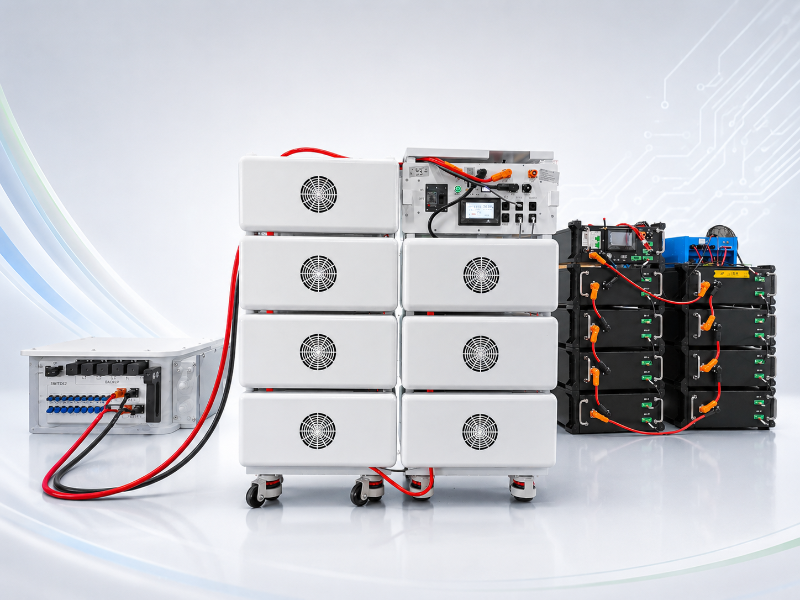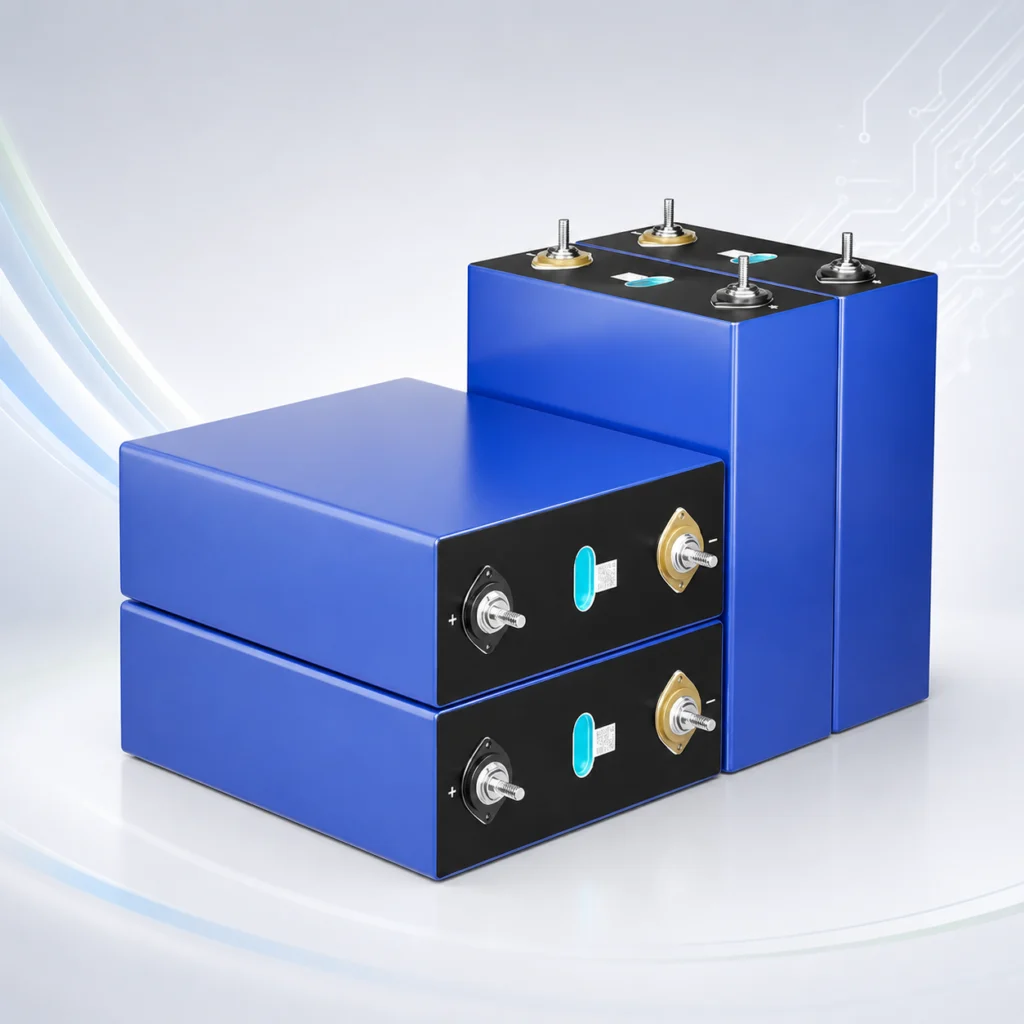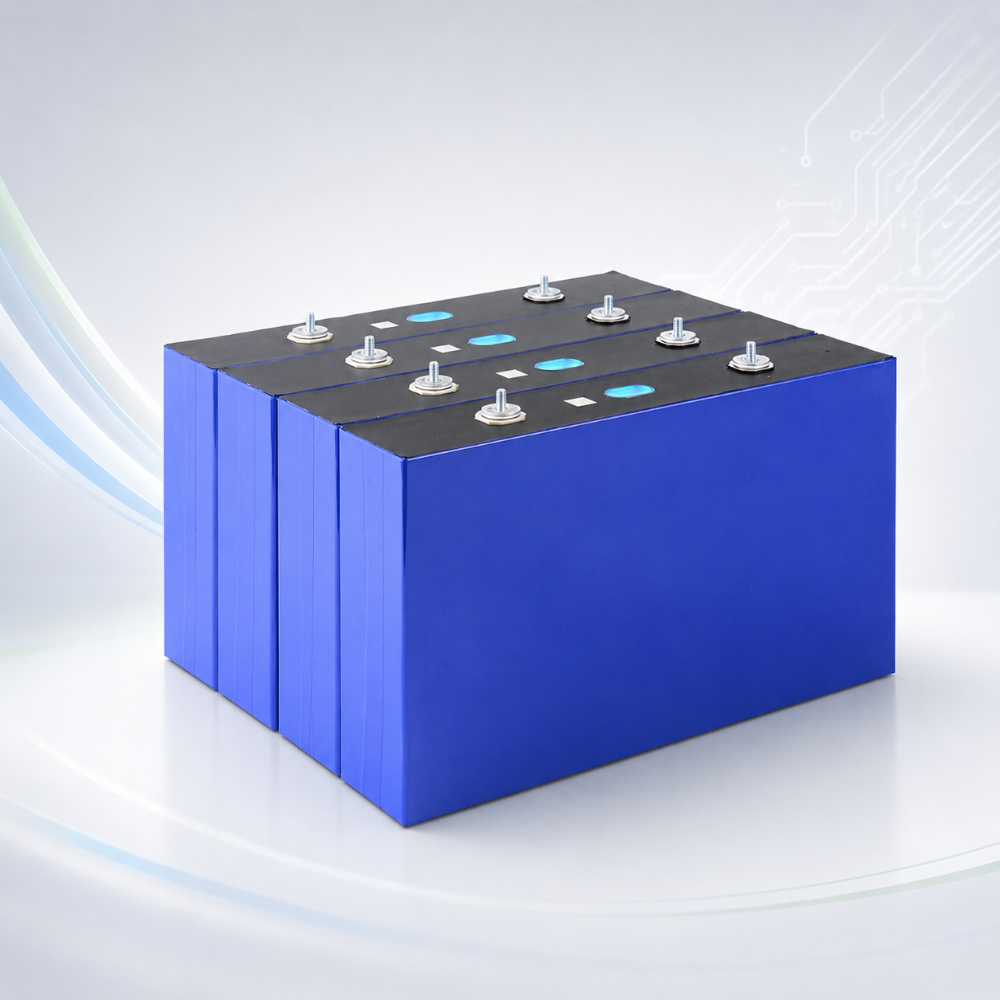
Lithium iron phosphate (LiFePO4) batteries are widely used in RV energy storage, solar energy storage, communication backup power, electric equipment, and commercial and industrial energy storage systems because of their long cycle life, stable safety performance, high energy efficiency, and low maintenance requirements. Unlike lead-acid batteries, LiFePO4 batteries have specific charging voltage requirements. Choosing an unsuitable charger output voltage may prevent the battery from reaching a full state of charge, reduce charging efficiency, or cause the battery management system (BMS) to activate protection functions. When selecting a LiFePO4 battery charger, users should consider not only the charging current but also the battery’s nominal voltage, number of cells connected in series, maximum charging voltage, and BMS specifications. A common 12V LiFePO4 battery is typically made of four 3.2V cells connected in series, giving it a nominal voltage of 12.8V and a full-charge voltage of approximately 14.6V. A 24V-class battery normally has a nominal voltage of 25.6V and a charging voltage of about 29.2V, while a 48V-class battery commonly has a nominal voltage of 51.2V and a charging voltage of approximately 58.4V. Understanding the relationship between battery voltage and charger output voltage can help users select the right charger and achieve safer, more stable charging.
Why Is LiFePO4 Charger Output Voltage Important?
The charging process of a LiFePO4 battery needs to operate within the voltage range specified by the battery manufacturer. The battery’s nominal voltage is not the same as the voltage required from the charger. For example, a 12.8V LiFePO4 battery has a nominal voltage of 12.8V, but its full-charge voltage is generally around 14.6V. The charger needs to provide an appropriate voltage above the battery’s nominal voltage to push current into the cells and complete the charging process.
If a standard 12V power supply is used directly to charge a 12.8V LiFePO4 battery, its output may not be high enough to reach the required full-charge voltage. The battery may remain partially charged for extended periods, reducing the available energy capacity.
An excessively high charging voltage is also unsuitable. Although the BMS can provide overvoltage and overcharge protection, the BMS should not be treated as a substitute for a properly matched charger. Continuous use of an incompatible charger may cause the BMS to activate protection frequently and can negatively affect charging efficiency and system stability.
For battery packs consisting of multiple cells connected in series, the charger output voltage must correspond to the battery pack configuration. For example, a 4S battery pack normally corresponds to a 12.8V LiFePO4 battery, an 8S configuration corresponds to 25.6V, and a 16S configuration corresponds to 51.2V. When selecting a charger, users should always check the battery manufacturer’s recommended charging parameters and confirm that the charger is designed specifically for LiFePO4 chemistry.
How Do Common LiFePO4 Batteries Match Charger Voltage?
Different LiFePO4 battery systems require different charger output voltages. During purchasing, users can check the battery’s nominal voltage, cell configuration, and manufacturer’s charging specifications to identify a suitable charger.
- 12V LiFePO4 batteries: A common specification is 12.8V, typically using four cells in series. A charger with an output voltage of approximately 14.6V is commonly used. These batteries are suitable for RVs, electric equipment, small energy storage systems, and backup power applications.
- 24V LiFePO4 batteries: A common nominal voltage is 25.6V, usually based on eight cells connected in series. The corresponding charging voltage is generally around 29.2V. These batteries are suitable for medium-sized energy storage systems, electric vehicles, and off-grid power systems.
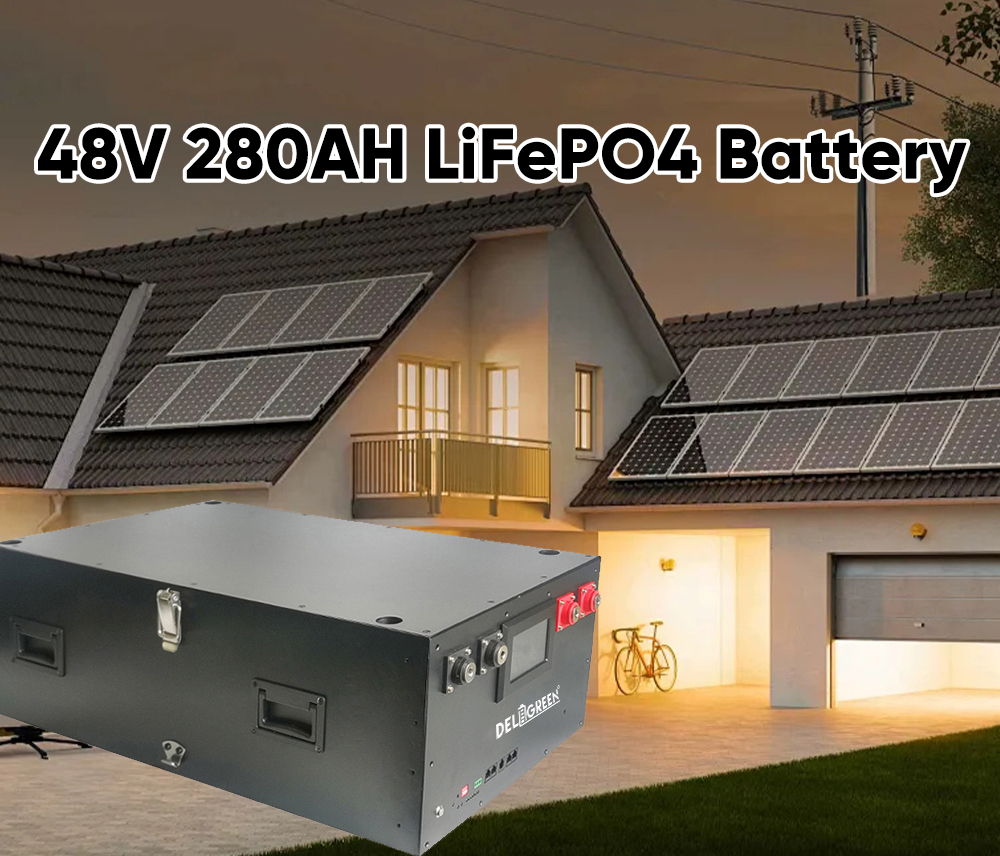
- 48V LiFePO4 batteries: A common nominal voltage is 51.2V, generally using 16 cells in series. The corresponding charging voltage is typically around 58.4V. This configuration is widely used in residential energy storage, communication backup power, and commercial and industrial energy storage systems.
- Higher-voltage battery systems: When a battery contains more cells connected in series, the required charging voltage should be determined according to the actual series configuration. The BMS, inverter, and overall system charging parameters should also be considered.
When purchasing a charger, users should not select a model simply because it is labeled “12V,” “24V,” or “48V.” Different battery manufacturers may use different charging specifications. Checking the battery label and technical datasheet before purchasing can help prevent voltage mismatches.
How Can Battery Series Configuration Determine Charger Voltage?
LiFePO4 cells generally have a nominal voltage of 3.2V. When multiple cells are connected in series, the nominal voltage of the battery pack increases according to the number of cells. A 4S configuration consists of four cells connected in series and has a nominal voltage of 12.8V. An 8S configuration has a nominal voltage of 25.6V, while a 16S configuration has a nominal voltage of 51.2V. The charger output voltage should correspond to the battery pack’s maximum charging voltage rather than simply matching its nominal voltage. Under common charging specifications, a 4S LiFePO4 battery has a full-charge voltage of approximately 14.6V, an 8S battery is approximately 29.2V, and a 16S battery is approximately 58.4V.
This relationship is particularly important for energy storage batteries. For example, a 51.2V 100Ah LiFePO4 battery can normally be charged using a charger with an output voltage of approximately 58.4V when this matches the manufacturer’s specified charging parameters. If a 48V power supply is used instead, the battery may not reach its intended full-charge level. For battery packs equipped with a BMS, users should also confirm that the charger’s voltage, current, and charging mode are within the limits permitted by the BMS.
Some energy storage systems use inverters, MPPT controllers, or integrated energy management systems for charging. In such applications, charger selection should not be based solely on the battery’s nominal voltage. The charging specifications of the entire system should be checked before installation.
What Other Parameters Should Be Considered When Choosing a LiFePO4 Charger?
After determining the appropriate output voltage, users should also check the charging current, charging mode, connector type, and protection functions. Correct voltage is the basic requirement, while charging current directly affects charging time and the amount of heat generated during operation. Large-capacity energy storage batteries may support higher charging currents, but the selected current must remain within the limits specified by the battery manufacturer and BMS.
- Charging current: The charger’s current rating should match the battery manufacturer’s recommended charging current. For example, a 100Ah battery may support different charging current options depending on the application, but selecting the largest available current is not always appropriate.
- Charging mode: A high-quality LiFePO4 charger generally uses charging control methods such as constant-current and constant-voltage charging, which are suitable for lithium iron phosphate batteries and help maintain charging stability.
- Protection functions: Overvoltage protection, overcurrent protection, short-circuit protection, and over-temperature protection can reduce the risks associated with abnormal charging conditions.
- Connector and operating environment: Check the DC connector, terminal type, polarity, and input power requirements. For RVs, outdoor energy storage, and industrial applications, heat dissipation and enclosure protection should also be considered.
Choosing a charger by checking voltage, current, charging mode, connector specifications, and protection functions together can reduce compatibility problems. For large-capacity energy storage batteries, it is recommended to configure the charger according to the battery manufacturer’s specified charging parameters.
What Should You Pay Attention to When Using a LiFePO4 Battery Charger?
A LiFePO4 battery should be charged with a dedicated charger that matches both the battery chemistry and rated voltage. Before connecting the charger, users should check the battery label for the nominal voltage, maximum charging voltage, and recommended charging current. The charger’s output parameters should then be compared with these specifications.
The charging environment can also affect equipment performance. The charger should be installed in a dry and well-ventilated location where heat can dissipate effectively. Avoid operating the charger continuously in extremely hot, humid, or enclosed spaces.
For battery packs equipped with a BMS, the BMS monitors cell voltage, temperature, and current and can provide protection when abnormal conditions occur. However, a properly matched charger should still be used during normal operation. If charging repeatedly stops or the BMS frequently activates protection, users should check the charger output voltage, charging current, wiring connections, and BMS status instead of repeatedly changing power supplies.
For 12.8V, 25.6V, or 51.2V LiFePO4 batteries, the charger can generally be selected according to the battery’s series configuration. Common charging voltage relationships include approximately 14.6V for a 12.8V battery, 29.2V for a 25.6V battery, and 58.4V for a 51.2V battery. However, the final charging voltage should always be based on the specific battery manufacturer’s specifications.
Choosing the correct LiFePO4 battery charger can help maintain stable charging performance, improve available battery capacity, and support the long-term reliability of the energy storage system. Whether the battery is used for an RV, home energy storage system, solar power system, backup power supply, or commercial and industrial energy storage, matching the charger output voltage to the battery specifications is an essential step in building a reliable power system.