Sodium-ion batteries are secondary batteries that use sodium ions as charge carriers. They feature widely available raw materials, flexible cost structures, and relatively good operating temperature adaptability. In low-temperature environments, the viscosity of the electrolyte in conventional lithium-ion batteries may increase, ion migration rates may decrease, and electrochemical reactions inside the electrodes may slow down, resulting in reduced discharge capacity and slower charging speeds. Under certain material systems and battery designs, sodium-ion batteries can maintain a certain level of ion transport capability and discharge performance at relatively low temperatures, providing certain low-temperature operating advantages. The low-temperature performance of sodium-ion batteries is closely related to the solvation state of sodium ions, electrolyte composition, electrode material structure, interfacial reactions, and overall battery design. Different cathode materials, anode materials, and electrolyte formulations exhibit significant differences, and their low-temperature discharge capability, low-temperature charging capability, and cycling stability are not entirely the same.
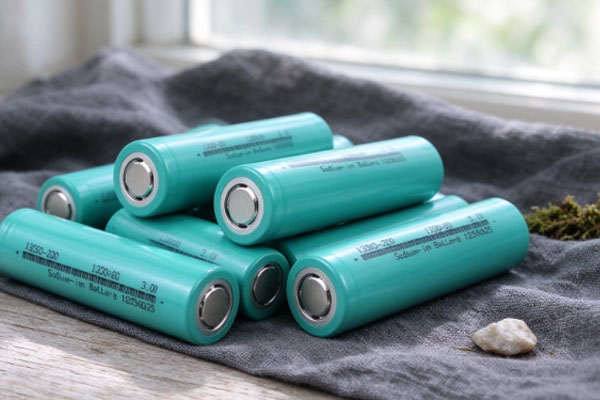
Basic Principles of the Low-Temperature Operating Advantages of Sodium-Ion Batteries
Migration Characteristics of Sodium Ions in the Electrolyte
During the operation of sodium-ion batteries, sodium ions need to move through the electrolyte and undergo intercalation and deintercalation between the cathode and anode materials. When the temperature decreases, ion movement in the electrolyte generally slows down, and the electrochemical reactions inside the battery are also affected. The ability of sodium-ion batteries to maintain a certain level of operating capability in some low-temperature environments is related to the electrolyte formulation, the solvation structure of sodium ions, and the ion transport channels in the electrode materials.
- Sodium ions in the electrolyte interact with solvent molecules through solvation. An appropriate solvent system can reduce resistance during the ion migration process.
- When electrode materials have structures suitable for sodium-ion intercalation and deintercalation, they can provide corresponding diffusion channels for ion transport.
- Reasonable control of the interfacial impedance between the electrodes and the electrolyte helps maintain the charge transfer process at low temperatures.
Sodium ions are larger than lithium ions, but this does not mean that sodium ions migrate faster in all electrolytes or electrodes. Low-temperature performance depends on the complete material system and cannot be determined solely by ion size.
Operating Characteristics of Internal Battery Reactions at Low Temperatures
In low-temperature environments, ion diffusion and charge transfer reactions inside the battery gradually become restricted. A decrease in temperature generally increases electrolyte viscosity, reduces ionic conductivity, and decreases the ion diffusion coefficients in electrode materials. Some sodium-ion batteries use electrode materials with open ion channels and combine them with electrolytes that have relatively good low-temperature adaptability, allowing sodium ions to continue undergoing a certain degree of migration and intercalation at low temperatures. This characteristic enables some sodium-ion batteries to retain a certain amount of capacity and output capability during low-temperature discharge. However, internal battery resistance may still increase at low temperatures, and the terminal voltage may also decrease.
Relationship Between the Low-Temperature Performance of Sodium-Ion Batteries and Electrode Material Structures
The electrode materials of sodium-ion batteries are responsible for storing and releasing sodium ions. Their crystal structures, pore distribution, electronic conductivity, and ion diffusion channels all affect low-temperature operating performance. When the temperature decreases, sodium-ion diffusion inside the electrode materials slows down, and the kinetic resistance that electrode reactions must overcome increases. Selecting appropriate cathode and anode materials can improve ion transport efficiency under low-temperature conditions and enable the battery to maintain a certain level of discharge capability.
Ion Transport Channels in Cathode Materials
Common cathode materials for sodium-ion batteries include layered transition metal oxides, polyanionic compounds, and Prussian blue and its analogues. Different materials have different crystal structures and sodium-ion storage mechanisms, resulting in variations in ion diffusion capabilities in low-temperature environments.
- Layered transition metal oxides have layered structures, allowing sodium ions to migrate through suitable interlayer channels. Material composition and interlayer structure affect ion diffusion rates.
- Polyanionic compounds have relatively stable framework structures. Some materials improve electronic conductivity and low-temperature reaction kinetics through methods such as carbon coating and elemental doping.
- Prussian blue and its analogues have open three-dimensional framework structures that can provide migration channels for sodium ions. Their low-temperature performance is related to material defects, crystal water content, and structural integrity.
Different cathode materials do not exhibit uniform low-temperature performance. Open ion channels provide structural conditions for sodium-ion migration, but electrolyte compatibility, electronic conductivity, and actual battery test results must also be considered.
Sodium Storage and Diffusion Characteristics of Anode Materials
Hard carbon is a commonly used anode material in sodium-ion batteries. Its internal structure contains disordered carbon layers, micropores, and defects, enabling sodium-ion storage through adsorption, intercalation, and pore storage. At low temperatures, the diffusion of sodium ions into hard carbon slows down, and the charge transfer resistance at the anode surface may also increase. The microstructure, pore distribution, surface functional groups, and interphase film formed during the initial cycle of hard carbon all affect its low-temperature sodium storage capability. Reasonable design of the pore structure and surface properties of hard carbon helps improve sodium-ion transport and interfacial reactions. However, more pores do not necessarily make an anode material better. An excessively large specific surface area may increase electrolyte consumption and interfacial side reactions. Therefore, sodium storage capacity, ion diffusion, and interfacial stability need to be balanced.
Low-Temperature Adaptability of Sodium-Ion Battery Electrolytes and Interfacial Reactions
The electrolyte is the primary medium for sodium-ion transfer between the cathode and anode and is also an important component affecting the low-temperature performance of the battery. In low-temperature environments, electrolyte viscosity, ionic conductivity, solvation structure, and the interphase film on the electrode surfaces all change. Some sodium-ion batteries optimize electrolyte solvents, sodium salts, and additives to reduce ion transport resistance and improve interfacial stability between the electrodes and the electrolyte.
Electrolyte Composition and Low-Temperature Ionic Conductivity
Liquid electrolytes generally consist of solvents, sodium salts, and functional additives. Different solvents have different freezing points, viscosities, and solvation capabilities, directly affecting ion migration at low temperatures.
- Selecting solvents with low freezing points and low viscosities helps reduce the decline in electrolyte fluidity at low temperatures.
- Reasonably adjusting the types and concentrations of sodium salts can improve the ionic conductivity of the electrolyte and the dissolution state of the salts.
- By using additives to regulate the solvation structure of the electrolyte, the energy required for sodium ions to detach from solvent molecules after reaching the electrode surface can be reduced.
In certain solvent systems, sodium ions may exhibit weaker solvation interactions, potentially lowering the interfacial desolvation energy barrier and improving low-temperature charge transfer kinetics. This characteristic depends on the specific solvent and electrolyte formulation.
Role of the Electrode Interphase Film in Low-Temperature Operation
During the initial charge and discharge processes of a battery, a solid electrolyte interphase film, commonly known as the SEI film, forms on the anode surface. This interphase film needs to allow sodium ions to pass through while limiting the continuous decomposition of the electrolyte. In low-temperature environments, if the SEI film is too thick, has an uneven structure, or has insufficient ionic conductivity, sodium ions encounter greater resistance when passing through the interface, resulting in increased battery polarization. An appropriate electrolyte formulation can help form a relatively stable interphase film with good ionic conductivity, reducing the increase in interfacial impedance at low temperatures. Interphase layers formed on the cathode surface also participate in the charge transfer process, and their stability is equally important to the low-temperature cycling performance of the battery.
Differences Between Low-Temperature Discharging and Low-Temperature Charging of Sodium-Ion Batteries
The ability of sodium-ion batteries to discharge in low-temperature environments does not mean they can be safely charged at the same temperatures. During discharge, sodium ions are released from the anode and migrate to the cathode. During charging, sodium ions need to re-enter the anode material. The reaction directions of these two processes are different, and their requirements for ion diffusion and electrode interfacial conditions also differ.
Basic Characteristics of Low-Temperature Discharge Capability
Within the applicable temperature range, some sodium-ion batteries can maintain a certain discharge capacity and output voltage. The low-temperature discharge performance of batteries is generally evaluated using indicators such as low-temperature capacity retention, discharge plateau, voltage changes, and internal resistance. For example, under the same test temperature, discharge rate, and cutoff voltage conditions, the low-temperature discharge capacity can be compared with the normal-temperature discharge capacity to calculate the capacity retention rate. Consistent test conditions are necessary for a relatively accurate comparison of the low-temperature discharge capabilities of different batteries.
Safety Requirements for Low-Temperature Charging
During low-temperature charging, the diffusion rate of sodium ions inside the anode decreases. If the charging current is too high, sodium ions may not be able to intercalate into the anode material in time, thereby increasing the risk of metallic sodium deposition on the anode surface. Metallic sodium deposition may cause irreversible reactions, changes in the interphase film, and battery safety issues. Therefore, charging sodium-ion batteries under low-temperature conditions must follow the cell specifications, manufacturer requirements, and temperature control requirements of the battery management system.
Low-temperature discharge: Discharge capacity, operating voltage, and allowable discharge current need to be considered.
Low-temperature charging: Minimum charging temperature, charging rate, risk of sodium plating on the anode, and temperature protection need to be considered.
Low-temperature cycling: Capacity degradation, changes in internal resistance, and interfacial stability after cycling need to be comprehensively evaluated.
Frequently Asked Questions
Q: Are sodium-ion batteries completely unaffected by low temperatures?
A: No. Sodium-ion batteries have relatively good low-temperature adaptability in certain material systems, but decreasing temperatures still reduce electrolyte ionic conductivity, slow down ion diffusion, and increase interfacial impedance. The actual operating temperature should be based on the technical specifications of the specific product.
Q: Do all sodium-ion batteries have better low-temperature performance than lithium-ion batteries?
A: Not necessarily. Different batteries have different cathode and anode materials, electrolyte formulations, cell structures, and test conditions. When comparing low-temperature performance, the same temperature, discharge rate, capacity testing method, and charging and discharging conditions must be used. Conclusions cannot be drawn solely based on the type of battery.
The low-temperature operating advantages of sodium-ion batteries are primarily related to the solvation characteristics of sodium ions, the low-temperature transport capability of the electrolyte, the ion diffusion channels in electrode materials, and the charge transfer process at the electrode interfaces. Some sodium-ion batteries can maintain a certain level of discharge capability in low-temperature environments by using electrolytes with good low-temperature adaptability, cathode materials with open structures, and suitable hard carbon anodes. However, sodium-ion batteries are not completely immune to low-temperature limitations. Low-temperature discharge performance and low-temperature charging safety need to be evaluated separately. The actual operating temperature, discharge rate, charging current, and cycle life of a battery should all be assessed based on the test data of the specific product.