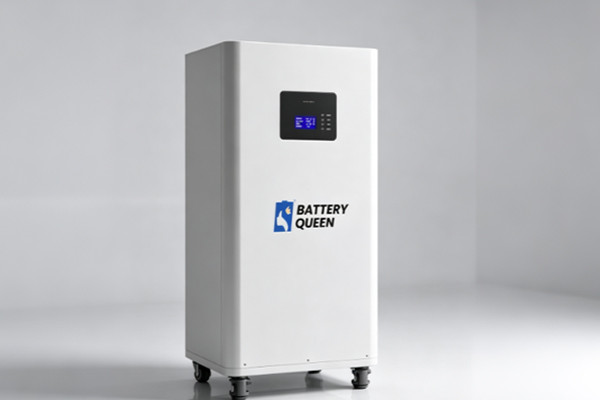
A 48V 100Ah battery pack is a relatively common high-capacity power configuration that can be used for home energy storage, solar energy storage, RVs, electric vehicles, backup power supplies, and some off-grid power systems. Determining what power devices a 48V 100Ah battery can run cannot be based only on the “100Ah” capacity parameter. It is also necessary to consider the battery’s actual nominal voltage, maximum continuous discharge current, BMS specifications, inverter power, and equipment starting current. 48V batteries usually use 16 3.2V cells connected in series, resulting in an actual nominal voltage of 51.2V. Therefore, 51.2V × 100Ah gives approximately 5120Wh, or 5.12kWh of theoretical energy storage capacity.
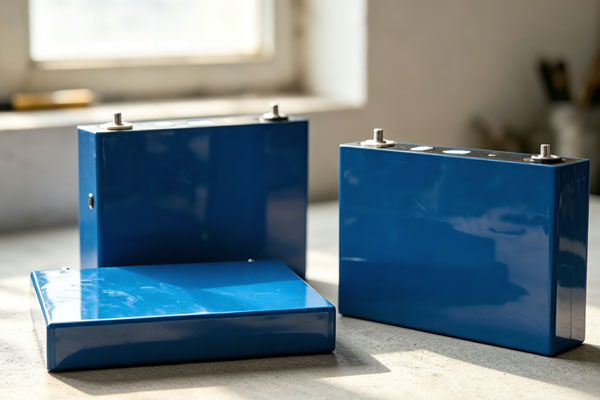
100Ah mainly indicates how much energy the battery can store, while “how large a device it can run” mainly depends on how much current the battery is allowed to output. For example, if a 51.2V 100Ah battery has a BMS that allows continuous discharge at 100A, the theoretical continuous output power is approximately 5.12kW based on voltage × current. If the BMS only allows continuous discharge at 50A, the theoretical output power is approximately 2.56kW. When connecting AC equipment, the power must also pass through an inverter, so the power available to the equipment is also limited by the inverter’s rated power and conversion efficiency. For equipment with starting current, such as motors, water pumps, refrigerators, and air conditioners, instantaneous power must also be considered. The rated power shown on the equipment nameplate alone is not sufficient for determining whether the battery can run the device.
How Much Power Can a 48V 100Ah Battery Output?
Power Calculation Formula
The theoretical output power of a battery can be calculated using:
Output Power (W) = Battery Voltage (V) × Discharge Current (A)
Taking a common 51.2V 100Ah LiFePO4 battery as an example, if the BMS allows continuous discharge at 100A:
51.2V × 100A = 5120W
That is approximately 5.12kW.
If the BMS allows continuous discharge at 80A:
51.2V × 80A = 4096W
Approximately 4.1kW.
If the BMS allows continuous discharge at 50A:
51.2V × 50A = 2560W
Approximately 2.56kW.
Therefore, even 48V 100Ah batteries can have different maximum load power levels depending on the BMS and cell discharge capabilities. The two parameters “48V 100Ah” alone cannot accurately determine the maximum load power.
100Ah Does Not Equal 100A
Here, Ah and A need to be distinguished. 100Ah is the battery capacity, while A represents current. For example, a 100Ah battery may discharge at 50A, 80A, or 100A under different conditions. The specific value depends on the rated discharge capability of the cells and BMS. Therefore, when selecting equipment, check the maximum continuous discharge current specified in the battery product documentation and then calculate the appropriate load power.
Key Parameters That Determine Load Power
BMS Continuous Discharge Current
The BMS is one of the key components determining the allowable output current of the battery pack. If the battery uses 100Ah cells but the BMS has a continuous discharge current of only 50A, the battery cannot be used for long-term loads at 100A or higher.
For example: 51.2V × 50A ≈ 2.56kW
This means that under ideal calculation conditions, a continuous load of approximately 2.56kW is already close to the theoretical output capability of the battery system.
If the BMS supports 100A continuous discharge, the theoretical value can reach: 51.2V × 100A = 5.12kW
Therefore, when purchasing or DIY-assembling a battery pack, both the cell discharge capability and the BMS rated current need to be confirmed.
Inverter Rated Power
If the battery supplies power to household AC equipment, an inverter is usually required to convert DC power into AC power. In this case, the inverter’s rated power also limits the final load. For example, if the battery can theoretically output 5kW but the matching inverter is rated at only 3kW, the actual AC load generally cannot be configured for 5kW. Conversely, if the inverter is rated at 5kW but the battery BMS can only continuously output 2.5kW, the inverter cannot make the battery stably provide 5kW of power.
How Much Power Do Different Devices Require?
How large a device a 48V 100Ah battery can run also depends on the specific type of load. Generally, low-power devices are easier to operate, while high-power devices consume the battery’s stored energy more quickly and may place greater demands on the battery’s continuous discharge capability.
Low-Power Devices
Examples include lighting, routers, computers, and small display devices, which generally have relatively low individual power requirements. Devices such as these can have relatively long operating times when powered by a battery with a theoretical energy storage capacity of 5.12kWh.
If the total load is 500W: 5120Wh ÷ 500W ≈ 10.24 hours
After considering inverter losses and actual available battery capacity, the operating time will be shorter than the theoretical value.
Medium-Power Devices
For example, when refrigerators, televisions, computers, fans, and small water pumps are used together, the total power may reach around 1000W.
Based on the theoretical value: 5120Wh ÷ 1000W ≈ 5.12 hours
Considering actual available energy and conversion losses, approximately 4 hours can be used as an initial estimate. The actual time depends on the equipment’s actual average power consumption.
High-Power Devices
Electric heating equipment, air conditioners, motors, and water pumps may consume 2kW, 3kW, or even more. When the load reaches 3000W, the theoretical operating current on the 51.2V battery side is approximately:
3000W ÷ 51.2V ≈ 58.6A
This already requires the battery to have a relatively high continuous discharge capability. If the equipment has a high starting current, the instantaneous output capability of the BMS and inverter will also need to meet higher requirements.
Frequently Asked Questions
Q: Can a 48V 100Ah Battery Run a 3000W Device?
A: It may be possible, but the BMS continuous discharge current, inverter rated power, and equipment starting power need to be checked. A 3000W load theoretically requires approximately 58.6A from a 51.2V battery. The battery must have at least this level of continuous discharge capability, and the inverter must also have the appropriate specifications for the configuration.
Q: Can a 48V 100Ah Battery Run a 5000W Device?
A: This needs to be determined according to the specific battery specifications. 51.2V × 100A is theoretically approximately 5.12kW, but this does not mean that every 48V 100Ah battery can continuously output 5kW. If the rated capabilities of the BMS, cells, or inverter are insufficient, the battery should not be used continuously at 5000W.
Q: Does a Larger Battery Capacity Mean It Can Run Higher-Power Devices?
A: Not necessarily. Ah mainly represents energy storage capacity, while maximum output power is also related to the allowable discharge current of the cells, the BMS rated current, and the overall system design. A 100Ah battery may be able to stably run a load of only around 2kW, while another battery may be designed to provide 5kW or even higher short-term output.
Q: Why Can’t the Equipment Operate Normally Even Though Its Power Does Not Exceed the Theoretical Battery Power?
A: The equipment may have a high starting current. Motors, water pumps, compressors, and similar devices may require significantly more power at startup than during normal operation. If the inverter’s peak power is insufficient or the BMS’s instantaneous discharge capability is insufficient, the equipment may fail to start normally even when its rated power does not exceed the battery’s theoretical output.
A 48V 100Ah battery pack generally has a theoretical energy storage capacity of approximately 5.12kWh, but the size of the device it can run is not determined by the 100Ah capacity alone. For a common 51.2V 100Ah LiFePO4 battery, output capability can be calculated using the formula “voltage × current.” Assuming the BMS allows 100A continuous discharge, the theoretical power is approximately 5.12kW; if the BMS only allows 50A continuous discharge, the theoretical power is approximately 2.56kW. The inverter’s rated power also needs to be taken into account. When using AC equipment, the DC power output by the battery must pass through an inverter for conversion, and the final power available to the equipment will be affected by the inverter’s capacity and conversion efficiency.
At the same time, the type of equipment is also important. Electric heaters, air conditioners, motors, water pumps, compressors, and other loads may produce relatively high instantaneous power during startup, so the normal operating power alone is not sufficient for evaluation. For small loads of around 500W, a 48V 100Ah battery can generally provide a relatively long operating time; loads of around 1000W are suitable for applications such as home backup power; loads of 2000W to 3000W require careful verification of the BMS, inverter, and battery continuous discharge capability. If a high-power device close to 5kW needs to be connected, confirm that the battery pack actually has the corresponding continuous output capability, and check whether the inverter’s rated power and peak power are properly matched.