Cylindrical batteries, with their mature manufacturing processes, stable structural design, and wide range of applications, have become one of the important power sources in fields such as new energy vehicles, energy storage systems, power tools, and smart devices. For product developers, equipment manufacturers, and procurement professionals, understanding the working principle of cylindrical batteries not only helps in comprehending battery performance but also enables more reasonable decisions in product selection, system design, and later maintenance. The following sections provide a detailed introduction to the charging and discharging mechanisms, internal structure, and key factors affecting performance of cylindrical batteries.
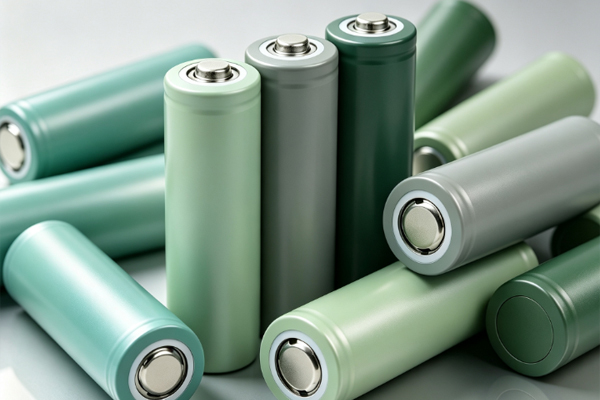
How Cylindrical Batteries Charge and Discharge
The operation of cylindrical batteries is based on electrochemical reactions, where charging and discharging form a reversible cycle that enables energy storage and release.
Working Principle of the Charging Process
The charging stage mainly converts electrical energy into chemical energy, allowing the battery to gradually store energy.
- External power supplies electrical energy, driving electrochemical reactions and promoting ion migration.
- Lithium/sodium ions are released from the cathode, migrate through the electrolyte, and are embedded into the anode.
- Electrons flow to the anode through the external circuit, combining with ions to achieve charge balance and energy storage.
After charging, ions are stably embedded in the anode, and the battery enters a high-energy storage state, providing the basis for subsequent discharge.
Working Principle of the Discharging Process
The discharging stage converts stored chemical energy into electrical energy and outputs it to external devices.
- Active ions in the anode detach and migrate back to the cathode, completing internal circulation.
- Electrons flow from the anode through the external circuit to the load device, forming a stable current and supplying power.
- The cathode receives ions and combines with electrons, sustaining the discharge reaction.
During this process, ions migrate inside the battery while electrons flow through the external circuit, together forming a complete discharge system.
What Components Make Up a Cylindrical Battery
The stable operation of cylindrical batteries depends on the coordinated function of multiple core structures.
Cathode Material
The cathode is a key area for energy storage and release, playing a decisive role in overall performance.
- Cathode materials determine the operating voltage range and energy output level.
- Structural stability affects cycle life; the more stable the material, the slower the capacity degradation.
- Different cathode systems influence energy density and thus determine application scenarios.
High-quality cathode materials maintain structural stability during repeated charge-discharge cycles, improving performance and lifespan of cylindrical batteries.
Anode Material
The anode serves as an important carrier for ion storage and release, acting as an “energy buffer zone” during cycling.
- Anode materials provide space for ion embedding, ensuring charging efficiency.
- Material conductivity and structure affect charge-discharge efficiency and energy loss.
- Anode performance determines battery rate capability and fast-charging stability.
Optimizing anode structure can improve cycle stability and extend the lifespan of cylindrical batteries.
Electrolyte and Separator
The electrolyte and separator together form the “ion channel and safety barrier” inside the battery.
- The electrolyte enables ion transport between cathode and anode and is essential for continuous electrochemical reactions.
- The separator has a microporous structure that allows ions to pass while preventing direct contact between electrons, avoiding internal short circuits.
- Their synergy ensures safe and stable operation even under high energy density conditions.
The combination of high-performance electrolyte and high-quality separator is fundamental to improving the safety and reliability of cylindrical batteries.
Factors Affecting the Efficiency of Cylindrical Batteries
The performance of cylindrical batteries depends not only on design but also on materials, environment, and control systems.
Electrode Material Performance
Material performance determines overall battery behavior. Active materials affect energy storage capacity, conductivity affects charge-discharge speed, and material stability affects cycle life. Continuous optimization of material systems can significantly enhance the overall performance of cylindrical batteries, and ongoing innovation in material systems is a core direction for performance improvement.
Operating Temperature
Temperature directly affects electrochemical reaction rate and stability.
- At optimal temperatures, ion migration is faster and efficiency is higher.
- High temperatures accelerate electrolyte decomposition and aging, shortening lifespan.
- Low temperatures reduce ion activity, lowering output and increasing internal resistance.
Maintaining a stable operating temperature is key to ensuring long-term stable operation of cylindrical batteries.
Battery Management System (BMS)
The Battery Management System (BMS) is the core control unit ensuring safety and performance optimization.
- It monitors voltage, current, and temperature in real time to ensure safe operation.
- It balances multiple cells to prevent overcharging or over-discharging.
- It triggers protection mechanisms in abnormal conditions to reduce safety risks.
A well-designed BMS not only improves safety but also extends the service life of cylindrical batteries.
Why Understanding the Working Principle of Cylindrical Batteries Matters
Understanding the working principle of cylindrical batteries helps make more scientific decisions in applications, improving system efficiency and reliability.
Improving Product Selection Efficiency
Different application scenarios require different battery performance, so selection must match actual needs.
- Select capacity based on power consumption to balance endurance and performance.
- Choose appropriate rate models based on discharge requirements.
- Select cylindrical cells with suitable dimensions based on space constraints.
Scientific selection fully leverages the performance of cylindrical batteries and improves overall system efficiency.
Enhancing System Design Capability
Proper design helps maximize battery value by optimizing cell configuration, improving heat dissipation and space utilization, and enhancing system stability and reliability. A well-designed system enables cylindrical batteries to maintain long-term stable operation.
Extending Battery Service Life
Proper usage and maintenance effectively slow down performance degradation.
- Avoid overcharging and over-discharging to reduce irreversible electrode damage.
- Maintain suitable operating temperatures to slow aging.
- Regularly inspect battery conditions and address potential issues promptly.
Scientific management can significantly extend the service life of cylindrical batteries and reduce maintenance costs.
Relying on the electrochemical mechanism of reversible ion intercalation and deintercalation between the anode and cathode, cylindrical batteries achieve stable energy conversion and output. With mature structural processes and continuously optimized material systems, they are widely used in new energy vehicles, energy storage systems, industrial equipment, and consumer electronics. In the future, with continuous advancements in battery technology, management systems, and manufacturing processes, there is still significant room for improvement in energy density, safety, and cycle life, enabling more efficient and reliable energy support for various application scenarios.