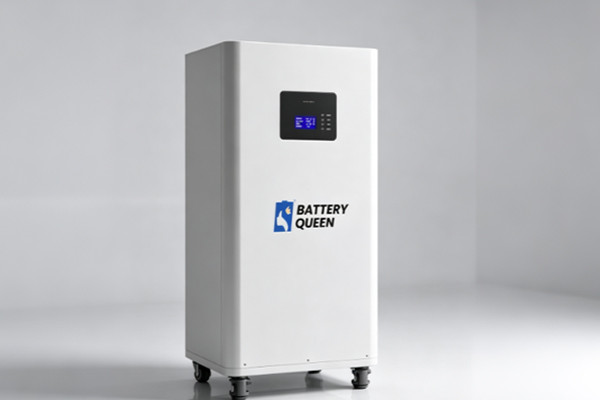
With the widespread adoption of energy storage systems, smart electronic products, power tools, and new energy applications, more and more users are paying attention to the flexible configuration capabilities of battery systems. Compared with fixed-spec finished battery packs, a DIY battery box allows users to freely combine the number of cells, voltage, and capacity according to different project requirements, providing a more customized power supply solution for devices. For maker development, product R&D, industrial equipment, and outdoor power applications, a DIY battery box not only serves the function of housing batteries but also plays an important role in protection, safety, maintenance, and expansion.
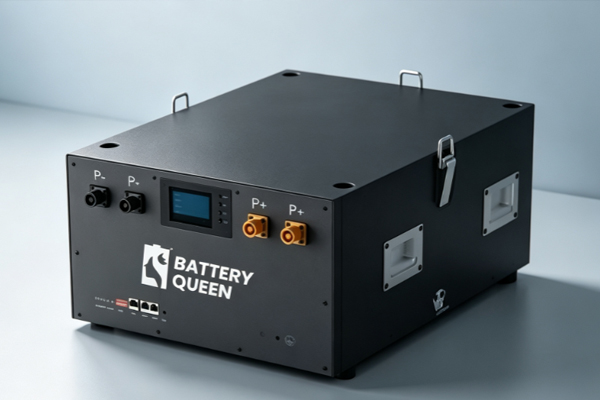
DIY Battery Boxes Can Protect the Battery System
During operation, batteries are affected by vibration, pressure, dust, and temperature changes. One of the core values of a DIY battery box is to provide a stable and reliable protective environment.
Fixing the Battery Position
A stable structural support makes battery operation safer and more reliable.
- Provides individual slots for each cell to prevent loosening or shifting.
- Uses a well-designed layout to make the battery pack more compact and improve shock resistance.
- Reduces collision and friction between cells during transportation or movement, lowering the risk of damage.
These designs help the battery system maintain long-term stability.
Improving External Protection
The protective performance of the enclosure directly affects battery safety and lifespan. It effectively isolates dust and debris, prevents poor contact or short-circuit risks, and provides cushioning against external impacts. Some high-quality battery boxes also offer moisture resistance, splash resistance, or even light waterproofing, making them suitable for outdoor or complex environments and improving overall durability.
DIY Battery Boxes Help Improve Installation Efficiency
DIY battery boxes usually adopt a modular design, making battery assembly more intuitive while reducing the difficulty of later maintenance.
Simplifying the Battery Assembly Process
A well-designed structure allows users to build battery packs more easily.
- Standard cell sizes can be quickly arranged for basic installation.
- Series or parallel connections can be achieved using connecting tabs or wires.
- Multiple configuration methods are supported, allowing flexible adjustment of voltage and capacity.
This approach reduces operational errors and improves assembly efficiency.
Facilitating Future Maintenance
Battery systems may require inspection or component replacement during long-term use.
- A single damaged cell can be replaced individually without replacing the entire pack.
- The internal structure is clear, making it easy to check connection status.
- Simple maintenance procedures reduce long-term usage costs.
Good maintainability makes it more suitable for long-term projects.
DIY Battery Boxes Improve System Safety
Safety is a core requirement in battery system design, and DIY battery boxes provide support in both structure and functionality.
Compatibility with Battery Management Systems
Modern DIY battery boxes usually reserve space for installing a BMS (Battery Management System), enabling intelligent management. The system can monitor each cell in real time, continuously track voltage, current, and temperature changes, and prevent abnormal conditions. In cases of overcharge, over-discharge, or short circuit, it can promptly cut off the circuit to protect battery safety. Through this coordinated mechanism, the overall safety of the battery system is significantly improved.
Improving Heat Dissipation
Batteries generate heat during charging and discharging, making proper thermal management essential.
- Optimized cell spacing improves air circulation efficiency.
- Heat dissipation holes or thermal structures accelerate heat release.
- Reduces temperature rise during long-term high-load operation.
Good thermal design helps extend battery lifespan.
Reducing Cable Clutter
Standardized wiring significantly improves safety.
- Fixed routing structures make connections clearer.
- Prevents cable tangling and wear, reducing short-circuit risks.
- Improves readability for easier maintenance and inspection.
A clean wiring layout makes the system more reliable.
DIY Battery Boxes Meet Diverse Application Needs
Different devices have varying power requirements, making the flexibility of DIY battery boxes especially important.
Supporting Custom Configurations
Users can freely design battery solutions based on their needs.
- Flexibly choose the number and combination of cells.
- Adjust series or parallel configurations to match voltage and capacity requirements.
- Support combinations of multiple cell types.
This freedom of configuration gives it high practical value in DIY applications.
Supporting Multiple Application Scenarios
DIY battery boxes are widely used across many industries.
- Provide stable power in outdoor energy storage systems.
- Serve as a core power source in robotics and electronic development projects.
- Deliver efficient energy output in power tools and industrial equipment.
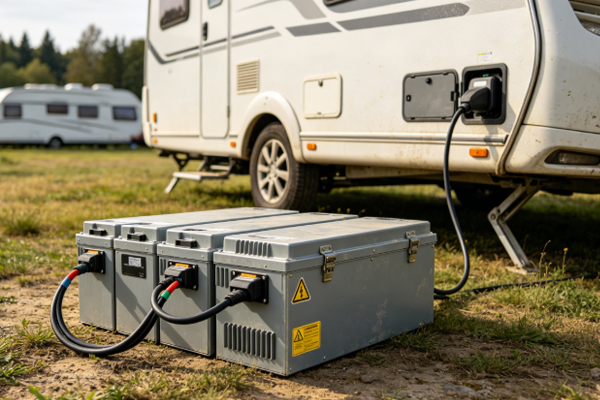
- Play a key role in portable power supplies and emergency backup systems.
These diverse applications fully demonstrate their versatility and scalability.
In the overall design of battery systems, DIY battery boxes play a foundational and integrative role. Their structural design improves the reliability of cell installation while providing essential protection and heat dissipation. With their freely combinable features, they can adapt to various power solutions and usage environments. In the future of energy storage and electronic devices, modular battery structures like these will continue to deliver significant value.