With the continuous development of energy storage equipment, grid regulation systems, and renewable energy applications, battery material performance has become an important factor affecting energy storage efficiency. As an emerging energy storage technology, sodium-ion batteries use sodium ions instead of lithium ions for charge transfer, and their operating principle is similar to that of lithium-ion batteries. During charging and discharging, sodium ions need to continuously move between the cathode and anode, while cathode materials play a key role in storing and releasing sodium ions. The cathode materials of sodium-ion batteries not only determine battery capacity but also affect cycle life, safety performance, charging and discharging speed, and manufacturing costs. Since sodium ions have a larger radius than lithium ions, some cathode materials commonly used in traditional lithium batteries cannot be directly applied to sodium-ion systems. Therefore, special material structures suitable for sodium ion insertion and extraction need to be developed.
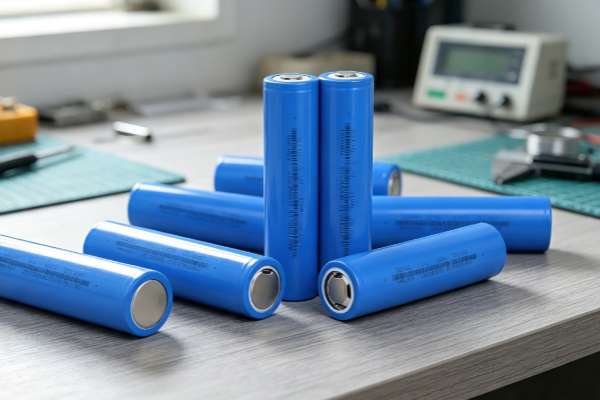
Currently, common cathode materials for sodium-ion batteries mainly include layered oxides, polyanionic compounds, Prussian blue-based materials, and organic cathode materials. These materials provide storage sites for sodium ions through different crystal structures, enabling stable energy conversion within the battery. Selecting suitable cathode materials requires comprehensive consideration of various factors, such as sodium ion migration speed, structural stability, manufacturing costs, and actual application environments. Different types of cathode materials have different characteristics, so they are selected according to the requirements of applications such as energy storage systems, electric vehicles, and backup power supplies.
Common Types of Cathode Materials for Sodium-Ion Batteries
Layered Oxide Cathode Materials
Layered oxides are one of the most widely studied cathode materials for sodium-ion batteries. Their structural characteristics are similar to some cathode materials used in lithium-ion batteries. These materials are usually composed of transition metal elements, oxygen elements, and sodium elements, and achieve sodium ion insertion and extraction through layered crystal structures. During charging, sodium ions leave the crystal structure of the cathode material and move through the electrolyte to the anode; during discharge, sodium ions return to the cathode and restore the original structure.
Layered oxide materials have the following characteristics:
- High electrochemical activity, providing good capacity performance;
- Relatively mature preparation processes, making large-scale production easier;
- Higher operating voltage, helping improve battery output performance;
- Material systems can be optimized by adjusting element ratios.
Common layered oxides include sodium nickel manganese oxide, sodium iron manganese oxide, and sodium cobalt manganese oxide. Among them, materials containing iron and manganese elements have attracted attention for energy storage applications due to their lower cost. However, layered oxides may experience crystal structure changes during long-term cycling, so methods such as element doping and surface treatment are required to improve material stability.
Polyanionic Cathode Materials
Polyanionic materials are a type of sodium-ion battery cathode material with stable structural characteristics. These materials usually contain multi-element anion structures such as phosphate and sulfate groups, which can enhance the stability of the crystal framework. Compared with some layered oxide materials, polyanionic materials have advantages in safety and cycling stability. Due to their stable internal structures, they are less likely to undergo significant changes during repeated charging and discharging processes, allowing them to maintain better service life.
The characteristics of these materials include:
- Stable crystal structures with good cycling performance;
- Strong thermal stability and higher safety;
- Stable material composition, suitable for long-term operation;
- Suitable for energy storage equipment requiring long service life.
Common materials include sodium vanadium phosphate and sodium iron phosphate. Among them, sodium iron phosphate has attracted considerable attention in the energy storage field due to abundant iron resources and lower costs. Although polyanionic materials have good stability, some materials have insufficient electrical conductivity and require improvements through material modification and particle optimization to enhance electron transport capability.
Characteristics of Other Sodium-Ion Battery Cathode Materials
Prussian Blue-Based Cathode Materials
Prussian blue-based materials are one of the representative cathode materials for sodium-ion batteries. These materials have an open three-dimensional framework structure with large internal spaces that provide channels for sodium ion movement. Due to the large structural space, sodium ions can easily enter and leave the material, giving these materials good rate performance and cycling capability.
Prussian blue-based materials have the following advantages:
- Open crystal structures facilitate rapid sodium ion movement;
- Wide availability of raw materials and lower manufacturing costs;
- Relatively simple preparation processes;
- Suitable for large-scale energy storage applications.
However, during production, moisture content and defect levels need to be carefully controlled. If there are too many vacancies inside the material, battery capacity and long-term stability may be affected. Therefore, manufacturing processes need to be optimized to improve material consistency.
Organic Cathode Materials
Organic cathode materials are an emerging material system for sodium-ion batteries. They mainly use active groups in organic compounds to participate in electrochemical reactions and achieve sodium ion storage. Compared with traditional inorganic materials, organic materials feature adjustable structures and higher resource utilization efficiency. At the same time, some organic materials can reduce dependence on metal elements, providing certain advantages in cost control.
The main characteristics of organic cathode materials include:
- Flexible material design with adjustable molecular structures;
- Relatively abundant raw material sources;
- Good environmental adaptability;
- Help reduce the use of certain metal resources.
However, organic cathode materials still face challenges such as insufficient electrical conductivity and stability. Further optimization is required before they can meet the requirements of large-scale commercial applications.
Frequently Asked Questions
Which Cathode Material Is Most Suitable for Sodium-Ion Batteries?
Different cathode materials are suitable for different application requirements. Layered oxides provide higher energy performance and are suitable for devices requiring stronger output capability. Polyanionic materials offer better stability and are more suitable for long-term energy storage systems. Prussian blue-based materials have lower costs and application potential in large-scale energy storage. Therefore, it is not possible to simply determine which material is the best; the selection should be based on the specific battery application.
Why Can Sodium-Ion Batteries Not Directly Use Lithium Battery Cathode Materials?
The main reason is that sodium ions are larger than lithium ions. If some lithium battery cathode materials are directly used, they may affect the entry and exit speed of sodium ions, resulting in reduced capacity and poorer cycling performance. Sodium-ion batteries require crystal structures that can accommodate larger ion sizes, such as layered structures and open framework structures.
How Do Cathode Materials Affect Sodium-Ion Battery Performance?
Cathode materials directly affect battery capacity, voltage, cycle life, and safety performance. For example, materials with stable structures can reduce structural changes during charging and discharging, improving service life. Materials with faster sodium ion migration rates can improve charging and discharging efficiency. Therefore, cathode materials are one of the key components determining the performance of sodium-ion batteries.
The main cathode materials for sodium-ion batteries include layered oxides, polyanionic materials, Prussian blue-based materials, and organic cathode materials. Different materials have differences in capacity, stability, cost, and manufacturing processes, together forming the important material foundation of sodium-ion batteries. Layered oxides provide good energy performance, polyanionic materials emphasize structural stability and safety, Prussian blue-based materials are suitable for large-scale energy storage due to their open structures and cost advantages, while organic cathode materials provide new directions for material design.
As the core component in the energy storage process of sodium-ion batteries, cathode materials determine sodium ion storage efficiency and overall battery performance. Suitable material systems need to be selected according to equipment requirements, battery life expectations, and cost control objectives. By properly matching cathode materials with anodes, electrolytes, and other components, sodium-ion batteries can achieve more stable and efficient energy storage operation.