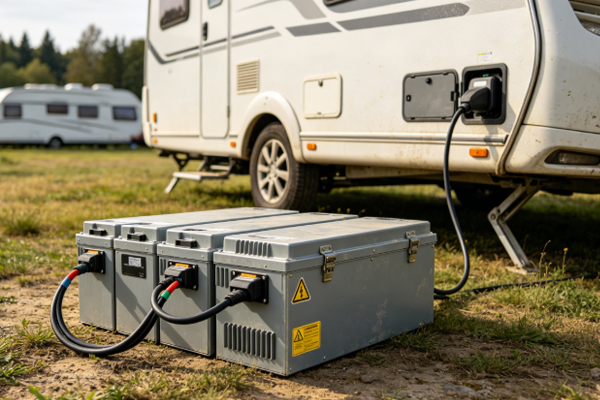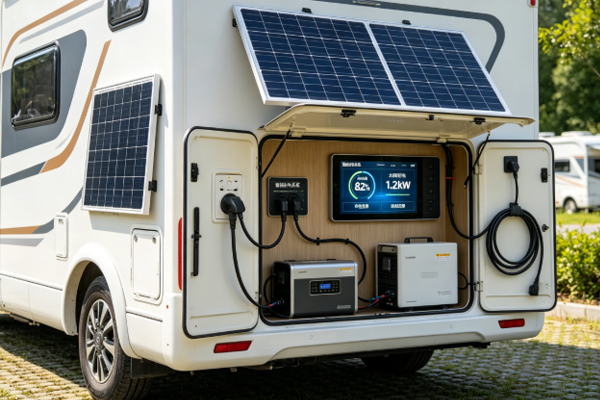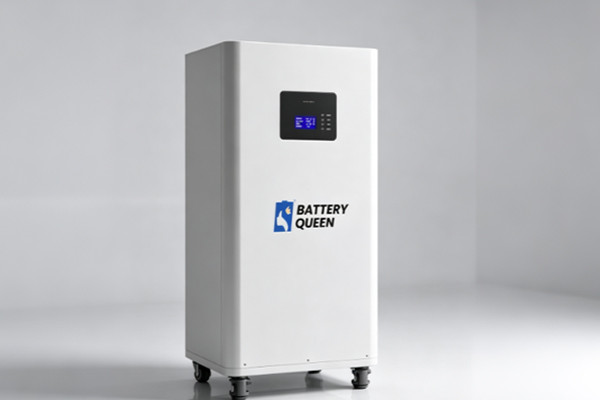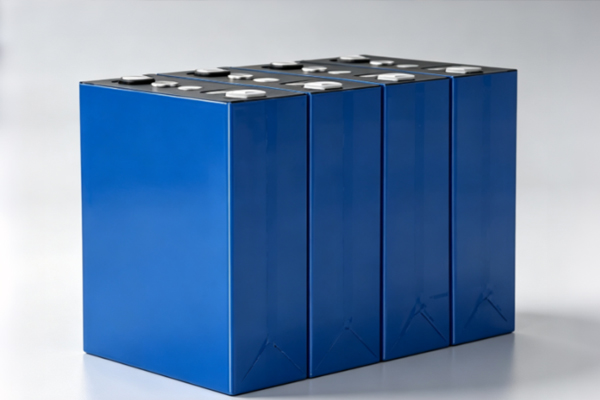
The comfort of RV travel is closely connected to the available onboard power supply. When an RV leaves a campground and travels into mountains, coastal areas, or other outdoor locations, reliable stored energy can support refrigerators, lighting, fans, mobile phones, computers, routers, and selected household appliances. For many RV owners, the goal is not simply to install a larger battery, but to make the available energy last longer under practical space and system constraints. An RV lithium battery runtime enhancement solution should be planned according to daily electricity consumption, battery capacity, usage habits, charging methods, and equipment efficiency. Using a LiFePO4 battery as the core energy storage unit and combining it with a BMS, charging equipment, inverter, solar system, and energy monitoring device can create a clearer power management process. By managing high-power loads, reducing unnecessary standby consumption, improving charging efficiency, and monitoring remaining battery capacity, RV users can make better use of stored energy and obtain longer-lasting power support during long-distance travel and outdoor parking.
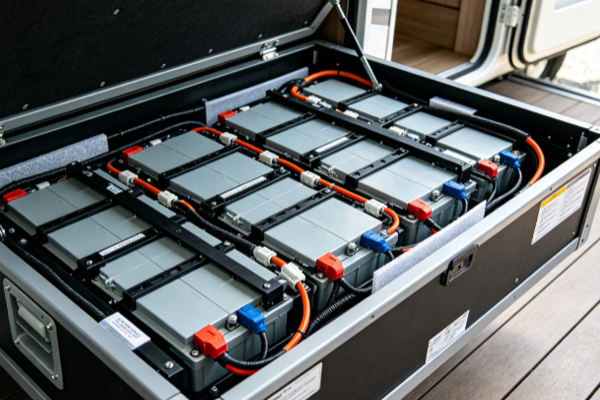
Proper LiFePO4 Battery Configuration Improves RV Energy Storage Runtime
Improving RV lithium battery runtime does not simply mean choosing a battery with a larger capacity. Actual operating time is related to usable battery capacity, load power, operating duration, and system losses. If an RV consumes a large amount of electricity every day, even a high-capacity battery can be depleted quickly. In contrast, proper load planning and suitable battery capacity can improve overall energy efficiency. LiFePO4 batteries are suitable for RV cycling energy storage and can be integrated with different DC and AC electrical systems. When selecting a battery, users should estimate the actual power requirements of refrigerators, lighting, air conditioners, kitchen appliances, communication equipment, and entertainment devices, while also considering expected daily operating hours. RVs intended for extended off-grid travel should also maintain an appropriate energy reserve in case of changing weather, longer parking periods, or limited charging opportunities. Properly matching battery capacity with actual loads can reduce the need for frequent charging while avoiding unnecessary space and cost caused by excessive energy storage capacity.
Main Factors Affecting RV Lithium Battery Runtime
Actual RV battery runtime is affected by several conditions. Understanding these factors allows users to make more targeted adjustments to system configuration and daily electricity consumption.
- Usable battery capacity: The actual amount of stored energy available for use directly affects how long the RV can remain powered.
- Appliance power consumption: Air conditioners, induction cookers, water heaters, and other high-power appliances can significantly increase electricity consumption.
- Daily operating time: The same appliance can consume very different amounts of energy depending on how long it operates.
- Inverter efficiency: AC appliances require an inverter, and energy losses occur during the conversion process.
- Standby consumption: Some onboard devices continue to consume small amounts of electricity even when they are not actively operating.
- Ambient temperature: Different temperature conditions can affect battery and electrical equipment performance.
- Charging availability: The availability of solar power, vehicle charging, and shore power affects how quickly battery capacity can be restored.
Understanding these factors allows RV users to estimate actual battery runtime more accurately and create an energy plan that better matches their travel requirements.
How to Select Battery Capacity for Different Runtime Requirements
When selecting RV lithium battery capacity, users can begin by recording the power rating and estimated daily operating time of commonly used appliances. Refrigerators may operate for long periods, lighting is generally concentrated in the morning and evening, while computers and communication equipment depend on work and entertainment requirements. High-power appliances may only operate for short periods but can still consume significant amounts of electricity during use. After estimating daily energy consumption, the required total energy reserve can be determined according to the expected number of off-grid days. If the RV is expected to remain without stable external charging for two or three consecutive days, additional energy storage should be considered. Battery capacity should also be planned according to available installation space, vehicle payload, and the existing electrical architecture. For RVs using 12V, 24V, or other system voltages, the battery solution should match the existing electrical structure. In addition to capacity, continuous battery output capability should meet the requirements of the inverter and major electrical loads. Proper capacity planning allows the RV to meet daily electricity requirements without constantly searching for charging locations or installing unnecessary equipment.
RV Battery Runtime Configuration Reference Table
Different RVs have different energy requirements. Battery configuration should be adjusted according to actual loads and travel habits. The following table can be used as an initial planning reference.
| Energy Demand Type | Common Appliances | Storage Configuration Focus | Runtime Management Recommendation |
| Basic Camping | Lighting, phones, fans | Support basic daily electricity needs | Limit unnecessary appliance use |
| Weekend Travel | Refrigerator, lighting, computer | Increase usable storage capacity | Fully charge before departure |
| Family Travel | Multiple electronic devices, refrigerator | Increase energy reserve according to household usage | Schedule appliance operation |
| Long-Term Parking | Refrigerator, network equipment, kitchen appliances | Increase battery and charging capability | Establish a daily energy plan |
| Off-Grid Camping | Multiple household appliances | Combine battery storage with solar and vehicle charging | Monitor daily SOC changes |
| High-Power Demand | Air conditioner, kitchen appliances | Focus on battery output and inverter matching | Avoid prolonged simultaneous high loads |
The configuration priorities in this table can help users understand the initial direction of RV energy storage planning. The final solution should be determined according to actual appliance specifications and the RV electrical system.
Optimizing Daily Electricity Use Extends RV Battery Runtime
With the same battery capacity, different electricity consumption habits can result in significantly different runtime. Proper load management can reduce unnecessary energy consumption and reserve stored power for essential equipment. In RV living, refrigerators, lighting, and communication devices are common basic loads, while air conditioners, electric heating equipment, and kitchen appliances can consume substantial amounts of electricity within a short period. Users can schedule appliances according to remaining battery capacity. When SOC is high and solar input is sufficient, selected high-power appliances can be used. When battery capacity decreases or weather conditions are unfavorable, unnecessary loads should be reduced. For AC appliances, the inverter should be operated according to actual requirements rather than remaining on without a useful load for extended periods. Some devices can use direct DC power where appropriate, reducing unnecessary power conversion. By classifying RV appliances and managing them according to priority, the entire energy storage system can operate more efficiently and provide longer practical runtime after each charge.
Practical Energy-Saving Methods for RVs
Extending battery runtime begins with everyday appliance usage. Simple energy management practices can reduce waste and allow stored energy to provide more useful operating time.
- Prioritize low-power appliances: When possible, choose onboard equipment with lower energy consumption while still meeting daily requirements.
- Schedule high-power loads: Air conditioners, induction cookers, and other high-power appliances should be used according to remaining battery capacity.
- Reduce standby time: Turn off unused electrical devices to prevent unnecessary long-term standby consumption.
- Avoid prolonged inverter operation without loads: When AC power is not required, the inverter can be turned off according to system requirements.
- Make use of daytime energy: Schedule selected appliances when solar input is higher.
- Use DC-powered equipment where appropriate: Reduce unnecessary DC-to-AC conversion and related energy losses.
- Monitor electricity consumption data: Use energy monitoring equipment to identify appliances that consume significant amounts of electricity.
Good electricity habits do not require sacrificing RV comfort. Instead, they make energy use more efficient and allow a limited battery capacity to provide longer practical runtime.
Hierarchical Load Management Improves Energy Storage Utilization
An RV can establish a simple load management plan based on appliance priority. For example, refrigerators and basic lighting can be treated as priority loads, while televisions, gaming devices, and selected entertainment appliances can be used flexibly according to available battery capacity. When SOC is high, more daily loads can operate normally. As remaining battery capacity decreases, secondary appliances can be reduced to reserve energy for essential equipment. For users planning extended off-grid parking, it is also useful to set a daily energy consumption target and check battery SOC at scheduled times. If daily consumption exceeds expectations, evening or next-day electricity use can be adjusted accordingly. Energy monitoring equipment allows owners to view current current, power, and remaining capacity more directly and determine whether continued operation of high-power appliances is appropriate. In RVs occupied by several people, kitchen appliances, charging equipment, and entertainment devices can also be scheduled at different times to prevent several high-power loads from operating simultaneously. This approach does not require complicated operation. Classifying appliances into essential loads, adjustable loads, and high-power loads can create a clearer and more practical energy management strategy.
Runtime Management Functions of an RV Energy Monitoring System
Energy monitoring equipment helps users understand real-time battery operating conditions. Battery monitors, BMS displays, and other energy management devices can provide information such as SOC, voltage, current, power, and charging or discharging status. For RVs used for extended off-grid travel, knowing battery conditions in time is important. Users can monitor daily SOC changes to determine the rate of energy consumption and adjust the energy plan according to solar generation or vehicle charging. If a particular appliance consumes significantly more electricity than expected, its operating duration or condition can be checked. Long-term electricity consumption records can also help users understand energy requirements under different seasons and travel patterns. For example, summer electricity consumption may increase because of air conditioning, while heating equipment may become a major load during winter. Continuous monitoring and recording allow users to gradually establish an energy usage pattern suitable for their RV. Monitoring equipment mainly provides operating data and system information, while battery maintenance and equipment inspection should still follow the technical requirements of the products.
Improving Charging Support Enhances RV Energy Replenishment
Improving RV runtime requires not only reducing energy consumption but also optimizing the way stored energy is restored. When an RV has multiple energy replenishment methods, it can continue recovering battery capacity during travel even when its individual storage capacity is limited. Solar energy is suitable for outdoor parking with sufficient sunlight. During driving, an appropriate DC-DC charging system can replenish the battery, while an external charger can be used at campgrounds with shore power. Different charging methods can be combined according to the travel schedule. For example, solar power can provide the primary energy source during extended outdoor parking, vehicle charging can replenish the battery during long-distance driving, and shore power can restore battery capacity at campgrounds. LiFePO4 batteries should be charged using equipment that meets product specifications, with charging parameters configured according to the battery system. A complete energy replenishment strategy can reduce situations where the RV unexpectedly runs low on power and provide more flexibility across different travel environments.
How to Combine Different Charging Methods
Solar power, vehicle charging, and shore power can complement each other during RV travel. Different energy sources are suitable for different operating environments.
- Solar charging: Suitable for sunny outdoor parking and camping, providing continuous energy replenishment when sunlight is available.
- Vehicle charging: Suitable for long-distance driving, providing additional energy to the storage system while the vehicle is operating.
- Shore power charging: Suitable for campgrounds and other locations with stable AC power.
- Pre-trip charging: Charge the battery to an appropriate level before beginning a long journey.
- Prioritize daytime energy replenishment: Make use of sunlight and driving time to improve daily energy recovery.
- Adjust plans according to weather: During extended cloudy or rainy weather, consider alternative charging sources in advance.
- Prevent unexpected low battery conditions: Monitor SOC and plan the next charging location and schedule ahead of time.
Properly combining different charging methods can provide more continuous energy input and improve runtime support during long-distance travel and off-grid RV living.
Battery and Equipment Matching for Better System Performance
RV lithium battery runtime is also affected by how well the complete electrical system is matched. Battery capacity should maintain a reasonable relationship with daily loads, inverter power should meet the requirements of major AC appliances, and charging equipment should be compatible with battery specifications. If the inverter is undersized, certain appliances may fail to start properly. Long-term use of high-power appliances that exceed actual system requirements can also increase overall energy consumption. Cable specifications should be selected according to current requirements and installation conditions, while connection terminals should remain secure to avoid reduced power delivery caused by poor contact. Solar controllers and DC-DC chargers should also match system voltage and charging requirements. When new appliances are added to an RV, their impact on battery runtime should be evaluated in advance, and the existing storage system should be checked to confirm sufficient output and charging capability. Proper equipment matching can reduce unnecessary energy losses and help batteries, charging equipment, and electrical loads operate in a coordinated manner. During long-term use, the battery exterior, cable connections, and related equipment should be inspected regularly, and abnormal information should be addressed promptly.
Modular Runtime Enhancement Configuration
Different travel patterns create different RV battery runtime requirements. A modular configuration approach allows users to establish suitable storage and charging solutions according to their actual needs.
- Short-trip configuration: Focuses on lighting, mobile device charging, and basic refrigerator operation.
- Weekend camping configuration: Adds appropriate solar charging capability to basic energy storage.
- Family travel configuration: Increases storage capacity according to multiple electronic devices and household appliance usage.
- Long-distance travel configuration: Combines vehicle charging, solar power, and shore power.
- Extended off-grid configuration: Increases energy reserves and focuses on planning daily energy input.
- High-power living configuration: Matches battery output and inverter capacity to air conditioning and kitchen appliance requirements.
- Upgradeable configuration: Reserves expansion capacity for future electrical equipment additions.
A modular planning approach avoids using one standardized storage solution for every RV. Users can adjust battery capacity and charging capability according to travel distance, parking duration, major appliances, and available energy sources, making the system more closely aligned with actual requirements.
An RV lithium battery runtime enhancement solution should integrate energy storage capacity, load management, and energy replenishment. LiFePO4 batteries can provide daily cycling energy storage for RVs. By selecting appropriate battery capacity, controlling high-power appliance usage, reducing standby consumption, and using energy monitoring equipment, users can manage limited stored energy more effectively. Solar power, vehicle charging, and shore power can provide different energy replenishment sources, making energy recovery more flexible during travel. Different RV users should plan their systems according to vehicle type, travel duration, daily electricity consumption, and major appliances, creating a stable mobile power structure through proper battery and equipment matching. Good energy management habits and standardized system maintenance can also help users continuously monitor battery operating conditions, providing longer-lasting power support during long-distance driving, outdoor camping, and extended RV parking.