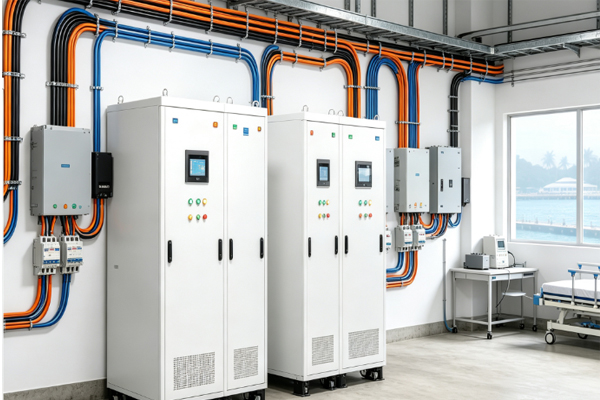
When purchasing an LTO battery, capacity is usually one of the first specifications customers look at. It is common to ask, “What Ah rating should I choose for an LTO battery?” However, there is no single capacity that works for every application.
If the capacity is too small, the equipment may not run for the required amount of time. If it is too large, the battery system may add unnecessary cost, weight, and installation space. For applications such as energy storage, electric vehicles, AGVs, and industrial equipment, the right LTO battery capacity should be determined based on actual power requirements rather than simply choosing the largest Ah rating available.

Understand What LTO Battery Capacity Means
LTO battery capacity is usually measured in Ah (ampere-hours). It indicates how much electrical charge the battery can store and deliver.
For example, under theoretical conditions, a 100Ah LTO battery could provide 100A for one hour or 10A for approximately 10 hours.
In real-world applications, however, actual operating time will not always match this simple calculation. Factors such as depth of discharge, load power, temperature, battery aging, and overall system efficiency can all affect actual performance.
When comparing LTO batteries with different capacities, it is important to consider both voltage and capacity. The basic formula is:
Battery Energy (Wh) = Battery Voltage (V) × Battery Capacity (Ah)
For example, a 2.3V, 100Ah LTO cell has a theoretical energy capacity of approximately 230Wh. When multiple cells are connected in series, the system voltage increases while the Ah capacity remains the same.
Start With the Equipment’s Daily Energy Consumption
Before selecting an LTO battery capacity, determine how much energy the equipment actually uses each day.
Suppose a device has an average power consumption of 1kW and operates for 5 hours per day. Its theoretical daily energy consumption would be:
1kW × 5h = 5kWh
After accounting for system losses and an appropriate capacity margin, the actual battery capacity should be higher than 5kWh.
For energy storage systems, this calculation is more useful than simply copying the battery capacity used in another project. You need to know how much energy must be stored and how long the system needs to operate without external charging.
Different Applications Require Different Battery Capacities
The right LTO battery capacity depends heavily on the application.
Small devices, such as portable power systems, compact robots, and certain automation equipment, may only require batteries with capacities of several dozen Ah.
AGVs, industrial vehicles, and larger backup power systems may require 100Ah, 200Ah, or even higher capacities.
For commercial and industrial energy storage or solar energy storage projects, a single LTO cell is usually not enough. Multiple LTO cells are connected in series and parallel to create a larger battery system.
Therefore, when selecting capacity, do not look only at the Ah rating of an individual LTO cell. Consider how much total energy the complete battery pack can provide, usually measured in kWh.
Don’t Look at Capacity Alone—Consider Power Requirements
A larger battery capacity does not necessarily mean that the battery is more suitable for your equipment.
For example, two battery packs may both provide 10kWh of energy, but one may support a significantly higher discharge rate. That battery could be more suitable for electric motors, industrial machinery, or other high-power equipment.
One of the advantages of LTO batteries is their strong rate performance, which makes them suitable for certain high-power applications.
If the equipment requires a large amount of current during startup, you should consider not only battery capacity but also the maximum continuous discharge current and peak discharge capability of the LTO battery.
Consider the Number of Daily Charge and Discharge Cycles
Cycle frequency is another factor worth considering when choosing an LTO battery.
If a device is used once a day, capacity is mainly determined by its operating time and load.
However, if the equipment charges and discharges multiple times per day, such as AGVs, industrial vehicles, and certain energy storage systems, you should pay closer attention to the required cycle depth and long-term operating conditions.
Proper capacity sizing can help prevent excessive battery discharge and reduce unnecessary high-load operation.
Leave Some Extra Capacity
When selecting an LTO battery, it is generally not a good idea to size the battery exactly to the theoretical minimum.
For example, if a device theoretically requires 5kWh per day but the battery system can provide only 5kWh, unexpected factors such as low temperatures, increased loads, or system losses could result in insufficient available energy.
Therefore, an appropriate capacity margin should be considered based on the specific application.
There is no universal percentage that should be added to every project. The appropriate margin depends on the equipment, operating environment, expected battery usage, and required runtime.
Consider the Operating Environment
Temperature is another factor that is often overlooked.
Although LTO batteries generally offer good low-temperature performance compared with some other lithium battery technologies, extremely high or low temperatures can still affect the actual available capacity and charging performance.
If the battery will be installed outdoors, in cold storage facilities, or in high-temperature industrial environments, the LTO battery capacity and specifications should be selected based on the actual operating temperature.
Battery cooling, insulation, and the BMS should also be considered as part of the overall system design.
A Larger Battery Is Not Always More Cost-Effective
A common mistake among buyers is assuming that a larger battery is always better because it can store more energy.
In reality, a larger LTO battery means higher upfront costs, greater installation requirements, and potentially more weight.
If the actual requirement is only 5kWh but a 10kWh or 20kWh battery system is installed, the additional capacity may not provide meaningful value and could increase project costs.
For businesses, a more practical approach is to consider load power, operating hours, daily energy consumption, cycle frequency, operating conditions, and budget together.
An Example of LTO Battery Capacity Selection
Suppose an industrial machine consumes 2kW of power and operates for 4 hours per day. Its theoretical daily energy consumption would be:
2kW × 4h = 8kWh
After accounting for system losses and an appropriate backup margin, the actual LTO battery system should have a capacity greater than 8kWh.
If 2.3V, 100Ah LTO cells are used, each cell has a theoretical energy capacity of approximately 230Wh. Multiple cells can then be connected in series and parallel to achieve the required system voltage and total capacity.
In an actual battery design, additional factors such as the BMS, inverter, charger, and maximum equipment power requirements must also be taken into account.
Choosing the right LTO battery capacity is not simply a matter of selecting the largest Ah rating available. A properly sized battery should match the equipment’s power requirements, operating time, daily energy consumption, cycle frequency, operating temperature, and overall system design.
For businesses purchasing or customizing LTO batteries, it is best to first determine the required voltage, load power, daily operating hours, and desired runtime. The required battery energy can then be calculated before deciding on the number of LTO cells and the final battery pack capacity.
For energy storage systems, electric vehicles, AGVs, and industrial equipment, proper capacity sizing not only ensures reliable operation but also prevents unnecessary oversizing and helps reduce the total long-term cost of the project.