
When purchasing cylindrical batteries in different specifications such as 18650 and 21700, capacity and individual cell price should not be the only considerations. What truly affects performance is whether the cell voltage, capacity, discharge capability, internal resistance, dimensions, temperature adaptability, and cycle life match the operating conditions of the equipment. For projects that require battery packs, the series-parallel configuration, BMS compatibility, and thermal management should also be considered. Matching equipment requirements with cell parameters one by one can reduce later replacement and performance compatibility issues.
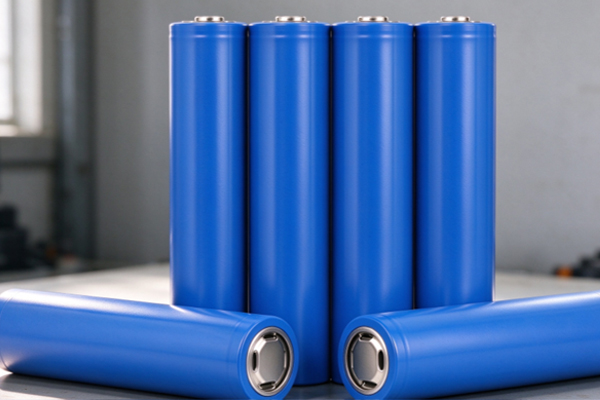
Determine Battery Specifications Based on Equipment Requirements
Before selecting cylindrical batteries, clarify the equipment’s operating voltage, runtime, load characteristics, and installation space, then select the appropriate specifications instead of purchasing based on a single parameter.
Match Cells According to Voltage Requirements
Different cell chemistries have different nominal voltages and charging and discharging ranges, so actual selection should be based on the specifications of the corresponding cell.
- Operating voltage: Determine the number of cells connected in series according to the equipment’s rated voltage.
- Charging and discharging range: Confirm the allowable operating range of the cell and match it with the charging system and BMS parameters.
- Series configuration: The number of cells connected in series determines the battery pack voltage and needs to correspond to the equipment’s input requirements.
Once the voltage parameters are determined, selecting capacity and output capability becomes more straightforward.
Select the Size According to Installation Space
Cell dimensions directly affect battery pack arrangement and internal space utilization. Common models such as 18650, 21700, and 26650 differ in diameter and height, and the actual dimensions should be checked against the specifications of the specific model. For equipment with limited internal space, the cell diameter, height, terminal structure, and installation clearance should be confirmed in advance. After confirming the dimensions, the internal connection and thermal management space of the battery pack should also be checked.
Balance Capacity and Discharge Capability When Selecting Cells
Capacity and discharge capability correspond to energy storage and power output respectively, and both should be evaluated according to the load characteristics of the equipment. High-energy and high-power cylindrical battery designs generally involve certain trade-offs, so a higher-capacity cell is not necessarily more suitable for high-current applications.
Determine Capacity According to Operating Conditions
Capacity is generally expressed in Ah or mAh, while actual stored energy is also related to voltage. The following factors can be considered based on equipment operating characteristics:
- Long-duration, low-power equipment: Focus more on capacity and energy reserves.
- Short-duration, high-load equipment: Pay particular attention to continuous discharge capability.
- Equipment with significant load variations: Also consider short-duration pulse current and voltage changes.
Capacity selection should serve the required operating time rather than comparing numerical values independently of equipment power consumption.
Understand the Trade-Off Between High Capacity and High Power
With the same dimensions and material system, cell design needs to balance energy storage, internal resistance, heat generation, and high-current output. High-energy cells and high-power cells typically have different performance priorities, so the following parameters should be examined:
- Continuous discharge current: Determines the output capability under long-term loads.
- Pulse discharge capability: Indicates the allowable range and duration of short-term high-current output.
- Voltage change under load: Shows the degree of voltage drop during high-current operation.
- Temperature rise under high load: Helps evaluate heat generation during sustained output.
Long-runtime equipment can place greater emphasis on energy capacity, while high-load equipment should give greater attention to power performance and find an appropriate balance between the two requirements.
Evaluate Cells Through Internal Resistance, Consistency, and Temperature Performance
When cells are assembled into a battery pack, the parameters of an individual cell are only part of the selection process. Differences between cells and the actual operating environment can also affect overall pack performance.
Check Internal Resistance and Cell Consistency
Internal resistance affects voltage changes and heat generation under load. When multiple cells are combined, parameter differences should also be considered.
- Internal resistance differences: Large deviations may cause different cells to experience different levels of heating and voltage variation under load.
- Capacity differences: Capacity inconsistencies can affect the overall performance of the battery pack.
- Initial condition: Check voltage and other relevant parameters according to product requirements before assembly.
Better consistency generally makes subsequent battery pack operation and management easier.
Select Cells According to Operating Temperature
Temperature affects cell charging and discharging performance during actual use, so the equipment location and operating conditions should be considered. Low-temperature applications should focus on low-temperature charging and discharging capability, while high-temperature applications should pay greater attention to temperature rise and heat dissipation. Equipment used outdoors for long periods should also account for seasonal temperature differences. Matching the cell’s temperature operating range with actual conditions can reduce performance fluctuations caused by environmental changes.
Complete Cell Selection by Considering Service Life and Pack Design
After basic parameters have been screened, selection should also consider service duration, system compatibility, and batch purchasing requirements. For equipment designed for long-term operation, these factors can directly affect subsequent maintenance costs.
Evaluate Cycle Life According to Usage Conditions
Cycle life is affected by factors such as charging and discharging current, depth of discharge, and operating temperature. When comparing different cells, consider:
- The test conditions corresponding to the specified cycle life;
- Differences between the actual operating current and the test conditions;
- Daily depth of discharge;
- Capacity retention after long-term use.
Only by comparing cycle-life data under conditions relevant to actual use can it be determined whether a cell meets project requirements.
Check Compatibility Between the Cell, BMS, and Battery Pack
When cells are used in a battery pack, their parameters need to be coordinated with the entire system. The BMS needs to match the cell chemistry, number of cells in series, charging voltage, operating current, and temperature monitoring scheme. At the same time, connection, insulation, and thermal management structures should be planned according to cell arrangement and load conditions. Proper pack design allows the cell’s performance to be used effectively.
Pay Attention to Long-Term Purchasing Consistency
For batch projects, subsequent replenishment and batch stability also need to be considered. During purchasing, confirm the cell model, specifications, batch management, and quality inspection requirements to reduce significant performance differences between batches. For long-term projects, stable specifications and consistent quality control can help reduce subsequent maintenance difficulties.
Choosing the right cylindrical battery is not simply about selecting the model with the largest capacity. The cell characteristics need to match the equipment’s load, available space, operating environment, and service cycle. During purchasing and development, core parameters can be screened and combined with the overall pack structure to determine the specific solution. For long-runtime and high-power requirements, the trade-off between energy storage and output capability should also be properly considered to select a cylindrical battery that better fits the actual application conditions.




