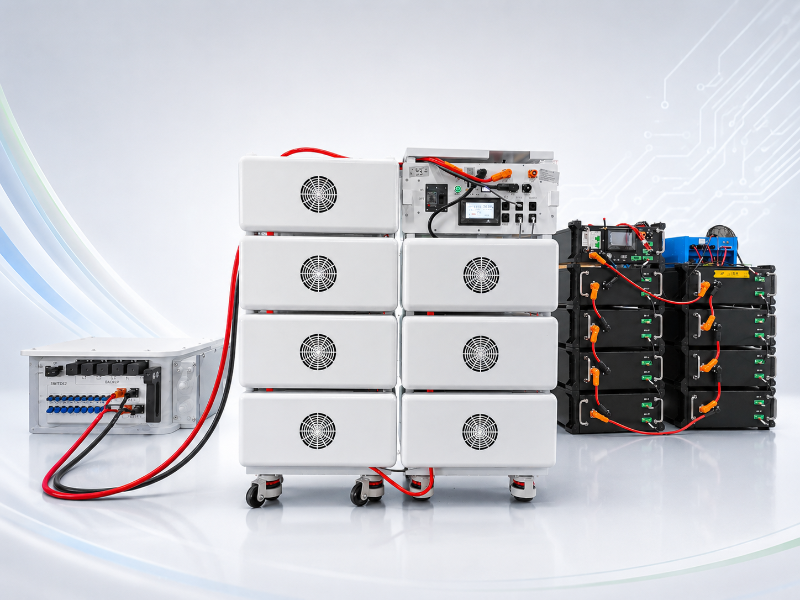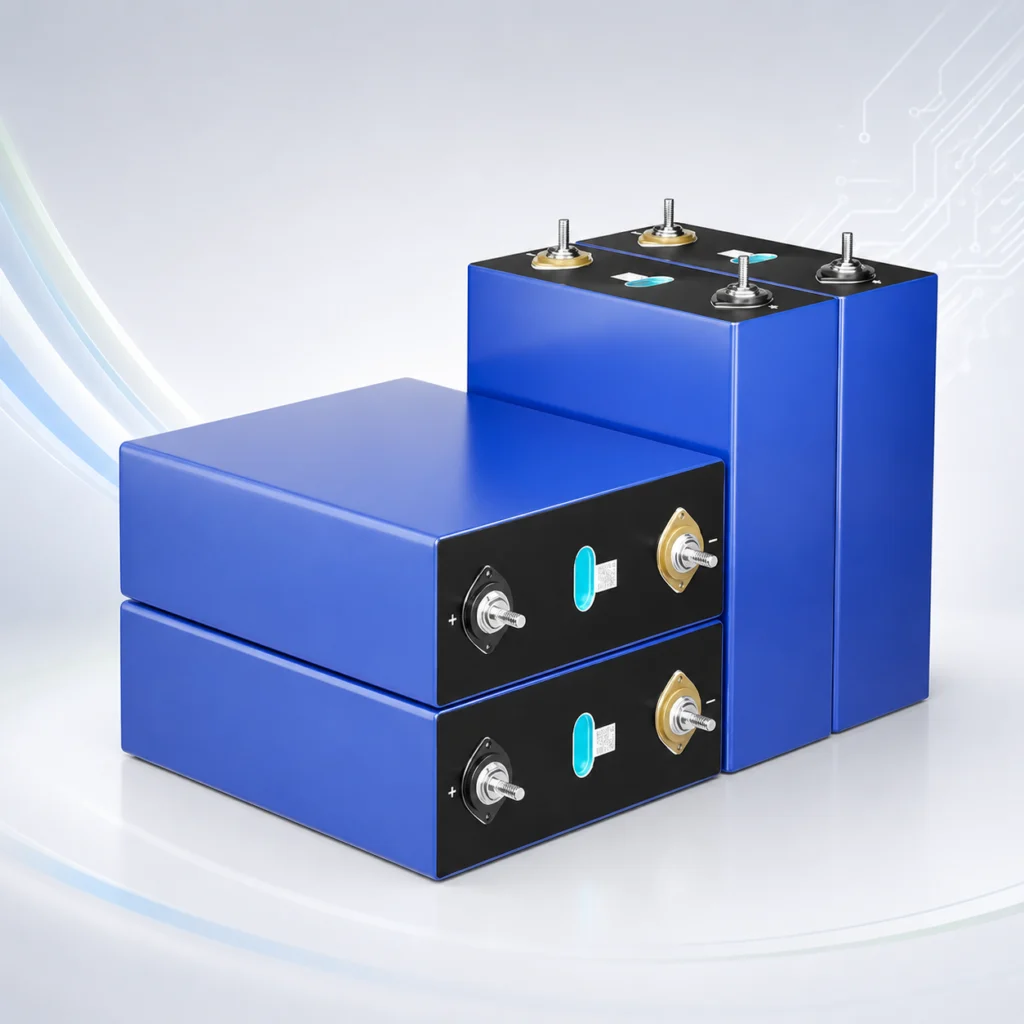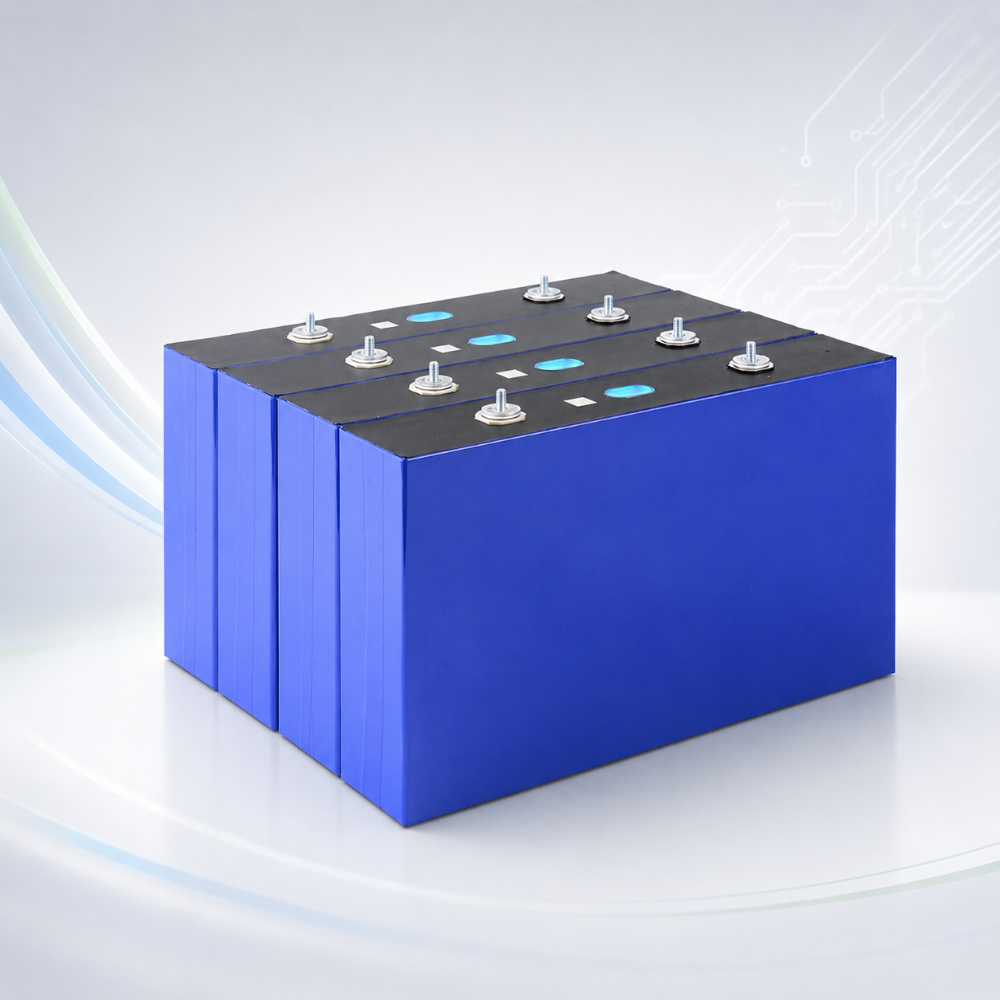
Battery packs are responsible for continuous power supply, and their structural design directly affects internal space utilization, assembly efficiency, and long-term operating performance. For different equipment platforms and operating environments, designers need to plan around cell specifications, installation space, connection methods, heat management, and protection requirements. For procurement personnel and equipment manufacturers, a mature structural design should also consider production, inspection, and maintenance needs, allowing the battery pack to better adapt to actual projects.
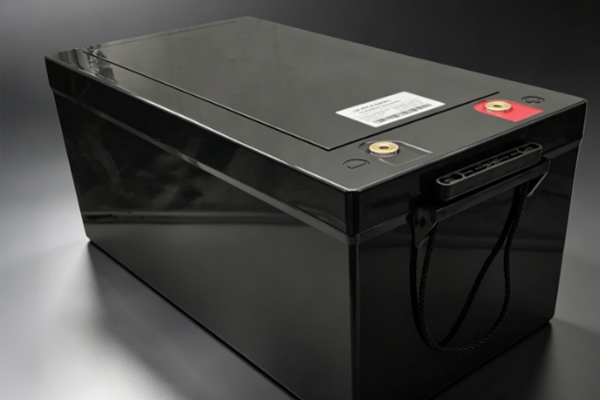
What Basic Conditions Should Be Considered in Battery Pack Structural Design?
Structural planning should be based on specific application parameters, with the operating requirements of the battery pack defined before determining its internal layout and external dimensions.
Determine the Cell Arrangement Based on Cell Specifications
Cell dimensions are an important factor affecting internal space utilization.
- Determine the installation area according to the dimensions of cylindrical, prismatic, or pouch cells.
- Plan the arrangement according to the required series and parallel configuration to reduce unused space.
- Maintain appropriate spacing between cells to accommodate insulation, fixation, and thermal management structures.
A well-planned arrangement can improve space utilization and facilitate subsequent modular design.
Determine Overall Dimensions Based on Equipment Space
The battery pack needs to maintain a suitable installation relationship with the complete equipment.
- Verify the installation position, mounting holes, and interface direction.
- Control the overall height and weight to avoid significantly affecting the equipment’s center of gravity.
- Reserve installation space for wiring harnesses, connectors, and the BMS.
Adequate dimensional planning can reduce structural interference during subsequent assembly.
Determine Protection Requirements Based on the Operating Environment
The operating environment of the equipment affects the structural strength and protection level of the battery pack, so actual working conditions need to be considered during design. The enclosure, support components, and fixing structures need to provide appropriate mechanical protection while offering a stable installation foundation for internal electrical components.
How Should the Internal Structure of a Battery Pack Be Arranged?
The internal layout needs to properly coordinate the spatial relationships among cells, connection components, the BMS, and auxiliary structures while maintaining appropriate separation between functional areas.
Cells and Modules Need to Be Securely Fixed
Cells may be exposed to continuous vibration and external impact during equipment operation, making structural fixation an important consideration.
- Use brackets, trays, or module frames according to the cell specifications.
- Properly isolate adjacent cells to reduce collision and compression.
- Strengthen bottom and side supports according to the equipment’s operating conditions.
A stable fixation method helps reduce adverse effects on connection structures caused by cell movement.
Electrical Connections Need Clear Routing
After completing series and parallel connections, busbars, wiring harnesses, and sampling lines also need to be properly planned.
- Separate and secure high- and low-voltage wiring according to system requirements.
- Reduce unnecessary cable crossings to simplify assembly and maintenance.
- Provide necessary insulation and mechanical fixation at connection points.
Clear connection routing can improve assembly consistency and facilitate subsequent inspection and maintenance.
The BMS Installation Position Should Facilitate Inspection and Maintenance
The BMS collects and manages operating data such as voltage, current, and temperature and is an important functional component of the battery pack. Its installation position should be determined based on sampling cable length, interface direction, and maintenance space, while avoiding obvious heat sources where possible. A well-planned layout can reduce excess wiring while making later inspection and maintenance more convenient.
How Can Battery Pack Structural Design Balance Thermal Management and Safety?
Battery pack operation generates heat, so structural design needs to account for both heat dissipation and abnormal-condition protection while coordinating with cell layout and functional component positioning.
Reserve Appropriate Heat Dissipation Paths
Different power levels require different thermal management approaches.
- Low-power products can combine natural heat dissipation with thermally conductive structures.
- High-power battery packs can use air cooling or liquid cooling according to actual operating conditions.
- Areas with concentrated heat generation require focused planning of thermal conduction and heat dissipation paths.
Appropriate thermal paths help control local temperature rise and improve the operating environment of the cells.
Strengthen Insulation and Protection Structures
The internal structure of a battery pack needs to meet both electrical connection and safety isolation requirements.
- Provide necessary insulation between cells, busbars, and the enclosure.
- Isolate and protect connection terminals and high-voltage components.
- Consider dust protection, water resistance, and impact resistance according to the actual environment.
Comprehensive insulation and protection structures can reduce risks associated with unintended conduction, short circuits, and external environmental conditions.
Allow Adequate Safety Space for Abnormal Conditions
The structural design needs to consider abnormal temperature rise, gas release, and fault isolation, while reserving space for protective components and safety pathways. Large battery systems should implement multi-level safety design covering cells, modules, PACKs, and the complete system, with coordinated operation among the BMS, electrical protection, and thermal management systems.
How Can the Practicality of Battery Pack Structural Design Be Improved?
In addition to meeting normal operating requirements, the structural design should also consider manufacturing, inspection, maintenance, and future upgrades to improve engineering feasibility.
Design Structures That Facilitate Assembly and Maintenance
In mass production, structural design directly affects assembly efficiency and product consistency.
- Arrange bolts, clips, and other fixing structures appropriately.
- Keep key interfaces clearly accessible and reduce unnecessary repeated disassembly.
- Reserve sufficient operating space for components that require regular inspection.
Structures that are easy to assemble and maintain can reduce production and after-sales maintenance time.
Consider Structural Strength and Reliability Verification in Advance
Battery packs may experience vibration, impact, and temperature changes during transportation and use. The design stage should include strength and reliability verification based on actual operating conditions. For customized PACK projects, prototype testing, structural analysis, and other methods can be used to identify weak areas before adjusting support, fixation, and connection structures. Sufficient validation before mass production helps reduce the risk of later rework and structural failure.
Reserve Space for Future Upgrades
Actual projects may require capacity adjustments, interface changes, or BMS function upgrades, so the structural design can reserve an appropriate amount of flexibility in advance.
- Reserve reasonable installation space for different capacity configurations.
- Consider standardized interfaces and mounting positions according to product series development requirements.
- Reserve necessary space for management modules that may be upgraded in the future.
A structural design with a certain degree of scalability makes product iteration and platform-based development more convenient for enterprises.
The value of battery pack structural design is not limited to whether internal components can be installed. It also affects stable production, maintenance convenience, and long-term operation. In practical projects, the structure should be planned according to actual requirements. Only when the structural design works effectively with the complete equipment system can it provide a solid foundation for reliable battery pack applications.