With the continuous expansion of new energy equipment applications, the adaptability of batteries in different environments has become an important factor that users consider when selecting products. As one of the most widely used lithium battery cells today, LiFePO4 battery cells are widely applied in new energy vehicles, energy storage systems, outdoor power supplies, and industrial equipment due to their high safety, long cycle life, and excellent stability. However, when used in winter low-temperature environments or cold regions, how well can LiFePO4 battery cells maintain their performance under low temperatures? Will lower temperatures affect battery capacity, charging and discharging speed, and service life?
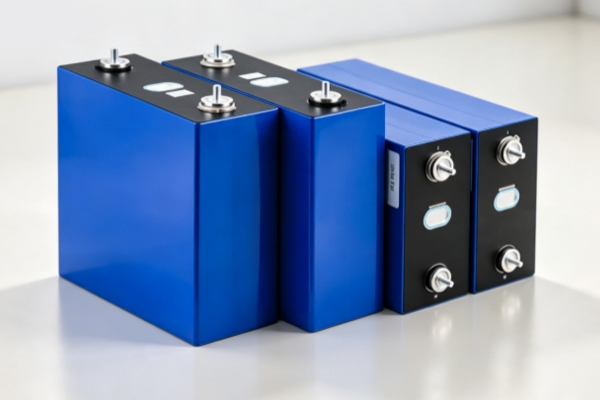
The low-temperature performance of LiFePO4 battery cells is closely related to the cell materials, electrolyte characteristics, battery structure, and temperature management methods. When the ambient temperature decreases, the movement speed of lithium ions inside the battery cell is affected, resulting in reduced discharge efficiency. However, by optimizing cell design, integrating intelligent battery management systems, and adding temperature control measures, the low-temperature performance can be effectively improved.
Basic Performance of LiFePO4 Battery Cells at Low Temperatures
Low Temperatures Reduce the Discharge Capability of Battery Cells
LiFePO4 battery cells can maintain good capacity output under normal temperature conditions, but when the ambient temperature decreases, the internal chemical reaction speed of the battery slows down, and the movement efficiency of lithium ions also decreases. These changes may cause reduced discharge capacity and lower output power of the battery cell. For example, when using battery-powered equipment outdoors in winter, users may notice that the operating time is shorter than under normal temperature conditions, which is a common phenomenon for lithium batteries in low-temperature environments.
After the temperature decreases:
- The conductivity of the electrolyte decreases;
- The movement speed of lithium ions between the cathode and anode slows down;
- The internal resistance of the battery cell increases, reducing discharge efficiency.
Different manufacturers have different production processes, battery material formulations, and battery management system designs, so low-temperature performance can vary. Some optimized LiFePO4 battery cells can maintain relatively good capacity output even at lower temperatures. Relevant test data shows that optimized LiFePO4 battery cells can still maintain a high percentage of discharge capacity at -20℃.
Low-Temperature Capacity Changes of LiFePO4 Battery Cells
The capacity performance of LiFePO4 battery cells in low-temperature environments gradually changes as the temperature decreases.
Generally:
- Around 0℃, battery performance does not decrease significantly;
- Between -10℃ and -20℃, capacity decreases to some extent;
- Below -30℃, discharge capability decreases more noticeably.
For example, some low-temperature test results show that optimized LiFePO4 battery cells can maintain around 90% capacity at 0℃, while capacity retention may decrease to around 80% at -20℃. Different products may have different data due to variations in materials and structural design. Therefore, LiFePO4 battery cells are not unsuitable for low-temperature environments, but appropriate models should be selected according to specific application conditions in cold environments.
Factors Affecting the Low-Temperature Performance of LiFePO4 Battery Cells
Battery Cell Materials Determine Basic Low-Temperature Performance
The low-temperature performance of LiFePO4 battery cells is directly related to their internal materials. The cathode material, anode material, electrolyte, and separator design all affect lithium ion movement efficiency. In low-temperature environments, electrolyte viscosity increases, reducing lithium ion transmission speed. At the same time, the lithium-ion intercalation capability of graphite anode materials decreases under low temperatures, reducing charging and discharging efficiency. To improve this situation, some battery manufacturers optimize material ratios during cell production, such as improving electrolyte formulas, enhancing electrode conductivity, and optimizing particle structures, allowing lithium ions to move more smoothly.
- High-quality electrolytes can improve low-temperature ion transmission speed;
- Improved anode materials can reduce low-temperature resistance;
- Optimized cathode structures can enhance low-temperature discharge capability.
These technical improvements help LiFePO4 battery cells maintain more stable performance in cold environments.
Battery Management Systems Affect Low-Temperature Performance
In addition to the materials of the battery cell itself, the BMS (Battery Management System) is also an important factor affecting low-temperature performance. The BMS can monitor battery cell temperature, voltage, and current status in real time and adjust charging and discharging conditions according to environmental conditions.
In low-temperature environments, an advanced BMS usually applies protective measures:
- Limiting high-current charging at low temperatures;
- Controlling charging speed;
- Preventing battery cells from being damaged by low temperatures.
Especially in new energy vehicles and large-scale energy storage systems, the battery management system can work together with heating modules to maintain the battery cells within a suitable operating temperature range, improving low-temperature operating stability.
How to Improve the Low-Temperature Performance of LiFePO4 Battery Cells?
Use Battery Heating Systems to Improve Low-Temperature Performance
For equipment that frequently operates in cold environments, relying only on the battery cell’s own performance may not meet application requirements. Therefore, additional battery heating designs can be added. Battery heating systems can increase battery cell temperature when it becomes too low, allowing internal materials to recover better activity. For example, when new energy vehicles start in winter, the thermal management system can preheat the battery to bring the power battery to a suitable operating condition, reducing range loss caused by low temperatures. For home energy storage systems and outdoor portable power supplies, methods such as insulated boxes and battery heating films can also be used to improve the user experience in cold environments.
Properly Control Low-Temperature Charging and Discharging Methods
When LiFePO4 battery cells are used in low-temperature environments, charging methods are particularly important. Under low-temperature conditions, high-current fast charging may affect battery life. Therefore, when used in cold environments, attention should be paid to:
- Avoid immediately fast charging when the battery cell is at extremely low temperatures;
- Wait until the battery temperature recovers before high-rate charging;
- Use charging equipment that matches the battery cell specifications.
Proper charging and discharging methods can reduce the impact of low temperatures on battery performance and improve long-term operating stability.
Choose LiFePO4 Battery Cells Suitable for Low-Temperature Environments
Different application scenarios have different requirements for low-temperature performance, so battery cell selection should be based on actual environmental conditions.
For example:
- Ordinary home energy storage systems can use standard LiFePO4 battery cells;
- Outdoor equipment in northern regions should select enhanced low-temperature battery cells;
- Applications in extremely cold environments require heating and temperature control systems.
Choosing the appropriate battery cell specifications can prevent performance degradation caused by mismatched environmental temperatures.
Frequently Asked Questions
Can LiFePO4 Battery Cells Still Be Used Normally in Winter?
Many users worry that low winter temperatures may cause batteries to stop working. In fact, LiFePO4 battery cells can still operate in normal low-temperature environments, but their capacity and output efficiency will decrease. If the temperature is not extremely low and the battery system has proper protection measures, normal operation is usually not affected. For equipment frequently used in cold regions, selecting low-temperature battery cells or adding insulation measures can improve operating stability.
Compared with Ternary Lithium Battery Cells, Which Has Better Low-Temperature Performance?
Different types of lithium batteries have their own characteristics. Some ternary lithium battery cells may have stronger energy release capability in low-temperature environments due to their material properties. However, LiFePO4 battery cells have advantages mainly in safety, cycle life, and stability. Therefore, battery selection should be based on actual requirements. If long-term stable operation and safety are the primary concerns, LiFePO4 battery cells offer significant advantages.
Can LiFePO4 Battery Cells Be Used at -20℃?
-20℃ is considered a low-temperature environment, but it does not mean LiFePO4 battery cells cannot operate. With optimized designs, LiFePO4 battery cells can maintain certain discharge capabilities at -20℃. Some test results show that low-temperature optimized products still demonstrate good capacity retention performance at -20℃. However, if long-term operation in low-temperature environments is required, it is recommended to combine temperature control systems to improve overall battery reliability.
The overall low-temperature performance of LiFePO4 battery cells is relatively stable, but they are still affected by temperature changes in cold environments. As temperatures decrease, internal chemical reactions slow down, resulting in reduced capacity and charging and discharging efficiency, which is a common characteristic of lithium batteries. For daily applications such as home energy storage, electric vehicles, and portable power supplies, LiFePO4 battery cells can meet most requirements. If the application environment has lower temperatures, it is necessary to combine low-temperature battery cells, battery heating systems, and intelligent BMS solutions to improve battery operation performance. Understanding the low-temperature characteristics of LiFePO4 battery cells can help users select battery products more reasonably and adopt proper usage methods according to actual environments, allowing the battery cells to fully utilize their performance advantages.