
Lithium batteries are widely used in residential energy storage, commercial energy storage, electric vehicles, and industrial equipment. Their safety and service life are closely related to proper charge and discharge management. Overcharging may cause abnormally high cell voltage, increasing the risk of overheating and internal damage. Overdischarging can lead to capacity degradation and, in severe cases, affect the battery’s ability to recharge. A Battery Management System (BMS) helps maintain lithium batteries within specified operating limits through real-time monitoring, threshold evaluation, and protective control.
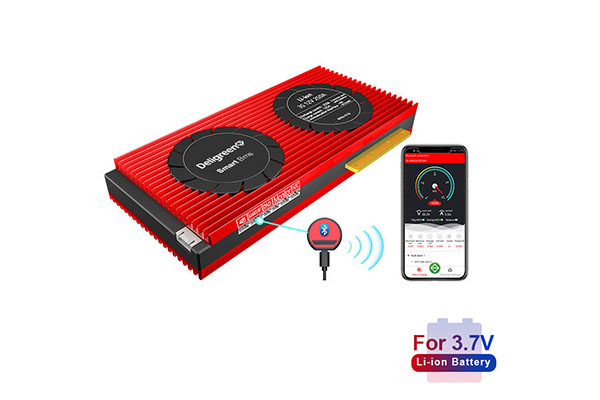
How Does a BMS Prevent Lithium Battery Overcharging?
Real-Time Cell Voltage Monitoring
A BMS uses voltage monitoring circuits to measure the total battery pack voltage and the individual voltages of cells connected in series. When a cell approaches its upper charging limit, the system continuously evaluates its voltage to prevent situations in which an individual cell reaches its limit before the overall battery pack reaches its target voltage.
Different lithium battery chemistries have different rated voltages and charging limits. For example, lithium iron phosphate (LiFePO4) batteries and ternary lithium batteries have different voltage parameters. Therefore, BMS protection thresholds must be configured according to the specifications of the selected cells rather than applying a universal setting.
Activating Overvoltage Protection
When an individual cell or the battery pack reaches a preset overvoltage protection threshold, the BMS can limit or interrupt the charging current by controlling charging MOSFETs, contactors, or communication with the charging equipment. Some intelligent BMS solutions can also send stop-charging commands to inverters or chargers, allowing the system to respond promptly to abnormal conditions.
The conditions for resetting overvoltage protection generally include the voltage returning to an acceptable range and meeting specified delay or recovery requirements. The exact response depends on the BMS hardware design, parameter configuration, and communication capabilities.
Reducing Overcharging Risks Through Cell Balancing
Cells in a multi-series battery pack may differ in capacity, internal resistance, and self-discharge rate. If some cells reach full charge earlier than others, they may trigger individual cell overvoltage protection even when the entire battery pack has not reached its target voltage.
A BMS can use passive or active cell balancing to reduce voltage differences between cells. This function helps improve battery pack consistency, but it cannot replace overvoltage protection or repair cells that have already been damaged.
How Does a BMS Prevent Lithium Battery Overdischarging?
Monitoring Cell Undervoltage and Remaining Capacity
During discharge, the BMS monitors changes in individual cell voltages and estimates the remaining battery capacity using current, temperature, and other operating data. When a cell approaches its lower discharge limit, the system can issue a low-battery warning to remind users to recharge the battery promptly.
It is important to understand that the state of charge (SOC) is an estimate of the remaining capacity and is not equivalent to the actual battery voltage. Load conditions, temperature, and cell aging can all affect voltage readings. Reliable overdischarge protection therefore requires consideration of both cell voltage and actual operating conditions.
Limiting Discharge When the Undervoltage Threshold Is Reached
When a cell voltage falls below the preset undervoltage protection threshold, the BMS can turn off discharge MOSFETs, disconnect the discharge circuit, or send a power-limiting command to the equipment controller. These actions help prevent the battery from continuing to supply power to the load under unsafe conditions.
In an energy storage system, a compatible BMS can communicate with the inverter to reduce discharge power in advance or stop power output. Protection thresholds and recovery conditions should be configured according to cell specifications, load characteristics, and equipment requirements to prevent cells from remaining at excessively low voltages.
Setting Appropriate Low-Battery Warnings
Undervoltage protection is generally a safety measure designed to prevent further battery damage, while low-battery warnings give users time to respond. For residential energy storage, solar energy storage, and industrial backup power systems, appropriately configured SOC warning levels, minimum discharge voltages, and load disconnection conditions can make system operation more predictable.
What Other Protection Functions Should a BMS Provide?
Overcurrent, Short-Circuit, and Temperature Protection
Excessive charging or discharging current can cause batteries and electrical connections to overheat. Abnormal temperatures can also affect cell performance and safety. Depending on its design, a BMS can provide charging overcurrent, discharging overcurrent, short-circuit, and high- or low-temperature protection.
For low-temperature charging applications, the system should also limit charging current according to the cell manufacturer’s specifications and prohibit charging when necessary.
Communication and Parameter Configuration
An intelligent BMS can exchange battery status information with inverters, chargers, or host computers through interfaces such as CAN or RS485. However, the presence of a communication interface does not automatically guarantee device compatibility.
When selecting a BMS, buyers should verify the communication protocol, protection parameters, rated current, number of cells connected in series, and battery chemistry to ensure that all system components work together properly.
How to Choose a BMS with Reliable Protection Functions
When selecting a BMS, buyers should look beyond rated current and price. They should confirm whether the system provides individual cell overvoltage and undervoltage protection, charge and discharge overcurrent protection, temperature monitoring, cell balancing, and appropriate fault recovery logic.
For energy storage projects, communication compatibility, scalability, and operating data recording should also be evaluated.
Deligreen offers LiFePO4 cells, battery packs, BMS products, and energy storage systems for different applications. For residential, commercial, and industrial energy storage projects, buyers can evaluate suitable solutions based on their specific requirements. For projects requiring intelligent monitoring, it is advisable to verify the voltage monitoring range, protection settings, communication protocols, and balancing capabilities of the specific BMS model to ensure compatibility with the overall system design.
Conclusion
A BMS helps lithium batteries avoid improper operating conditions through voltage monitoring, overvoltage and undervoltage protection, cell balancing, and charge and discharge control. These functions reduce the safety risks and service life degradation associated with overcharging and overdischarging.
However, a BMS cannot replace a suitable charger, correct battery configuration, or proper installation and maintenance. Matching cell specifications, BMS protection parameters, charging equipment, and load requirements is essential for maintaining the long-term safety, reliability, and stability of a battery system.




