
In lithium battery systems, a BMS (Battery Management System) and a battery protection board are both important components for ensuring safe battery operation. Both can monitor battery conditions and provide protection against overcharging, over-discharging, overcurrent, and other abnormal conditions. However, they differ significantly in functionality, hardware structure, and application scenarios. Understanding these differences helps businesses and project procurement teams choose the right battery solution.
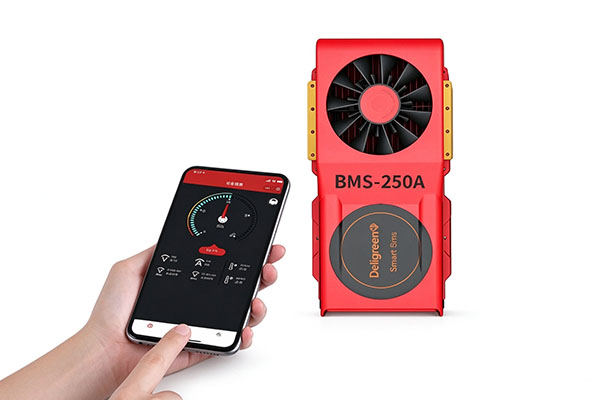
What Are a BMS and a Battery Protection Board?
Battery Management System (BMS)
A BMS is a system designed to monitor, manage, and protect battery packs. It typically consists of control circuits, sampling modules, temperature sensors, communication interfaces, and related protection components. In addition to basic voltage, current, and temperature monitoring, an intelligent BMS may support battery state estimation, cell balancing, fault diagnosis, and data communication.
In residential energy storage, commercial and industrial energy storage, RV power systems, and off-grid power applications, a BMS helps users monitor battery operating conditions and provides data for charging, discharging, and system integration.
Battery Protection Board
A battery protection board primarily provides basic battery safety protection. Common functions include overcharge protection, over-discharge protection, overcurrent protection, and short-circuit protection. Some models also support temperature protection and cell balancing.
A protection board typically uses voltage detection circuits, protection control chips, and power MOSFETs to monitor battery conditions and disconnect the circuit when necessary. Compared with a fully featured intelligent BMS, a basic protection board generally has a simpler structure and is suitable for battery applications that do not require advanced communication, data analysis, or battery management functions.
Key Differences Between a BMS and a Battery Protection Board
Different Functional Capabilities
A battery protection board focuses on protective actions under abnormal conditions. For example, it can disconnect the charging or discharging circuit when the battery voltage exceeds a predefined limit.
A BMS may provide additional functions beyond basic protection, including battery condition monitoring, active or passive balancing, operating data logging, and system communication.
It is important to note that not every BMS supports all advanced functions. Actual capabilities depend on the product model and configuration.
Different Hardware Structures
A basic battery protection board generally uses a relatively simple circuit design centered on voltage detection, overcurrent detection, and protection switches. An intelligent BMS may have a more complex hardware configuration, incorporating multiple sampling channels, temperature sensors, communication modules, and control units.
For battery packs containing multiple cells connected in series, a BMS can also monitor voltage differences between individual cells to help prevent certain cells from reaching their charging or discharging limits prematurely.
Different Communication and Data Management Capabilities
Standard protection boards typically do not provide advanced communication functions, although some models offer basic status outputs. An intelligent BMS may support CAN, RS485, or Bluetooth communication, transmitting battery voltage, current, temperature, alarms, and other operating data to inverters, controllers, or monitoring platforms.
In energy storage systems, these communication capabilities help coordinate equipment operation and improve troubleshooting and routine maintenance efficiency.
Applications of BMS and Battery Protection Boards
Typical Applications of Battery Protection Boards
Basic protection boards are suitable for battery packs with relatively simple functional requirements and limited installation space or cost budgets.
When selecting a protection board, verify compatibility with the battery chemistry, number of cells in series, continuous current, peak current, and protection thresholds. Battery capacity alone is not sufficient to determine whether a protection board is suitable.
Typical Applications of a BMS
An intelligent BMS is more suitable for residential solar energy storage, commercial and industrial energy storage systems, RVs, marine applications, and other scenarios requiring continuous monitoring or communication between devices.
For example, in a LiFePO4 battery pack, a BMS can use cell voltage, temperature, and current data to manage protective functions. Models equipped with balancing capabilities can also help improve cell consistency, while communication interfaces enable data exchange with inverters and other connected equipment.
How to Choose the Right Battery Management Solution
Choose According to System Complexity
If an application only requires basic voltage and current protection, a properly specified and validated protection board may be sufficient. If the system requires cell balancing, operating data monitoring, communication, or remote maintenance, an intelligent BMS should be considered.
Verify Electrical Parameters and Compatibility
During selection, confirm the battery chemistry, number of cells in series, continuous charging and discharging current, temperature protection range, balancing method, and charging and discharging control logic.
For LiFePO4 batteries, protection parameters must match the cell specifications. Compatibility between the charger, inverter, and BMS is also essential for reliable system operation.
Consider Customization and System Integration
For bulk procurement and energy storage projects, selection should go beyond the price of individual components. Battery pack design, communication protocols, connectors, enclosures, testing and validation, and after-sales support should also be considered.
Deligreen provides battery cells, battery packs, BMS accessories, and energy storage products. The company also supports customization based on project requirements, including battery capacity, voltage, BMS communication, and related configurations. These options can benefit customers with system integration and OEM/ODM requirements.
Conclusion
A BMS and a battery protection board are not entirely separate or interchangeable concepts. A battery protection board primarily focuses on basic safety protection, while a more advanced BMS can also support battery monitoring, cell balancing, communication, and operating management. The actual capabilities of either solution should always be verified against the product specifications.
When selecting a battery management solution, consider the battery type, system scale, operating environment, and communication requirements. For applications such as residential energy storage, RV power systems, and commercial energy storage, choosing an appropriate BMS can help improve battery safety, maintainability, and overall system reliability.
If you are planning a LiFePO4 battery pack or energy storage project, contact Deligreen with your battery voltage, capacity, application scenario, and communication requirements to evaluate suitable BMS and battery solutions.




