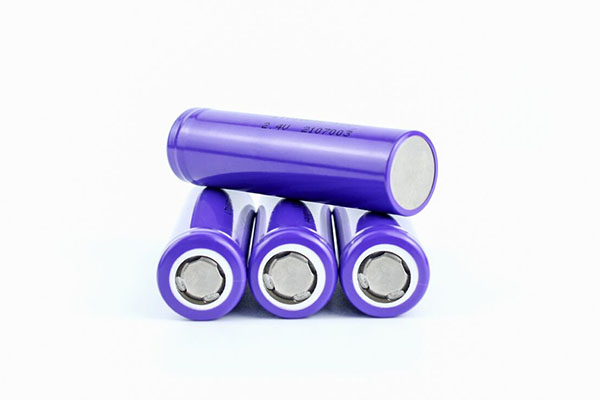
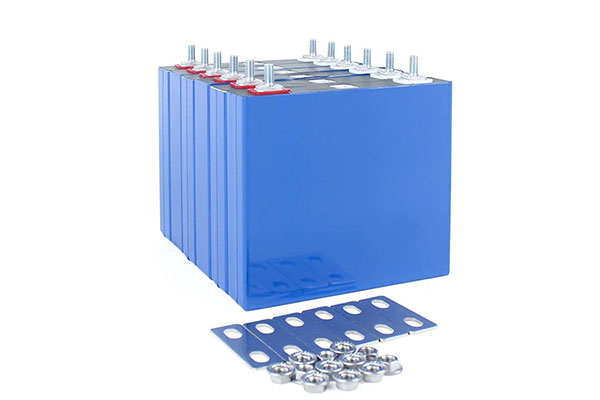
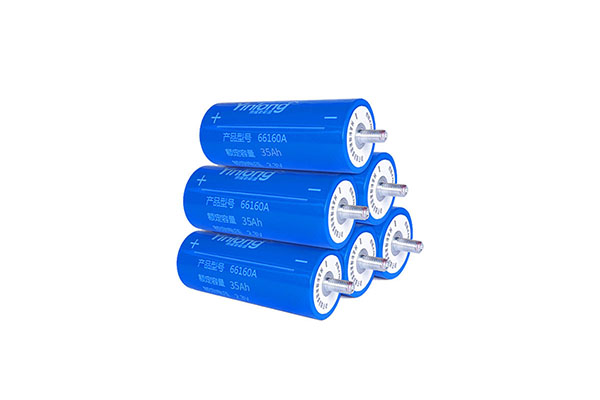
In power equipment, energy storage systems, power tools, and smart devices, multiple cylindrical cells are typically connected in series and parallel to form a complete battery pack. As the number of cells increases, differences in voltage, capacity, internal resistance, and temperature gradually emerge, making battery system management more complex. As an important control unit, the BMS continuously collects key operating data and performs monitoring, protection, balancing, and communication according to actual conditions, providing a more stable foundation for power management.

The BMS Monitors the Operating Status of Cylindrical Batteries
A cylindrical battery pack contains multiple cells and connection components, so continuous monitoring of different operating conditions is required to provide accurate data for subsequent control.
Real-Time Cell Voltage Monitoring
Voltage status reflects changes in cells during charging and discharging, and the BMS continuously collects individual cell voltage and voltage differences.
- Individual Cell Voltage Monitoring: Tracks voltage changes in each cell and identifies abnormal deviations.
- Voltage Difference Management: Monitors voltage differences between cells connected in series, reducing the impact of individual cells reaching full or empty states prematurely.
- Abnormality Detection: Combines current, temperature, SOC, and other data to evaluate cell operating conditions.
Continuous voltage data provides a foundation for protection control, balancing management, and fault diagnosis.
Monitoring Temperature Through Limited Measurement Points
Cylindrical battery packs may contain dozens or even thousands of cells. In practical engineering, multiple temperature sensors are typically placed at key locations rather than installing a sensor on every individual cell.
- Hotspot Monitoring: Temperature sensors are placed in dense cell areas, high-current connection areas, and other critical locations.
- Multi-Point Sampling: Collects temperature changes from different areas to observe the overall temperature distribution.
- Temperature Rise Detection: Combines temperature change rate, current, SOC, and ambient temperature to identify abnormal trends.
A reasonable temperature-sensor layout balances monitoring coverage, sensor quantity, and system cost.
Monitoring Charging and Discharging Current
Charging and discharging current directly affects battery pack power output and heat generation, so the BMS also records current changes.
- Determines the current load and charging or discharging intensity.
- Identifies abnormal current levels and prolonged high-load conditions.
- Combines voltage and temperature data to evaluate operating conditions.
Multi-parameter monitoring provides a clearer picture of battery pack status and supports real-time control strategies.
The BMS Provides Electrical Safety Protection for Cylindrical Batteries
During high-rate charging and discharging and long-term cycling, cylindrical batteries require protection strategies for different abnormal conditions to reduce prolonged stress on the cells.
Overcharge, Over-Discharge, and Overcurrent Protection
The BMS can execute corresponding electrical protection strategies based on real-time monitoring results.
- Overcharge Protection: Monitors individual and overall voltage to limit prolonged exposure to abnormally high voltage.
- Over-Discharge Protection: Prevents cells from entering excessively low voltage ranges and reduces damage caused by deep discharge.
- Overcurrent Protection: When charging or discharging current exceeds preset conditions, the system can limit power or disconnect the circuit according to its protection strategy.
Timely response to different abnormal conditions can reduce their impact on individual cells and the overall battery pack.
Monitoring Abnormal Temperature Rise and Thermal Runaway Risks
Cylindrical lithium batteries may experience thermal runaway under extreme conditions such as internal short circuits, mechanical damage, or severe overcharging. The BMS therefore needs to pay close attention to temperature and its rate of change.
- Abnormal Temperature Alarm: Issues an alarm when a measurement point reaches a defined protection condition.
- Temperature Rise Rate Detection: Uses the rate of temperature change to identify abnormal thermal conditions.
- Power Limitation: Reduces charging or discharging power according to temperature, current, and cell status.
- Safety Coordination: Works with fuses, insulation, thermal management, and other safety structures according to the battery pack design.
The BMS mainly handles monitoring, warning, and electrical control, while thermal runaway protection also depends on the overall battery pack structure.
Coordinating With Hardware Safety Structures
Software protection cannot cover every abnormal condition, so cylindrical battery packs also require appropriate hardware protection. Depending on the design, these may include fuses, insulating supports, flame-retardant thermal insulation materials, pressure-relief paths, and thermal management structures. When the BMS detects a serious abnormality, it can disconnect the circuit or limit power, while the hardware provides physical isolation, mechanical protection, and fault propagation control. Coordinated software and hardware protection can create a more complete safety system.
The BMS Helps Improve Cylindrical Battery Pack Consistency
After multiple cells operate together over an extended period, differences in capacity, internal resistance, and voltage may gradually increase. The BMS can use balancing and condition management to reduce the impact of these individual differences on overall operation.
Reducing Cell Differences Through Balancing Management
Cell consistency affects battery pack capacity utilization and cycling performance, so balancing functions need to be configured according to the actual system structure.
- Passive Balancing: Uses resistors to dissipate part of the energy from higher-voltage cells. The structure is relatively simple, but it generates additional heat and has limited balancing speed.
- Active Balancing: Transfers energy between cells to redistribute available energy. Energy losses can be lower, but the control structure is generally more complex.
- Solution Matching: Selects an appropriate balancing method based on the number of series cells, capacity, cost, and thermal management conditions.
The balancing strategy should be selected according to the specific design objectives of the battery pack rather than evaluated independently of its application conditions.
Identifying Abnormal Parallel Connections
Cylindrical battery packs commonly use multi-series and multi-parallel configurations, with cells connected through tabs or busbars. Vibration and high-rate operation can affect connection reliability over time. The BMS can use voltage, voltage differences, current, temperature rise, and historical data to help identify connection abnormalities. Reduced capacity, changes in current distribution, or localized heating may occur when a parallel branch develops a connection problem, and structural inspection may be required for confirmation.
Supporting SOC and SOH Management
After long-term battery use, instantaneous voltage alone cannot fully represent the actual battery condition, so operating data needs to be considered comprehensively.
- The BMS can estimate SOC and SOH using current, voltage, temperature, and historical charging and discharging data.
- These estimates can support remaining-energy assessment, available-power management, maintenance scheduling, and battery life management.
- Long-term data accumulation can help identify trends in capacity degradation and internal resistance changes.
State estimation allows battery management to extend from individual parameter monitoring to long-term operating condition analysis.
The BMS Provides Data Support for Long-Term Maintenance of Cylindrical Batteries
For equipment manufacturers and battery system purchasers, the BMS also supports operating data management, fault analysis, and equipment communication, all of which directly affect subsequent maintenance efficiency.
Supporting Data Recording and Fault Analysis
Long-term battery operation generates substantial amounts of data that can be used to assess battery condition and plan maintenance.
- Records charging and discharging cycles, voltage differences, temperature changes, and protection events.
- Analyzes when abnormal alarms occur, the operating conditions involved, and changing trends.
- Uses historical data to identify capacity degradation, internal resistance changes, and consistency issues.
Continuous data recording helps maintenance personnel identify performance changes promptly and provides a reference for subsequent inspections.
Communicating With the Equipment Control System
In new energy vehicles, energy storage equipment, and industrial equipment, the BMS typically needs to exchange data with the overall equipment control system.
- Through communication interfaces, the BMS can provide voltage, current, SOC, SOH, temperature, and fault status information.
- The BMS can coordinate charging and discharging power with the overall equipment controller according to system strategies.
- For equipment requiring remote management, operating data can also support condition analysis and maintenance planning.
Stable communication functions help improve coordinated management between the battery pack and the overall equipment.
Providing a Basis for Maintenance and Battery Life Management
After long-term operation, voltage differences, temperature changes, capacity status, and fault records become important references for maintenance.
- Maintenance personnel can use these data to evaluate battery pack condition.
- Abnormal temperature rises, significant voltage differences, connection abnormalities, or rapid performance degradation should be inspected promptly.
- When significant abnormalities are detected, the battery should be taken out of service and inspected by personnel with the appropriate expertise.
- Continued operation should be avoided to prevent the fault from becoming more serious.
Timely identification and handling of abnormalities helps maintain safe and stable battery pack operation.
The BMS of a cylindrical battery pack provides continuous management ranging from basic data collection to electrical protection, cell balancing, state estimation, abnormality diagnosis, and equipment communication. Different battery systems require different configurations based on cell quantity, series-parallel structure, power level, temperature conditions, and equipment control requirements. A properly designed BMS makes battery pack operating conditions more controllable while providing ongoing data support for maintenance, performance analysis, and service life management.