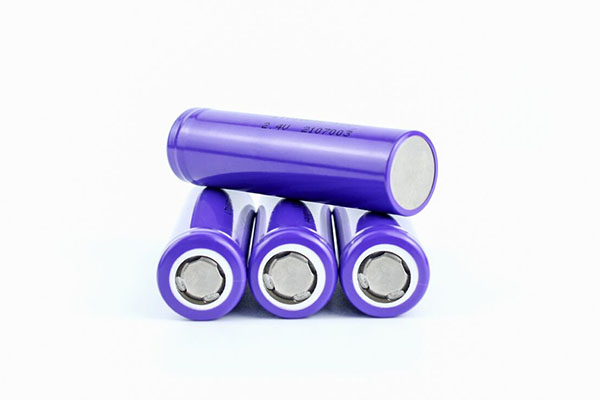
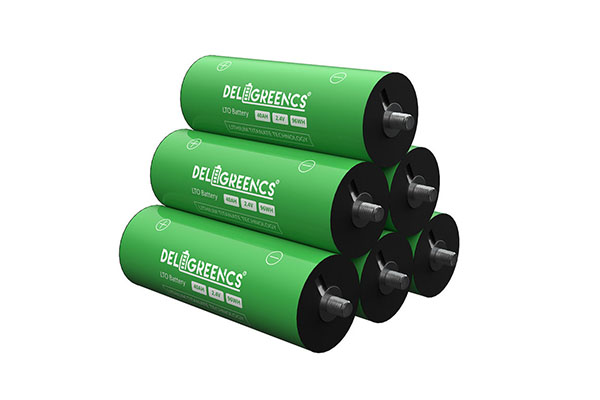
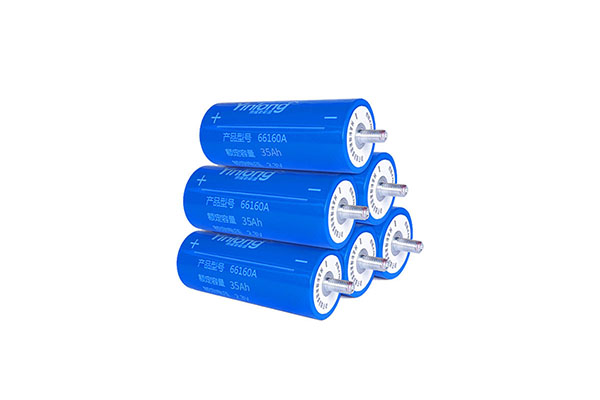
The mass production of cylindrical batteries involves multiple stages, including material processing, electrode manufacturing, winding and assembly, electrolyte filling and formation, and finished-cell screening. During production, issues such as coating deviations, welding contamination, abnormal casing assembly, and early self-discharge may affect cell consistency and subsequent performance. For battery manufacturers, equipment companies, and purchasers, establishing clear process control standards helps improve production stability and reduce batch-to-batch quality fluctuations.
Strict Control Is Required for Raw Materials and Electrode Manufacturing
Cell quality management needs to begin with the material stage, using incoming material inspection and electrode manufacturing controls to reduce basic performance differences.
Conduct Thorough Raw Material Inspection
Cathode and anode materials, conductive agents, binders, current collectors, and other materials all participate in cell manufacturing, so clear inspection standards should be established when materials enter the factory.
- Material specification inspection: Check material batches, specifications, and key performance parameters to confirm compliance with product design requirements.
- Impurity and moisture control: Reduce the impact of foreign particles, moisture, and other factors on subsequent electrochemical reactions.
- Batch records: Establish material circulation and inspection records to facilitate source tracing when abnormalities occur.
Stable raw material conditions provide a reliable foundation for subsequent electrode processing.
Control Slurry and Coating Quality
Slurry dispersion and electrode coating quality affect capacity, internal resistance, and consistency. Production should focus on the following parameters:
- Slurry condition: Control viscosity, solid content, and dispersion uniformity.
- Coating parameters: Maintain stable coating thickness, areal density, and electrode width.
- Edge quality: Inspect for burrs, exposed foil, powder shedding, and uneven edges.
Stable electrode manufacturing conditions can reduce performance differences between individual cells.
Winding, Welding, and Casing Assembly Determine Cell Structural Quality
The internal structure of a cylindrical battery depends on precise winding and connection processes. Positional deviations and foreign-particle contamination during assembly must be carefully controlled.
Improve Winding Accuracy
During winding, the positional relationship between the electrodes and separator must remain stable. Key parameters include:
- Tension consistency: Prevent local areas of the wound core from becoming excessively loose or tight.
- Alignment accuracy: Reduce misalignment between the positive electrode, negative electrode, and separator.
- Wound-core dimensions: Control the diameter, roundness, and end-face condition of the wound core.
A stable winding process helps reduce internal structural deviations and localized stress.
Strengthen Welding and Cleanliness Control
Tabs and current-collection structures are commonly connected through laser welding, resistance welding, or similar processes. Quality management needs to address both weld quality and the welding environment.
- Welding parameters: Control welding energy, pressure, and time according to the materials and structural design.
- Weld condition: Inspect welding position, connection strength, and contact resistance.
- Welding-spatter control: Reduce the risk of metal particles entering the winding gaps of bare cells.
- Dust removal and cleaning: Maintain cleanliness in welding and assembly areas to reduce residual metallic contaminants.
Welding quality and cleanliness must be controlled together to reduce potential internal short-circuit risks.
Strengthen Grooving and Sealing Quality Control
The hard-shell structure of cylindrical batteries involves grooving, sealing, and crimping, and the relevant dimensional and pressure parameters must remain stable. Grooving requires consistent position, depth, and circumferential uniformity to provide accurate positioning for the sealing structure. The sealing fit between the gasket, top cap, and casing should be inspected to reduce the risk of sealing abnormalities. Crimping or sealing dimensions should be controlled to avoid excessive compression that could damage insulation structures. For cells equipped with a CID or pressure-relief structure, the assembly process must not interfere with their intended operation.
The Entire Electrolyte Filling, Wetting, Formation, and Aging Process Requires Monitoring
After electrolyte enters the wound core, the cell still needs sufficient wetting, resting, formation, followed by aging and screening to gradually reach a stable operating condition.
Control Electrolyte Filling and Vacuum Wetting
The electrolyte needs to sufficiently penetrate the electrodes and separator. Process control should focus on the following:
- Filling amount: Control the amount of electrolyte according to the cell design.
- Vacuum wetting: Use appropriate vacuum and resting conditions to promote electrolyte penetration into the wound core.
- Wetting time: Set an appropriate wetting period according to the material system and wound-core structure.
- Condition inspection: Monitor weight, appearance, and abnormal changes after wetting.
Adequate wetting helps improve ion transport conditions inside the cell.
Strengthen Formation, Aging, and Rest Management
Formation establishes the electrode interface, while aging and resting help evaluate the early condition of the cell. The specific process should be adjusted according to the cell chemistry and design. During formation, current, voltage, temperature, and time should be configured according to the cathode and anode materials. Resting and aging provide time for further electrolyte penetration and stabilization of the internal condition, while some processes may incorporate temperature-controlled aging. OCV and voltage-drop screening can be conducted by monitoring open-circuit voltage changes and self-discharge behavior to identify abnormal cells. Cells showing abnormal voltage drops or self-discharge should be isolated at an early stage to prevent unqualified cells from entering subsequent processes.
Finished-Cell Inspection and Production Traceability Need to Form a Closed Loop
After the main manufacturing processes are completed, finished-cell inspection and data tracking are required to verify product quality and provide a basis for subsequent abnormality analysis.
Establish Multidimensional Finished-Cell Testing
Finished-cell testing should cover electrical performance, structural condition, and relevant safety indicators.
- Capacity and internal resistance testing: Determine whether actual capacity, DC internal resistance, and other key parameters meet design requirements.
- Voltage and self-discharge screening: Monitor OCV, voltage drop, and voltage changes after resting to identify abnormal cells.
- Appearance and dimensional inspection: Check the casing, top cap, sealing area, welds, and dimensional condition.
- Safety performance validation: Conduct appropriate tests according to the product type and applicable standards.
Multidimensional testing can reduce the likelihood of abnormal cells entering subsequent battery packs.
Establish Full-Process Quality Traceability
Cylindrical battery production involves large amounts of material, equipment, and process data, making a complete data-recording system essential.
- Material traceability: Record batches of cathode and anode materials, separators, electrolytes, and other key materials.
- Process traceability: Preserve key parameters for coating, winding, welding, electrolyte filling, formation, and aging.
- Equipment traceability: Record equipment calibration, maintenance, and abnormal operating conditions.
- Testing traceability: Preserve capacity, internal resistance, OCV, self-discharge, and safety testing data.
A complete data chain helps companies locate quality abnormalities and provides a basis for process optimization.
The quality of cylindrical batteries is ultimately reflected in batch consistency, parameter stability, and long-term operating performance. Companies can establish tiered inspection standards based on product applications, integrate material data, production parameters, aging screening, and finished-cell results into a unified management system, and continuously optimize processes and equipment based on abnormality records, enabling cylindrical batteries to maintain more stable performance in practical applications.