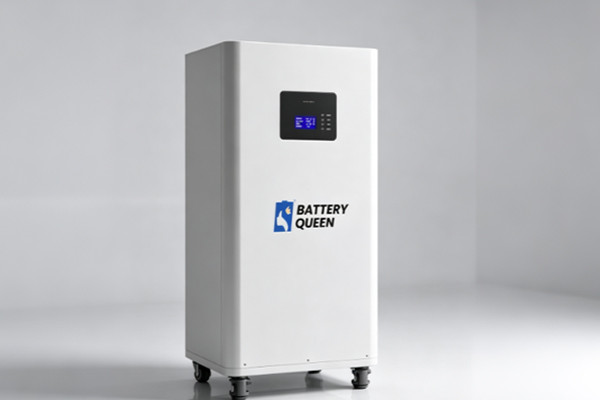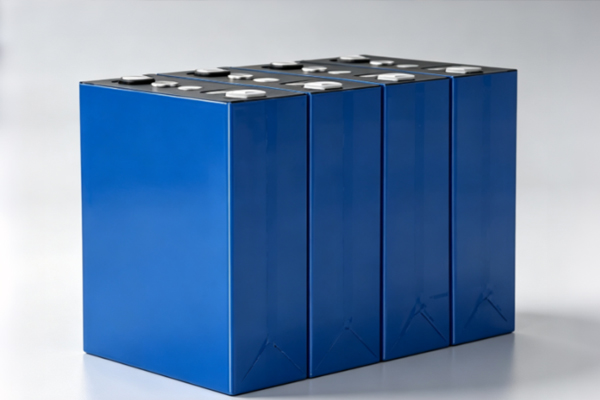
As RV travel, outdoor camping, and long-term mobile living continue to grow in popularity, reliable onboard power has become an important part of the RV experience. When an RV is parked away from campgrounds and utility power, its own energy system needs to keep refrigerators, lighting, communication equipment, daily appliances, and entertainment devices operating normally. A solar energy storage system can use roof-mounted solar panels to generate electricity and store it in LiFePO4 batteries, while an inverter and power distribution equipment deliver electricity to different loads. Compared with relying only on external utility power or vehicle engine charging, a solar energy storage system provides a more flexible way to replenish energy, making it particularly suitable for outdoor parking, long-distance travel, and off-grid camping.
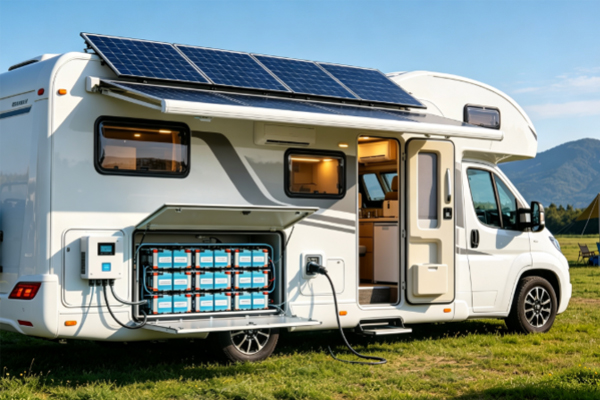
Components and Key Advantages of an RV Solar Energy Storage System
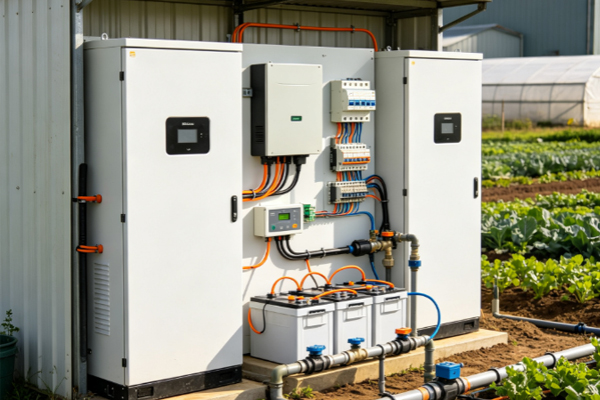
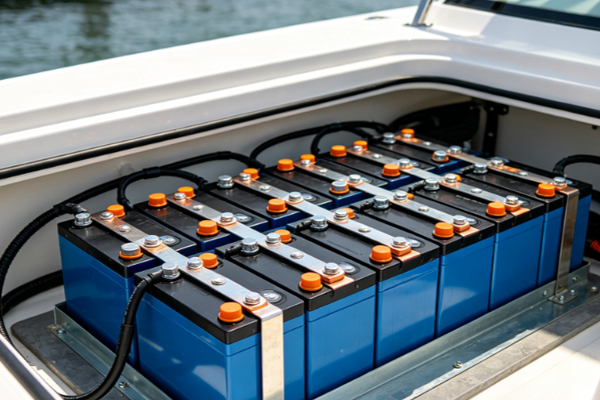
An RV solar energy storage system is not simply a combination of several solar panels. It consists of solar modules, an MPPT solar charge controller, LiFePO4 batteries, an inverter, DC distribution equipment, AC distribution equipment, and a battery management system. These components need to be properly matched to ensure that solar-generated electricity can be efficiently stored in the battery and delivered according to the actual load requirements. For RV energy storage solutions using LiFePO4 batteries, battery capacity, continuous discharge capability, charging efficiency, and installation space are important factors during system design.
Key Advantages of an RV Solar Energy Storage System
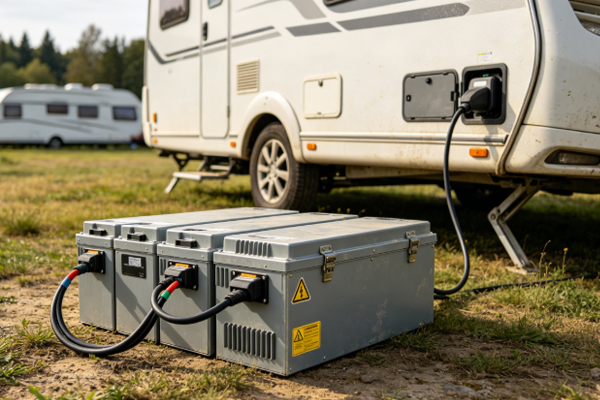
A properly configured solar energy storage system allows an RV to obtain continuous power replenishment without relying completely on the utility grid. As the core energy storage unit, LiFePO4 batteries offer good cycling capability, relatively low weight, and high usable capacity. When combined with solar power generation equipment, they can provide reliable energy storage for daily RV use.
The key benefits include:
- Reduced dependence on grid power: When the RV is parked away from a campground, solar energy can replenish the battery and improve independent power capability.
- Suitable for mobile applications: Solar panels can be installed on the RV roof without occupying additional ground space, making them suitable for mobile energy systems.
- Flexible energy storage capacity: LiFePO4 battery capacity can be selected according to available vehicle space, electrical loads, and travel duration.
- Support for various electrical appliances: With a properly sized inverter, the system can supply refrigerators, lights, computers, televisions, and selected kitchen appliances.
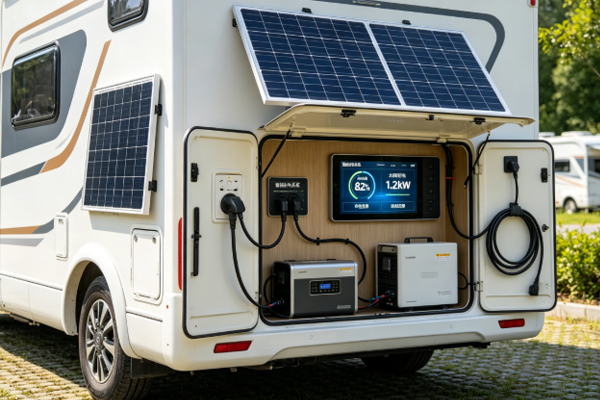
- Convenient energy management: When combined with a BMS and monitoring equipment, users can view battery voltage, SOC, charging status, and discharging conditions.
- Suitable for extended outdoor use: Combining solar generation with battery storage can reduce the need to frequently start the vehicle engine for charging.
By integrating solar generation, LiFePO4 battery storage, and intelligent power distribution, an RV can establish a more independent and flexible energy supply system.
How to Use an RV Solar Energy Storage System
When using an RV solar energy storage system, users should consider weather conditions, vehicle parking direction, daily electricity consumption, and remaining battery capacity. During the daytime, solar panels can supply electricity directly to active loads, while surplus energy is stored in the LiFePO4 battery. When solar input is insufficient or unavailable at night, the battery supplies power to the RV loads. For systems equipped with an inverter, high-power appliances should also be managed according to the inverter’s rated output to prevent excessive discharge loads over short periods.
During daily operation, users can monitor SOC changes through the energy monitoring system and schedule refrigerators, lighting, computers, entertainment equipment, and kitchen appliances according to the available battery capacity. During extended periods of cloudy or rainy weather, the battery can be replenished through a vehicle DC-DC charger or campground shore power to maintain an appropriate charge level. For RVs used for long-term parking, solar panel capacity and battery storage capacity can also be adjusted according to seasonal changes, allowing the system to better adapt to different solar conditions.
RV Solar Energy Storage System Configuration Reference Table
Different RVs have different available space, electrical loads, and travel patterns. A single configuration cannot meet every requirement. The following table can be used as a basic reference:
| Usage Requirement | Solar Panel Capacity | LiFePO4 Battery | Suitable Loads | Configuration Characteristics |
| Short camping trips | Small | Small capacity | Lighting, phones, fans | Simple system with low energy replenishment requirements |
| Weekend RV travel | Medium | Medium capacity | Refrigerator, lighting, computers | Suitable for regular outdoor travel |
| Family travel | Medium to high | Medium to large capacity | Refrigerator, TV, computers, household appliances | Requires greater energy reserves |
| Long-term parking | High | Large capacity | Refrigerator, network equipment, kitchen appliances | Focuses on daily generation and storage balance |
| Off-grid camping | High | Large capacity | Multiple AC and DC devices | Recommended to combine multiple charging sources |
| High-load living | High | High-output battery | Air conditioner, kitchen appliances | Requires careful matching of inverter and battery output |
The actual configuration should be adjusted according to the available roof area, electrical load, battery compartment, and expected travel duration.
Application Scenarios and Functions of RV Solar Energy Storage Systems
The value of a solar energy storage system is not limited to electricity generation. It can participate in the complete energy cycle of an RV. Solar modules collect renewable energy, the charge controller regulates the charging process, LiFePO4 batteries store electricity, the inverter converts electrical energy, and the distribution system delivers power to different appliances. This combination allows an RV to maintain a more stable energy supply in a variety of environments.
Solar Energy Storage for Outdoor RV Camping
Outdoor camping is one of the most common applications for RV solar energy storage systems. When an RV is parked at a natural campsite, near the coast, in a mountainous area, or at another location without fixed power access, roof-mounted solar panels can generate electricity whenever sunlight is available. During the day, generated electricity can be used directly for refrigerators, lighting, and communication equipment while also charging the LiFePO4 battery. At night, the stored energy can provide the primary power supply.
This operating model is particularly suitable for RV users who prefer to stay in natural environments for extended periods. It can reduce the frequency of searching for fixed charging facilities and provide greater flexibility for independent travel.
Energy Functions for Long-Distance Travel and Mobile Living
Long-distance RV travel involves changing weather conditions, road environments, and parking locations. Relying on only one charging method may make it difficult to maintain adequate energy throughout the entire journey. A solar energy storage system can work together with vehicle charging and campground shore power. During driving, the battery can be replenished through the vehicle charging system, while solar energy can continue charging the battery when the RV is parked.
For users who work, entertain themselves, or live in an RV for extended periods, a larger LiFePO4 battery capacity can provide greater energy reserves for nighttime use and periods of limited solar generation.
Core Functions of an RV Solar Energy Storage System
A complete solar energy storage system should provide electricity collection, energy storage, power conversion, protection, and monitoring functions. These functions work together to improve the overall operation of the system.
- Solar energy collection: Solar modules convert solar radiation into electrical energy.
- Smart charging: The MPPT controller adjusts charging parameters according to solar input conditions to improve solar energy utilization.
- Energy storage: LiFePO4 batteries store surplus daytime electricity for nighttime operation and periods of low solar availability.
- Inverter power supply: The inverter converts DC power from the battery into AC power for compatible appliances.
- Battery protection: The BMS monitors battery voltage, current, temperature, SOC, and other operating conditions while providing corresponding protection.
- Energy monitoring: Monitoring equipment displays solar generation, battery capacity, charging and discharging status, and load power to help users manage electricity consumption.
Together, these functions can transform an RV from a vehicle with simple battery storage into a complete mobile energy management system.
Performance Design and Configuration Optimization for RV Solar Energy Storage Systems
System performance depends on battery specifications, solar panel capacity, charge controller efficiency, inverter ratings, and cable configuration. LiFePO4 battery capacity should be selected according to daily electricity consumption and peak loads rather than simply choosing the largest available battery. If an RV needs to operate a refrigerator, lighting, network equipment, computers, and household appliances every day, the required storage capacity should be estimated according to actual power consumption and operating time. The battery’s continuous discharge capability should also match the inverter’s rated output to prevent insufficient battery output.
For RVs that need to operate high-power devices such as air conditioners, microwave ovens, and induction cookers, particular attention should be paid to battery continuous output and inverter peak power. Cables connecting the battery, inverter, and distribution system should be appropriately sized according to the current level, while terminals and connections should remain secure. Proper matching can reduce energy conversion losses and improve the utilization of solar-generated electricity.
Performance Matching Between LiFePO4 Batteries and Solar Systems
LiFePO4 batteries are well suited for cyclic RV energy storage. During system configuration, users should consider nominal voltage, capacity, maximum charging current, continuous discharge current, peak discharge capability, and operating temperature range. Solar panel capacity should be estimated according to the expected effective sunlight hours per day. The MPPT controller should also match the voltage and current specifications of the solar array.
The inverter should not be selected only according to the normal operating power of the appliances. Starting loads from refrigerator compressors and certain motor-driven devices can create temporary power demands. If the RV needs to operate high-power equipment such as air conditioners, microwave ovens, or induction cookers, battery continuous output and inverter peak power should be carefully checked.
The cables connecting the battery, inverter, and distribution equipment should also be selected according to the expected current. Proper system matching can reduce unnecessary energy losses and allow a greater portion of solar-generated electricity to be used effectively.
Modular RV Solar Energy Storage Solutions
Different RV sizes and applications can benefit from a modular design that leaves room for future expansion. A compact RV can start with basic solar panels and a LiFePO4 battery to support lighting, refrigeration, mobile devices, and other essential loads. A medium-sized RV can increase battery capacity and solar panel capacity to support additional appliances. Larger RVs or vehicles used for long-term parking can use higher-capacity batteries, multiple solar modules, and higher-power inverters.
A modular design also makes it easier to add batteries, upgrade solar panels, or replace the inverter with a higher-rated model in the future. When the RV’s energy requirements change, the entire energy system does not necessarily need to be rebuilt. For LiFePO4 battery suppliers serving the RV energy storage market, modular configurations can also adapt to different vehicle types, travel durations, and electrical requirements.
An RV solar energy storage system integrates solar power generation, LiFePO4 battery storage, inverter power supply, and intelligent monitoring to provide flexible energy support for mobile living. Proper capacity planning, reliable battery performance, compatible charging equipment, and comprehensive protection can help RV users obtain stable and flexible power during camping, long-distance travel, extended parking, and off-grid use. For users building an independent onboard energy system, the appropriate LiFePO4 battery and supporting equipment can be selected according to vehicle space, daily electricity consumption, available solar installation area, and high-power appliance requirements, creating an expandable RV solar energy storage solution.