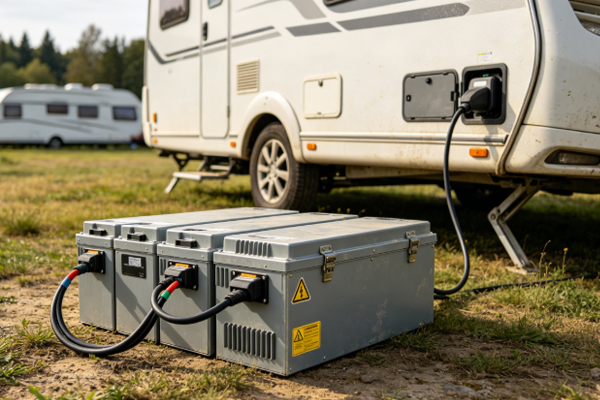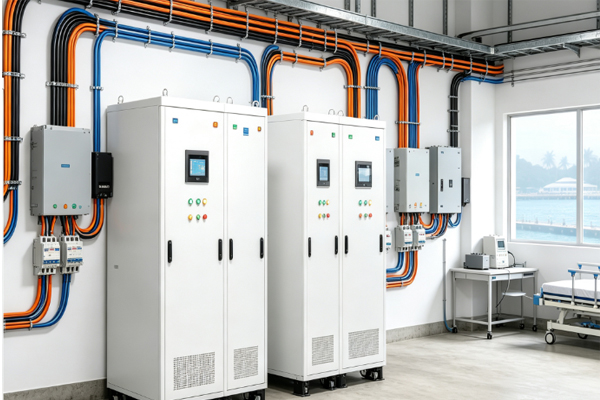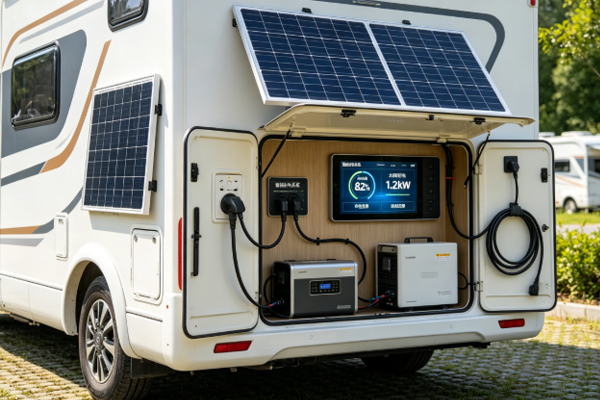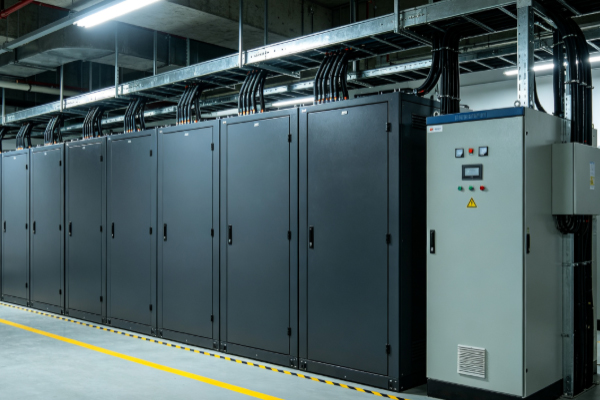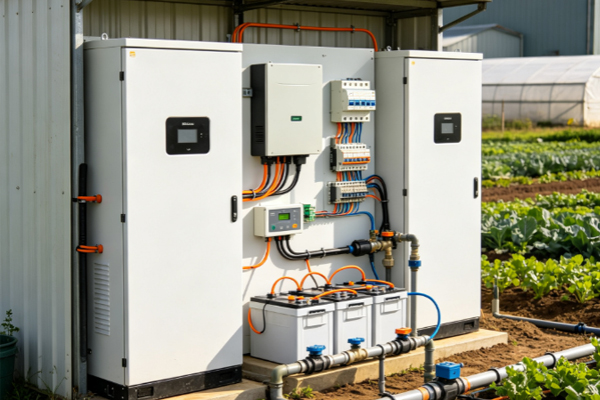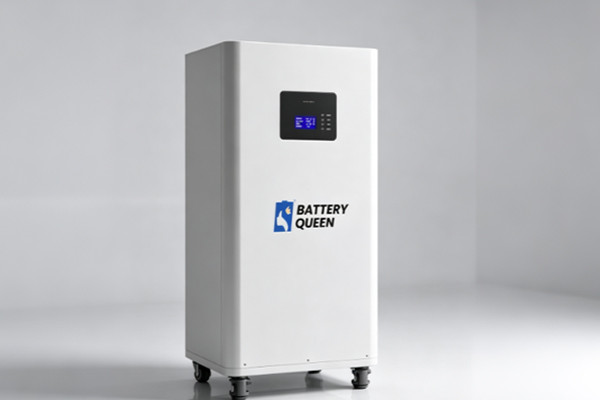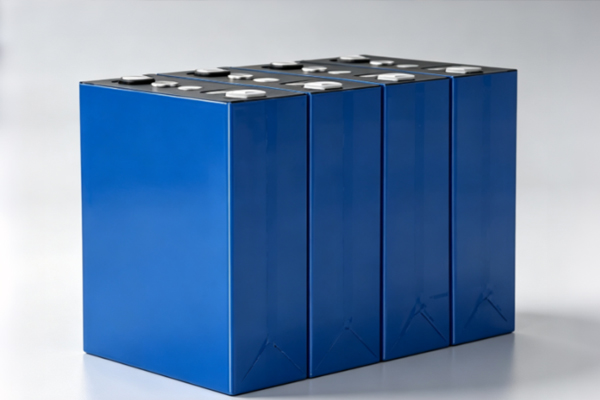
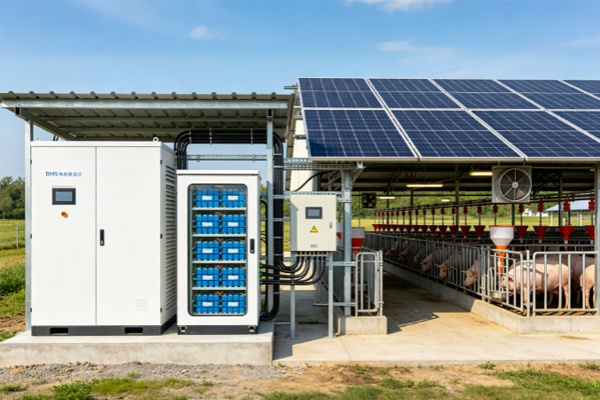
For livestock barns, a power outage is not just about losing a few lights. When ventilation fans stop, water pumps shut down, automatic feeding is interrupted, and monitoring systems go offline, the entire farm can quickly face operational problems. This becomes even more critical during hot summers or cold winters. More farms are now using LiFePO4 batteries to support ventilation, water supply, feeding, monitoring, and other essential equipment. With solar power, the battery can store excess energy during the day and provide backup power when the grid goes down.
How Much Power Does a Livestock Barn Need? Which Equipment Should Get Priority?
Electricity demand varies greatly between livestock barns. A small pig barn, poultry house, and large automated livestock facility can have completely different power requirements. Before purchasing a battery, it is better to list the equipment that actually needs to keep running instead of looking only at the total connected load, then size the farm battery storage system around real operating conditions.
Which Livestock Equipment Needs Backup Power During an Outage?
Not every piece of equipment needs to keep running during a power outage. When the budget is limited, backup power can be prioritized for equipment that directly affects animal welfare and essential farm operations:
- Ventilation fans: Ventilation becomes especially important during hot weather because stopped fans can quickly affect temperature and air quality inside the barn.
- Water pumps and drinking systems: Automatic drinking and water circulation systems need reliable power to maintain access to essential water supplies.
- Automatic feeding equipment: Large livestock facilities often depend on automated feeding systems, making backup power useful when outages last for an extended period.
- Monitoring and alarm systems: Cameras, temperature sensors, smoke alarms, and communication devices usually have relatively low power demand but are important during emergencies.
- Lighting and temperature control: Basic lighting may be needed for nighttime management, while young animals may require heating or temperature control during cold seasons.
A practical farm energy storage system can separate equipment into “critical during outages” and “non-essential during outages.” This prevents the battery from being oversized simply to keep every device running and makes the overall system easier to manage.
How Much Backup Energy Does a Livestock Barn Need?
Actual energy demand depends on the number of devices, operating hours, and seasonal conditions. The figures below are useful for preliminary planning, while the final battery size should be calculated using equipment nameplate ratings and actual operating schedules.
| Livestock Barn Equipment | Typical Power Range | Operating Pattern | Storage Priority |
| Ventilation Fans | 500W–3000W+ | Longer operation in hot weather | High |
| Water Pumps | 500W–2000W+ | Operates as needed | High |
| Automatic Feeders | 300W–1500W | Scheduled operation | Medium |
| LED Lighting | 100W–800W | Mainly used at night | Medium |
| Monitoring System | 50W–300W | Continuous operation | Very High |
| Temperature Control | 500W–3000W+ | Varies by season | Depends on demand |
Motor startup current also needs to be considered. Fans and pumps may normally consume only hundreds or a few thousand watts, but their startup power can be considerably higher, so both the inverter and battery discharge capability need sufficient headroom.
How Much Farm Battery Storage Does a Livestock Barn Need?
A basic estimate can be made by multiplying equipment power by operating time, then allowing for inverter losses, usable battery capacity, and a suitable reserve. For instance, if critical equipment requires an average of 2kW and needs to operate for six hours during an outage, the theoretical energy requirement is 12kWh, but the actual battery should not be sized exactly at 12kWh because load fluctuations and usable capacity also need to be considered.
How Can Livestock Barn Batteries Handle Power Outages? How Should Solar and Storage Work Together?
Farm equipment often cannot simply wait for the grid to come back. Ventilation, water pumps, and monitoring systems may need power immediately after an outage, so response time, inverter capability, and load transfer design all deserve attention when planning a livestock barn power supply solution.
Which Equipment Should the Battery Power First During an Outage?
Connecting the entire livestock barn to the battery can quickly increase both battery capacity and inverter requirements. A more practical approach is to create dedicated critical-load circuits so stored energy is directed to essential equipment:
- Keep ventilation and air circulation equipment running, especially essential fans during hot weather.
- Keep water supply and drinking systems operating so animals can continue receiving essential water.
- Keep monitoring, alarm, and communication systems powered so farm operators can respond quickly to abnormal conditions.
- Add temperature control loads when needed, especially heating equipment for young animals during cold weather.
This approach allows every stored kilowatt-hour to be used where it matters most instead of requiring a very large battery system to power every device in the barn.
Can Solar Power Charge Livestock Barn Batteries?
Yes. Solar power and LiFePO4 batteries can work well together in farm energy storage systems. During the day, solar generation can supply fans, pumps, feeding equipment, and other active loads first, while excess energy can be stored in the battery for evening use or grid outages.
- Solar power can supply the livestock barn’s active loads during the day.
- Excess solar generation can be stored in the battery when production exceeds immediate demand.
- The battery can support part of the load when solar output falls in the evening.
- The energy storage system can supply designated critical loads when the grid goes down.
- Battery capacity and related power equipment can be expanded when additional solar panels are installed later.
This setup is useful not only for emergency backup but also for improving solar self-consumption, giving the battery system greater value during normal farm operations.
How Long Can Livestock Barn Storage Last During Cloudy Weather?
Cloudy weather mainly reduces the amount of solar energy available for recharging the battery during the day, but it does not remove energy already stored in the battery. Actual runtime depends on the remaining battery capacity and current load, so during extended periods of low solar production, non-essential equipment can be reduced while reserving energy for ventilation, water supply, and monitoring.
What Battery Is Best for Livestock Barns? Are LiFePO4 Batteries Suitable for Farm Storage?
Livestock barn batteries operate in conditions that are different from ordinary household backup batteries. Farms may have heat, humidity, dust, and frequent equipment starts, so the battery needs to store energy reliably while handling long operating cycles. LiFePO4 batteries are commonly used in farm energy storage, but BMS protection, discharge capability, and installation conditions still need to be considered.
Why Are LiFePO4 Batteries Commonly Used for Farm Energy Storage?
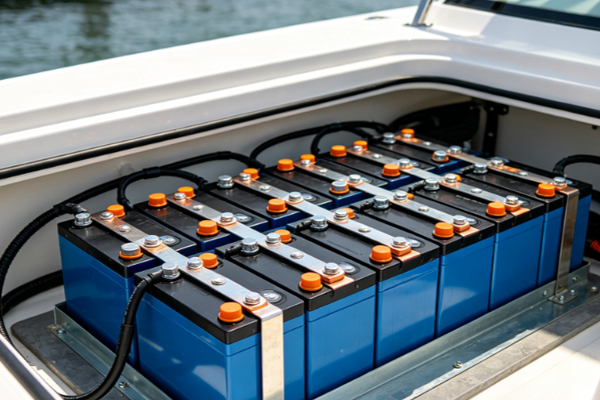
LiFePO4 batteries are well suited to energy storage applications that require repeated charging and discharging. This makes them useful for solar-plus-storage farm systems where the battery may charge during the day and discharge at night.
- Good cycle performance makes LiFePO4 batteries suitable for solar storage and regular charge-discharge cycles.
- Good thermal stability makes them easier to manage in long-term farm energy storage applications.
- Modular design makes it possible to expand storage capacity when farm loads or equipment requirements increase.
- Relatively simple maintenance combined with a BMS allows continuous monitoring of voltage, current, and temperature.
For large livestock operations, a battery should not simply be installed and forgotten. Continuous monitoring is important, and BMS protection and communication capabilities can make long-term system management much easier.
What BMS Functions Does a Livestock Barn Storage Battery Need?
The BMS is an important protection system for the battery pack. Since farm batteries may operate for long periods in warm, dusty, or humid environments, the BMS should provide appropriate monitoring and protection functions.
- Cell voltage monitoring can help identify abnormal voltage changes.
- Charge and discharge current monitoring can help prevent operation outside the permitted current range.
- Battery temperature monitoring can provide protection when temperatures become abnormal.
- Overcharge, over-discharge, overcurrent, and short-circuit protection should be included.
- CAN, RS485, or other communication interfaces may be needed when the battery must communicate with an inverter or energy management system.
Buyers should not focus only on the term “LiFePO4.” Different LiFePO4 batteries can have significant differences in BMS functions, discharge capability, cell quality, and mechanical design.
What Should Be Considered When Installing Batteries in Livestock Barns?
Livestock areas may contain moisture, dust, feed particles, and temperature changes. The battery should be installed away from direct water exposure, prolonged sunlight, and high-temperature sources while leaving sufficient space for inspection and maintenance. Battery cabinets, cables, and connectors also need suitable protection, especially in outdoor or semi-open livestock barns.
What Should You Confirm When Buying Farm Storage Batteries? How Can You Avoid Compatibility Problems?
The biggest purchasing problems often appear after the battery arrives rather than during price negotiations. Battery capacity, inverter power, connectors, communication protocols, and installation dimensions all need to match, and changing them later can be costly. For farm projects, it is better to confirm these specifications clearly before requesting a final quotation.
What Should Buyers Ask Suppliers About Farm Battery Storage?
Purchasing teams can send the following questions directly to battery suppliers and ask them to provide specifications based on the actual farm application:
- What are the battery’s rated voltage and actual usable capacity?
- What are the maximum continuous discharge current and peak discharge current?
- What protection functions are included in the battery BMS?
- Does the battery support CAN, RS485, or another communication protocol?
- Can multiple battery units be connected in parallel for future expansion?
- What are the battery dimensions, weight, and mounting requirements?
- Which inverters and charging systems are compatible with the battery?
- What are the sample testing process, warranty terms, and bulk delivery schedule?
Once these specifications are confirmed, comparing supplier prices becomes much more meaningful. For long-term farm energy storage projects, buyers should also consider expansion, communication, maintenance, and real-load testing rather than comparing the price of a single battery unit alone.
How Should Livestock Barn Storage Battery Samples Be Tested?
For bulk purchases, it is better not to skip the sample stage. A sample battery can first be connected to actual or simulated loads so the operating performance can be checked before finalizing the production specification.
- Test whether the actual usable capacity meets the required specification.
- Test whether the voltage drops significantly when fans and water pumps start.
- Test battery temperature changes during continuous operation.
- Test whether the charger, inverter, and BMS can communicate and operate reliably together.
- Test whether overcurrent, overtemperature, and over-discharge protection functions operate correctly.
Once the sample passes testing, bulk purchasing becomes less risky, while future expansion can also follow the same system specifications. For global farm buyers looking for customized LiFePO4 batteries, battery packs, DIY battery boxes, or BMS accessories, DELIGREEN can develop battery configurations around livestock barn loads, installation space, and energy storage requirements, helping farm battery storage support critical ventilation, water supply, feeding, and monitoring equipment.
A reliable livestock barn power supply solution is about more than simply adding a large battery. The key is deciding which equipment must continue operating during a power outage and how solar power and battery storage can work together during normal operation. LiFePO4 batteries can support daily farm energy storage and backup power, but capacity, discharge capability, BMS protection, inverter compatibility, and installation conditions all need to be properly matched. For livestock farms, identifying critical loads and building the battery storage system around them is often more practical than simply installing a larger battery, while also allowing the system to provide value during both everyday operation and unexpected outages.