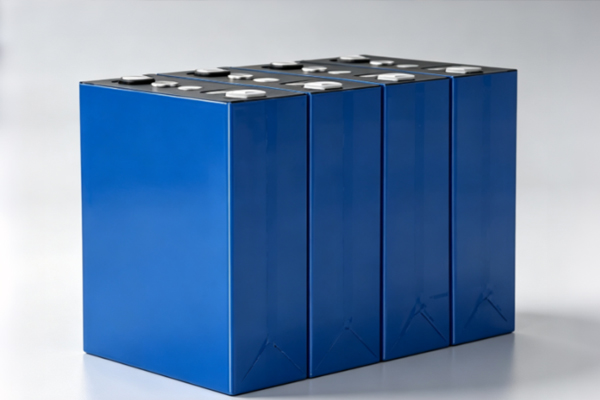
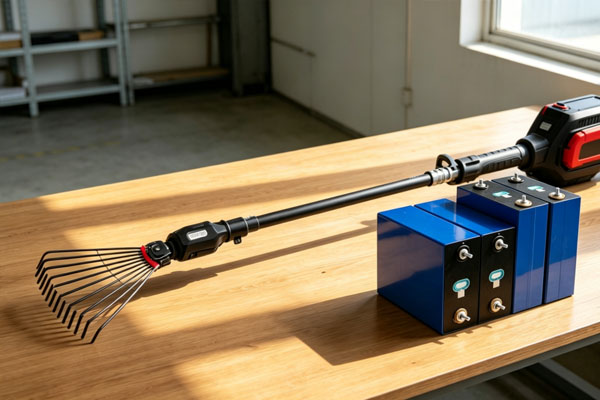
Electric olive harvesters need to operate for extended periods in orchard environments, where equipment is typically exposed to continuous vibration, frequent start-stop cycles, outdoor temperature fluctuations, as well as soil, dust, and moisture. The battery not only determines how long the harvester can operate, but also affects the overall equipment weight, operating comfort, output stability, and daily maintenance costs. Although traditional lead-acid batteries have a relatively low cost, they are heavier and have certain limitations in charging and discharging efficiency and cycle life. LiFePO4 batteries feature relatively light weight, long cycle life, stable output, and simple maintenance, making them suitable for electric olive harvesters, vibrating harvesting poles, electric pruning equipment, and other agricultural power tools. Based on the motor power, operating time, battery compartment space, and operating environment of different harvesters, the battery can be customized in terms of voltage, capacity, cell configuration, BMS protection, housing structure, and other aspects to establish a more stable battery solution for the complete equipment.
Why Electric Olive Harvesters Are Suitable for LiFePO4 Batteries
Continuous Power Supply Capability
During actual operation, an electric olive harvester usually needs to continuously drive a vibrating pole, roller, or other harvesting mechanism through the motor. When the battery level decreases, significant output voltage fluctuations may result in reduced power and lower harvesting efficiency. LiFePO4 batteries have relatively stable discharge characteristics and can provide the motor with a relatively stable power supply under normal operating conditions. By properly designing the number of cells connected in series and parallel, battery packs can be configured according to the rated voltage of the equipment, such as 12V, 24V, 36V, and 48V, or customized according to actual equipment requirements.
Lightweight Design
Olive harvesting usually requires continuous movement throughout the orchard. Operators may need to hold a harvesting pole or carry the battery during continuous operation. An excessively heavy battery can increase the burden of transportation and operation. Under the same available energy conditions, LiFePO4 batteries can generally provide higher energy utilization efficiency while reducing the weight burden associated with traditional batteries. The battery can be designed as a backpack-mounted, waist-mounted, externally mounted, or built-in type according to the overall equipment structure, providing greater flexibility in battery installation.
Cycle Life Suitable for Agricultural Equipment
Olive harvesting is highly seasonal, but harvesting equipment is not used only once. The battery still needs to maintain stable performance after multiple operating cycles; otherwise, replacement costs may increase. LiFePO4 batteries generally have a longer cycle life than traditional lead-acid batteries. With reasonable control of charging and discharging conditions, they can meet the requirements of frequently used agricultural electric equipment.
| Comparison Item | Traditional Lead-Acid Battery | LiFePO4 Battery |
| Battery Weight | Heavier | Relatively lighter |
| Cycle Life | Relatively shorter | Longer |
| Discharge Stability | More noticeable voltage drop in the later discharge stage | Relatively stable output |
| Daily Maintenance | More maintenance requirements | Relatively simple maintenance |
| Equipment Compatibility | Commonly used in traditional equipment | Suitable for upgrading electric agricultural equipment |
| Customization Options | Limited | Voltage, capacity, and dimensions can be customized |
How to Customize a Battery for an Electric Olive Harvester
Determine Voltage and Capacity Based on Motor Power
Battery customization needs to consider the motor’s rated voltage, operating power, and daily operating time. For example, if a harvester uses a 48V motor with an average operating power of approximately 600W per hour and requires approximately 4 hours of continuous operation, the theoretical energy requirement is approximately 2.4kWh. Considering power fluctuations during equipment operation, battery discharge efficiency, and a certain reserve capacity, the battery pack capacity can be determined further.
The common calculation method is:
Battery Energy (Wh) ≈ Battery Voltage (V) × Battery Capacity (Ah)
For example, a 51.2V 100Ah LiFePO4 battery has a theoretical energy storage capacity of approximately 5.12kWh. The actual available energy needs to be calculated based on BMS protection parameters, discharge current, and operating conditions.
Determine Dimensions Based on the Battery Compartment
The battery installation space of agricultural equipment is usually limited, especially for handheld harvesters and portable harvesting tools. An oversized battery may not fit properly, while an unreasonable weight distribution can also affect operation. The battery pack can be customized in length, width, and height according to the internal space of the equipment. Mounting holes, connectors, switches, handles, and protective structures can also be designed accordingly. For external batteries, the design can also incorporate carrying straps or protective cases.
Select the Battery Structure Based on the Operating Environment
Olive orchard environments are significantly different from ordinary indoor power tool applications. Harvesting equipment may come into contact with soil, branches and leaves, moisture, and dust, and may also operate for extended periods under direct sunlight. Therefore, the battery housing needs to provide good mechanical protection, connection points should have appropriate anti-loosening measures, and external interfaces need to be protected according to the actual operating environment. For equipment frequently used outdoors, a battery housing with appropriate dust and water resistance can be designed according to the requirements of the complete equipment. Battery design also needs to consider heat dissipation space. Although LiFePO4 batteries have good stability under normal operating conditions, continuous high-current operation still generates heat. Reasonable internal layout and heat dissipation design can help maintain stable operation.
How BMS Improves Battery Stability in Olive Harvesters
BMS Provides Basic Protection for the Battery Pack
LiFePO4 battery packs generally require a BMS, also known as a Battery Management System. The BMS can monitor cell voltage, battery temperature, and charging and discharging status, and provide protection according to preset parameters. During the operation of an electric olive harvester, the instantaneous current may increase when the motor suddenly starts or when the harvesting mechanism encounters significant resistance. The appropriate BMS needs to be selected based on the motor’s starting current and continuous operating current to prevent frequent power interruptions caused by excessively low protection parameters.
Design Needs to Consider Motor Starting Current
The actual operating current of power tools and agricultural equipment is not fixed. The current may change during motor startup, increased load, or when the harvesting mechanism becomes jammed. Therefore, the battery BMS cannot simply be selected according to battery capacity. The continuous discharge capability of the cells, peak current capability, continuous current rating of the BMS, and peak protection parameters all need to be determined based on equipment data. For harvesting equipment requiring high instantaneous power, suitable cells and a BMS can be selected according to the actual load so that the battery maintains stable output during startup and continuous operation.
Charger Specifications
Battery performance is not only related to discharge; the charger also needs to match the battery specifications. LiFePO4 batteries require a charger with corresponding voltage and charging parameters. For example, a 48V-class LiFePO4 battery generally uses a 16-series cell configuration, with a nominal voltage of 51.2V. The full-charge voltage needs to be determined according to the specific cells and BMS solution. An incorrect charger may cause abnormal charging, protection activation, or even affect battery life. Therefore, when customizing a battery, it is recommended to confirm the battery pack specifications, charger parameters, connector type, and charging method at the same time.
Battery Supporting Solution from Prototype to Mass Production
Confirm the Core Parameters of the Harvester
When customizing a battery for an electric olive harvester, it is necessary to provide the equipment’s rated voltage, motor power, operating time, maximum operating current, and battery compartment dimensions. If an existing battery is available, its voltage, capacity, and interface information can also be provided as a design reference. Based on these parameters, the basic battery configuration can be determined, and the relationship between capacity, weight, and dimensions can be further evaluated.
Develop Samples Based on Application Requirements
During the sample stage, the compatibility between the battery and the olive harvester can be verified, including whether startup is normal, whether the continuous operating time meets requirements, whether the interfaces are suitable, whether the battery is securely installed, and the temperature rise after long-term operation. If the equipment is intended for export sales, the requirements of the target market for battery transportation, product safety, and relevant compliance documents should also be confirmed in advance.
Battery Solution Suitable for Mass Production
After the sample is approved, the cell model, battery structure, BMS parameters, connectors, housing, and label information can be further standardized to establish specifications suitable for mass production. For electric olive harvester manufacturers, batteries can not only be customized according to existing equipment through OEM services, but different battery capacities can also be designed for different harvester models.
| Customization Item | Available Options |
| Cells | LiFePO4 cell specifications and capacity |
| Voltage | 12V, 24V, 36V, 48V, and other customized specifications |
| Capacity | Calculated based on operating time and power |
| BMS | Continuous current, peak current, temperature protection, etc. |
| Housing | Plastic, metal, and customized structures |
| Interfaces | Charging interface, discharge interface, communication interface |
| Installation Method | Built-in, external, backpack-mounted, etc. |
| Services | OEM/ODM, battery pack customization, sample development |
Frequently Asked Questions
Can an electric olive harvester use a 48V LiFePO4 battery?
Yes, but the harvester motor’s rated voltage, controller parameters, and original battery specifications need to be confirmed. A 48V system generally requires a corresponding LiFePO4 battery pack selected according to the actual equipment requirements.
Does a larger battery capacity mean a longer operating time for the harvester?
When the equipment power and other conditions are basically the same, increasing battery capacity can generally extend operating time, but battery weight, size, and cost will also increase. A suitable solution needs to balance operating time, weight, and installation space.
Can the battery be customized according to the dimensions of the olive harvester?
Yes. The battery pack can be customized in terms of structure, dimensions, interfaces, and installation method according to the battery compartment space of the equipment. The number of cells and BMS specifications can also be determined based on motor power.
Can samples be provided for testing?
Yes. A battery solution can be designed based on the equipment parameters provided by the customer, and samples can be produced according to the confirmed specifications. After the samples are tested with the equipment, the specifications for mass production can be further determined.
What battery documents are required for export sales?
Requirements may vary depending on the country and transportation method. Applicable certificates, transportation test summaries, Safety Data Sheets, and relevant compliance documents can be provided according to the product model and target market. The specific documents need to be confirmed based on the actual battery model.
After using LiFePO4 batteries in electric olive harvesters, users can achieve improvements in battery weight reduction, operating cycle life, and stable power supply. However, a suitable battery solution cannot be completed simply by increasing capacity. Voltage, capacity, cells, BMS, dimensions, interfaces, and charger specifications all need to match the harvester. Since agricultural equipment often operates continuously outdoors, battery structure, protection, and stability also require careful consideration. If you are developing a new electric olive harvester or preparing to upgrade an existing lead-acid battery to a LiFePO4 battery, the battery can be customized according to motor power, operating time, and battery compartment dimensions. After confirming actual performance through sample testing, the solution can proceed to mass production, helping reduce subsequent modification costs and making it easier to establish standardized battery specifications.
If you are looking for a professional LiFePO4 battery manufacturer, please provide the harvester motor power, rated voltage, expected operating time, and battery compartment dimensions. We can further assist in confirming the battery specifications.
WhatsApp: +86 15074995718
Email:info@deligreen.net