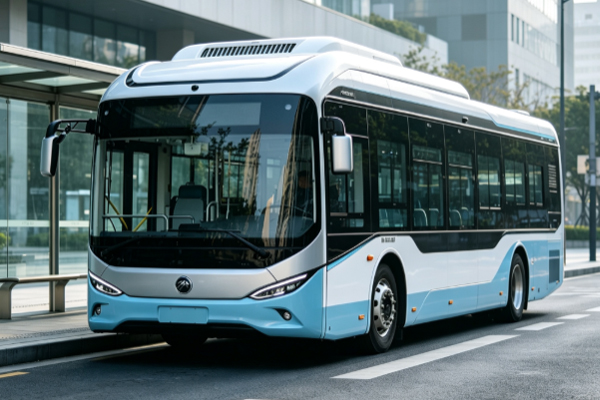
Electric buses operate on fixed routes or high-frequency shuttle services every day. Their range directly affects vehicle scheduling, charging frequency, and operating costs. In actual operation, full passenger loads, traffic congestion, slopes, high or low temperatures, air conditioning, and other auxiliary equipment can all increase energy consumption. Simply increasing battery capacity cannot solve every problem. A more effective range optimization solution requires coordinated design across multiple areas, including cell performance, battery capacity, vehicle energy consumption, thermal management, and BMS control, so that the vehicle can achieve more stable real-world range performance.
Battery Capacity and Cell Performance Form the Foundation of Range Optimization
Electric bus batteries need to achieve a reasonable balance between range, weight, and power. Capacity configuration should be planned according to the route and the vehicle’s actual operating conditions.
Cell Selection Must Balance Energy Density and Service Life
For different bus routes and vehicle models, cells can be evaluated based on the following key indicators:
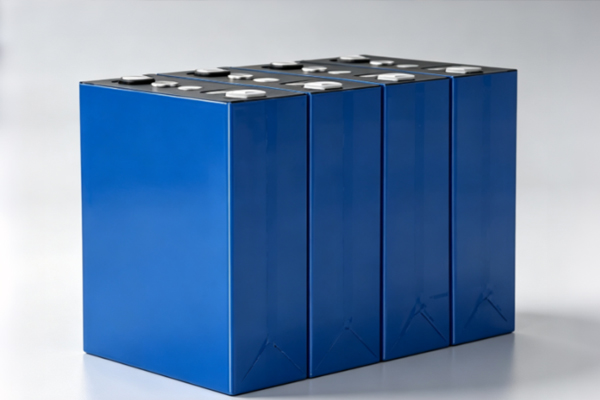
- Energy density: Increase usable energy while keeping battery weight within a reasonable range.
- Cycle performance: High-frequency operation involves multiple charge and discharge cycles every day, requiring good capacity retention.
- Consistency: In multi-series and multi-parallel battery systems, differences in capacity, internal resistance, and voltage between individual cells must be controlled.
- Rate capability: Stable power output is required during fully loaded starts, acceleration, and hill climbing.
A suitable cell combination can reduce the trade-off between range and power, providing a stable foundation for long-term operation.
Battery Capacity Must Be Configured According to Route Conditions
Range optimization should not rely solely on the rated mileage. Actual capacity requirements need to be calculated based on the characteristics of the route:
- Average daily mileage;
- Average passenger load and the proportion of fully loaded operation;
- Slopes and congested road sections;
- Auxiliary power consumption from air conditioning, lighting, and other equipment.
Configuring capacity based on real operating data can reduce the additional energy consumption caused by excessive battery weight and also prevent frequent recharging caused by insufficient capacity.
Reducing Internal Battery Pack Resistance and High-Voltage Wiring Losses
During acceleration, hill climbing, and high-load operation, electric vehicles draw relatively high discharge currents. Internal battery pack resistance and high-voltage connection resistance cause voltage drops and heat losses. Reducing these resistances helps improve the energy utilization efficiency of the battery pack.
Reduce Internal Battery Pack Resistance to Minimize High-Current Losses
Cell internal resistance, contact resistance at connection points, and busbar resistance all affect battery pack performance. During high-rate discharge, the greater the current, the more significant the voltage drop and heat generation. Therefore, particular attention should be paid to the following:
- Cell internal resistance: Select cells with good consistency and perform appropriate matching.
- Connection structure: Optimize busbars, connectors, and welding structures to reduce resistance.
- Current paths: Shorten high-current transmission paths and reduce localized heat generation.
Reducing internal battery pack resistance can minimize voltage drops and heat generation during high-current discharge, thereby improving energy utilization efficiency.
Optimize High-Voltage Wiring and the Voltage Platform to Improve System Energy Utilization
High-voltage wiring, connectors, and other components affect the energy transmission efficiency of the entire vehicle. Wiring specifications and lengths should be selected appropriately to reduce resistance in the wiring and connections and minimize heat losses under high loads. Where system compatibility allows, increasing the voltage platform can reduce operating current and transmission losses. At the same time, the connection paths between the battery pack, power electronics, and drive system should be optimized to reduce energy losses.
Thermal Management and BMS Affect Long-Term Battery Range Performance
Temperature changes and cell conditions affect the battery’s available capacity and power performance. For electric buses that operate at high frequency every day, thermal management and the BMS need to work together through coordinated control.
Thermal Management Should Reduce Temperature Differences and Abnormal Temperature Rise
The battery system can be equipped with an appropriate temperature control solution according to its capacity and power requirements:
| Thermal Management Method | Main Features | Applicable Scenarios |
| Air cooling | Relatively simple structure and convenient maintenance | Systems with relatively low or controllable thermal loads |
| Liquid cooling | High heat transfer efficiency and good temperature uniformity | Large-capacity, high-power batteries |
| Heating system | Improves battery operating conditions in low-temperature environments | Cold regions and winter operation |
| Intelligent temperature control | Adjusts control strategies according to temperature and operating conditions | Vehicles with high temperature-control requirements |
A well-designed temperature control system can reduce temperature differences and excessive temperature rise, creating favorable conditions for stable battery output.
The BMS Should Provide Detailed Management Based on Range Status
The electric bus BMS can focus on managing the following data:
- SOC: Provides a basis for estimating remaining energy and range.
- SOH: Tracks changes in battery health.
- Cell voltage: Monitors cell consistency.
- Temperature data: Identifies abnormal temperature rises during high-load operation and charging.
- Balancing strategy: Reduces the expansion of cell differences caused by long-term cycling.
Continuous accumulation of operating data can help operators identify declining range trends and arrange more appropriate maintenance intervals.
Electric Bus Range Optimization Requires Validation Through Actual Operation
For vehicle manufacturers, battery purchasers, and public transportation operators, laboratory range data may differ from actual road performance. Sample testing should therefore be conducted under conditions that closely reflect real-world operation.
Core Parameters Must Be Clarified Before Customization
Customers can provide the following information in advance:
- Vehicle model and voltage platform: To match the vehicle’s power system.
- Target range: To clarify the actual requirements for a single operating cycle.
- Battery installation space: To confirm dimensions, weight, and installation location.
- Route conditions: To provide information on gradients, congestion levels, and average daily mileage.
- Load conditions: To clarify the average passenger load and fully loaded operating conditions.
- Charging conditions: To determine whether charging will take place overnight, at stations, or through fast charging.
The more complete the parameters, the easier it is to achieve precise matching among the cells, capacity, BMS, and thermal management system.
Sample Testing Should Cover Real Road Conditions
Range testing should not be limited to constant-speed driving. It should also simulate different conditions encountered during actual operation:
- Fully loaded testing: Observe energy consumption and power performance under high loads.
- Urban road testing: Simulate frequent stops, starts, and congested traffic conditions.
- Hill-climbing testing: Check current, temperature, and remaining energy changes during uphill operation.
- Air-conditioning testing: Evaluate the impact of auxiliary equipment on range during hot or cold seasons.
Testing under real operating conditions can provide a more accurate assessment of battery capacity configuration and overall vehicle energy efficiency, offering a reliable basis for volume procurement.
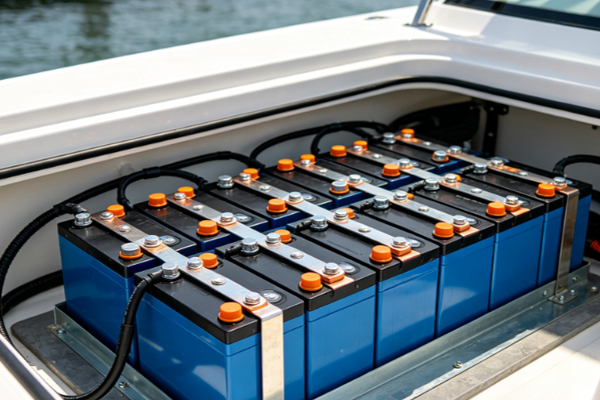
The range performance of an electric bus depends on the coordinated design of multiple factors, including cell performance, battery capacity, vehicle energy consumption, thermal management, and BMS control. Developing a battery solution according to specific operating requirements and optimizing it based on test data can help reduce operating energy consumption, increase usable battery energy, and improve vehicle range stability. For vehicle manufacturers, public transportation operators, and volume procurement customers, mature battery customization capabilities can also be applied to power applications such as electric boat batteries, providing complete energy solutions from the perspectives of system design, thermal management, and long-term operation and maintenance.