As schools continue to develop intelligent campuses and digital infrastructure, the demand for stable power supply and efficient energy management is increasing. Modern campuses contain not only classrooms but also servers, network equipment, security monitoring systems, access control systems, broadcasting equipment, air conditioning, elevators, lighting, and various public facilities. These loads have different power requirements and operating schedules. Conventional grid power can be affected by outages, voltage fluctuations, or peak demand, potentially interrupting critical equipment.
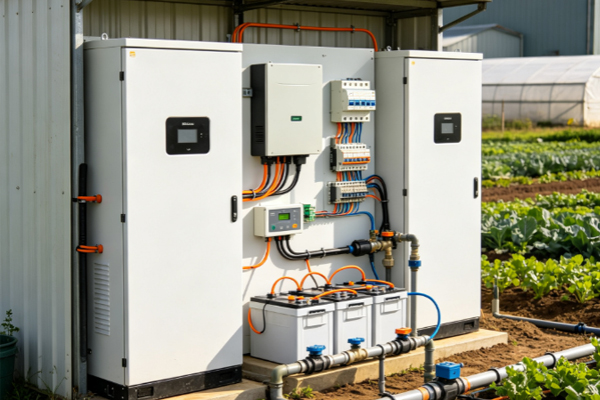
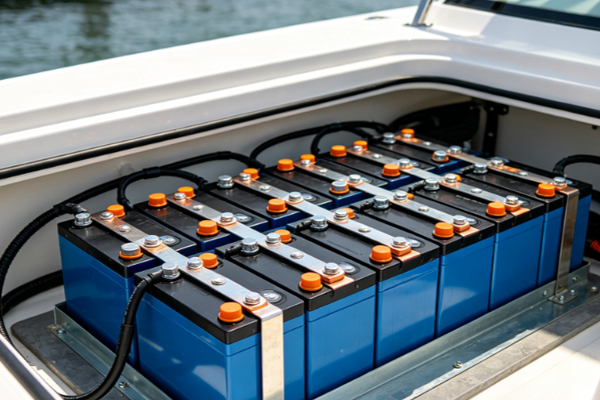
A comprehensive school LiFePO4 battery solution integrates LiFePO4 batteries, Battery Management Systems (BMS), Power Conversion Systems (PCS), Energy Management Systems (EMS), and power distribution protection equipment to create a reliable campus energy storage system. LiFePO4 batteries offer long cycle life, good thermal stability, and characteristics suitable for stationary energy storage applications. They can support peak shaving, off-peak energy storage, photovoltaic energy storage, backup power, and critical load protection. By appropriately matching battery capacity with output power, schools can establish a flexible energy storage architecture while preparing for future energy management upgrades and capacity expansion.
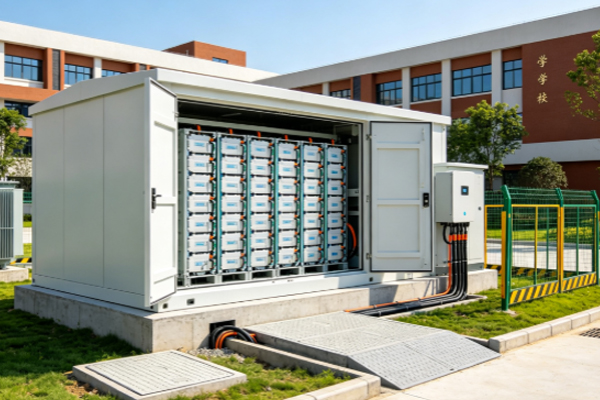
LiFePO4 Batteries Build a Stable Campus Energy Storage System
Campus electricity consumption typically includes many types of loads with different operating schedules. During the daytime, teaching activities and public facilities can create higher electricity demand, while nighttime consumption may come from dormitories, monitoring systems, servers, and basic infrastructure. A LiFePO4 battery energy storage system can automatically adjust its charging and discharging status according to electricity demand, allowing stored energy to be released when it is most useful. Critical equipment can also be assigned priority power supply strategies so that the energy storage system can quickly provide backup power when grid abnormalities occur.
Key Advantages of Campus Energy Storage Systems
When installing a LiFePO4 energy storage system, schools need to consider electricity consumption, load characteristics, operating schedules, and future expansion requirements. A properly configured system can support both daily energy management and emergency power requirements.
- Strong cycling capability: LiFePO4 batteries are suitable for frequent charging and discharging and can operate according to daily campus electricity consumption patterns.
- Good thermal stability: The LiFePO4 chemistry provides good thermal stability. Combined with BMS monitoring and protection equipment, it can support safer system operation.
- Efficient energy utilization: PCS enables bidirectional energy conversion, allowing electricity to be stored during low-demand periods and released when power demand increases.
- Convenient maintenance: Modular battery structures make condition monitoring, fault identification, and maintenance easier for large-scale energy storage systems.
- Suitable for long-term operation: Stationary energy storage batteries do not need to be moved frequently and can continuously perform scheduled charging and discharging.
- Flexible system expansion: When school electricity demand increases, additional battery capacity or other storage components can be added according to the original system design.
With appropriate configuration, a LiFePO4 energy storage system can support daily campus energy management, critical equipment protection, and future energy system upgrades.
How to Use LiFePO4 Batteries in Schools
A campus energy storage system is more than a battery connected to the power distribution network. BMS, PCS, and EMS work together to control and manage the system. The BMS monitors cell voltage, temperature, current, SOC, and other battery parameters. The PCS manages bidirectional energy conversion between the battery and AC grid, while the EMS controls the overall energy strategy according to campus electricity demand.
During normal operation, the system can establish charging and discharging schedules based on peak and off-peak electricity periods. For example, the battery can charge during periods of lower electricity demand and discharge when campus power consumption increases. If the school has a photovoltaic system, solar power can be prioritized for campus loads during the daytime, while surplus electricity can be stored in the LiFePO4 battery. When photovoltaic output decreases, the stored energy can be supplied to campus loads.
During a grid outage or abnormal power condition, the system can follow a preset backup strategy to provide electricity to critical equipment such as servers, network rooms, monitoring systems, access control, emergency lighting, and communication equipment. Actual operation should also consider battery SOC, load power, expected outage duration, and appropriate depth of discharge to prevent unsuitable long-term operating conditions.
Energy Storage Configuration for Different Campus Loads
A school energy storage system should establish different power supply strategies according to equipment importance and power characteristics. Independent circuits, prioritized power supply, or load-level control can be used to improve the utilization of available battery capacity.
| Campus Load | Energy Storage Application | Power Supply Characteristics |
| Servers and Network Equipment | Backup power | High continuity requirements |
| Security Monitoring Systems | Emergency power | Continuous monitoring required |
| Access Control Systems | Backup power | Basic operation should remain available during outages |
| Broadcasting and Communication Equipment | Emergency power | Supports campus information communication |
| Air Conditioning | Peak-load support | Relatively high power demand |
| Public Lighting | Auxiliary energy supply | Concentrated operating periods |
| Elevators and Public Facilities | Emergency energy support | Requires configuration according to system capacity |
| EV Charging Facilities | Energy scheduling | Can be controlled according to peak and off-peak periods |
Through load prioritization, schools can give critical equipment access to stored energy before supplying lower-priority loads, improving the practical value of the energy storage system.
School LiFePO4 Energy Storage Covers Multiple Campus Applications
Campus energy systems need to manage daily electricity consumption, photovoltaic energy utilization, emergency backup, and peak-load demand. LiFePO4 batteries can serve as an important energy storage unit in campus microgrids or integrated energy systems. They can work together with photovoltaic systems, charging infrastructure, intelligent power distribution, and energy management platforms. Different campus areas can use centralized or modular energy storage configurations according to their actual power requirements.
Coordinated Operation of Solar Power and LiFePO4 Batteries
When schools have suitable rooftop or parking areas for photovoltaic installations, solar generation can be combined with a LiFePO4 energy storage system. During periods of high solar output, electricity can directly supply campus loads, while surplus energy can be stored in the battery. When solar generation decreases in the evening but electricity demand remains, the battery can discharge stored energy to support campus loads.
This configuration can reduce energy waste caused by temporary mismatches between solar generation and electricity demand while increasing the practical utilization of renewable energy on campus. The photovoltaic system, battery, and loads can be coordinated through the EMS. Based on real-time solar generation, load power, battery SOC, and preset operating strategies, the EMS can automatically adjust energy flows between solar power, the grid, and battery storage. For schools pursuing green campus development, this configuration can become an important part of low-carbon energy infrastructure.
Emergency Power Supply and Critical Equipment Protection
During a grid outage, not every school device needs to remain operational. However, servers, communication equipment, monitoring systems, access control systems, emergency lighting, and other critical infrastructure may need continuous power. LiFePO4 batteries can store energy in advance and provide electricity to designated critical circuits according to preset backup strategies.
Battery capacity can be calculated according to the total power of critical loads and the required backup duration. For example, if a school needs to support a critical load of 50 kW for four hours, the theoretical energy requirement is approximately 200 kWh. Actual system design also needs to consider the permitted SOC range, conversion efficiency, ambient temperature, battery aging margin, and variations in load demand.
This configuration prevents schools from unnecessarily increasing battery capacity just to support every campus device during an outage. By establishing critical load circuits, stored energy can be prioritized for equipment that genuinely requires continuous operation, while a portion of the battery capacity can be reserved for extended power interruptions.
Intelligent EMS Improves Campus Energy Management
The EMS is an important control component in a comprehensive school LiFePO4 energy storage solution. It can collect operating data from the grid, battery system, photovoltaic installation, and campus loads and display information such as power, energy consumption, SOC, and charging and discharging status through a visual management platform.
School energy managers can use historical data to understand electricity consumption patterns during different periods and adjust energy storage strategies accordingly. The EMS can automatically execute charging and discharging schedules based on peak and off-peak electricity periods. When the battery reaches a preset SOC range, the system can adjust power output to prevent excessive charging or discharging.
For large campuses, energy data management can also be established for different buildings, zones, and equipment. This allows the LiFePO4 energy storage system to develop from a simple backup power source into an important component of an integrated campus energy management platform.
High-Performance LiFePO4 Batteries Support Long-Term Campus Operation
School energy storage systems are generally expected to operate for many years. Batteries need to provide stable charging and discharging performance throughout their service life rather than only meet initial capacity requirements. Battery capacity, rated power, operating temperature, cycle performance, BMS protection strategies, and installation conditions can all affect system performance. When selecting LiFePO4 batteries, schools should calculate the required storage capacity based on actual campus loads while leaving sufficient room for future equipment additions and changing energy requirements.
High Cycle Performance for Long-Term Energy Storage
Campus energy storage systems may perform one or more charging and discharging cycles each day, making battery cycle performance an important factor in long-term operation. LiFePO4 batteries are suitable for stationary energy storage and can operate continuously within an appropriate charging and discharging range.
The BMS can monitor individual cell voltage, temperature, current, SOC, and other parameters and activate corresponding protection functions when abnormal conditions occur. By appropriately controlling charging and discharging power and operating ranges, unnecessary stress on the battery can be reduced.
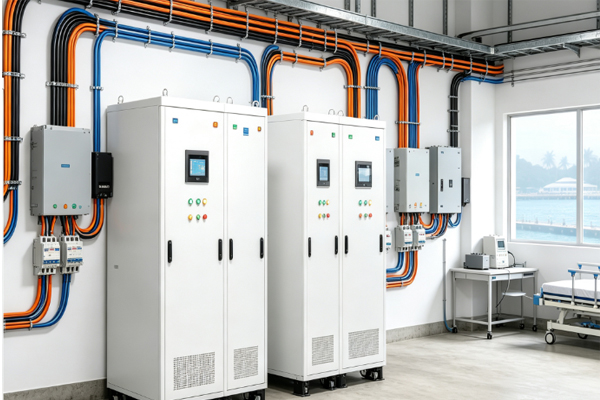
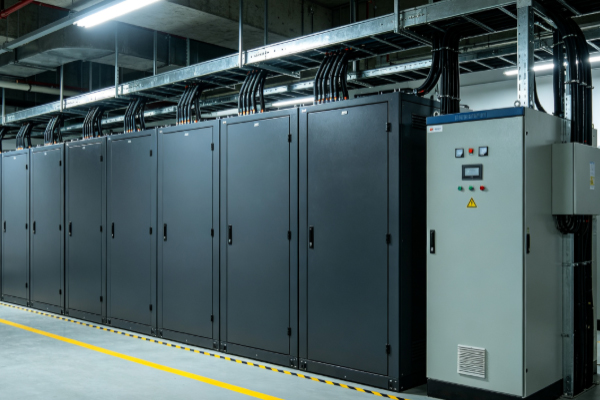
The battery system should also be installed with suitable temperature control and ventilation. When constructing an energy storage room, schools should design the installation space, fire protection equipment, environmental monitoring, electrical protection, and maintenance access according to the battery system specifications and applicable local requirements. A properly designed operating environment can help improve long-term battery stability.
Modular Design Simplifies Campus Energy Storage Expansion
School electricity requirements are not fixed. As teaching buildings, dormitories, laboratories, data centers, charging facilities, and renewable energy infrastructure expand, the original energy storage capacity may need to be increased. Modular LiFePO4 batteries can be configured with different capacity combinations. Schools can control the initial system size and investment while adding storage modules later according to actual electricity demand.
Before expanding the system, the existing PCS rated power, BMS communication protocol, power distribution capacity, installation space, and battery compatibility should be evaluated. If the school also plans to increase photovoltaic capacity, the relationship between battery storage capacity and solar output should be reviewed at the same time. Proper planning allows a modular architecture to provide greater flexibility for future campus energy upgrades.
Intelligent Monitoring Supports Stable Energy Storage Operation
After a school energy storage system is installed, continuous monitoring of battery SOC, SOH, temperature, voltage consistency, charging and discharging power, and alarm status is important. An intelligent monitoring platform can display these parameters in a centralized interface, helping maintenance personnel identify abnormal conditions at an early stage.
For large campus energy storage projects, regular inspection and maintenance should be established for battery modules, PCS equipment, distribution cabinets, communication cables, and environmental control equipment. Through data interaction between the BMS, PCS, and EMS, the system can create a complete monitoring chain from individual battery cells to overall power output.
When abnormal conditions such as overtemperature, overvoltage, undervoltage, overcurrent, or communication failure occur, protection mechanisms can reduce power or stop relevant operations according to preset control logic. A reliable monitoring and maintenance system can reduce the risk of unplanned downtime and make LiFePO4 energy storage a practical solution for long-term school energy management.