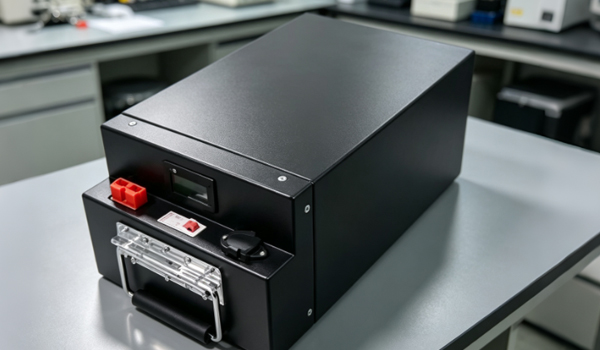
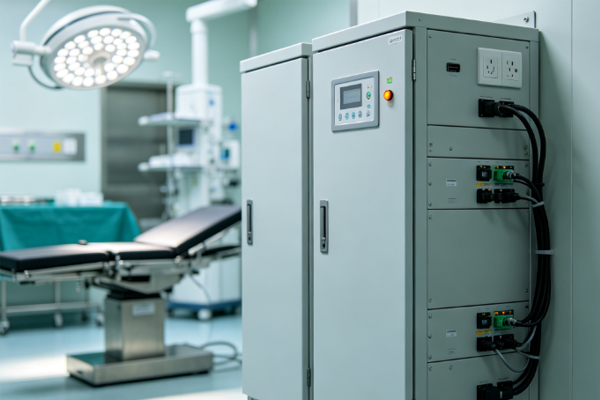
A sudden power outage in an operating room is far more serious than simply losing electricity for a few minutes. Surgical lights, anesthesia machines, patient monitors, operating tables, and communication equipment may all be affected. The backup power system must respond quickly, provide stable output, and continue supplying power for as long as necessary. For hospitals, choosing an operating room battery solution is not just about battery capacity. The system also needs to work properly with UPS equipment, inverters, critical loads, and the hospital’s existing electrical infrastructure. LiFePO4 batteries are becoming an important option for hospital energy storage because of their stable discharge performance and long service life.
Which Operating Room Equipment Needs Continuous Backup Power?
The power requirements of an operating room are very different from those of a normal office. A computer or non-critical light can tolerate a temporary interruption, while patient monitoring, anesthesia support, and surgical lighting cannot simply wait for the grid to come back. Before selecting a hospital battery storage system, it is useful to identify which devices must remain powered and which ones can be temporarily disconnected.
Which Devices Should Get Backup Power First?
Not every device in an operating room has the same priority. Dividing loads into different levels makes it easier to determine the required battery capacity, inverter rating, and backup duration.
- Critical loads: Patient monitors, anesthesia equipment, surgical lighting, and other essential devices require continuous power.
- Priority loads: Motorized operating tables, infusion equipment, communication systems, and similar equipment may need continued operation during an outage.
- Non-critical loads: Certain displays, general lighting, and auxiliary equipment can be selectively powered depending on the hospital’s emergency plan.
- High-startup loads: Some imaging systems and motor-driven equipment may have much higher startup power than their normal operating consumption.
Once the loads have been classified, the hospital can determine what the battery system actually needs to support. A larger battery is not automatically a better solution. The available energy should be prioritized for equipment that cannot afford an interruption.
Typical Power Requirements of Operating Room Equipment
Actual power consumption varies by equipment model, manufacturer, and operating conditions. The following figures can be used for preliminary planning, while final system sizing should be based on equipment nameplates and measured operating data.
| Equipment | Typical Power Range | Backup Requirement | Key Selection Point |
| Surgical light | 100–500W | High | Stable output |
| Patient monitor | 50–200W | High | Continuous power |
| Anesthesia machine | 100–500W | High | Power stability |
| Motorized operating table | 100–500W | Medium–High | Startup power |
| Communication equipment | 50–200W | High | Continuous operation |
| Certain imaging equipment | 1kW+ | Depends on equipment | Peak power |
This table provides a starting point for estimating the load. A complete hospital energy storage design still needs to account for the number of devices, simultaneous usage, required backup time, and startup current.
Why Does Hospital Battery Storage Need to Handle Instantaneous Power?
An operating room battery does more than store electricity. When a power failure occurs, the system needs to respond quickly and provide enough current to handle the connected loads. Some equipment has relatively low normal power consumption but can draw a significantly higher current when starting. Looking only at Ah capacity can lead to a system that has enough stored energy but cannot properly handle the actual load.
How Should Continuous and Peak Discharge Capability Be Evaluated?
When purchasing batteries for hospital energy storage, ask the supplier for both continuous discharge and peak discharge specifications. These values should be compared with the maximum power requirements of the connected equipment. Motors, compressors, and other inductive loads deserve particular attention because their startup current can be much higher than their normal operating current.
- Continuous current: Shows whether the battery can support the load during normal operation.
- Peak current: Indicates whether the battery can handle short startup surges without triggering protection.
- Inverter rating: Determines how much AC load the system can actually support.
- BMS protection limits: Help protect against overcurrent, overtemperature, overvoltage, and other abnormal conditions.
- Communication capability: Makes it easier to monitor battery status and integrate the battery with the power system.
The battery and inverter should be treated as one system during the design stage. A battery with high output capability will not solve the problem if the inverter is undersized for the operating room load.
What Does the BMS Need to Monitor?
Hospital battery storage systems may remain on standby for long periods but must be ready to respond when an outage occurs. The Battery Management System (BMS) continuously monitors parameters such as cell voltage, temperature, current, and state of charge (SOC), while providing protection when abnormal conditions are detected.
Communication is also important for hospital projects. Interfaces such as RS485 and CAN can connect the battery with an inverter or energy management system, making battery status easier to monitor. For larger installations, battery data can also be integrated into a centralized monitoring platform, reducing the need for manual inspections.
Why Is a Modular Battery Design Useful for Hospitals?
The number of operating rooms, medical devices, and required backup hours may change over time. A hospital may expand its surgical department or add new equipment, increasing the demand for energy storage. A modular battery system makes it easier to configure the initial capacity around actual requirements while leaving room for future expansion.
| Energy Storage Capacity | Suitable Application | Typical Use |
| 5–10kWh | Small operating area | Short-term backup for critical equipment |
| 10–30kWh | Medium operating room | Backup for several critical devices |
| 30–100kWh | Multiple operating rooms | Centralized backup power |
| 100kWh+ | Hospital-level energy storage | Energy support for multiple areas |
These capacity ranges are only preliminary references. A final configuration should be designed around the hospital’s actual load list, backup requirements, installation conditions, and electrical system.
How Can an Operating Room Battery Handle a Long Power Outage?
A short grid disturbance and a prolonged power outage place different demands on a backup system. During a brief interruption, rapid response and power transfer are critical. During a long outage, available stored energy becomes the main concern. A hospital battery solution needs to address both situations without unnecessarily increasing system size and cost.
How Much Backup Runtime Does a Hospital Need?
A preliminary battery energy calculation can be made with the following formula:
Required Battery Energy ≈ Critical Load Power × Backup Time ÷ System Efficiency
The system should also maintain a reasonable energy reserve instead of using the theoretical full battery capacity every time.
For example, if an operating area has approximately 2kW of critical loads and requires 4 hours of backup power, with an estimated overall system efficiency of 90%:
2kW × 4h ÷ 0.9 ≈ 8.9kWh
The actual project may use a larger battery capacity to provide additional room for startup loads, battery aging, temporary load increases, and other operating conditions.
How Does the Battery Work With the Hospital Power System?
Hospitals generally do not rely on the battery alone to handle every power requirement. The grid, UPS, battery storage system, inverter, and backup generator can work together as part of an integrated power architecture.
Under normal grid conditions, the battery can remain on standby or charging. When a power failure occurs, the UPS can maintain continuous power for critical loads while the battery provides the energy needed for longer-duration backup.
This architecture allows each component to perform the role it is best suited for. For an operating room, the key is maintaining power continuity at the moment of failure while also providing enough stored energy for the following hours.
How Can Hospitals Reduce Unnecessary Battery Consumption?
Not every operating room device needs to remain active during a prolonged outage. An energy management system can prioritize loads and reserve battery energy for critical equipment. Non-essential auxiliary equipment can be reduced or disconnected when appropriate.
This becomes especially useful in larger hospital energy storage projects. When battery capacity is limited, effective load management can extend the actual backup time available for essential medical equipment.
What Should Hospitals Confirm Before Purchasing an Operating Room Battery?
Medical applications require a high level of power reliability, so purchasing decisions should not be based only on the battery price. Suppliers should be able to provide complete specifications covering battery capacity, voltage, BMS configuration, communication interfaces, dimensions, weight, cycle performance, and testing information. Physical installation also needs to be considered. Battery dimensions, terminal positions, communication ports, and cable arrangements should match the existing equipment and installation space.
For new hospital energy storage projects, the installation environment should also be checked in advance, including operating temperature, ventilation, available space, and maintenance access. For customized battery systems, dimensions, terminals, communication interfaces, and wiring can be defined during the design stage, reducing the risk of installation problems after delivery.
For long-term hospital projects, DELIGREEN provides LiFePO4 batteries, battery packs, BMS solutions, and scalable energy storage systems with configurable voltage, capacity, dimensions, and communication options. For critical applications such as operating rooms, the ability to properly match the battery, BMS, inverter, and actual load requirements is often more important than simply comparing the cost per kWh.
An operating room battery solution is more than simply adding a battery pack to the electrical system. The goal is to provide dependable energy support for critical medical equipment when the grid becomes unstable or unavailable. Load prioritization, peak power, battery capacity, BMS communication, UPS integration, and hospital electrical infrastructure all need to work together. A properly configured LiFePO4 battery system with modular expansion capability can provide a more stable and flexible hospital energy storage solution for long-term operation.