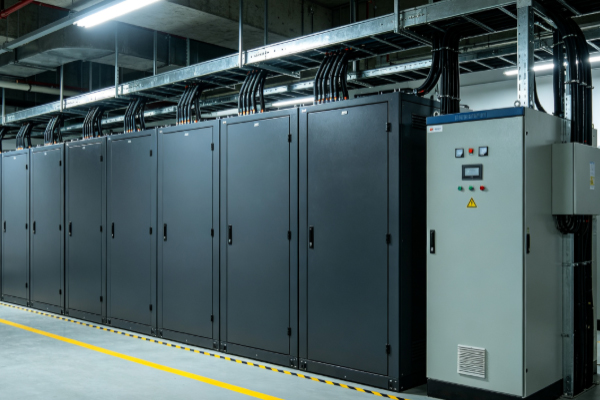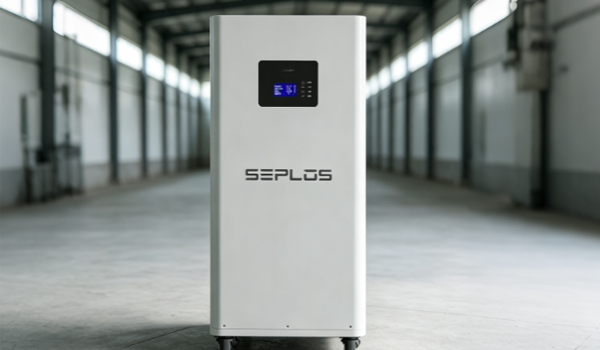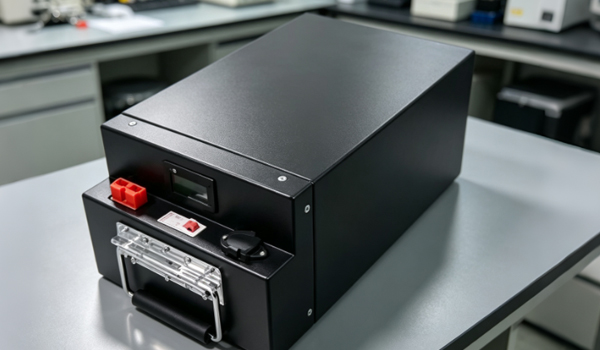
Schools and campuses are public facilities with complex electricity loads. Teaching buildings, laboratories, libraries, dormitories, cafeterias, sports facilities, and campus network equipment all require stable power support. Unexpected power outages can affect classroom teaching, laboratory equipment, network communications, access control systems, surveillance equipment, and important data. LiFePO4 batteries offer good cycling performance, efficient energy utilization, and stable electrochemical characteristics. When combined with power conversion systems, BMS, energy management systems, and photovoltaic equipment, they can form an energy storage solution suitable for campus applications. By properly planning battery capacity, charging and discharging power, and critical loads, the system can provide flexible power support during normal operation, peak and off-peak electricity periods, and unexpected grid outages.
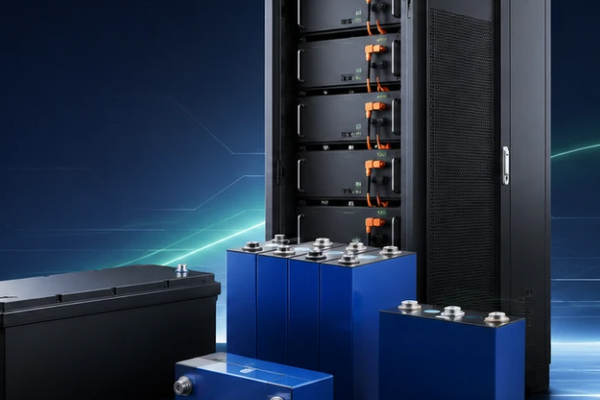
Advantages and Usage Methods of LiFePO4 Battery Energy Storage Systems for Campuses
Campus energy storage systems need to support both daily electricity management and emergency power supply. Different campus buildings do not have identical load patterns. Teaching buildings may experience higher loads during daytime classes, while dormitories and cafeterias have different peak periods. LiFePO4 batteries can respond to campus load changes through controlled charging and discharging. With an EMS energy management system, the battery can coordinate with the grid, photovoltaic generation, and electrical loads, allowing stored energy to be used when needed.
Main Advantages of LiFePO4 Batteries for Campus Power Security
LiFePO4 batteries are suitable for campus energy storage systems that require long-term operation and frequent charging and discharging. Compared with relying only on traditional backup power equipment, an energy storage battery can support both daily energy management and emergency power supply, increasing the overall utilization of the storage system.
The main advantages include:
- Good cycling capability: Campus energy storage systems may experience different levels of charging and discharging every day, and LiFePO4 batteries are suitable for repeated cycling.
- Stable safety characteristics: Lithium iron phosphate chemistry offers good thermal stability. Combined with BMS and system-level protection equipment, it can support safer energy storage operation.
- Peak-load management: Electricity can be stored during low-load periods and released during high-load periods, helping optimize campus energy management.
- Suitable for photovoltaic energy storage: Rooftops, parking shelters, and other campus locations can be equipped with photovoltaic systems. Solar electricity can be used directly by campus loads or stored in LiFePO4 batteries.
- Emergency power capability: During a power outage, the system can supply backup electricity to servers, network equipment, surveillance systems, access control, communication equipment, and other critical loads according to its configuration.
- Modular expansion: As campus buildings, teaching equipment, and electricity demand increase, energy storage capacity can be expanded according to the system architecture.
- Smart monitoring: BMS and EMS can collect voltage, current, SOC, temperature, charging and discharging power, and other operating data to support energy management.
These characteristics allow LiFePO4 batteries to serve not only as campus backup power sources but also as active components in daily energy management, improving the overall utilization of stored electricity.
How to Use LiFePO4 Battery Energy Storage Systems on Campuses
When developing a campus energy storage system, electricity loads and operating schedules should be assessed for different buildings, including classroom lighting, air conditioning, laboratory equipment, computers, servers, cafeteria equipment, dormitory facilities, and campus security systems. Loads can be classified according to their importance, followed by battery capacity planning based on required backup duration.
During normal grid operation, the EMS can control battery charging and discharging according to grid demand and battery SOC. For campuses equipped with photovoltaic systems, solar electricity can be used to supply daytime loads, while excess generation can be stored in LiFePO4 batteries. During peak electricity periods, the energy storage system can discharge according to its configured strategy. When a grid abnormality occurs, the system can switch to backup power operation and provide electricity to predefined critical equipment.
After the system is commissioned, operators should regularly check SOC, temperature, charging and discharging power, alarm records, and communication status. For larger campus energy storage installations, operational records should be established to continuously monitor battery condition and system performance, making it easier to identify abnormal conditions at an early stage.
Reference Configuration Table for Campus LiFePO4 Battery Energy Storage Systems
| Campus Application Area | Battery Configuration | Supporting Equipment | Main Applications | Design Focus |
| Teaching building | Medium-capacity storage | PCS, BMS, EMS | Lighting, networking, office equipment | Maintain power during teaching hours |
| Laboratory | Medium-to-high-capacity storage | PCS, UPS, BMS | Laboratory equipment, computers | Consider instantaneous power and supply stability |
| Library | Medium-to-high-capacity storage | EMS, PCS, fire protection system | Lighting, servers, network equipment | Extend backup duration for critical loads |
| Student dormitory | Larger-capacity storage | PCS, EMS, distribution equipment | Public-area equipment and critical facilities | Configure according to evening loads |
| Cafeteria | High-power storage | PCS, distribution cabinet, BMS | Refrigeration, lighting, auxiliary kitchen equipment | Consider peak power requirements |
| Campus data center | High-reliability storage | UPS, BMS, EMS | Servers, network, communication equipment | Emphasize continuous power availability |
Actual battery capacity should be calculated according to campus building size, equipment power, daily electricity consumption, required backup duration, and photovoltaic capacity.
Application Scenarios and Core Functions of Campus LiFePO4 Batteries
Campus energy systems usually consist of multiple buildings and different types of electrical equipment. Energy storage batteries can be configured according to load priority and used for daily load management, critical equipment backup, and renewable energy utilization. Distributed storage systems or centralized energy storage stations can be selected according to campus architecture, allowing stored energy to support teaching, administration, and student services more flexibly.
Power Security Applications in Teaching Buildings, Laboratories, and Libraries
Teaching buildings have electricity loads such as lighting, air conditioning, computers, projectors, and network equipment, with relatively clear operating schedules. Electricity demand is often higher during daytime teaching hours. LiFePO4 batteries can work with campus energy management systems to respond to changes in load demand. During a short power outage, the storage system can prioritize lighting, network equipment, computers, and other important devices, helping reduce disruption to normal teaching activities.
Laboratories often require higher power reliability, and some laboratory equipment should not suddenly lose power during operation. Energy storage systems can provide backup power according to equipment priority and can be combined with UPS systems to establish a more stable power supply chain. Libraries can use energy storage to support lighting, network equipment, servers, and self-service facilities, helping maintain basic public services during grid interruptions.
Energy Storage Applications for Dormitories, Cafeterias, and Campus Public Facilities
Student dormitories often experience concentrated electricity demand during morning and evening periods, while cafeterias may have noticeable load changes around breakfast, lunch, and dinner. LiFePO4 energy storage systems can respond to campus electricity patterns by storing energy during lower-load periods and providing supplemental power when demand increases. For cafeteria refrigeration equipment, lighting, and critical auxiliary kitchen equipment, backup power priorities can be configured according to actual requirements.
Campus public facilities include access control systems, surveillance equipment, public address systems, network communications, auxiliary fire protection equipment, parking management systems, and emergency lighting. Although some of these devices have relatively low power requirements, they are important for continuous campus operation. Energy storage systems can include these loads in critical power circuits and prioritize them when the grid experiences an interruption.
Core Functions of Campus LiFePO4 Battery Energy Storage Systems
Campus energy storage systems need to perform energy storage, charging and discharging control, operational monitoring, and safety protection. The BMS manages battery conditions, the PCS performs bidirectional power conversion, and the EMS develops operating strategies based on campus loads and available energy sources.
- Battery condition monitoring: Real-time monitoring of battery voltage, current, SOC, temperature, and other data provides visibility into operating conditions.
- Peak and off-peak energy management: The system controls charging and discharging according to campus load changes to improve the overall load profile.
- Photovoltaic energy utilization: Solar electricity can be used directly by campus loads or stored in batteries, improving the utilization of renewable energy.
- Emergency backup power: When the grid fails, stored energy can be supplied to critical loads according to predefined operating strategies.
- Load priority control: Different power supply priorities can be assigned according to the importance of teaching, laboratory, communication, security, and other equipment.
- Remote operation monitoring: Facility managers can use an energy management platform to view battery SOC, power, alarms, and operating status.
- Fault protection management: The system can provide protective responses to overvoltage, undervoltage, overcurrent, overtemperature, and communication abnormalities.
These functions allow a campus energy storage system to develop beyond a basic backup power source and become an integrated platform for energy storage, intelligent scheduling, and emergency power support.
Performance Requirements and Maintenance Design for Campus LiFePO4 Batteries
Campus energy storage systems generally need to operate for long periods. Battery cabinets, PCS, BMS, EMS, fire protection equipment, and distribution systems must work together as a properly matched system. Performance planning should consider not only storage capacity but also continuous charging and discharging power, peak power, response time, operating temperature, installation conditions, and expansion capability. For large schools, vocational institutions, and university campuses, distributed planning based on the load characteristics of different buildings can provide more suitable system configurations.
Performance Matching and Safety Configuration of LiFePO4 Batteries
Campus energy storage capacity should be determined according to daily electricity consumption, required backup duration, and critical load power. If the primary purpose is peak and off-peak electricity management, daily cycling capacity and charging and discharging power should be considered. If emergency backup is the primary purpose, the electricity required by critical loads during an outage should receive greater attention. For servers, communication equipment, laboratory instruments, and other devices sensitive to power quality, UPS and PCS output specifications should also be properly matched.
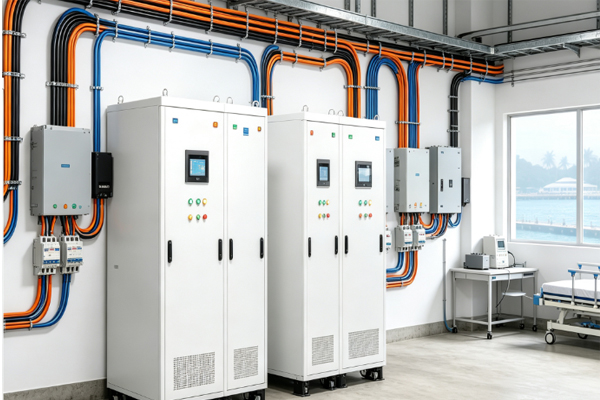
The battery system should use a suitable BMS to monitor individual cell voltage, temperature, current, and SOC. Large campus energy storage projects should also include fire protection, temperature control, ventilation, and fault alarm equipment according to project requirements. The battery installation area should provide sufficient maintenance space and an appropriate temperature management system for local environmental conditions. Coordinating the battery, PCS, BMS, EMS, and safety equipment can improve the operating stability of the complete energy storage system.
Campus Energy Storage Expansion and Daily Maintenance
As schools add teaching buildings, laboratories, dormitories, charging facilities, and other infrastructure, campus electricity demand may continue to change. A modular LiFePO4 battery energy storage system can support future expansion when its original voltage platform, PCS capacity, BMS communication protocol, and distribution structure are designed for scalability. Before adding battery modules, cell specifications, capacity, voltage, and operating condition should be checked to ensure compatibility. Battery modules should not be connected in parallel simply because they have the same rated capacity.
Daily maintenance can include periodic inspection of battery SOC, temperature, charging and discharging power, terminals, fuses, communication wiring, and system alarm records. The energy storage equipment area should be kept clean, and ventilation passages should remain unobstructed. Long-term campus energy storage systems can also use EMS platforms to store historical data and track charging and discharging cycles, operating power, and abnormal events. When abnormal temperatures, significant capacity changes, or system alarms are detected, inspection and maintenance should be performed according to the equipment manufacturer’s requirements.
A LiFePO4 battery solution for campus power security can connect energy storage, photovoltaic generation, the grid, and critical loads to provide flexible energy support during normal operation, peak-load management, and unexpected power outages. By properly determining battery capacity, PCS power, BMS configuration, and critical load coverage, teaching buildings, laboratories, libraries, dormitories, cafeterias, and campus communication equipment can receive more stable power support. For campus energy storage projects, designing the system according to actual load profiles, building size, photovoltaic conditions, and required backup duration can help make more effective use of LiFePO4 battery energy storage capacity.