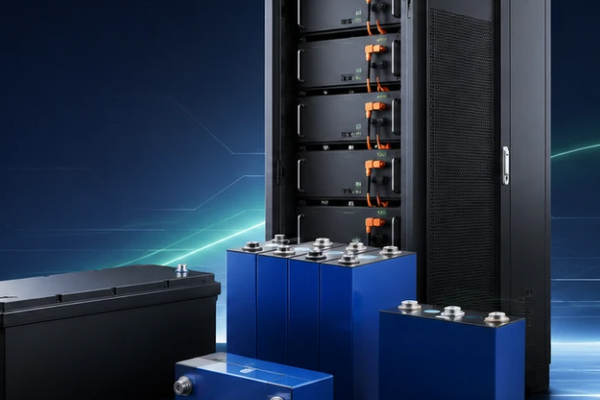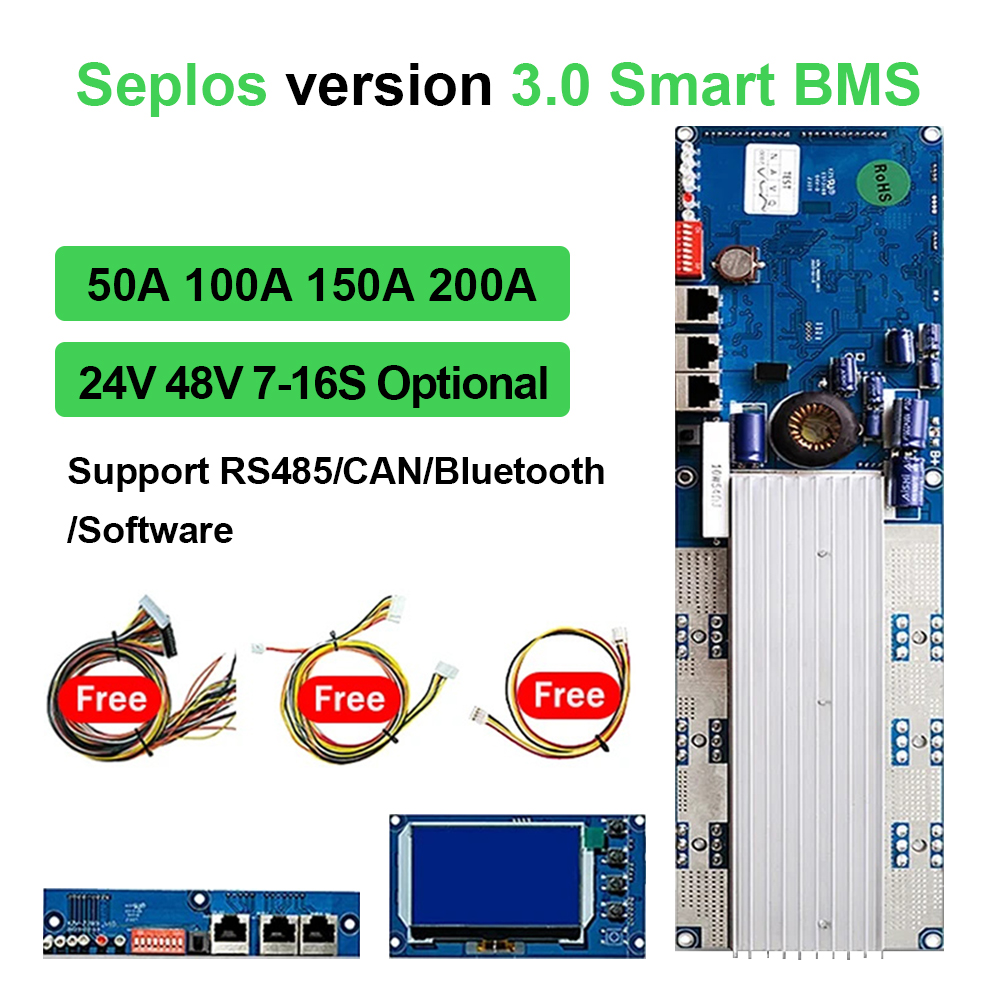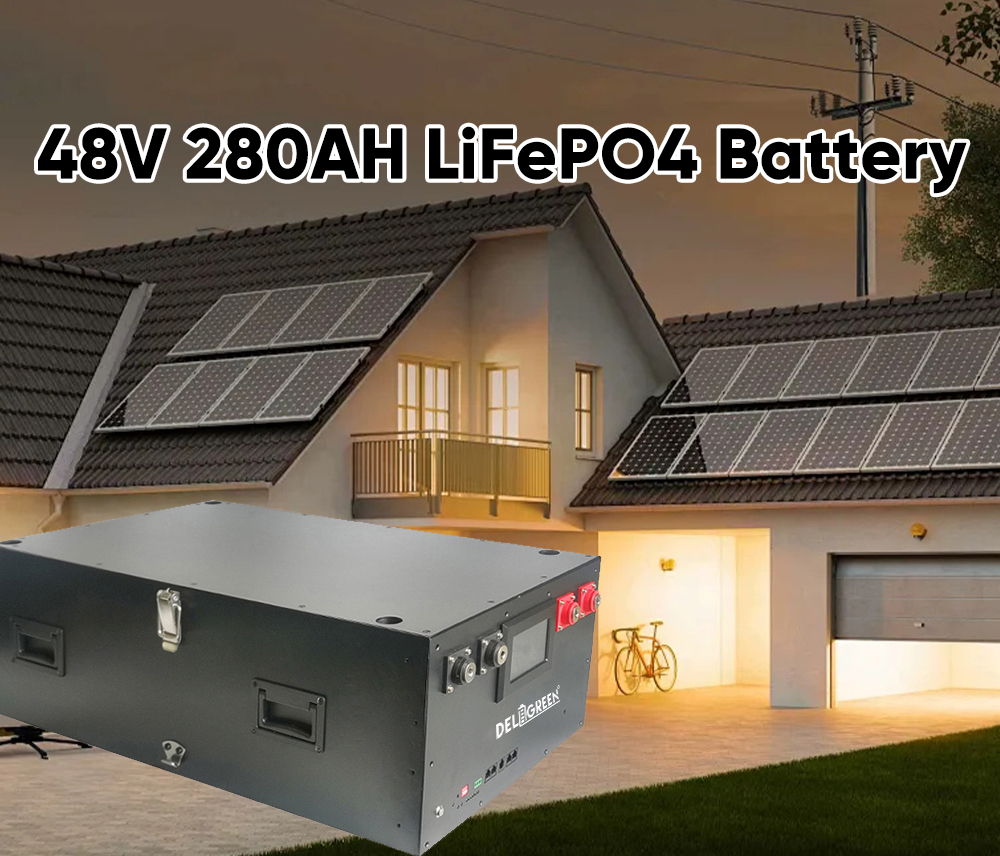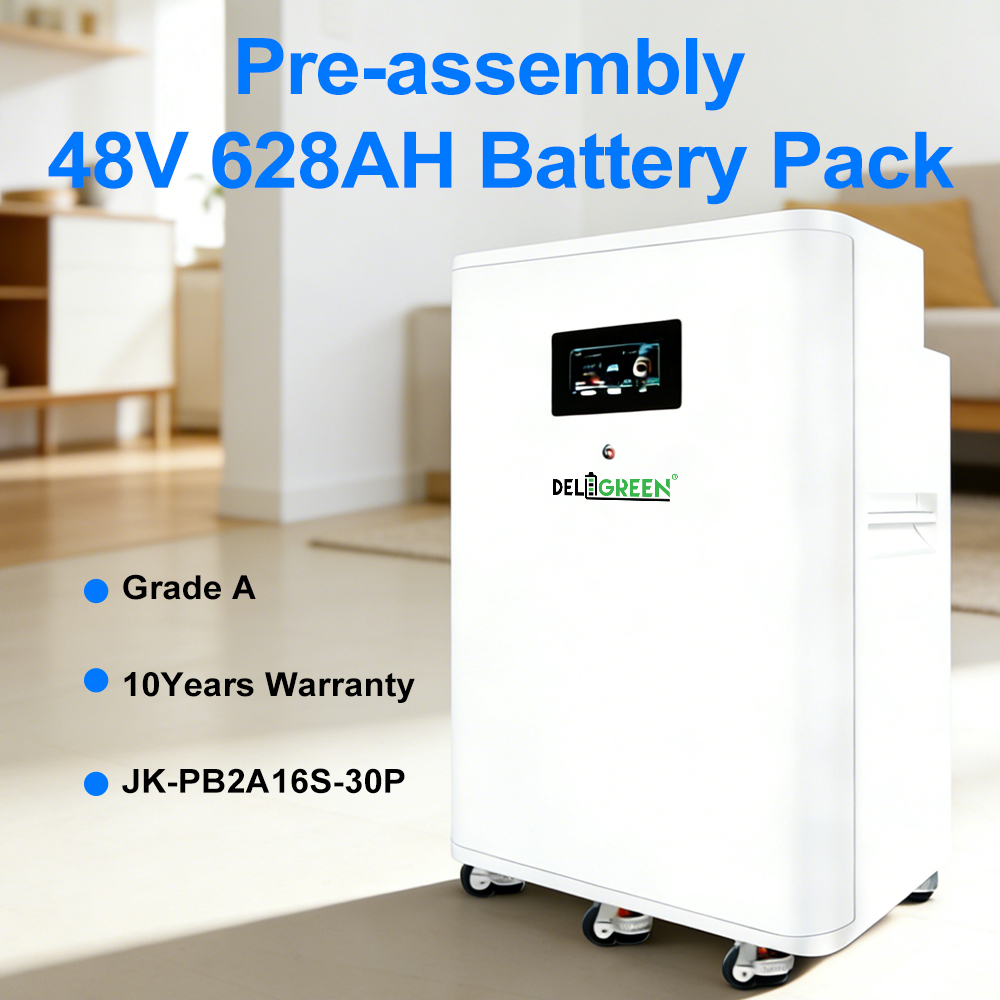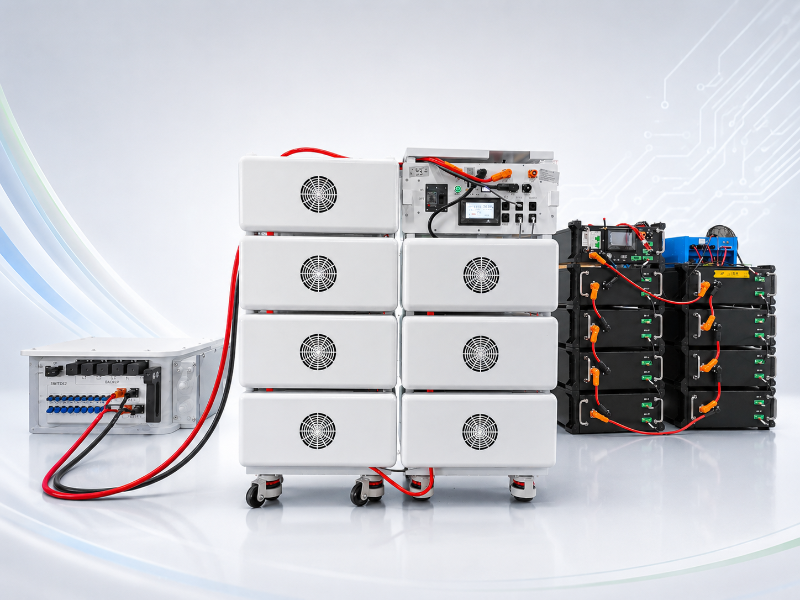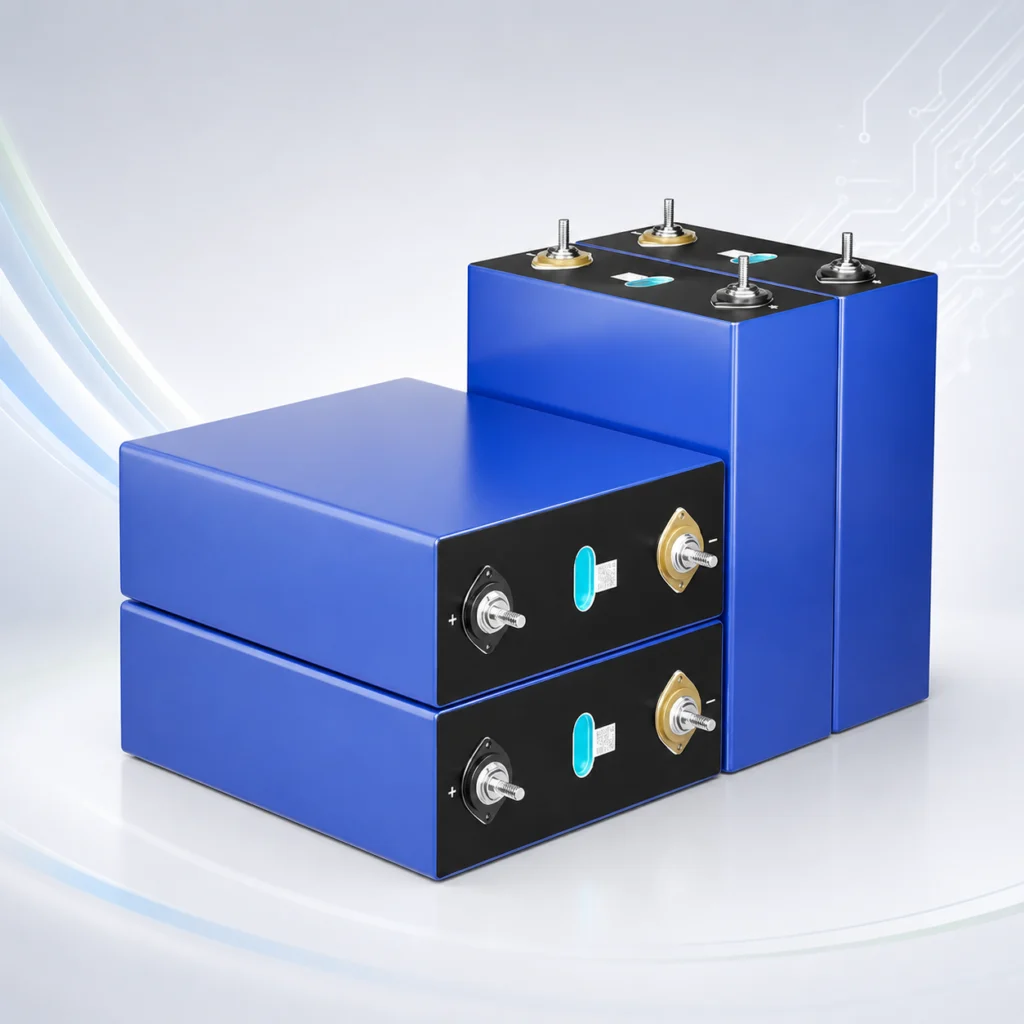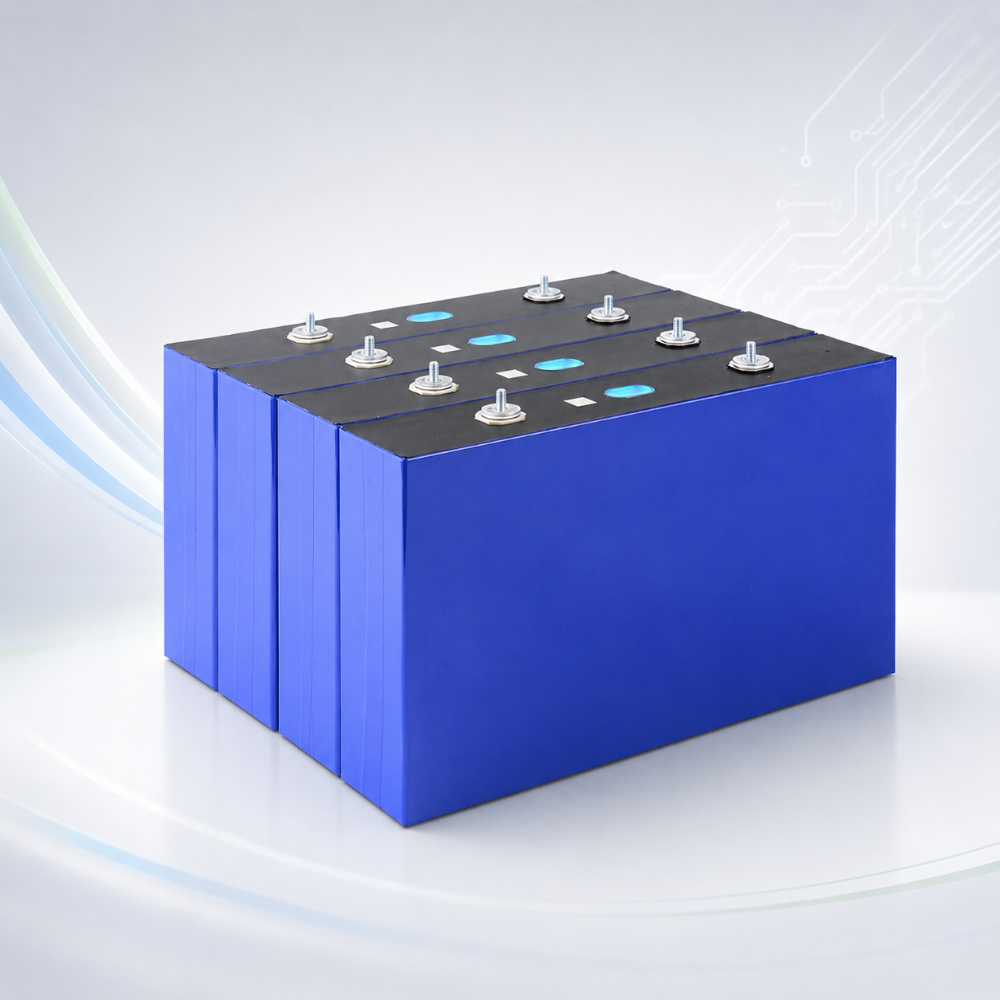
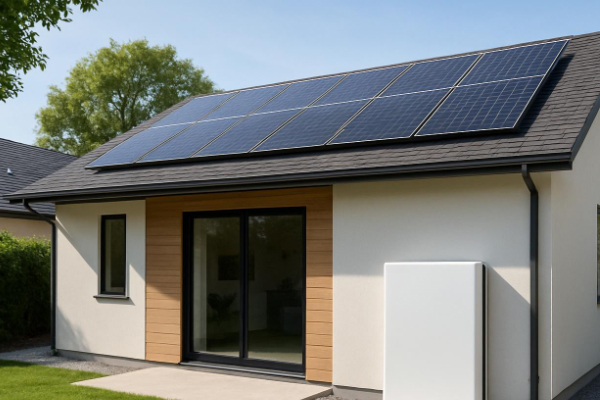
As residential solar power systems become increasingly popular, more homeowners are adding energy storage batteries to reduce electricity costs while maintaining a backup power supply during grid outages. A typical home solar energy storage system consists of photovoltaic panels, an energy storage battery, a hybrid inverter, a Battery Management System (BMS), an energy management system, and household electrical equipment. Under normal conditions, solar panels supply electricity to household loads, while surplus electricity is stored in a LiFePO4 battery. At night or when solar generation is insufficient, the stored energy can be released to power household appliances. When the public grid fails, a system equipped with backup power and automatic transfer functions can switch selected household loads to battery power, reducing the impact of an outage on lighting, refrigerators, networking equipment, and other essential appliances. It is important to understand that a solar energy storage system cannot prevent an outage from occurring on the public grid. Instead, it allows the household to maintain a certain level of electricity supply while the grid is unavailable. Reliable backup performance requires appropriate battery capacity, inverter power, backup load selection, and energy management settings.
Why Can a Solar Energy Storage System Handle Power Outages?
Traditional grid-connected residential solar systems generally shut down when the grid goes offline. This prevents electricity from being fed back into utility lines during an outage and helps protect maintenance personnel. A solar energy storage system with backup capability can create an independent power supply through a hybrid inverter, energy storage battery, and automatic transfer equipment. When the grid is operating normally, solar generation can supply household loads and charge the LiFePO4 battery with surplus electricity. When a grid outage occurs, the system detects the abnormal grid condition and can switch to backup or off-grid operation according to its design. The energy storage battery then supplies electricity to designated loads. If the system supports solar charging during an outage, photovoltaic panels may continue supplying household loads and replenishing the battery when sunlight is available. LiFePO4 batteries offer good cycle performance and are suitable for frequent charging and discharging, making them widely used in residential solar energy storage systems. Actual backup duration depends on usable battery capacity, household load power, and inverter efficiency. For example, supplying only refrigerators, lighting, routers, and security equipment can provide a relatively long backup period, while simultaneously operating air conditioners and electric water heaters can consume stored energy much faster.
How Should Battery Capacity and Backup Loads Be Configured?
The ability of a residential solar energy storage system to provide sufficient backup power depends heavily on battery capacity and backup load configuration. Battery capacity should not be determined solely by the installed photovoltaic capacity. Daily electricity consumption, critical appliance power, and expected outage duration should also be considered. For households primarily interested in outage protection, essential appliances can be connected to a dedicated backup circuit.
- Prioritize Essential Household Appliances:Refrigerators, lighting, routers, security systems, and computers can generally be prioritized for backup power. This prevents unnecessary high-power appliances from quickly consuming the stored battery energy.
- Determine Capacity According to Backup Duration:If the goal is to maintain power for several hours during an outage, the required energy capacity should be calculated according to total backup load power and expected operating time. A reasonable allowance should also be included for system losses and battery reserve capacity.
- Pay Attention to Inverter Output Power:Battery capacity determines how much energy can be stored, while inverter power determines how much load can operate simultaneously. Even if the battery has sufficient capacity, high-power appliances cannot operate properly if the inverter’s rated output is insufficient.
- Consider Solar Recharging Capability:If photovoltaic panels can continue charging the battery during an outage, the backup operating time can be extended. Therefore, photovoltaic capacity, inverter functions, and battery charging power should also be properly matched.
Proper battery sizing and backup load management allow stored energy to be concentrated on critical appliances and help extend actual backup time during an outage.
How Does a Home Solar Energy Storage System Provide Automatic Backup Power?
Automatic backup operation relies heavily on a hybrid inverter with backup output and an energy storage battery. Under normal grid conditions, the inverter manages energy flow between solar panels, the grid, the battery, and household loads. When solar generation is sufficient during the day, solar electricity can supply household appliances first, while surplus energy charges the LiFePO4 battery. At night, the battery can discharge to supply household loads and reduce reliance on grid electricity. When the system detects abnormal grid voltage or a power outage, an automatic transfer device can disconnect the home from the public grid and switch designated backup circuits to battery power according to the configured operating logic. The actual transfer time depends on the inverter and system design. For appliances requiring uninterrupted power, users should confirm whether the system provides an appropriate UPS-level transfer function. During an outage, the EMS or inverter control system can adjust power distribution according to battery SOC and load demand. When the battery reaches a preset low SOC level, nonessential loads can be reduced or disconnected to extend backup time for critical appliances. If solar conditions are suitable, photovoltaic power can continue charging the battery. Automatic detection, transfer, and power management reduce the need for manual intervention and make home energy storage systems more practical for unexpected power outages.
Which Appliances Should Be Connected to the Home Energy Storage Backup Circuit?
A home energy storage system does not necessarily need to supply every appliance in the house during a power outage. Separating critical loads from nonessential loads can provide longer backup time with a given battery capacity. Low-power appliances are generally more suitable for extended backup operation, while high-power appliances should be evaluated according to inverter and battery output capabilities.
Appliances Recommended for Priority Backup
- Refrigerators: Keeping refrigerators operating during an outage helps protect food from prolonged power interruptions.
- Lighting: LED lighting generally consumes relatively little power and is suitable for basic emergency illumination.
- Routers and Networking Equipment: These devices can maintain internet connectivity for remote work and communication.
- Security and Monitoring Equipment: Backup power allows essential home security systems to continue operating during an outage.
- Computers and Office Equipment: Households working from home can connect essential equipment to the backup circuit according to available battery capacity.
These appliances generally have relatively low power consumption and can achieve longer backup operation when the energy storage system is appropriately sized.
High-Power Appliances Require Careful Evaluation
Air conditioners, electric water heaters, induction cookers, ovens, and some power tools can have high power requirements. They may consume stored energy quickly and place greater demands on inverter output capacity. Whether these appliances can be included in the backup circuit depends on the inverter’s continuous output power, peak output capability, and the battery’s maximum discharge current. Properly dividing backup circuits can prevent high-power appliances from affecting the continuous supply of essential loads.
How Can Home Solar Energy Storage Improve Outage Protection?
Improving the backup capability of a home solar energy storage system requires careful planning of equipment selection, battery capacity, backup circuits, and routine maintenance. LiFePO4 batteries with stable cycle performance, reliable BMS protection, and clearly defined specifications are generally suitable for residential applications. Battery voltage ranges and communication protocols should be compatible with the hybrid inverter. Battery capacity should be selected according to critical household loads and desired backup duration rather than being determined solely by house size or photovoltaic capacity. The inverter should provide reliable backup output and be capable of handling the temporary power demand generated when household appliances start. For homes that require longer backup periods, increasing battery capacity or photovoltaic generation capacity can allow the system to receive more solar energy during an outage. After installation, users should regularly check battery SOC, operating temperature, charging and discharging status, inverter alarms, and communication status to ensure reliable operation during an outage. Backup circuits should also be tested periodically to verify automatic transfer functions and critical load operation. For households experiencing frequent power outages, setting an appropriate minimum SOC reserve can be useful. For example, keeping part of the battery capacity reserved for emergencies prevents the battery from being fully discharged for daily peak and off-peak electricity management. By properly integrating photovoltaic generation, LiFePO4 energy storage batteries, and backup inverters, households can improve solar energy utilization during normal operation while using stored electricity to maintain critical appliances when the grid fails. Homeowners considering an energy storage battery should select suitable battery capacity and system power according to actual electricity needs and have the equipment professionally installed and commissioned to create a more stable and flexible residential backup power system.