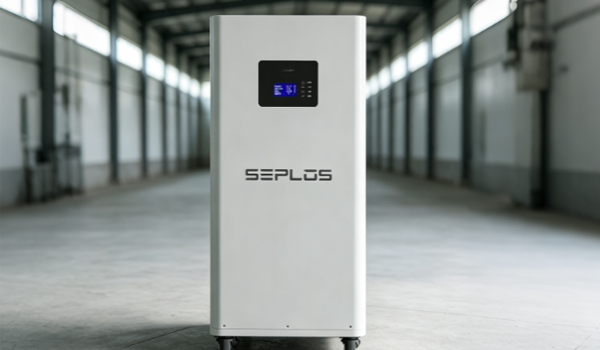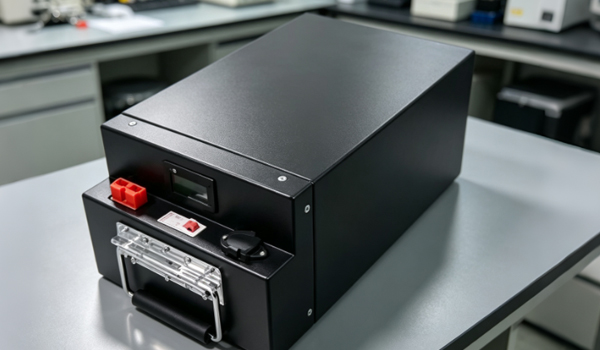
Bus routes require vehicles to maintain a high level of availability, while traditional long-duration charging can easily occupy operating time. High-rate batteries can not only meet the high-current discharge demands during starting, acceleration, and hill climbing, but also support high-power fast charging, allowing vehicles to quickly replenish energy during stops or operating intervals. For vehicle manufacturers and bus operators, battery selection should also take into account the vehicle voltage platform, installation space, operating routes, and charging infrastructure to ensure that the solution is compatible with actual operating conditions and provides a solid foundation for subsequent system integration and large-scale deployment.
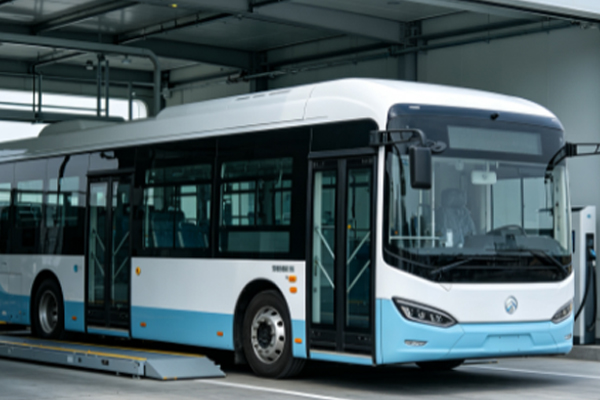
Why High-Rate Batteries Are Suitable for Fast-Charging Electric Bus Applications
Electric buses require frequent charging, starting, acceleration, and braking. Therefore, the battery must support fast charging while also providing stable power output.
Fast-Charging Capability Affects Bus Operating Efficiency
For vehicles operating at high frequency, reducing charging time can improve vehicle turnover efficiency. The actual charging power should be determined based on the route, charging equipment, and operating schedule:
- Rapid energy replenishment: Charging during overhead charging or station stops.
- Frequent charging: Paying attention to battery life and consistency.
- Proper matching: Matching the charging power with the grid, charging equipment, battery system, and operating schedule.
- SOC management: Properly controlling the charging range to balance charging speed and battery life.
Some fast-charging bus projects require energy replenishment within 15–30 minutes. The actual time depends on the battery capacity, charging power, SOC range, and charging equipment.
High-Rate Discharge Determines Vehicle Power Performance
During fully loaded starts, continuous acceleration, hill climbing, and frequent stop-and-go operation in congested areas, the battery is subjected to high instantaneous currents. The cells must provide stable power output, while the internal connection structure of the battery pack should reduce additional resistance and localized heat generation. High-rate design must cover both charging and discharging to meet the actual operating requirements of electric buses.
The Cell Chemistry Should Be Selected According to High-Rate Charging and Discharging Requirements
Different cell chemistries vary in terms of power, energy density, low-temperature performance, service life, and fast-charging capability. Selection should not be based solely on capacity or C-rate, but should also consider the vehicle’s actual operating requirements.
LFP, LTO, and High-Power Ternary Cells Have Different Application Priorities
Cell chemistry affects the design limits of high-rate batteries. Common options can be compared as follows:
| Cell Chemistry | Main Characteristics | Key Considerations for High-Rate Applications |
| Lithium Iron Phosphate (LFP) | Noted for safety, cycle performance, and cost advantages | Focus on optimizing fast-charging capability, low-temperature charging, and thermal management |
| Lithium Titanate (LTO) | Excellent fast-charging acceptance and cycle performance | Energy density, system cost, and overall vehicle weight must be considered comprehensively |
| High-Power Ternary Cells | Relatively high energy density, with power performance optimized through cell chemistry design | High requirements for thermal control and safety management during high-rate charging and discharging |
The technical route varies among different vehicle models and projects. For urban buses, high-power LFP can be a key option, while LTO can be selected according to fast-charging requirements, cycle frequency, and operating conditions.
High-Rate Charging Requires Attention to Lithium Plating Risk at Low Temperatures
High-current charging in low-temperature environments places greater demands on ion transport within the cells. If the charging conditions do not match the cell state, the risk of lithium plating may increase, potentially affecting capacity retention and cycle life. The actual solution should establish charging control strategies based on temperature, SOC, current, and cell condition. By limiting high-rate charging at low temperatures and combining this with heating and BMS management, a balance can be achieved between fast-charging performance and battery life.
High-Rate Fast Charging Places Higher Requirements on Thermal Management and the BMS
High-power charging and high-rate discharging increase battery heat generation. Electric buses operate for long periods, and significant temperature differences between cells or uneven heat dissipation may affect battery life and system stability.
Liquid Cooling Is Suitable for High-Rate Batteries
For large-capacity, fast-charging batteries, thermal management mainly includes:
- Liquid cooling system: Removes battery heat and is suitable for high-power batteries.
- Cooling plate layout: Improves heat dissipation and reduces temperature differences between cells.
- Heating function: Helps the battery operate properly at low temperatures.
- Temperature monitoring: Provides real-time battery temperature data to support charging and discharging control.
The thermal management system for high-rate fast-charging batteries should be planned during the initial design stage.
The BMS Needs to Manage Charging and Discharging Conditions
The BMS of a high-rate electric bus battery must adjust its control strategy according to different operating stages. Core functions include:
- Cell voltage and temperature monitoring;
- Protection against charging overcurrent, overvoltage, and abnormal conditions;
- Discharge overcurrent and over-discharge protection;
- Cell balancing management;
- Low-temperature charging limitations;
- High-temperature warnings;
- SOC, SOH, and operating data management.
By working together with the thermal management system, the BMS can adjust control strategies according to charging and discharging power and temperature, reducing the impact of abnormal operating conditions on the cells.
Customizing High-Rate Electric Bus Batteries Requires a Balance Between Performance, Service Life, and Cost
For vehicle manufacturers and bulk procurement customers, a battery solution should focus not only on C-rate, but also on fast-charging efficiency, driving range, service life, safety, installation, and maintenance costs.
What Parameters Need to Be Confirmed Before Customization
Customers can provide the following information:
- Vehicle voltage platform: To match the motor, electronic control system, and charging system.
- Battery capacity: Determined according to driving range requirements.
- Charging and discharging rate: Clarifying the requirements for starting, hill climbing, and fast charging.
- Charging time: Providing the charging equipment and target energy replenishment time.
- Installation space and weight: Determining the dimensions and weight of the battery pack.
- Operating environment: Including high-temperature, low-temperature, hill, and high-frequency operating conditions.
This information helps match the cells, BMS, liquid cooling system, and battery pack structure.
Sample Validation Should Cover Fast Charging and High-Load Operation
Sample testing should not only measure capacity, but also simulate actual operating conditions. Fast-charging tests should focus on charging power, temperature rise, voltage differences, and BMS performance. Driving tests should cover fully loaded starts, acceleration, hill climbing, and continuous operation. In low-temperature environments, charging limitations and preheating functions should also be verified. During mass production, consistency should be maintained in cell screening, capacity testing, internal resistance testing, BMS calibration, and finished-product testing to reduce the impact of batch variations on vehicle operation.
The actual performance of high-rate electric bus batteries depends on the combined implementation of cell selection, structural design, thermal management, and control strategies. Customization based on vehicle charging conditions, operating routes, load variations, and ambient temperature can improve the adaptability and operating stability of the battery system, providing more reliable power support for bus operators, vehicle manufacturers, and bulk procurement customers.