During long-distance navigation, high-load propulsion, and centralized charging, electric boat power batteries are continuously affected by current, temperature, and environmental changes. The relatively limited space inside a vessel means that once an individual cell experiences abnormal temperature rise, heat may spread to surrounding cells and modules, making fault handling more difficult. For shipowners and project purchasers, thermal runaway protection needs to focus on monitoring before abnormalities occur, as well as isolation, alarms, and fire response after a fault develops, giving the battery system a more comprehensive safety foundation.
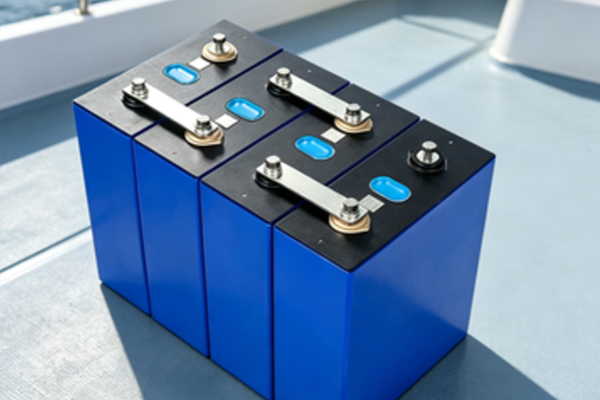
Reduce Thermal Runaway Risks From the Cell and Battery Pack Design Stage
Thermal runaway protection cannot rely solely on downstream fire protection equipment. Cell characteristics, battery structure, and internal connections also affect the overall safety level of the system. Marine batteries need to be configured according to vessel type, navigation duration, and load characteristics, with comprehensive consideration of thermal stability and structural protection.
Cell Selection Needs to Focus on Thermal Stability
Different battery chemistries have different response characteristics under abnormal conditions such as high temperatures, overcharging, and short circuits. Actual projects can be evaluated from the following aspects:
- Pay attention to cell stability under high-temperature and abnormal operating conditions.
- Evaluate cell consistency to reduce localized risks caused by performance differences between individual cells.
- For vessels operating under high loads for extended periods, pay particular attention to temperature rise during continuous discharge.
Appropriate cell selection can provide a stable foundation for subsequent thermal management, condition monitoring, and safety control.
Battery Pack Structure Needs to Control Heat Propagation Paths
When an individual cell becomes abnormal, heat may spread to adjacent cells and modules, so the battery structure needs to account for heat propagation paths in advance. Thermal isolation and structural protection space should be maintained between cells, localized heat accumulation should be reduced within modules, abnormal heat sources such as loose or short-circuited high-voltage connections should be minimized, and the battery enclosure should be designed with enhanced mechanical and environmental protection suitable for marine applications. Layered protection from cells and modules to the battery enclosure can reduce the scope of abnormal impacts and provide more time for fault handling.
Use the BMS and Thermal Management System to Identify Abnormalities in Time
One of the key aspects of thermal runaway protection is detecting abnormal temperature increases at an early stage. The BMS needs to continuously collect battery operating data and establish appropriate data connections with thermal management, vessel monitoring, and alarm systems.
The BMS Needs to Continuously Monitor Key Parameters
Battery abnormalities are often accompanied by changes in voltage, current, or temperature. Multiple parameters can be used for comprehensive assessment:
- Individual cell voltage and total battery pack voltage;
- Charging and discharging current, SOC, and SOH;
- Individual cell temperature and temperature differences between cells;
- Temperature trends and abnormal alarm conditions.
Multi-parameter monitoring can help the system identify localized abnormalities and provide more sufficient data for subsequent safety responses.
Thermal Management Needs to Cover Different Navigation Conditions
Vessels may experience long-duration cruising, low-speed operations, high-load propulsion, and frequent charging. Thermal management solutions need to be matched to changes in thermal load:
| Navigation Condition | Main Thermal Management Focus | Monitoring Focus | Protection Direction |
| Long-duration cruising | Continuous heat dissipation | Cell temperature and temperature difference | Maintain stable temperature control |
| High-load propulsion | Rapid heat removal | Current and temperature changes | Reduce localized heat accumulation |
| Frequent charging | Control charging temperature rise | Charging power and SOC | Match allowable charging conditions |
| High-temperature environment | Improve heat dissipation capability | Ambient and enclosure temperature | Reduce continuous heat accumulation |
The thermal management system needs to adjust according to battery status and keep the cells within a suitable operating temperature range.
Strengthen Multi-Layer Protection for the Battery Enclosure and Battery Compartment
Marine batteries are generally installed in dedicated spaces. When an abnormality occurs, it is also necessary to consider the spread of smoke, flammable gases, flames, and high temperatures to surrounding areas. Protection design needs to extend from the battery enclosure to the entire battery compartment.
The Battery Enclosure Needs to Balance Isolation and Abnormal Gas Release
In addition to providing installation and mechanical protection, the battery enclosure needs to consider gas release and heat control under abnormal conditions:
- Configure appropriate temperature detection and alarm devices.
- Plan flammable gas discharge and ventilation paths according to system characteristics.
- Optimize the internal enclosure structure to reduce rapid heat transfer to adjacent areas.
- Design wiring harnesses, connectors, and enclosure structures according to the marine operating environment.
A properly designed battery enclosure can reduce the rate at which a localized fault expands into surrounding areas.
The Battery Compartment Needs to Integrate Fire Protection and Personnel Safety
When a fault expands to the battery compartment, BMS monitoring alone can no longer cover all risks. Compartment-level safety measures are also required. Fire detection and alarm systems can be configured according to the project risk assessment, while ventilation and gas discharge solutions can be designed according to vessel type, battery type, and compartment structure. Fire-resistant separation can be used to reduce the spread of high temperatures and flames, while personnel evacuation, inspection, and emergency response routes should also be planned. Battery compartment protection needs to address both equipment protection and personnel safety, leaving sufficient space for emergency response when unexpected faults occur.
Establish a Coordinated Mechanism for Alarms, Isolation, and Fire Protection
Thermal runaway protection involves the battery system, vessel electrical system, monitoring equipment, and fire protection facilities. Strengthening only one part cannot fully address the overall risk. The actual solution needs to define corresponding response actions for different fault levels.
Establish Graded Responses Based on the Severity of Abnormalities
Different temperature increases and fault conditions can be matched with different safety strategies:
- During the early stage of a minor abnormality, alarms can notify operators to inspect the operating condition.
- When abnormal temperature conditions persist, protective measures such as reducing the load or stopping charging can be taken according to the system design.
- When a serious fault occurs, electrical isolation can be performed according to the established safety strategy, while alarm information is transmitted to the vessel safety system.
- Once thermal runaway is confirmed, corresponding firefighting, cooling, and emergency response measures can be implemented according to the vessel type and fire protection design.
Graded responses allow ordinary abnormalities and serious faults to enter different handling procedures, reducing the risk of false triggering caused by a single protection action.
Fire Protection Solutions Need to Be Configured According to Vessel Conditions
Fire protection requirements vary according to battery chemistry, battery compartment structure, and vessel application. Fixed fire suppression systems, cooling measures, detection devices, and ventilation designs need to be matched to the specific project. Marine projects should also conduct risk assessments based on applicable regulations, vessel type, navigation area, battery capacity, and installation method rather than directly applying protection models designed for land-based energy storage systems. A complete solution should incorporate cells, modules, battery enclosures, battery compartments, and the vessel management system into an integrated safety design.
When purchasing a battery system, shipowners and project teams need to evaluate cell stability, structural isolation, thermal management capability, BMS data monitoring, alarm communication, electrical protection, and compartment safety. Navigation duration, propulsion loads, and installation space vary between vessel types. Properly matching the capacity, structure, and safety configuration of electric boat batteries can help improve safety management during project acceptance, routine maintenance, and long-term operation.