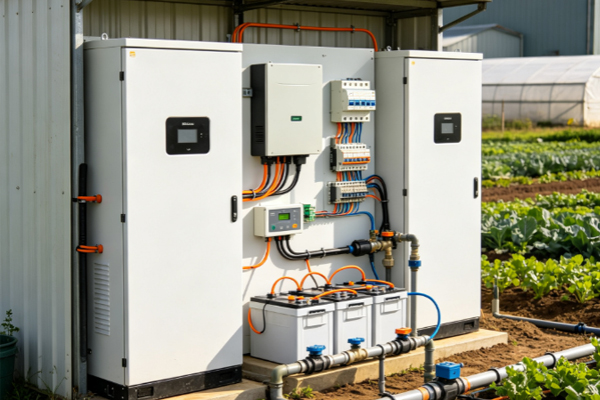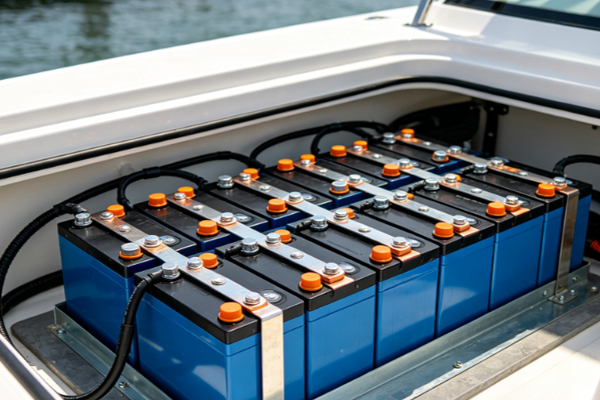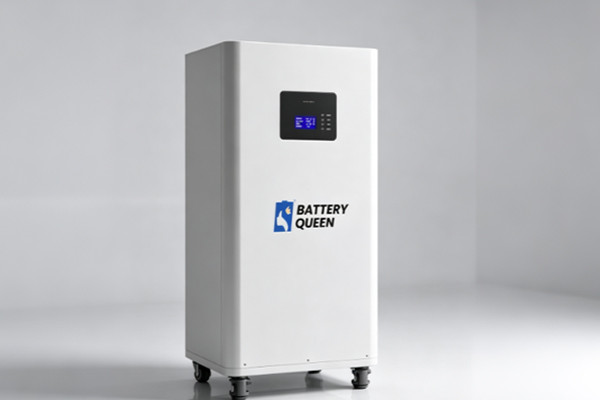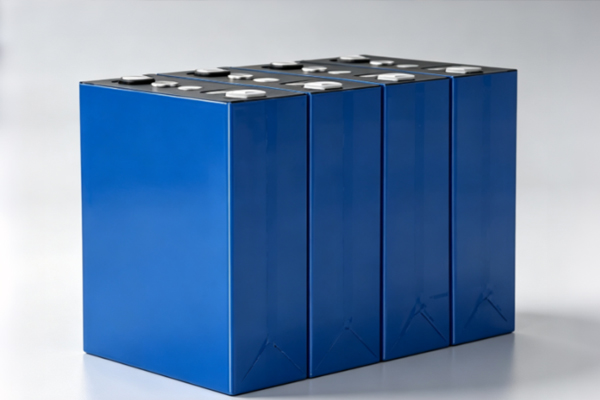
When it comes to farm battery storage, the real challenge is often not whether there is enough electricity, but when that electricity is needed. Water pumps may start suddenly, ventilation fans may run continuously, greenhouse equipment can change with weather conditions, and aerators in aquaculture operations cannot simply be switched off. Every type of farm has its own production rhythm, so the energy storage system should not follow a one-size-fits-all approach. An all-type farm battery energy storage solution should start with actual production needs, allowing LiFePO4 batteries to support daily power use, equipment operation, and backup power during unexpected outages.
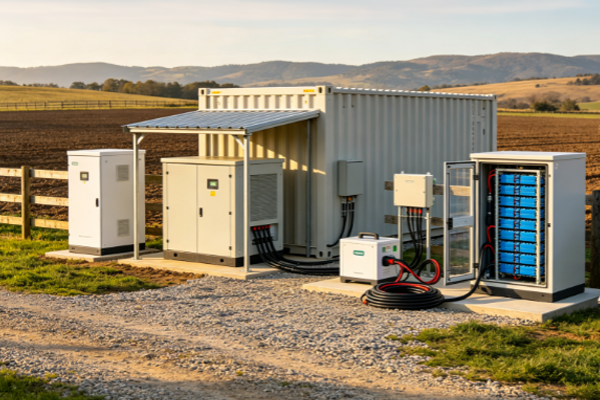
How Does a Farm Use Electricity Every Day? Different Operations Need Different Storage Solutions
Although they are all agricultural operations, orchards, greenhouses, livestock farms, and aquaculture facilities can have completely different electricity consumption patterns. Some equipment runs for only a few hours a day, while other systems operate around the clock. Certain devices may have low average consumption but require a sudden increase in power when starting. If farm battery energy storage is designed around total daily consumption alone, the battery may end up being unnecessarily large or simply unable to handle peak demand.
What Do Orchards and Outdoor Farms Mainly Use Battery Storage For?
Electricity use in orchards is often concentrated at specific times. Irrigation and spraying may be scheduled for early morning or evening, while monitoring equipment and sensors may need to remain online continuously. During dry seasons, pump operating hours can also increase significantly.
- Irrigation systems
The main loads are usually water pumps, valve controllers, and irrigation equipment. It is important to know the pump power, daily operating hours, and how often the pumps start.
- Orchard power needs
In addition to irrigation, orchards may use spraying systems, security cameras, sensors, and nighttime lighting. These loads are often spread throughout the site, with some equipment requiring continuous operation.
- Seasonal changes
Irrigation frequency can vary greatly from one season to another. The energy storage system should have enough flexibility to avoid excessive unused capacity during low-demand periods and insufficient power during peak seasons.
- Farm machinery and maintenance
Some farms also use electric tools, small repair equipment, or temporary work equipment. These loads can change quickly, making peak output capability an important consideration.
Another characteristic of orchard storage is that equipment is often distributed across a large area. The battery system needs to meet energy requirements while also fitting the installation location, maintenance conditions, and distance from the inverter.
How Are Greenhouses, Livestock Farms, and Aquaculture Facilities Different?
A greenhouse operates more like a controlled production environment. Fans, pumps, circulation equipment, supplemental lighting, and controllers can change their operating patterns with temperature, humidity, and crop conditions. Livestock farms rely more heavily on ventilation, water supply, and feeding equipment, while aquaculture facilities have even greater dependence on continuous aeration.
| Farm Type | Typical Power Pattern | Common Power Challenge | Main Storage Priority |
| Orchard | Concentrated irrigation, continuous monitoring | Pumps start together | Peak output, flexible power supply |
| Outdoor crops | Scheduled irrigation | Strong seasonal changes | Capacity flexibility, cycling |
| Greenhouse | Continuous monitoring and climate control | Frequent fan and pump starts | Stable output, continuous operation |
| Poultry farm | Ventilation, water, and lighting throughout the day | Production affected by outages | Backup power, continuous discharge |
| Livestock farm | Scheduled or continuous operation | Multiple motor loads | Starting capability, reliable operation |
| Aquaculture | Continuous aeration and circulation | Aeration cannot stop for long | Long runtime, fast response |
| Smart farm | Connected equipment and automated control | Communication and control systems must stay online | Data monitoring, system compatibility |
Farm type is only the starting point when designing a project. The next step is to look at how the equipment actually operates, when it runs, and which loads must remain active during a power outage. This makes the storage system a real part of farm power management instead of simply a backup battery.
Is a Larger Farm Battery Always Better?
Not necessarily. An oversized battery increases the initial investment and may spend much of its service life with low utilization. A battery that is too small, on the other hand, can reach a low state of charge too quickly when farm loads increase.
A practical approach is to divide farm equipment into critical production loads, supporting loads, and equipment that can be temporarily shut down. Critical loads receive priority from the battery, while other equipment can be adjusted according to battery status and available power. This is usually more flexible than simply purchasing the largest possible battery.
How Can Battery Storage Support Farm Production? It Is Not Just for Power Outages
When people talk about farm battery energy storage, the first thing that often comes to mind is backup power during an outage. But if a battery only sits idle until the grid fails, its utilization remains low. Farms with solar power, time-of-use electricity rates, or highly variable loads can use energy storage as part of everyday operations, shifting electricity between different periods of the day.
How Should Solar Power and LiFePO4 Batteries Work Together?
During the daytime, farm equipment is often operating while solar generation is also at its highest. The storage system can distribute power according to real-time demand rather than forcing every load to run from the battery.
- When solar power can cover the farm’s active loads, it can directly supply pumps, fans, and control equipment.
- When solar generation exceeds current demand, the excess electricity can charge the LiFePO4 battery.
- At night, the battery can supply monitoring systems, lighting, ventilation, aeration, or other selected production loads.
- When the battery reaches a preset low state of charge, the system can switch to the grid or generator to avoid excessive discharge.
This operating method fits the actual rhythm of agricultural production. During the day, the farm uses available solar power; excess energy is stored and then used after sunset, giving the battery a clear daily role.
Why Do Some Farms Need Stable Power More Than Long Runtime?
Aquaculture is a good example. If an aerator suddenly stops, the problem is not simply that a few kilowatt-hours of electricity have been lost. The production environment itself can be affected. Ventilation fans and circulation pumps on livestock farms can face similar challenges.
For these applications, the value of the battery is often more about fast transfer, stable output, and sufficient starting power. The battery may not need to run the entire farm for ten or more hours. It may simply need to take over critical loads quickly when the main power source fails, then step back once the generator starts or grid power returns.
When Does Farm Battery Storage Make Sense for Peak Load Management?
If a farm has high-power equipment that tends to start at the same time, battery storage can also help reduce short-term grid demand. Water pumps, refrigeration equipment, processing machines, and large ventilation fans can all create this type of load spike.
In daily operation, the battery can charge during periods of lower demand and provide part of the required power when high-load equipment starts. The goal is not for the battery to supply all farm electricity, but to help smooth sudden changes in power demand.
How Much Battery Storage Does a Farm Roughly Need?
The figures below can be used for early project discussions rather than as final purchasing specifications. Actual capacity should still be determined by equipment power, operating hours, backup requirements, and available solar generation.
| Application | Main Storage Task | Typical Storage Range | Suitable Operating Mode |
| Small orchard | Irrigation, monitoring, lighting | 5–20kWh | Solar priority + battery |
| Greenhouse | Fans, pumps, control systems | 20–50kWh | Daily cycling + backup |
| Medium crop farm | Multi-zone irrigation | 30–100kWh | Solar + modular storage |
| Livestock farm | Ventilation, water, feeding | 50–200kWh | Storage + backup power |
| Aquaculture | Aeration, circulation pumps | 50–200kWh | Long runtime + emergency backup |
| Smart farm | Automated control, communications, production equipment | 100kWh+ | Modular expansion + intelligent energy management |
The important point is that storage capacity does not necessarily increase in proportion to farm size. A relatively small aquaculture facility may need more storage than a large orchard if its aeration equipment has high power demand. A large orchard with only a few scheduled loads may require a much smaller storage system.
What Makes Farm Battery Storage Difficult? Installation, Daily Use, and Future Expansion All Matter
Once a farm energy storage system is installed, the real test is how it performs over the long term. A system may work perfectly during commissioning, but a farm could later add pumps, expand greenhouses, install more ventilation equipment, or increase production capacity. The original battery system may then become undersized. Farm environments can also be demanding, so the battery cabinet, wiring, and control system all need sufficient room for future changes.
Why Is the Installation Environment Especially Important for Outdoor Farms?
Farms are rarely as controlled as standard equipment rooms. Batteries may be installed in utility rooms, warehouses, near greenhouses, or even outdoors. High summer temperatures, low winter temperatures, humidity, dust, and rain can all affect long-term operation.
The installation area should provide adequate ventilation and maintenance access while protecting the battery system from rain, dust, and physical damage. In cold climates, low-temperature charging conditions should be checked in advance. In hot climates, cooling and temperature protection deserve particular attention.
Can the Original Battery System Support Farm Expansion?
That depends on whether expansion capacity was considered from the beginning. A farm may initially use storage only for irrigation, then add cold storage, greenhouse equipment, livestock facilities, or automated systems. The total load can increase substantially over time.
Modular LiFePO4 battery systems can make this type of expansion easier. The initial system can be sized for the current production scale, with additional battery modules added later. The inverter, distribution system, and control system should also be checked to make sure they can support the increased capacity.
What Problems Are Easy to Miss During Long-Term Farm Battery Operation?
After several years of operation, battery management and maintenance become increasingly important. This is particularly true for farms with limited on-site staff or unattended facilities. Waiting until the battery is completely depleted or a major alarm appears can make troubleshooting much more difficult.
- Long-term exposure to high temperatures should be monitored rather than checked only during installation.
- Frequent starts and stops of high-power equipment can create large short-term current demands, so operating data should be monitored continuously.
- Battery capacity changes over time, so actual backup runtime should be reassessed periodically.
- Communication between the BMS, inverter, and energy management system should remain stable, with abnormal alarms investigated promptly.
How Can Farms Reduce Problems When Purchasing Batteries in Bulk?
For large farms, agricultural groups, or projects covering several sites, it is better to organize the data for each location separately rather than provide only one total capacity requirement. Different sites may have completely different equipment, environments, and operating schedules.
- Prepare an equipment list and actual operating hours for each farm.
- Record the starting characteristics of pumps, fans, aerators, and other motor-driven equipment.
- Confirm the models of existing solar systems, inverters, generators, and distribution equipment.
- Provide the battery installation location, available space, and environmental conditions.
- Identify which loads need to operate continuously and which can be automatically disconnected when battery levels are low.
- Consider whether greenhouses, livestock facilities, cold storage, or additional irrigation zones will be added in the future.
This information allows the supplier to evaluate compatibility between the battery pack, inverter, and control system more accurately. It also makes it easier to replicate the energy storage solution across additional farm sites.
Are LiFePO4 Batteries Suitable for All Types of Farm Energy Storage?
The value of LiFePO4 batteries is not simply their energy capacity. Their characteristics also make them suitable for storage applications that require regular cycling over long periods. Farm storage may participate in solar energy utilization, nighttime power supply, and load management every day. In these situations, cycle performance, thermal stability, and BMS management become increasingly important.
For global farm energy storage buyers, the purchase decision should not focus only on the price of a single battery. Battery pack dimensions, BMS functions, connection methods, communication protocols, inverter compatibility, and future expansion can all affect the total cost of the project. DELIGREEN provides LiFePO4 batteries, battery packs, DIY battery boxes, BMS accessories, and scalable energy storage solutions that can be configured for different farm equipment and operating patterns.
Farm battery storage is most valuable when electricity can follow the production schedule. Orchards need power for irrigation, greenhouses need energy for environmental control, livestock farms need reliable ventilation and water supply, aquaculture facilities need continuous aeration, and smart farms need automated equipment to stay connected. These applications do not require identical battery configurations, but they all benefit from energy storage that can operate reliably over the long term, remain easy to manage, and leave room for future upgrades. This is where LiFePO4 batteries are becoming increasingly useful in modern agricultural energy storage.