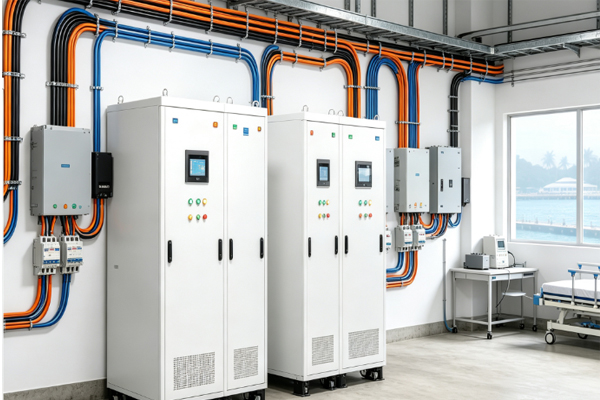
Hospitals cannot treat power interruptions like ordinary office buildings. A brief outage may only affect lighting in an office area, but in an ICU, emergency department, or operating room, even a short interruption can create serious problems. That is why battery energy storage has become an important part of hospital microgrid solutions. A battery system is not only there for emergencies. It can also work with solar power, UPS systems, diesel generators, and the hospital grid to keep critical loads running during grid fluctuations and unexpected outages.
How Much Battery Storage Does a Hospital Microgrid Need?
The easiest mistake to make when planning hospital energy storage is to ask only, “How many kWh do we need?” The more useful questions are which loads must stay online, how long they need backup power, and whether those loads have high startup currents. Hospital battery storage should be sized around critical loads rather than simply the total electricity consumption of the entire building.
Which Hospital Equipment Needs Battery Backup?
Different hospital areas have very different power requirements. ICUs, operating rooms, emergency departments, and medical monitoring areas usually have higher backup power priorities, while offices and staff areas can be assigned a lower priority. Creating a clear load list before selecting the battery makes the final storage configuration much more practical.
Common loads that may need to be included in hospital battery storage planning include:
- ICU equipment: Ventilators, patient monitors, infusion pumps, and other critical devices may need continuous power.
- Operating room equipment: Anesthesia machines, surgical lights, patient monitoring systems, and control equipment require stable power.
- Emergency department loads: Lighting, monitoring systems, communication equipment, and selected medical devices need to remain operational.
- Hospital server rooms: Servers, network equipment, data storage, and communication systems require reliable electricity.
- Refrigeration equipment: Certain medicines, blood products, and laboratory samples need controlled storage conditions.
Once these loads have been identified, the battery capacity can be calculated based on actual operating requirements rather than a rough estimate.
How Do You Calculate Hospital Battery Capacity?
A simple preliminary calculation is:
Battery Capacity ≈ Critical Load Power × Backup Time ÷ System Efficiency ÷ Usable Depth of Discharge
Suppose a hospital needs to keep critical equipment with a combined load of around 20kW running for four hours. The required rated battery capacity will not simply be 80kWh. Inverter efficiency, usable battery capacity, BMS protection limits, and operating reserves also need to be considered.
| Hospital Load | Typical Power Range | Backup Time | Key Battery Requirement |
| ICU critical equipment | 5–20kW | 1–4 hours | Continuous discharge, stable output |
| Emergency department critical loads | 10–30kW | 1–3 hours | Peak power, fast transfer |
| Hospital server room | 5–50kW | 1–4 hours | UPS integration, communication |
| Medicine refrigeration | 2–15kW | 2–8 hours | Long-duration operation |
| General lighting and office loads | 10–50kW | 1–3 hours | Load prioritization |
Actual projects should also account for seasonal loads, future equipment additions, and available solar generation. Leaving reasonable room for future expansion is usually more practical than installing a very large battery from day one.
Is 10kWh, 50kWh, or 100kWh Battery Storage Better for a Hospital?
A small clinic or independent medical facility may only need a battery system in the tens-of-kWh range, while a larger hospital may require much more storage for critical loads. When rooftop solar is installed at the same time, excess daytime solar power can be stored and used later in the evening or during grid interruptions.
Why Are LiFePO4 Batteries Suitable for Hospital Energy Storage?
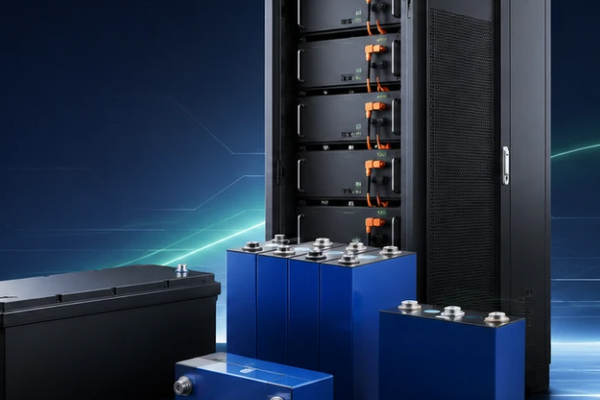
Hospital energy storage is not simply about having a large battery. Daily charging and discharging, available installation space, long-term maintenance, and system expansion can all affect the final configuration. LiFePO4 batteries are widely used in energy storage applications where long service life, frequent cycling, and stable operation are important.
Does Hospital Battery Storage Need to Cycle Every Day?
When solar panels are integrated into a hospital microgrid, the battery can store excess solar power during the day and discharge it in the evening or during periods of high grid demand. During a power outage, the same battery system can provide backup power to critical loads. In other words, hospital battery storage can support daily energy management as well as emergency backup.
When evaluating LiFePO4 batteries, buyers should pay close attention to these specifications:
- Cycle life: Hospital energy storage systems may operate with frequent charge and discharge cycles over many years.
- Discharge capability: Emergency equipment, pumps, HVAC systems, and other loads can create high short-term power demands.
- Energy density: A compact battery cabinet can be easier to install when hospital electrical rooms have limited space.
- Temperature performance: Battery temperature monitoring and protection are important when operating conditions change.
The battery itself is only one part of the system. The BMS, inverter, distribution equipment, and energy management system also need to work together properly.
What Does the BMS Do in a Hospital Battery System?
The BMS monitors the condition of the battery cells and provides protection when abnormal conditions occur. When purchasing hospital battery storage, it is not enough to ask whether the battery has a BMS. Buyers should check what data the BMS can monitor, what communication protocols it supports, and how the system responds to abnormal conditions.
Common BMS functions include:
- Cell voltage monitoring to identify voltage differences between individual cells.
- Battery temperature monitoring to detect abnormal temperature increases.
- Overcharge, over-discharge, and over-current protection to prevent unsafe operating conditions.
- SOC monitoring to show the remaining battery capacity to the energy management system.
- CAN or RS485 communication for data exchange with inverters, monitoring platforms, and other equipment.
For hospitals, these BMS functions can make routine maintenance easier and help operators determine how much usable battery power remains.
Can LiFePO4 Batteries Work With a Hospital UPS?
Yes. A system can be designed with the UPS handling fast power transfer while the battery system provides longer-duration backup power. The exact connection method depends on the UPS model, battery voltage, communication protocol, and overall system architecture. For a new hospital microgrid project, it is much better to confirm compatibility during the purchasing stage rather than discovering communication or interface problems after the batteries arrive.
How Do Solar, Battery Storage, and the Grid Work Together in a Hospital Microgrid?
The real value of a hospital microgrid is not simply installing a battery. It is making different power sources work together when they are needed. During the day, solar power can supply hospital loads, while excess generation can charge the battery. At night, the battery can continue supplying selected loads. If the grid becomes unstable or fails, the system can transfer critical loads to battery power.
How Should Hospital Battery Storage Be Charged With Solar Power?
When a hospital has rooftop solar, solar generation may be high around midday, while the hospital’s actual electricity demand does not always match the solar output. Energy storage allows excess generation to be stored and used later, reducing wasted solar energy.
A hospital microgrid can use an operating strategy such as:
- Solar power supplies current hospital loads first, with excess energy charging the battery.
- The battery discharges during high electricity-price periods or when grid demand is high.
- When the grid is operating normally, the battery maintains an appropriate SOC reserve for unexpected outages.
- During a grid failure, the system prioritizes operating rooms, ICUs, emergency departments, server rooms, and other critical loads.
This approach is more practical than simply installing a very large battery because the storage system can actively participate in daily energy management instead of sitting idle waiting for an outage.
How Long Can a Hospital Microgrid Run During a Power Outage?
Backup duration mainly depends on battery capacity and critical load power. If a hospital wants four hours of backup, the calculation should also account for discharge depth, inverter efficiency, and reserved capacity.
| Rated Battery Capacity | Critical Load | Theoretical Runtime | Typical Use |
| 20kWh | 5kW | About 4 hours | Small critical areas |
| 50kWh | 10kW | About 5 hours | Small and mid-sized medical areas |
| 100kWh | 20kW | About 5 hours | Hospital critical loads |
| 200kWh | 40kW | About 5 hours | Larger microgrid systems |
Actual runtime varies with depth of discharge, inverter efficiency, temperature, and changes in load.
A hospital does not necessarily need to keep the entire building powered by batteries during an outage. Separating critical loads from non-critical loads can make it easier to control both the required storage capacity and project cost.
Should Hospital Battery Storage Be Designed for Future Expansion?
Hospital electricity demand will not remain exactly the same. New CT scanners, laboratory equipment, servers, refrigeration systems, or renovated wards can all increase future power requirements. A modular storage design allows additional battery modules or storage cabinets to be added later instead of replacing the entire system.
What Should Hospitals Check When Purchasing Battery Energy Storage?
When purchasing hospital battery storage, it is not a good idea to compare suppliers only by price. Buyers should check battery voltage, capacity, maximum continuous charge and discharge current, peak power, dimensions, communication protocols, BMS functions, cycle life, and compatibility with existing UPS or inverter equipment. If solar power is also part of the project, the EMS control logic and future expansion method should be confirmed in advance. For hospitals that require continuous power, sample testing and real-load testing are also important. Running the system successfully at the sample stage before moving into larger-volume purchasing can be much safer than simply choosing the lowest quotation. DELIGREEN provides LiFePO4 batteries, battery packs, DIY battery boxes, BMS accessories, and scalable energy storage solutions for hospital microgrid projects, with configurations matched to voltage, capacity, dimensions, communication requirements, and application needs.
A hospital microgrid is not simply a battery installation. The real goal is to make the grid, solar power, UPS, and hospital battery storage work as one reliable power system. How much electricity critical equipment needs, how long it must operate during an outage, how excess daytime solar power should be stored, how the BMS should monitor the battery, and whether the system can be expanded later all need to be considered before purchasing. When these details are confirmed early, the battery system is far less likely to end up oversized and expensive or undersized when critical equipment needs it most. For hospitals planning a microgrid, having a battery supplier evaluate the actual loads and operating requirements can make it much easier to build a stable, scalable, and long-term energy storage solution.