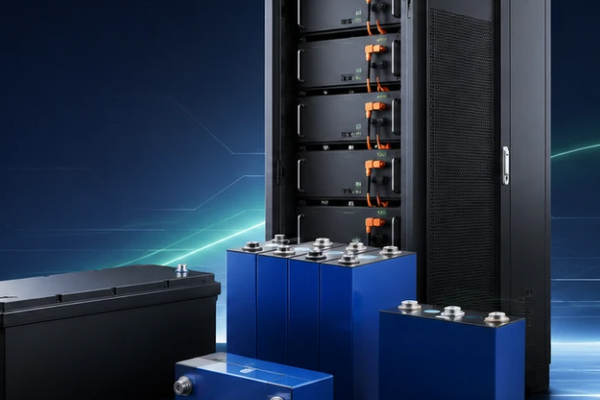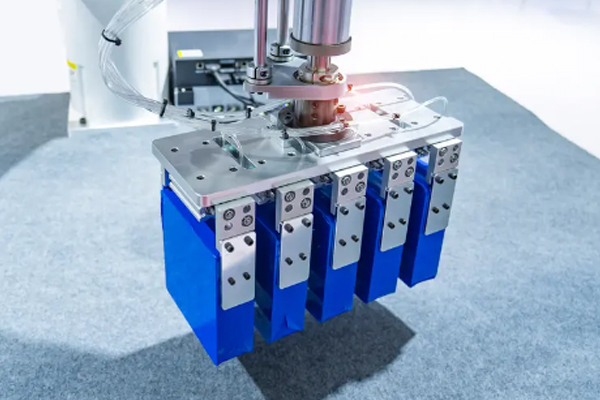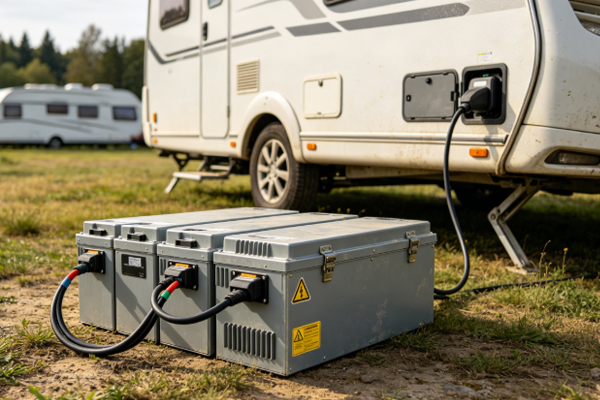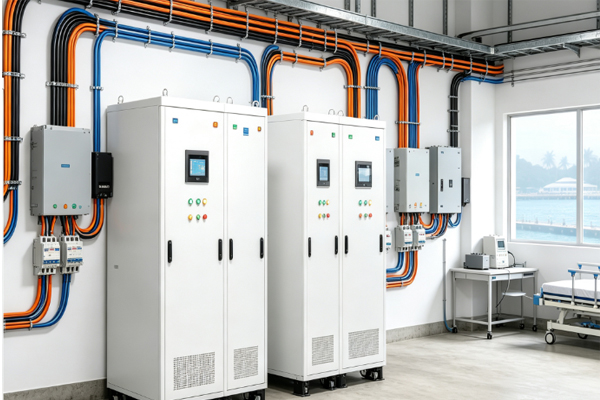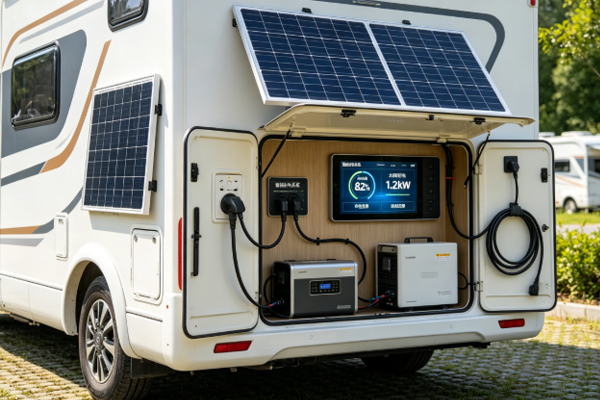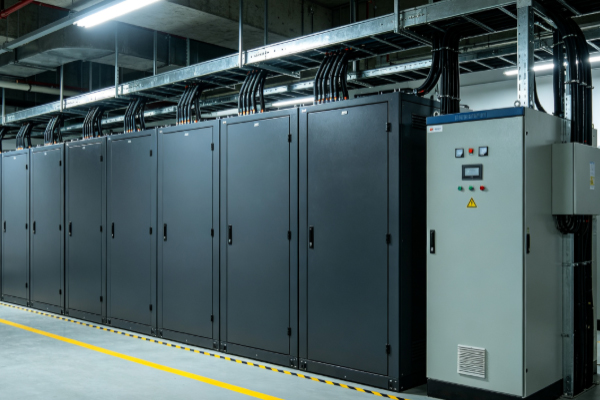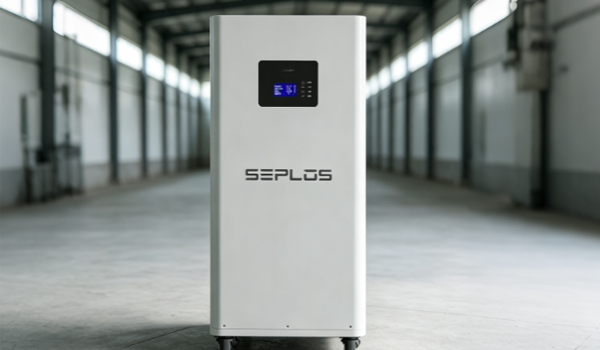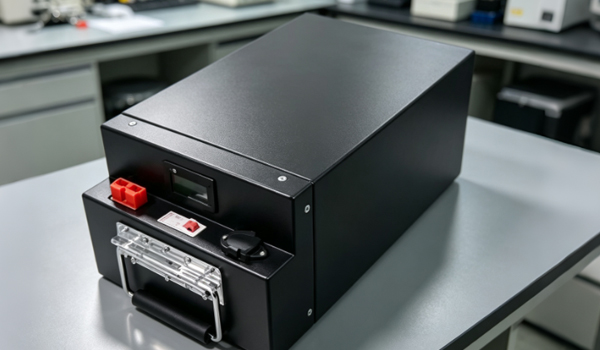
In residential environments without a stable utility power supply, energy storage batteries play an important role in storing electricity and providing continuous power. Mountain homes, rural residences, vacation homes, independent houses, and living areas far from the power grid may all require an off-grid energy storage solution capable of long-term operation. Solar power generation can provide electricity during the day, but the amount of electricity generated is not always synchronized with actual household demand due to weather, seasonal conditions, and electricity usage times. Therefore, an energy storage battery is needed to store electricity generated during the day for use at night or when solar generation is insufficient. A residential off-grid lithium battery energy storage system usually consists of a LiFePO4 battery pack, BMS, battery inverter, solar modules, and related power distribution equipment. With proper capacity design, it can provide stable power for lighting, refrigerators, communication equipment, network equipment, water pumps, televisions, and other household loads. Compared with relying solely on power generation equipment, an energy storage system can reduce energy waste and make household electricity use more flexible.
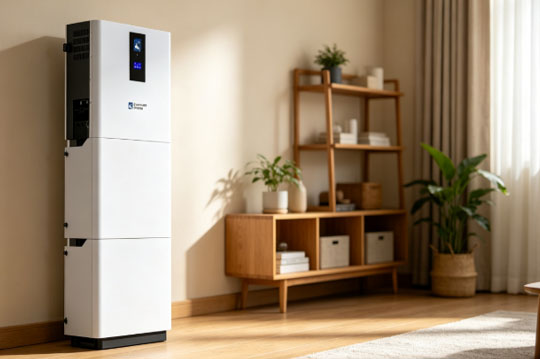
Basic Components of Residential Off-Grid Energy Storage
LiFePO4 Batteries Handle Energy Storage
Residential off-grid energy storage requires batteries with good cycle performance, stability, and a long service life. LiFePO4 batteries have a high cycle life and good thermal stability, so they are commonly used in residential energy storage battery packs. Battery capacity needs to be determined according to the home’s daily electricity consumption. If the household mainly uses basic equipment such as lighting, refrigerators, and routers, the required energy storage capacity is relatively small. If high-power equipment such as water pumps, air conditioners, and induction cookers is also operated, battery capacity and inverter power need to be increased.
Common residential energy storage battery configurations can be referenced as follows:
| Energy Storage Capacity | Common Household Applications | Suitable Applications |
| 5kWh–10kWh | Lighting, refrigerators, network equipment, televisions | Basic backup power |
| 10kWh–20kWh | Lighting, refrigerators, household appliances, and some kitchen equipment | Residential off-grid use |
| 20kWh–50kWh | Multiple household appliances, water pumps, air conditioners, etc. | Higher electricity demand |
| Above 50kWh | Large residences, multiple residences, or small independent power supply applications | High-capacity off-grid energy storage |
The specific capacity still needs to be calculated according to daily electricity consumption, requirements for continuous rainy days, and equipment starting power.
BMS Manages Battery Operation
The BMS is an important component of a lithium battery pack. It can monitor operating data such as battery voltage, current, and temperature, and provide protection under abnormal conditions. When a residential energy storage battery operates for long periods, the BMS needs to provide stable protection. It can also provide CAN, RS485, and other communication interfaces according to system design, making data communication between the battery and inverter more convenient. During battery pack customization, the corresponding BMS configuration can also be designed according to the customer’s inverter brand, communication method, battery capacity, and installation space, allowing the battery to work better as part of a complete energy storage system.
The Inverter Connects Energy Storage with Household Loads
The battery stores DC power, while most household appliances use AC power, so an inverter is required for power conversion. When the off-grid energy storage system operates, electricity generated by the solar modules can first supply household loads, while excess electricity is stored in the battery. When solar power generation is insufficient, the battery supplies electricity to household loads. This operating method can reduce solar energy waste and allow the household to maintain basic power supply without utility electricity.
How to Design the Capacity of Residential Off-Grid Lithium Batteries
Determine Capacity Based on Daily Electricity Consumption
Energy storage capacity is not simply a matter of choosing a larger capacity. It needs to be designed according to the home’s actual daily electricity consumption. For example, if a residence mainly uses lighting, a refrigerator, a router, a computer, and a television, with total daily electricity consumption of approximately 8kWh, the energy storage battery can be configured according to daily demand and backup time. If the energy storage system needs to continue operating for a longer period when solar power generation is insufficient, battery capacity needs to be increased accordingly. Capacity design also needs to consider the battery’s actual usable capacity, conversion losses, and reserved power.
Select the Battery Solution Based on Load Power
Energy storage capacity determines “how long the system can operate,” while inverter power determines “how many devices can operate at the same time.” For example, refrigerators, air conditioners, water pumps, and other equipment may have high instantaneous power when starting. If the inverter power is too low, the equipment may not start properly even when the battery capacity is sufficient.
Therefore, a residential off-grid energy storage project usually needs to confirm:
- Average daily electricity consumption
- Total power of commonly used equipment
- Starting requirements of high-power equipment
- Required continuous power supply time
- Estimated daily solar power generation
- Power that needs to be reserved for rainy weather
After these data are confirmed, the battery capacity, operating voltage, and inverter specifications can be designed.
Determine the Battery Pack Structure Based on Installation Space
Residential energy storage batteries may be installed in indoor equipment rooms, garages, storage rooms, or other designated areas. Different installation environments have different requirements for battery dimensions and structures. The battery pack can be designed according to the installation space, including enclosure dimensions, connection methods, and capacity combinations. For example, a 48V-class energy storage battery pack can combine multiple battery modules according to different capacity requirements and increase the overall energy storage capacity through parallel connection. For residences with limited space, a more compact battery structure can also be used to make the energy storage equipment easier to install and maintain.
Coordinated Operation of Solar Energy and Off-Grid Lithium Batteries
Prioritize Solar Energy During the Day
Residential off-grid systems usually use solar energy as one of their primary energy sources. After solar modules generate electricity during the day, the power can directly supply household loads. When power generation is higher than the household’s immediate electricity demand, excess electricity can be stored in lithium batteries. At night, when solar power generation is no longer available, the energy storage battery can release electricity to meet household nighttime demand. This approach can improve solar energy utilization and reduce reliance on other backup energy sources.
Energy Storage Batteries Provide Nighttime Power
Lighting, refrigerators, network equipment, and other household devices still require continuous electricity at night. The energy storage battery can provide power according to the load conditions. If the household has relatively high electricity consumption at night, energy storage capacity can be increased appropriately. If the main equipment consists of low-power loads, a smaller battery capacity can meet basic electricity needs. In off-grid environments, energy storage batteries may also need to handle short-term high-load power requirements, such as water pump startup and household equipment operation. Therefore, the battery’s continuous discharge capability and peak output capability also need to be included in the design.
Handle Continuous Rainy Weather
Solar power generation is affected by weather conditions, and continuous rainy weather may significantly reduce daily power generation. Off-grid residences cannot design energy storage capacity based only on sunny-day conditions, otherwise insufficient battery power may occur. If the residence is located in an area with significant weather changes, additional backup energy storage capacity can be added so that the battery can store more electricity. In some projects, backup power generation equipment can also be configured to create a multi-energy power supply system together with solar energy and lithium batteries. Proper energy combination can help off-grid residences maintain more stable daily electricity supply.
Customized Residential Off-Grid Energy Storage Battery Solutions
Customize Battery Packs According to Project Requirements
Different residences have different electrical equipment, installation spaces, and local power conditions. Therefore, standard batteries may not be suitable for every project. LiFePO4 battery packs can be customized according to voltage, capacity, dimensions, BMS, communication method, and installation structure. Common residential energy storage voltages include 12V, 24V, and 48V classes, among which 48V energy storage batteries are suitable for many residential energy storage and off-grid applications. For higher-capacity residential projects, a modular design can also be used to expand energy storage capacity by combining multiple battery modules.
Provide OEM/ODM Energy Storage Battery Services
As a professional LiFePO4 battery manufacturer, we specialize in the R&D, production, and sales of LiFePO4 cells, battery packs, battery management systems (BMS), and energy storage systems. From cell selection and battery pack design to BMS configuration, structural design, and finished product inspection, we can provide OEM/ODM services according to customers’ residential energy storage project requirements. Products can be customized according to different market and application requirements, with corresponding product documents, transportation documents, and compliance documents provided as needed.
From Battery Production to Quality Control
Residential energy storage batteries need to operate for long periods, making cell quality, battery assembly processes, and factory inspection particularly important. During production, cell inspection, capacity testing, BMS function testing, charge and discharge testing, and finished product inspection can be performed according to the product model. For different market and transportation requirements, applicable battery models can also be provided with access certificates, transport test summaries, safety data sheets, and compliance reports.
| Service Content | Support Available |
| Cell | LFP cell selection and matching support |
| Battery pack | Support for voltage, capacity, dimensions and structural customization |
| BMS | Protection function and communication interface configuration support |
| OEM / ODM | Product development support according to project requirements |
| Quality inspection | Support for cell and battery pack testing |
| Compliance documents | Provide relevant materials based on product and target market |
| Energy storage system | Support for residential grid-connected and solar energy storage applications |
Frequently Asked Questions
How much capacity does a residential off-grid lithium battery need?
The capacity needs to be determined according to actual daily electricity consumption, required backup time, and solar power generation. Basic household electricity use can generally use an energy storage capacity of around 5kWh–10kWh. Homes with more equipment or longer backup power requirements can use 10kWh–20kWh or higher-capacity battery systems.
Is a 48V LiFePO4 battery suitable for residential off-grid energy storage?
48V-class LiFePO4 batteries are a common configuration for residential energy storage and are suitable for use with energy storage inverters of corresponding specifications. The specific battery capacity and BMS configuration need to be determined according to the inverter, household loads, and installation environment.
Will rainy weather cause the energy storage system to run out of power?
Continuous rainy weather can reduce solar power generation, so a certain amount of energy storage capacity needs to be reserved in advance. If the local area experiences frequent rainy weather, battery capacity can be increased, and other backup power sources can also be configured to improve overall power supply stability.
Can the battery dimensions be customized according to the residential space?
Yes. Residential energy storage projects can customize battery pack dimensions, capacity, structure, and interfaces according to the installation location. The corresponding BMS can also be configured according to the inverter’s communication requirements.
LiFePO4 batteries have a long cycle life and stable operating characteristics, making them suitable for long-term energy storage applications. For different residential projects, battery packs can be designed according to actual electricity consumption, equipment power, installation location, and backup time, without selecting an unnecessarily large capacity. For energy storage projects intended for export, the product documents, transportation requirements, and compliance documents of the target market also need to be confirmed in advance. Choosing a supplier with R&D and production capabilities for cells, battery packs, BMS, and energy storage products can reduce project communication steps and facilitate subsequent product customization.
If you are planning a residential off-grid energy storage project and need to confirm the voltage, capacity, battery dimensions, BMS, communication method, or OEM/ODM solution, contact our team for customized support.
WhatsApp: +86 15074995718
Email: info@deligreen.net