Hospitals cannot afford to treat power outages as a minor inconvenience. A short interruption may only stop work in an ordinary commercial building, but in a hospital, monitoring equipment, operating room systems, network infrastructure, and medicine refrigeration may need to keep running. Diesel generators remain a common backup option, but battery energy storage can provide fast backup power when the grid fails. When planning a hospital emergency power solution, buyers usually care about four things: how long the battery can run, which equipment should be backed up, how fast the system switches over, and whether the storage system can be expanded later.
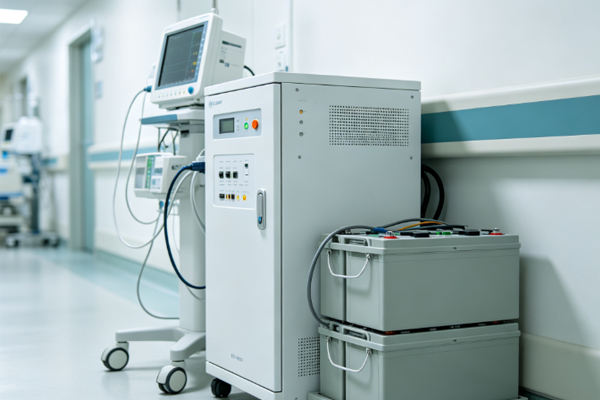
Which Hospital Equipment Should Be Powered by an Emergency Power System?
A hospital emergency power system does not always need to supply electricity to every device in the building. In many projects, critical equipment is connected to dedicated emergency circuits, while non-essential loads are given lower priority. This helps make better use of available battery energy and prevents the system from becoming unnecessarily oversized.
Which Hospital Equipment Needs Backup Power?
Hospital equipment has different power requirements. Hospital battery storage is normally prioritized for equipment that cannot simply stop during a grid outage.
| Equipment Type | Emergency Power Priority | Main Requirement |
| Patient monitoring and life-support equipment | High | Continuous and stable power |
| Critical operating room equipment | High | Minimize power interruption risks |
| Hospital servers and network equipment | High | Keep information systems running |
| Medicine refrigeration equipment | Medium-High | Maintain continuous operation |
| Emergency lighting | High | Provide lighting during outages |
| General office equipment | Low-Medium | Can be prioritized based on actual needs |
Connecting every office computer, large HVAC system, and non-critical public-area load to the battery can quickly consume available energy. A more practical approach is to identify critical loads first and then allocate remaining battery capacity to secondary loads.
How Should Hospital Emergency Loads Be Prioritized?
Load classification directly affects battery capacity and backup runtime. Hospitals can assign different priority levels based on what must remain operational during an outage.
- Priority 1: Life-support equipment, critical monitoring systems, and essential operating room equipment.
- Priority 2: Medicine refrigeration, essential lighting, network rooms, and communication equipment.
- Priority 3: General office equipment and selected public-area equipment.
- Non-essential loads: Equipment that can be temporarily shut down during a power outage.
This approach is much more practical than simply installing a very large battery to keep every device running. Critical equipment receives stable backup power, while lower-priority loads can be reduced when necessary, allowing hospital battery storage to provide longer useful runtime.
How Quickly Can Hospital Energy Storage Provide Backup Power?
Transfer speed is an important consideration for hospital emergency power systems. When grid power fails, the battery system needs to supply designated loads through the inverter and electrical distribution system. Equipment that is highly sensitive to even a short interruption may also require UPS protection.
Battery capacity is not the only thing to check. A large battery will not solve the problem if the transfer equipment, inverter output, or electrical distribution design does not match the load. Buyers should evaluate the battery, inverter, distribution equipment, and transfer method as one complete system.
How Much Battery Storage Capacity Does a Hospital Need?
There is no universal answer to whether a hospital needs 100kWh, 200kWh, or 300kWh of battery storage. The required capacity depends on the emergency load, the amount of power consumed at the same time, and the desired backup duration. When purchasing hospital battery storage, buyers should look beyond the Ah rating and pay attention to usable energy and continuous output power.
How Many Hours Can a Hospital Battery Provide Backup Power?
A basic estimate can be made with this formula:
Required Battery Capacity ≈ Emergency Load Power × Backup Time ÷ Overall System Efficiency
For instance, if the hospital’s critical loads require an average of 50kW and the target backup time is 4 hours, the basic energy requirement is about 200kWh. The actual battery specification should also allow for usable capacity, conversion losses, and operating reserves.
How Should Hospital Battery Storage Capacity Be Selected?
Before purchasing hospital battery storage, it is useful to prepare the following information for the supplier:
- Normal operating power of critical equipment.
- Equipment that must remain operational during an outage.
- Peak or startup power requirements.
- Required backup duration, such as 2, 4, or more hours.
- Expected future increases in hospital loads.
If the system only needs to support emergency lighting, network equipment, and a limited number of medical devices, a smaller battery system may be sufficient. If refrigeration, pumps, selected HVAC loads, or additional medical equipment also need backup power, the required capacity will naturally increase.
How Should Hospitals Choose Between 50kWh, 100kWh, and 200kWh Storage?
| Storage Capacity | Typical Application | Configuration Approach |
| Around 50kWh | Small clinics and community healthcare facilities | Focus on lighting, networks, and critical equipment |
| Around 100kWh | Small and medium healthcare facilities | Support a wider range of critical medical loads |
| Around 200kWh | Medium-sized hospitals | Provide backup power for more core equipment |
| 300kWh and above | Large hospitals or medical campuses | Use modular batteries with other backup power systems |
These capacity ranges are useful for initial planning, but they are not fixed standards. Large hospitals can have significant differences between daytime and nighttime electricity demand, so actual load data should be used for final sizing instead of simply choosing a standard capacity.
Why Are LiFePO4 Batteries Suitable for Hospital Emergency Power?
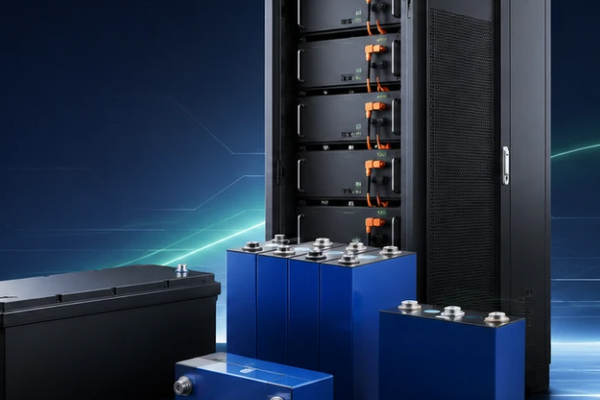
Hospital backup batteries may spend much of their time in standby mode, but when a grid failure occurs, they need to deliver stable power without hesitation. LiFePO4 batteries offer long cycle life and good thermal stability for stationary energy storage applications. When integrated with a BMS, battery cabinet, and suitable inverter, they can form a practical long-term hospital battery storage system.
What Are the Benefits of LiFePO4 for Hospital Battery Storage?
When purchasing batteries, hospitals need to consider more than the initial purchase price. Maintenance, service life, space requirements, and future replacement costs can all affect the long-term value of the system.
- Long cycle life for long-term energy storage applications.
- Good thermal stability for stationary battery systems.
- Higher energy density than traditional lead-acid solutions, helping reduce space requirements.
- Modular battery configurations make future capacity adjustments easier.
Hospital energy storage systems may need to remain ready for extended periods. Looking only at the purchase price does not tell the whole story. Service life, maintenance requirements, equipment room space, and replacement costs should all be considered when selecting the battery technology.
What Should Be Considered When Choosing a Hospital Battery Cabinet?
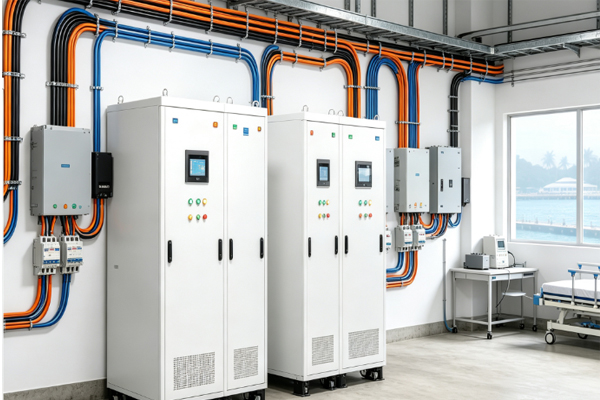
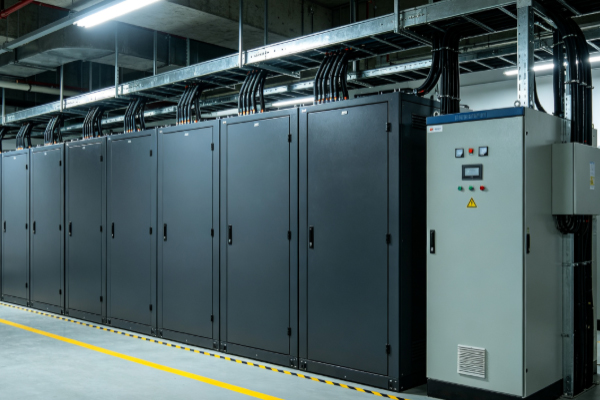
The battery cabinet cannot simply be placed wherever there is empty space. Hospital projects usually need to consider equipment room dimensions, access routes, load-bearing capacity, ventilation, and future maintenance.
- Leave sufficient space around the cabinet for inspection and servicing.
- Check cabinet dimensions against the equipment room and transportation route.
- Plan cable routing and power distribution locations in advance.
- Keep the installation area within suitable environmental conditions.
This detail is easy to overlook during procurement. A battery may meet all technical specifications, but if the cabinet cannot pass through the equipment room entrance or there is not enough space for maintenance, installation can become unnecessarily complicated. Checking the site conditions before purchasing can prevent these problems.
What Does the BMS Do in a Hospital Emergency Battery System?
The BMS is an important part of hospital battery storage. It monitors cell voltage, temperature, current, and battery status while providing protection when abnormal conditions occur.
For hospital backup batteries that remain on standby for long periods, the BMS also helps manage battery operating conditions and makes it easier for maintenance teams to monitor system status. Compatibility between the battery, BMS, and inverter communication system is another key point to verify during procurement.
Can a Hospital Emergency Power System Be Expanded Later?
Hospital power requirements rarely remain unchanged. A facility may add new departments, medical equipment, patient rooms, or even entire buildings over time. If the initial hospital battery storage system is designed with modular expansion in mind, additional battery capacity can be added as demand increases. For new hospitals, facility expansions, and projects planning gradual increases in energy storage, reserving space and system capacity early can be much easier than rebuilding the entire system later.
Can Hospital Battery Storage Capacity Be Increased Later?
Yes, but expansion is not simply a matter of connecting several new batteries. The voltage, capacity, BMS communication, inverter parameters, and other system specifications need to be compatible.
Batteries that have already been operating for some time may also have different performance conditions from new battery modules. The existing system should be evaluated before adding new modules.
What Should Be Checked Before Expanding Hospital Battery Storage?
Hospital storage expansion requires more than checking the new battery modules. The existing system should also have sufficient power and installation capacity.
- Check whether the existing battery model, voltage, and capacity are suitable for expansion.
- Confirm that the BMS communication protocol is compatible with the new battery modules.
- Check whether the inverter supports the expanded battery capacity and output power.
- Confirm that the distribution cabinet, cables, and installation area have sufficient spare capacity.
Planning these parameters during the initial project stage can make future expansion much easier. Since hospitals operate continuously, expansion work should also include a clear power transfer and installation plan to minimize disruption to medical services.
Can Hospital Solar Energy Storage Work With Emergency Power Systems?
Yes. During the day, solar panels can supply power directly to hospital loads, while excess solar energy can charge the battery. When grid power fails, the storage system can supply electricity to designated emergency loads. Large hospitals can also integrate battery storage with UPS systems and diesel generators, allowing different power sources to handle different backup requirements.
Can DELIGREEN Provide Hospital Battery Storage Solutions?
DELIGREEN supplies LiFePO4 batteries, battery packs, DIY battery boxes, BMS accessories, and scalable energy storage solutions to buyers worldwide. Hospitals can select the appropriate voltage, capacity, battery pack configuration, and BMS setup based on their actual power requirements. For projects with future expansion plans, modular battery configurations can also provide more flexibility, allowing additional storage capacity to be added as the hospital’s power demand grows.
A reliable hospital emergency power solution is not simply about installing the largest battery possible. The real question is whether critical equipment can continue operating when the grid fails, how long backup power is required, and whether the battery system can reliably support the designated loads. By defining emergency loads, power requirements, backup duration, battery technology, and future expansion needs before procurement, hospitals can build a more practical battery storage system. For buyers looking for hospital backup batteries, starting with actual power requirements and then comparing battery specifications and system options is usually a much smarter approach than looking at battery price alone.