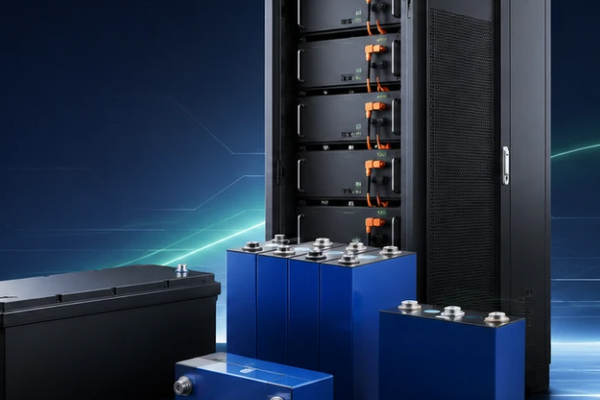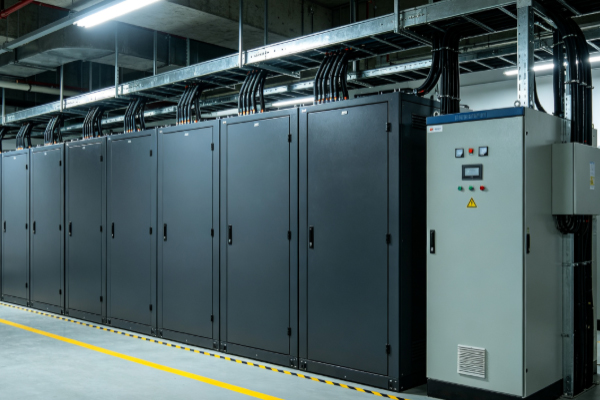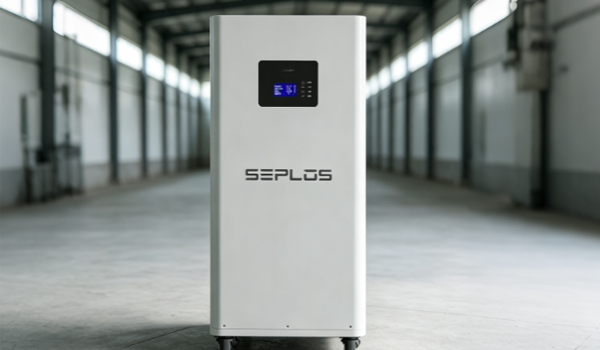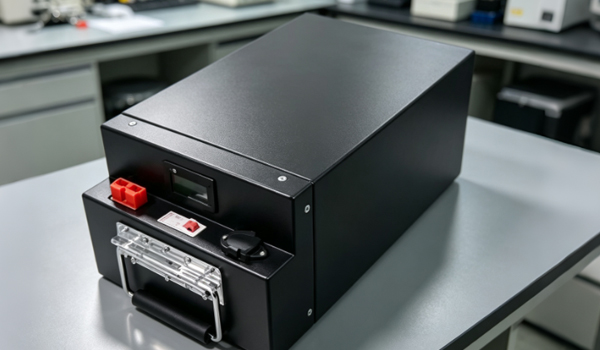
When a robot’s battery drops to a low level, the biggest headache for warehouse managers is often not the empty battery itself, but the waiting time that follows. AGVs and AMRs running for ten or more hours a day can push the entire material-handling schedule back if they have to sit and wait for charging. A robot battery swapping solution takes a simple approach: instead of waiting beside a charger, the robot replaces its low battery with a fully charged one and gets back to work, while the removed battery goes to the charging station. For warehouses, manufacturing facilities, and logistics projects that require long operating hours, this can significantly reduce charging downtime.
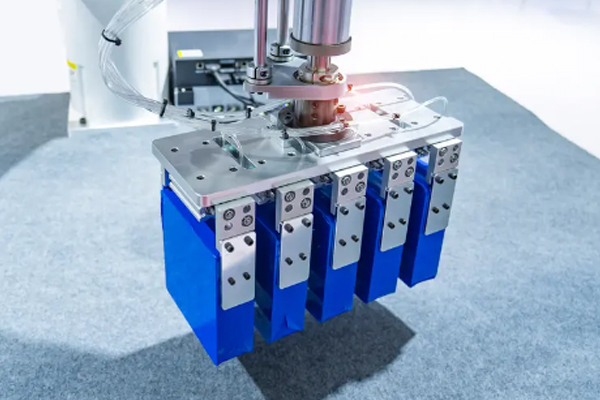
Why Do Robots Need Battery Swapping? The Real Issue Is Downtime
Some robots do not work long enough to justify battery swapping and can simply charge during scheduled breaks. In high-frequency material-handling environments, however, a robot may receive its next task immediately after completing the previous one. If it then has to stop for several hours, even a large number of chargers may not prevent waiting. Battery swapping separates robot operation from battery charging, allowing the robot to continue working while another battery is being recharged.
Which Robots Are Better Suited to Battery Swapping?
Whether a robot needs battery swapping depends heavily on its workload and operating schedule. The following types of equipment often benefit more from reduced downtime than from simply installing a larger battery:
- AGV transport robots: These robots often move repeatedly between warehouses, production lines, and material areas, making battery rotation relatively easy to organize.
- AMR autonomous mobile robots: Their tasks can change with orders and warehouse scheduling, so a fully charged spare battery can reduce waiting when workloads increase.
- 24-hour warehouse robots: For operations running across multiple shifts or around the clock, relying on one battery and repeated charging can easily create gaps in robot availability.
- High-load mobile robots: Carrying heavier loads increases motor demand and battery consumption, while swapping in a charged battery allows the robot to return to operation more quickly.
The important calculation is not simply how long the battery lasts. Buyers should look at the complete operating cycle: how long one battery works, how long it takes to recharge, how quickly it can be replaced, and how many spare batteries the site actually needs.
How Should You Choose AGV and AMR Robot Batteries?
Although AGVs and AMRs are both mobile robots, their battery requirements are not necessarily the same. Procurement can start with the robot type and actual operating conditions, followed by battery capacity, discharge capability, dimensions, and communication requirements.
| Robot Type | Common Battery Requirements | Key Robot Battery Parameters | Suitable Charging Method |
| AGV transport robot | Long operating hours and frequent starts/stops | Battery capacity, discharge current, cycle life | Automatic charging, battery swapping |
| AMR mobile robot | Continuous operation and changing tasks | Runtime, BMS communication, weight | Automatic charging, fast battery swapping |
| Warehouse robot | High-frequency handling and extended operation | Battery capacity, charging time, swapping efficiency | Battery swapping |
| Factory mobile robot | Higher loads and fixed routes | Peak discharge, battery weight, connectors | Fast battery swapping |
| Autonomous delivery robot | Outdoor mobility and longer operating hours | Battery runtime, protection design, operating temperature | Charging, spare battery swapping |
This table is useful for initial selection, but it should not be used to determine the final battery model on its own. Before placing an order, provide the battery manufacturer with the original battery specifications, battery compartment dimensions, load data, and daily operating hours.
What Is the Biggest Problem With Robot Battery Swapping? The Battery May Not Fit
A battery designed for swapping is different from a standard energy storage battery in one obvious way: it needs to be removed and installed repeatedly. It must not only power the robot but also withstand frequent handling and connector insertion. If the battery is too heavy, the connector is difficult to plug in, or the locking mechanism is awkward, operators will quickly notice the problem when they have to swap batteries dozens of times a day.
What Should Be Measured in a Robot Battery Compartment?
These details should ideally be confirmed before making a sample battery. Waiting until a batch has already been produced to discover that the dimensions are wrong can be expensive. Older robot models can be particularly challenging because battery compartments may have very limited space.
- Battery compartment dimensions: Measure the usable length, width, and height accurately while leaving enough room for battery installation and removal.
- Mounting method: Confirm whether the battery uses a slide-in design, locking mechanism, or screw mounting, because different structures require different battery housing designs.
- Connector position: Confirm the location of power connectors, communication ports, and cable exits rather than simply stating that the connector type is the same.
- Battery weight: For manual battery swapping, excessive weight can make repeated handling tiring and inconvenient for operators.
- Handle and load-bearing position: A practical handle position can make a major difference when batteries need to be removed and installed frequently.
- Robot center of gravity: Significant changes to internal battery layout or weight distribution can affect driving stability, so simply making the battery “fit” is not enough.
It is helpful to provide the manufacturer with clear photos and dimension drawings along with these measurements. For customized robot batteries, a clear photo of the battery compartment can sometimes communicate more useful information than a long list of specifications.
Why Can’t You Just Choose Any Battery Connector?
When batteries are swapped frequently, the connector becomes an easily overlooked wear point. Plugging and unplugging a connector once a day is very different from doing it dozens of times. Connector type, mating cycles, locking method, and foolproof design should all be checked before production.
Automatic battery swapping requires even more precision. The mechanical system needs to position the battery accurately, while the connector must engage reliably every time. A battery that works well with manual operation may still have problems in an automated swapping station, so automated projects should include real movement and connection testing before mass production.
How Many Spare Batteries Does a Robot Battery Swapping System Need?
A battery swapping solution is not simply a matter of buying several extra batteries. Too few spare batteries can still leave robots waiting, while too many increase purchasing and inventory costs. In actual operation, the site is essentially managing a battery rotation pool: some batteries are installed in robots, some are charging, and others are fully charged and waiting for the next swap.
How Many Batteries Are Needed for a Robot Battery Swapping System?
Start by mapping out the daily operating cycles and then work backward to estimate the required number of spare batteries. The key is not simply to calculate “how many batteries per robot,” but to see whether operating time and charging time can keep up with each other.
- Long runtime per battery: If one battery can cover a relatively long operating cycle, fewer spare batteries may be required.
- Long charging time: When a removed battery takes a long time to recharge, more spare batteries are needed to fill the rotation gap.
- Peak workload periods: When warehouse orders suddenly increase, robots may be used more frequently, and the normal spare battery inventory may no longer be enough.
- Growing robot fleets: When a project expands from a dozen robots to several dozen or more, the original battery rotation ratio should be recalculated.
Battery quantities can be estimated based on normal operating conditions while leaving some buffer for peak demand. For larger projects, planning the number of robots, batteries, and chargers together is usually more practical than calculating battery quantities separately.
Where Should Removed Robot Batteries Be Stored?
It may sound like a small operational issue, but it becomes very important in warehouses with large robot fleets. If removed batteries are simply placed in a corner, it becomes easy to use the wrong battery, forget to charge one, or accidentally reinstall a battery that has an abnormal condition.
A simple battery status system can help:
- Fully charged batteries: Move them to the standby area for the next robot.
- Low batteries: Send them to charging immediately after removal.
- Fully charged after charging: Confirm normal status before returning them to the standby area.
- Abnormal batteries: Isolate them and check the BMS before putting them back into service.
For larger projects, each robot battery can be assigned an identification number, with charging cycles, operating time, and abnormal events recorded. Over time, it becomes much easier to identify batteries that are used more frequently or show noticeable changes in condition.
How Should You Purchase Robot Batteries for Battery Swapping?
Once a project moves into bulk purchasing, customers are usually no longer asking simply whether robot batteries are available. They want to know whether dozens or hundreds of batteries can maintain consistent specifications. If the first batch fits perfectly but the next batch uses different dimensions, or if one BMS protocol works while a later replacement battery is incompatible, fleet management quickly becomes complicated. For this reason, future replenishment and expansion should be considered from the beginning.
What Specifications Should Be Confirmed When Purchasing Robot Batteries?
The following table can be used as a practical inquiry checklist. Buyers can confirm each item with the battery supplier and use the information when comparing different suppliers.
| Robot Battery Parameter | What to Confirm | Impact on the Battery Swapping System |
| Battery capacity | Usable capacity and runtime per charge | Determines how long the robot can work after one swap |
| Battery voltage | Compatibility with the robot’s existing system | Determines whether the robot can operate normally |
| Discharge current | Continuous and peak discharge capability | Affects startup, acceleration, and full-load operation |
| Battery dimensions | Length, width, and height | Determines whether the battery fits the robot battery compartment |
| Battery weight | Total battery pack weight | Affects manual swapping and robot payload |
| BMS communication | CAN, RS485, and other protocols | Enables SOC, voltage, and temperature data communication |
| Connectors | Power connector, communication connector, and cable length | Affects installation and frequent swapping |
| Swapping structure | Slide rails, locks, handles, and positioning structure | Affects swapping speed and ease of use |
| Charging method | Charger specifications and charging time | Determines battery rotation efficiency |
| Cycle life | Charge and discharge cycle capability | Affects long-term robot battery costs |
In addition to these core specifications, buyers should ask about sample lead times, bulk production schedules, whether future replacement batteries will maintain the same specifications, and how defective batteries will be handled. A low initial price may look attractive, but it becomes a problem if the original battery model is discontinued when replacement units are needed.
Why Should You Keep a Sample Before Placing a Bulk Order?
The sample does not need to be complicated, but it should actually be installed on the robot and tested in operation. Many practical problems cannot be identified by reading a specification sheet alone.
- Check installation: Confirm that the battery can be inserted, locked, and removed smoothly.
- Test repeated swapping: Perform multiple battery replacement cycles and check whether the connector, locking mechanism, handle, and housing are convenient for repeated operation.
- Test under real operating conditions: Run the robot with a normal load and check runtime, power output, battery readings, and BMS communication.
Once the sample passes testing, the final dimensions, connectors, BMS, and housing design can be fixed before mass production. Overseas buyers can also confirm packaging, shipping documents, spare parts, and remote technical support at this stage, helping reduce communication and delivery issues later.
The real value of a robot battery swapping solution is that robots do not have to remain idle for long charging sessions, but making the system work smoothly requires much more than simply preparing spare batteries. Battery capacity determines operating time, discharge capability affects performance, dimensions and connectors determine whether the battery can be swapped quickly, and BMS communication allows the robot to monitor battery status. DELIGREEN provides LiFePO4 batteries, battery packs, DIY battery boxes, BMS accessories, and scalable energy storage solutions for global buyers, with customized capacity, housing, connectors, and BMS configurations for AGVs, AMRs, and other mobile robots, helping customers build battery swapping solutions designed for continuous operation and large-scale deployment.